

can any one by chance help me find some more info about this engine
i seem to be having a hard time finding anything other then
# 400cid 255-265 bhp Turbo Fire V8 (1970-1976)
and thats from wikipeda
i seem to be having a hard time finding anything other then
# 400cid 255-265 bhp Turbo Fire V8 (1970-1976)
and thats from wikipeda

Senior Member
You might want to try this link for more info:
http://www.mortec.com/\
Also, the 400 had a longer stroke, and bigger bore. The clyinder walls were thinner as a result, and steam holes were drilled between bores and heads also to let out some heat buildup there.
A lot of people turned the main journal down to 350 size and made 383 by swapping crank to the 350. A little more complicated than that.
GM made a 4 bolt and 2 bolt version. A lot of the stock car guys say the 2 bolt version block holds up better, as the 4 bolt blocks cracked. I don't know personally, but I know a ton of old stock car guys that ran them for years.
http://www.mortec.com/\
Also, the 400 had a longer stroke, and bigger bore. The clyinder walls were thinner as a result, and steam holes were drilled between bores and heads also to let out some heat buildup there.
A lot of people turned the main journal down to 350 size and made 383 by swapping crank to the 350. A little more complicated than that.
GM made a 4 bolt and 2 bolt version. A lot of the stock car guys say the 2 bolt version block holds up better, as the 4 bolt blocks cracked. I don't know personally, but I know a ton of old stock car guys that ran them for years.

sofakingdom
Supreme Member
close


Today
- Join DateSep 2005
- Posts:27,993
- iTrader Positive Feedback100
- iTrader Feedback Score(1)
- CarYes
- EngineUsually
- TransmissionSometimes
- Axle/GearsBehind me somewhere
- Likes:1
- Liked:2,485 Times in 1,897 Posts
Not sure what you want to "find out"....
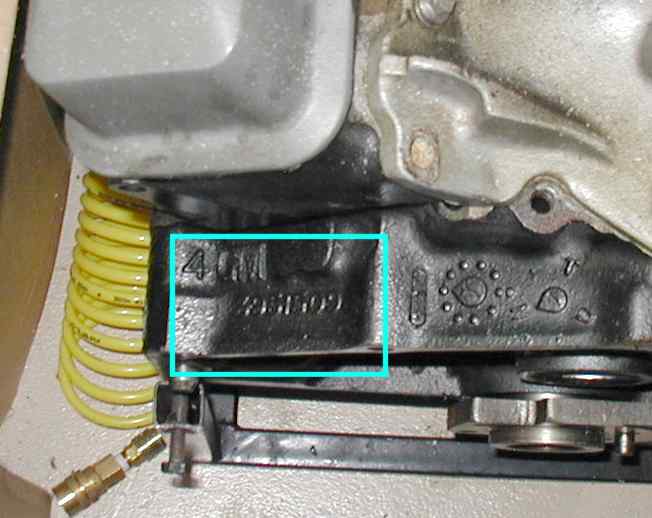
It's a 400. 4.125" bore x 3.75" stroke. V8. Block casting # will be either 509 or 817; there are no others in that year (511 was also used up to 72 however).
The wrist pin center is 1.56" from the piston top, same as a 350, which required rods that are 5.565" centers, rather than the 5.7" length in all other SBCs. The shorter rods, in turn, meant that the crank counterweights were impossible to make large enough to fully balance the engine, so part of the balance weights for the #1 & 2 journal and the #7 & 8 one, were moved to the damper and the flex plate respectively. If you are willing to accept the use of rings that are narrower and/or spaced closer together (the factory wasn't, due to warranty concerns), then the wrist pin can be moved up higher to use a shorter piston and a longer rod, which then allows internal balance like all other SBCs.
The steam holes are drilled because the cylinders, instead of being 4 individual "tubes" on each side, are one large "siamesed" assembly (stronger than the other). Since there's no coolant flow between the cyls, that spot can get hot during extended idling and such; so to prevent the formation of steam pockets at that place, there's little holes drilled in the block deck and the head, to allow steam to escape. Very easy to add to any heads.
The heads on a 400 are GARBAGE (usually 882 or 624, starting in 73); the cam is GARBAGE (the "929" one); they only came with 2-bbl carbs; the exhaust was GARBAGE (the same as 350 2-bbl motors of the day); and so forth.
Talking about what the motor CAME AS, or what it CAME OUT OF, is a waste of time. All of that stuff (heads, cam, intake, exhaust, carb) that made it a low-HP, high-torque-only, tractor motor slug, will go in the trash when you build it up.
The whole 2-bolt vs 4-bolt thing gets blown WAY out of proportion. It is totally insignificant for a street build, and is only an issue for engines that will run continuously at high RPMs. A 76 400 however will have 2-bolt caps on it, and will be the later casting with more metal around the main webbing, which is REALLY the thing that makes the 2-bolt block "stronger", NOT the bolts or caps themselves. The "strongest" possible combo is a 2-bolt block with aftermarket 4-bolt caps, with "splayed" outer bolts, installed on it.
The block will most likely NOT have the starter bolt hole for the late-model starter in it; so by all means, just get that drilled when you get it machined. It's ALOT cheaper and easier to do it then, than to believe what you want ot hear when someone with no BTDT tells you about some magic starter that "ought to" fit. Believe me, IT WON'T, unless that hole is there. Which it won't be, in blocks before about 78, unless somebody has added it.
There is so much drivel and misinformation and "old wives' tales" out there about 400s, it's disgusting. They're a perfectly good motor, an EXCELLENT foundation for a street build. They get that much better with longer rods and an aftermarket crank (the stock cast crank has a bad habit of breaking if you abuse it), subject to putting heads with BIG FLOW on them. You GOTTA do taht to make it worthwhile: DO NOT hallucinate that you're going to get good results by using whatever stock ones are on it, unless sombody already put double-humps on it or something (possible but highly unlikely at best).
I've built many of them over the years, and ran one in my 83 for well over a decade. Feel free to ask questions and get the myths debunked that people repeat ignorantly without any personal experience; like the "overheating" one for example.
It's a 400. 4.125" bore x 3.75" stroke. V8. Block casting # will be either 509 or 817; there are no others in that year (511 was also used up to 72 however).
The wrist pin center is 1.56" from the piston top, same as a 350, which required rods that are 5.565" centers, rather than the 5.7" length in all other SBCs. The shorter rods, in turn, meant that the crank counterweights were impossible to make large enough to fully balance the engine, so part of the balance weights for the #1 & 2 journal and the #7 & 8 one, were moved to the damper and the flex plate respectively. If you are willing to accept the use of rings that are narrower and/or spaced closer together (the factory wasn't, due to warranty concerns), then the wrist pin can be moved up higher to use a shorter piston and a longer rod, which then allows internal balance like all other SBCs.
The steam holes are drilled because the cylinders, instead of being 4 individual "tubes" on each side, are one large "siamesed" assembly (stronger than the other). Since there's no coolant flow between the cyls, that spot can get hot during extended idling and such; so to prevent the formation of steam pockets at that place, there's little holes drilled in the block deck and the head, to allow steam to escape. Very easy to add to any heads.
The heads on a 400 are GARBAGE (usually 882 or 624, starting in 73); the cam is GARBAGE (the "929" one); they only came with 2-bbl carbs; the exhaust was GARBAGE (the same as 350 2-bbl motors of the day); and so forth.
Talking about what the motor CAME AS, or what it CAME OUT OF, is a waste of time. All of that stuff (heads, cam, intake, exhaust, carb) that made it a low-HP, high-torque-only, tractor motor slug, will go in the trash when you build it up.
The whole 2-bolt vs 4-bolt thing gets blown WAY out of proportion. It is totally insignificant for a street build, and is only an issue for engines that will run continuously at high RPMs. A 76 400 however will have 2-bolt caps on it, and will be the later casting with more metal around the main webbing, which is REALLY the thing that makes the 2-bolt block "stronger", NOT the bolts or caps themselves. The "strongest" possible combo is a 2-bolt block with aftermarket 4-bolt caps, with "splayed" outer bolts, installed on it.
The block will most likely NOT have the starter bolt hole for the late-model starter in it; so by all means, just get that drilled when you get it machined. It's ALOT cheaper and easier to do it then, than to believe what you want ot hear when someone with no BTDT tells you about some magic starter that "ought to" fit. Believe me, IT WON'T, unless that hole is there. Which it won't be, in blocks before about 78, unless somebody has added it.
There is so much drivel and misinformation and "old wives' tales" out there about 400s, it's disgusting. They're a perfectly good motor, an EXCELLENT foundation for a street build. They get that much better with longer rods and an aftermarket crank (the stock cast crank has a bad habit of breaking if you abuse it), subject to putting heads with BIG FLOW on them. You GOTTA do taht to make it worthwhile: DO NOT hallucinate that you're going to get good results by using whatever stock ones are on it, unless sombody already put double-humps on it or something (possible but highly unlikely at best).
I've built many of them over the years, and ran one in my 83 for well over a decade. Feel free to ask questions and get the myths debunked that people repeat ignorantly without any personal experience; like the "overheating" one for example.


Quote:
Here's a pretty decent discussion about them, Click here.... Originally Posted by Jtufts
can any one by chance help me find some more info about this engine, i seem to be having a hard time finding anything other then # 400cid 255-265 bhp Turbo Fire V8 (1970-1976), and thats from wikipeda.... 
sofakingdom - had a feeling you would stop and help me out , be prepared for some questions as to i am so excited i got this truck with this engine ,
also thanks StreetLethal for the topic i am reading it now
also thanks StreetLethal for the topic i am reading it now