

Firebird Mess85
Member
close
Jul 7, 2015
- Join DateJul 2008
- LocationBuffalo, NY
- Posts:362
- iTrader Positive Feedback0
- iTrader Feedback Score(0)
- Car85 Firebird & Grand Prix GXP
- EngineLG4 305 (originally 2.8L V6)
- Transmission700R4
- Axle/Gears10 bolt 3:43 Open Diff.
- Likes:0
- Liked:0 Times in 0 Posts
Can I use urethane primer and single stage paint over the original factory GM enamel paint? I'm sanded down but not to bare metal. I've been reading up but some say it depends on alky'd, etc and I'm not familiar with the terms.
Firebird Mess85
Member
close
Jul 7, 2015
- Join DateJul 2008
- LocationBuffalo, NY
- Posts:362
- iTrader Positive Feedback0
- iTrader Feedback Score(0)
- Car85 Firebird & Grand Prix GXP
- EngineLG4 305 (originally 2.8L V6)
- Transmission700R4
- Axle/Gears10 bolt 3:43 Open Diff.
- Likes:0
- Liked:0 Times in 0 Posts
:bump:

Senior Member

Supreme Member
A paint job is only as good as whats under it.
My advice, sand it down.
My advice, sand it down.


Quote:
Yes, because its old (not a fresh job).Originally Posted by Firebird Mess85
Can I use urethane primer and single stage paint over the original factory GM enamel paint? I'm sanded down but not to bare metal. I've been reading up but some say it depends on alky'd, etc and I'm not familiar with the terms. Firebird Mess85
Member
close
Jul 7, 2015
- Join DateJul 2008
- LocationBuffalo, NY
- Posts:362
- iTrader Positive Feedback0
- iTrader Feedback Score(0)
- Car85 Firebird & Grand Prix GXP
- EngineLG4 305 (originally 2.8L V6)
- Transmission700R4
- Axle/Gears10 bolt 3:43 Open Diff.
- Likes:0
- Liked:0 Times in 0 Posts
I am sanded down already just not to bare metal. I want to be sure that what I prime and paint with aren't going to react with what's left on the car.
I'm unclear as to what enamel came on the car from the factory. From what I've gathered it's baked enamel?
I'm unclear as to what enamel came on the car from the factory. From what I've gathered it's baked enamel?
Senior Member
JB's right, strip it. If you're worried about the old paint lifting, you haven't sanded it down enough.
Firebird Mess85
Member
close
Jul 7, 2015
- Join DateJul 2008
- LocationBuffalo, NY
- Posts:362
- iTrader Positive Feedback0
- iTrader Feedback Score(0)
- Car85 Firebird & Grand Prix GXP
- EngineLG4 305 (originally 2.8L V6)
- Transmission700R4
- Axle/Gears10 bolt 3:43 Open Diff.
- Likes:0
- Liked:0 Times in 0 Posts
I'm worried because I've never done it before and I know certain paints have chemical reactions and are incompatible such as lacquer over enamel.


Quote:
Sand to metal, shoot the whole car with epoxy. Then do your body work, then seal it, guide coat it, then paint it. Originally Posted by Firebird Mess85
I'm worried because I've never done it before and I know certain paints have chemical reactions and are incompatible such as lacquer over enamel. -- Joe
Supreme Member
Quote:
-- Joe
That's what I did to mine!Originally Posted by anesthes
Sand to metal, shoot the whole car with epoxy. Then do your body work, then seal it, guide coat it, then paint it. -- Joe
Firebird Mess85
Member
close
Jul 7, 2015
- Join DateJul 2008
- LocationBuffalo, NY
- Posts:362
- iTrader Positive Feedback0
- iTrader Feedback Score(0)
- Car85 Firebird & Grand Prix GXP
- EngineLG4 305 (originally 2.8L V6)
- Transmission700R4
- Axle/Gears10 bolt 3:43 Open Diff.
- Likes:0
- Liked:0 Times in 0 Posts
I sanded last summer, there is no way I'm getting the whole car to metal. It was very difficult to get it to where I've got it now. The enamel is a b*tch.
Quote:
That is why I had mine mediablasted. For around $800, saved me days of da work and a mess in the shop. Originally Posted by Firebird Mess85
I sanded last summer, there is no way I'm getting the whole car to metal. It was very difficult to get it to where I've got it now. The enamel is a b*tch. I'm done da'ing cars

-- Joe

Member
I'm going from memory here...F Body cars didn't get basecoat/clearcoat until about 1991. Prior to that, I believe they all had lacquer from the factory. Even if it was "enamel" it would have been acrylic enamel. The factories haven't used alkyd enamel since the 50s. "Baked enamel" is a process, not a type of enamel paint. All paint jobs at the factory were/are baked to speed the drying/curing process.
If your current paint isn't cracked or peeling, all you need to do is give it a good sanding with 180, then final sand with 400 grit. Spray a couple of coats of sealer, then shoot the color.
If you need to do bodywork, there are some added tasks that I won't bother to innumerate at this time. Suffice to say that I'm not a fan of bodywork over epoxy.
It should be mentioned that differents brands of paint and different types may require different processes. Be cautious.
If your current paint isn't cracked or peeling, all you need to do is give it a good sanding with 180, then final sand with 400 grit. Spray a couple of coats of sealer, then shoot the color.
If you need to do bodywork, there are some added tasks that I won't bother to innumerate at this time. Suffice to say that I'm not a fan of bodywork over epoxy.
It should be mentioned that differents brands of paint and different types may require different processes. Be cautious.
Firebird Mess85
Member
close
Jul 7, 2015
- Join DateJul 2008
- LocationBuffalo, NY
- Posts:362
- iTrader Positive Feedback0
- iTrader Feedback Score(0)
- Car85 Firebird & Grand Prix GXP
- EngineLG4 305 (originally 2.8L V6)
- Transmission700R4
- Axle/Gears10 bolt 3:43 Open Diff.
- Likes:0
- Liked:0 Times in 0 Posts
1986 is when F bodies went to base/clear. Prior to that at least the third gens got enamel. You just supplied me with part of the info I needed which was that it was acrylic enamel not alkyd so thank you for that!
I had a couple cracking spots. I've sanded the car down and am in the middle of doing body work. What I was going to do was finish the body work, spray epoxy primer/sealer over the bare metal spots, use adhesion promoter on the bumpers, shoot 2k urethane primer, and then use a black single stage urethane. I've just been trying to verify that this will be compatible and hold up.
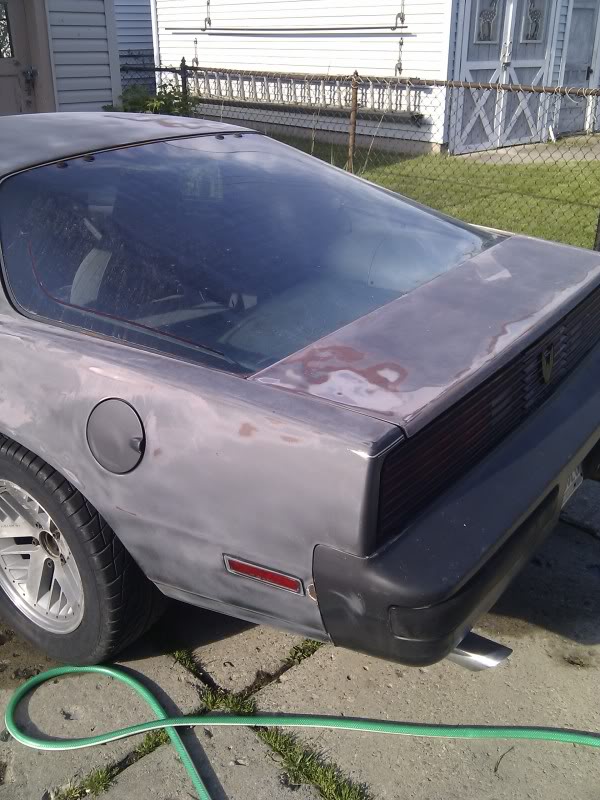
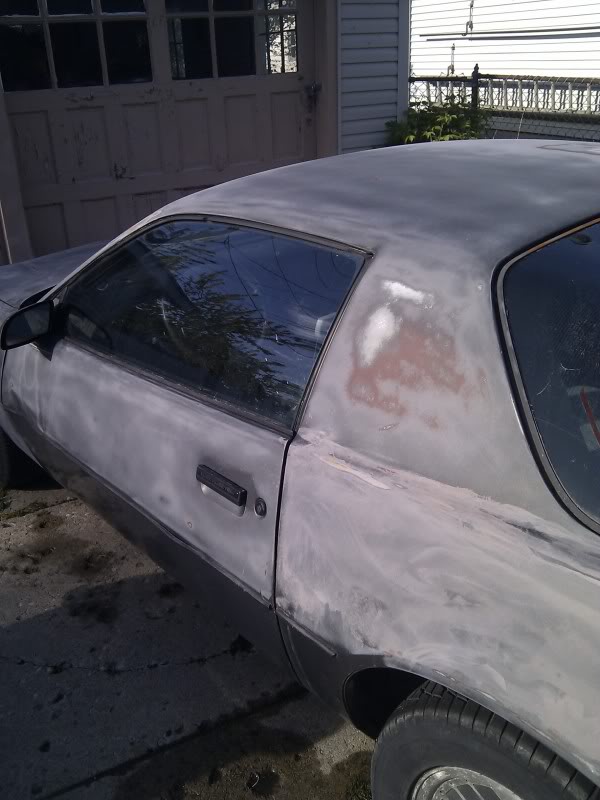
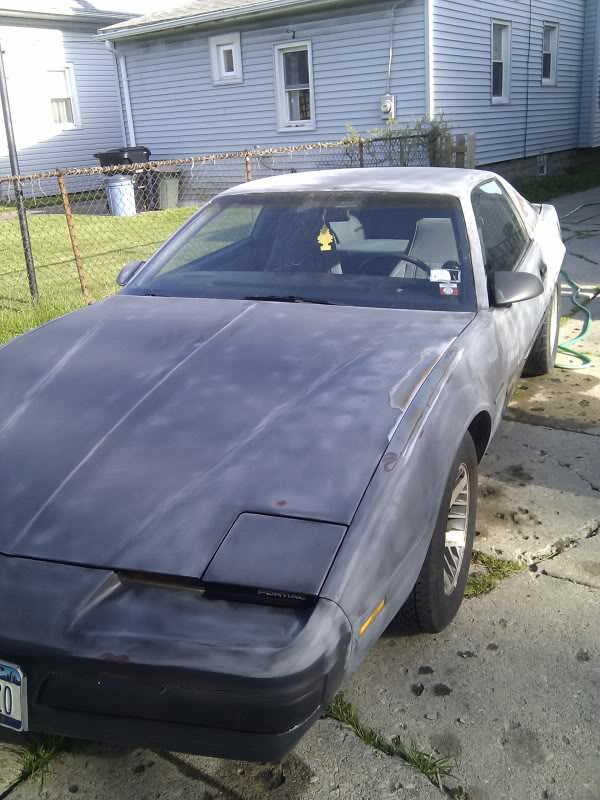
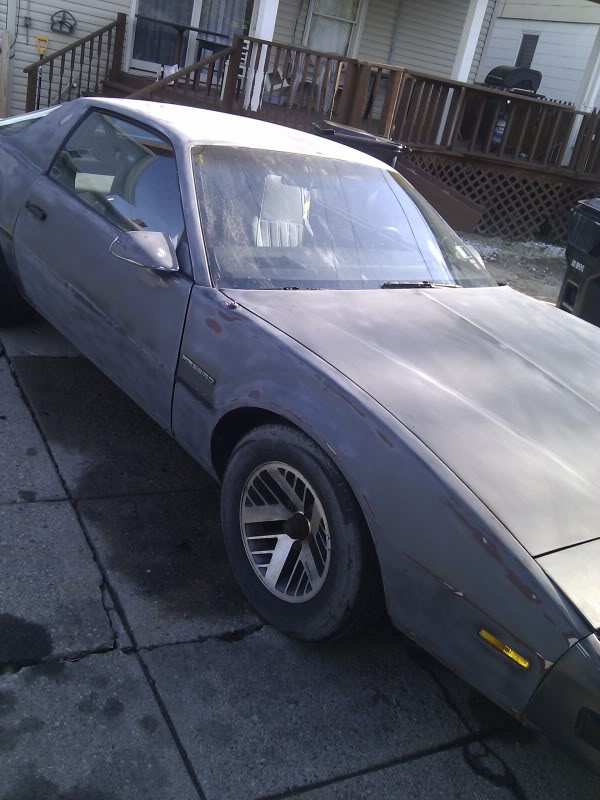
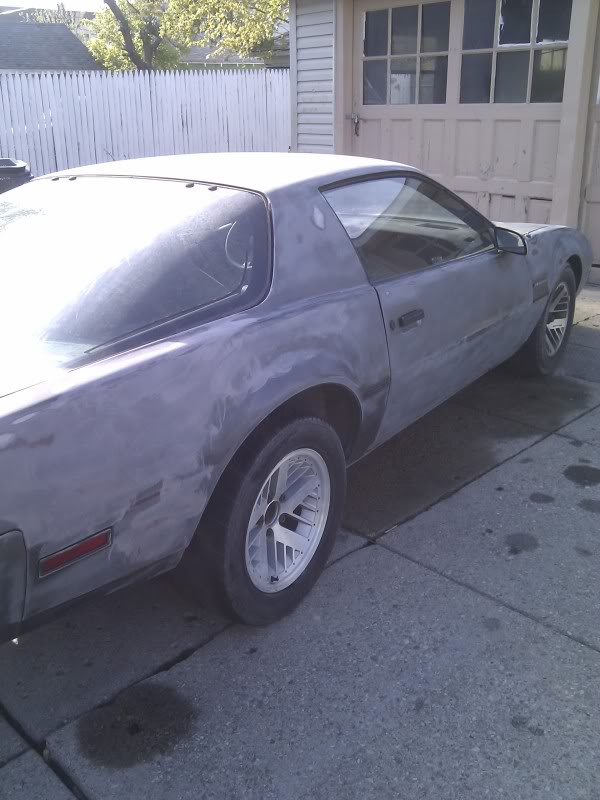
I had a couple cracking spots. I've sanded the car down and am in the middle of doing body work. What I was going to do was finish the body work, spray epoxy primer/sealer over the bare metal spots, use adhesion promoter on the bumpers, shoot 2k urethane primer, and then use a black single stage urethane. I've just been trying to verify that this will be compatible and hold up.
Member
Your process will work just fine. Just do a good blocking to smooth everything out.
I'll have to do more research to augment my memory. 1986 jiggles a memory of some sort, but I was thinking that my new 1989 wasn't basecoat/clear. It wouldn't be the first time my memory has fizzled.
I have heard once before that some or all F-Bodies got acrylic enamel, but I've never seen one personally. I was the body shop manager at a very large Chevy dealer during those years. That doesn't mean they didn't get it, it just means I don't recall seeing one.
Update...you are correct. After a quickie check based on paint codes, the 86 did have bc/cc. The 85 had a single stage but the source I checked didn't specify type of paint.
I'll have to do more research to augment my memory. 1986 jiggles a memory of some sort, but I was thinking that my new 1989 wasn't basecoat/clear. It wouldn't be the first time my memory has fizzled.
I have heard once before that some or all F-Bodies got acrylic enamel, but I've never seen one personally. I was the body shop manager at a very large Chevy dealer during those years. That doesn't mean they didn't get it, it just means I don't recall seeing one.
Update...you are correct. After a quickie check based on paint codes, the 86 did have bc/cc. The 85 had a single stage but the source I checked didn't specify type of paint.
Quote:
Why not? Originally Posted by Yenipenny
Suffice to say that I'm not a fan of bodywork over epoxy. -- Joe
Member
Quote:
-- Joe
Just one quickie...I'm in a hurry. Most, but not all paint manufacturers do not recommend the use of body filler on top of paint/primer. One exception that I recall is that PPG has one epoxy primer that they say body filler can be applied over it. They don't do so for others. I use DuPont primarily and DuPont doesn't recommend it for any of their primers.Originally Posted by anesthes
Why not? -- Joe
I prefer bodywork on bare metal followed by etch primer over the remaining bare metal, then 2K primer. Some people prefer using epoxy primer over bare metal. Either way works. Chemically, there's little or no difference. People get into knock-down, drag-out arguments over which is better than the other and why. I use the etch primer 'cause I like it and it works.
Read the note at the bottom of page 1 in this link. This is from DuPont's Performance Coatings website.
http://pc.dupont.com/dpc/en/US/html/...GenRepairs.pdf
Senior Member
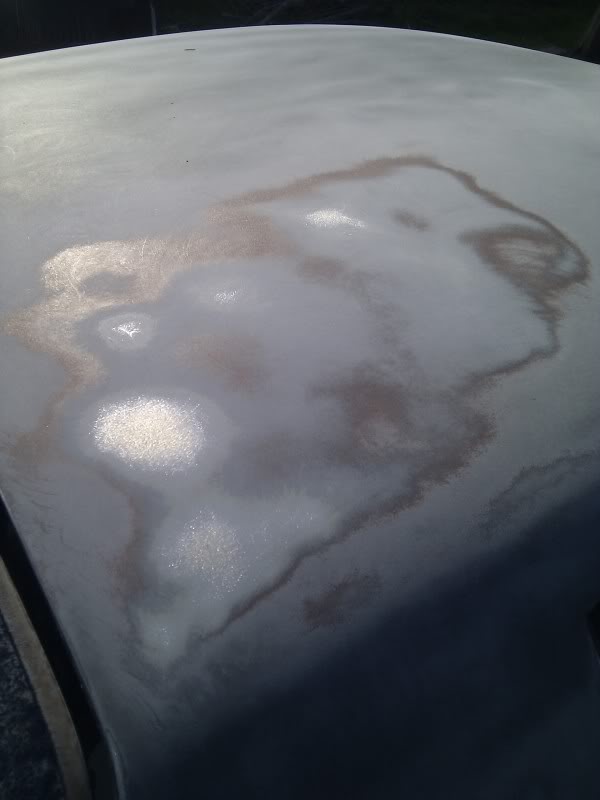
It looks as if it has been repainted. I don't recall factory using red oxide primer(anybody find red oxide under their factory paint?), let alone what I count as 5 different coats, based on the shot of the roof. You need to strip it.
Firebird Mess85
Member
close
Jul 7, 2015
- Join DateJul 2008
- LocationBuffalo, NY
- Posts:362
- iTrader Positive Feedback0
- iTrader Feedback Score(0)
- Car85 Firebird & Grand Prix GXP
- EngineLG4 305 (originally 2.8L V6)
- Transmission700R4
- Axle/Gears10 bolt 3:43 Open Diff.
- Likes:0
- Liked:0 Times in 0 Posts
I'd be interested to see anybody's response about the red oxide primer. As far as I know it's the original paint and I know it's the original color.
Member
Quote:
Bingo on the red oxide! Not from the factory.Originally Posted by haps
It looks as if it has been repainted. I don't recall factory using red oxide primer(anybody find red oxide under their factory paint?), let alone what I count as 5 different coats, based on the shot of the roof. You need to strip it. Supreme Member
Yep, like I said before, stripnit to bare.
A paint job is only as good as what's under it.
I used PPG epoxy primer.
A paint job is only as good as what's under it.
I used PPG epoxy primer.
Member
Quote:
I'll have to do more research to augment my memory. 1986 jiggles a memory of some sort, but I was thinking that my new 1989 wasn't basecoat/clear. It wouldn't be the first time my memory has fizzled.
I have heard once before that some or all F-Bodies got acrylic enamel, but I've never seen one personally. I was the body shop manager at a very large Chevy dealer during those years. That doesn't mean they didn't get it, it just means I don't recall seeing one.
Update...you are correct. After a quickie check based on paint codes, the 86 did have bc/cc. The 85 had a single stage but the source I checked didn't specify type of paint.
"More Update: (This comes from the NastyZ28.com and refers to Camaros)These codes would appear on the SPO or cowl tag.Originally Posted by Yenipenny
Your process will work just fine. Just do a good blocking to smooth everything out.I'll have to do more research to augment my memory. 1986 jiggles a memory of some sort, but I was thinking that my new 1989 wasn't basecoat/clear. It wouldn't be the first time my memory has fizzled.
I have heard once before that some or all F-Bodies got acrylic enamel, but I've never seen one personally. I was the body shop manager at a very large Chevy dealer during those years. That doesn't mean they didn't get it, it just means I don't recall seeing one.
Update...you are correct. After a quickie check based on paint codes, the 86 did have bc/cc. The 85 had a single stage but the source I checked didn't specify type of paint.
Starting in 1985 the paint types are:
DIS Lacquer - Dispersion Lacquer
SOL Lacquer - Solution Lacquer
BC CC - Base Coat/Clear Coat
Water - Enamel "
I'm still digging, but I believe some colors got BC/CC while others didn't. Some models got BC.CC and others didn't. EX: Cavaliers got Dispersion Lacquer into the 90s(95?) except one factory in Ohio(?) which used BC/CC for a year or two before that.
Quote:
I prefer bodywork on bare metal followed by etch primer over the remaining bare metal, then 2K primer. Some people prefer using epoxy primer over bare metal. Either way works. Chemically, there's little or no difference. People get into knock-down, drag-out arguments over which is better than the other and why. I use the etch primer 'cause I like it and it works.
Read the note at the bottom of page 1 in this link. This is from DuPont's Performance Coatings website.
http://pc.dupont.com/dpc/en/US/html/...GenRepairs.pdf
That says don't apply body filler to OEM paint or it will lift. We're talking about sanding the car down to bare metal here. Originally Posted by Yenipenny
Just one quickie...I'm in a hurry. Most, but not all paint manufacturers do not recommend the use of body filler on top of paint/primer. One exception that I recall is that PPG has one epoxy primer that they say body filler can be applied over it. They don't do so for others. I use DuPont primarily and DuPont doesn't recommend it for any of their primers.I prefer bodywork on bare metal followed by etch primer over the remaining bare metal, then 2K primer. Some people prefer using epoxy primer over bare metal. Either way works. Chemically, there's little or no difference. People get into knock-down, drag-out arguments over which is better than the other and why. I use the etch primer 'cause I like it and it works.
Read the note at the bottom of page 1 in this link. This is from DuPont's Performance Coatings website.
http://pc.dupont.com/dpc/en/US/html/...GenRepairs.pdf
Here is the instructions for my epoxy primer that I use:
SURFACE PREPARATION:
All substrates must be degreased and sanded. All rust must be removed.
1. Wash vehicle with soap and water.
2. Clean metal surfaces with PF 605 Wax & Grease Remover. Clean plastic surfaces with PF 606 Plastic Parts Cleaner. Wipe dry while the surface is still wet.
3. Sand area with 180 - 220 grit abrasive to remove any corrosion.
4. Re-clean area with PF 603 Final Wipe.
5. Aluminum and Stainless steel must be sanded with 180 - 220 grit paper even if a metal prep or self etching primer is used.
6. Apply primer to aluminum and stainless steel substrates within 72 hours after sanding.
MIXING DIRECTIONS:
FOR PRIMER 1 : 1
1 part Epoxy Primer : 1 part Epoxy Primer Catalyst
FOR SEALER 1 : 1 : 1/2
1 part Epoxy Primer : 1 part Epoxy Primer Catalyst :
1/2 part Urethane Reducer (PF 682C Slow, PF 683C Medium or PF 684C Fast)
DIRECTIONS FOR USE:
All drying times refer to shop temperature of 25°C (77°F) / 50% humidity. Allow additional drying time when optimal conditions are not reached.
SPRAY GUN AND PRESSURE:
Gun Type Fluid Tip Air Pressure
Siphon Feed 1.4-1.6mm 45-55 psi
Gravity Feed 1.2-1.6mm 40-45 psi
HVLP 1.2-1.6mm 10 psi
Apply 1 - 2 full wet coats of primer allowing 15 minutes flash between coats (1.0 mils DFT). Allow 30 to 60 minutes dry times before applying additional primers or topcoats. To achieve maximum film integrity, allow at least 3 hours dry time if film thickness exceeds 1.0 mils. Allow 12 hours drying time before applying body fillers.
-- Joe
Member
Quote:
Here is the instructions for my epoxy primer that I use:
SURFACE PREPARATION:
All substrates must be degreased and sanded. All rust must be removed.
1. Wash vehicle with soap and water.
2. Clean metal surfaces with PF 605 Wax & Grease Remover. Clean plastic surfaces with PF 606 Plastic Parts Cleaner. Wipe dry while the surface is still wet.
3. Sand area with 180 - 220 grit abrasive to remove any corrosion.
4. Re-clean area with PF 603 Final Wipe.
5. Aluminum and Stainless steel must be sanded with 180 - 220 grit paper even if a metal prep or self etching primer is used.
6. Apply primer to aluminum and stainless steel substrates within 72 hours after sanding.
MIXING DIRECTIONS:
FOR PRIMER 1 : 1
1 part Epoxy Primer : 1 part Epoxy Primer Catalyst
FOR SEALER 1 : 1 : 1/2
1 part Epoxy Primer : 1 part Epoxy Primer Catalyst :
1/2 part Urethane Reducer (PF 682C Slow, PF 683C Medium or PF 684C Fast)
DIRECTIONS FOR USE:
All drying times refer to shop temperature of 25°C (77°F) / 50% humidity. Allow additional drying time when optimal conditions are not reached.
SPRAY GUN AND PRESSURE:
Gun Type Fluid Tip Air Pressure
Siphon Feed 1.4-1.6mm 45-55 psi
Gravity Feed 1.2-1.6mm 40-45 psi
HVLP 1.2-1.6mm 10 psi
Apply 1 - 2 full wet coats of primer allowing 15 minutes flash between coats (1.0 mils DFT). Allow 30 to 60 minutes dry times before applying additional primers or topcoats. To achieve maximum film integrity, allow at least 3 hours dry time if film thickness exceeds 1.0 mils. Allow 12 hours drying time before applying body fillers.
-- Joe
That points out the most important message on the products that you use. RTFI...or in a nicer way-read all the instructions and spec sheets.Originally Posted by anesthes
That says don't apply body filler to OEM paint or it will lift. We're talking about sanding the car down to bare metal here. Here is the instructions for my epoxy primer that I use:
SURFACE PREPARATION:
All substrates must be degreased and sanded. All rust must be removed.
1. Wash vehicle with soap and water.
2. Clean metal surfaces with PF 605 Wax & Grease Remover. Clean plastic surfaces with PF 606 Plastic Parts Cleaner. Wipe dry while the surface is still wet.
3. Sand area with 180 - 220 grit abrasive to remove any corrosion.
4. Re-clean area with PF 603 Final Wipe.
5. Aluminum and Stainless steel must be sanded with 180 - 220 grit paper even if a metal prep or self etching primer is used.
6. Apply primer to aluminum and stainless steel substrates within 72 hours after sanding.
MIXING DIRECTIONS:
FOR PRIMER 1 : 1
1 part Epoxy Primer : 1 part Epoxy Primer Catalyst
FOR SEALER 1 : 1 : 1/2
1 part Epoxy Primer : 1 part Epoxy Primer Catalyst :
1/2 part Urethane Reducer (PF 682C Slow, PF 683C Medium or PF 684C Fast)
DIRECTIONS FOR USE:
All drying times refer to shop temperature of 25°C (77°F) / 50% humidity. Allow additional drying time when optimal conditions are not reached.
SPRAY GUN AND PRESSURE:
Gun Type Fluid Tip Air Pressure
Siphon Feed 1.4-1.6mm 45-55 psi
Gravity Feed 1.2-1.6mm 40-45 psi
HVLP 1.2-1.6mm 10 psi
Apply 1 - 2 full wet coats of primer allowing 15 minutes flash between coats (1.0 mils DFT). Allow 30 to 60 minutes dry times before applying additional primers or topcoats. To achieve maximum film integrity, allow at least 3 hours dry time if film thickness exceeds 1.0 mils. Allow 12 hours drying time before applying body fillers.
-- Joe
That specific product points out one of the disadvantages of using epoxy primer--the drying time before applying other products. That may not be a huge problem with hobbyists, but can be a killer for a production shop where time is money. High volume commercial shops are my background.
Quote:
That specific product points out one of the disadvantages of using epoxy primer--the drying time before applying other products. That may not be a huge problem with hobbyists, but can be a killer for a production shop where time is money. High volume commercial shops are my background.
Agreed. It also doesn't spell out that once it cures (not flashes!) you must sand it with 180 minimum before applying filler. Originally Posted by Yenipenny
That points out the most important message on the products that you use. RTFI...or in a nicer way-read all the instructions and spec sheets.That specific product points out one of the disadvantages of using epoxy primer--the drying time before applying other products. That may not be a huge problem with hobbyists, but can be a killer for a production shop where time is money. High volume commercial shops are my background.
I have some reservations about applying filler direct to metal. I've never seen rust behind epoxy that filler was applied over, but I've seen rust behind filler that was direct to metal. Bondo and other brands attract water, which could be an issue especially in a home shop where humidity is not controlled. Once you seal the filler the only place for the water to go is into the metal below.
However, you absolutely must hammer and dolly everything before epoxy. I'd get rid of all the high spots, epoxy, fill, sand, seal, paint..
-- Joe
Firebird Mess85
Member
close
Jul 7, 2015
- Join DateJul 2008
- LocationBuffalo, NY
- Posts:362
- iTrader Positive Feedback0
- iTrader Feedback Score(0)
- Car85 Firebird & Grand Prix GXP
- EngineLG4 305 (originally 2.8L V6)
- Transmission700R4
- Axle/Gears10 bolt 3:43 Open Diff.
- Likes:0
- Liked:0 Times in 0 Posts
Are you guys positive GM didn't use any red primer in the early third gens? I can not find anything that suggests the car was repainted. The car sat in a barn for years before I bought it.
Member
Quote:
I have learned to never make absolutes, but to my knowledge and experience, GM has not used red oxide primer since at least the late 50s.Originally Posted by Firebird Mess85
Are you guys positive GM didn't use any red primer in the early third gens? I can not find anything that suggests the car was repainted. The car sat in a barn for years before I bought it. Sometimes pictures can fool you, but the picture of the roof sure looks like it has had refinish work done and appears to me that the "base" primer is gray.