


noob question - what are the air tubes for on headers?


Thread Starter
Junior Member
Joined: Jun 2010
Posts: 86
Likes: 0
noob question - what are the air tubes for on headers?
Got an 89 firebird GTA 5.7L v8.
headers are rusted to all hell but they have the air tubes.
Looking at getting new headers but, what do these air tubes do exactly?
if i got headers without, what happens?
headers are rusted to all hell but they have the air tubes.
Looking at getting new headers but, what do these air tubes do exactly?
if i got headers without, what happens?

Banned
iTrader: (12)
Joined: Jul 1999
Posts: 12,212
Likes: 13
From: Bertram (outside Austin), TX
Car: 87 GTA
Engine: L98
Transmission: 700R4
Axle/Gears: Dana M78 3.27 posi
Re: noob question - what are the air tubes for on headers?
They are to return unburnt fuel vapors into the intake & help burn them. They are part of the Federal Emissions requirement, so if you get headers without them, your car won't pass inspection anymore unless you have a "friendly" inspector or just a lazy one.

Moderator
Joined: Jan 2000
Posts: 20,981
Likes: 11
From: Mercedes Norte, Heredia, Costa Rica
Car: 1984 Z28 Hardtop
Engine: 383 Carb
Transmission: 4L60
Axle/Gears: 3.54 Dana 44
Re: noob question - what are the air tubes for on headers?
No, they're to blow clean air into the exhaust to react with unburned gasses, and to reduce CO emissions.


Junior Member
Joined: Sep 2007
Posts: 55
Likes: 0
From: binghamton,ny
Car: 1988 camaro sc
Engine: nasty 305 tbi,tba 632 big block
Transmission: built 700r4
Axle/Gears: 3.23
Re: noob question - what are the air tubes for on headers?
Air Injection System & Smog Pump
The air injection system (AIS) is designed to introduce clean air to the engine exhaust as it exits the exhaust manifold or exhaust headers. Exhaust gases are at their hottest as they leave the combustion chambers. Introducing oxygen to the exhaust at this point allows continued burning of the fuel mixture as it travels down the exhaust system and ultimately out the tailpipe.
Air injection systems consist of mainly two different designs. Your vehicle's Underhood Emissions Label can provide you with information regarding the requirements of this emission system design and equipped components.
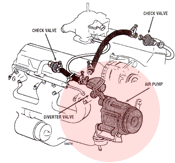
Pump Type: The first system known as the Pump Type includes an air pump, commonly known as the smog pump, which is responsible for supplying fresh pressurized oxygen to the exhaust stream through header or exhaust manifold, and/or before the Catalytic Converter. The components of this system are the air pump, the diverter valve, the air distribution manifold; both known as exhaust manifold and exhaust headers, and the air check valve.
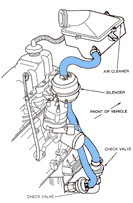 Pulse Type: The second type of system known as the Pulse Air System is much simpler and only relies on the vacuum created in the exhaust stream as it travels down the exhaust manifold and passages. As the engine cycles, this vacuum draws fresh oxygen into the Air Injection lines. The air is then used to prolong thorough exhaust burning. This system should consist of a metal duct or hose approximately 1" in diameter around the air cleaner leading to a metal air check valve, and then the exhaust manifold.
Operation: Pump Type - The spinning vanes of the air pump force air into the diverter valve. During acceleration air is forced through the diverter valve, the check valve, the air injection manifold, and into the exhaust stream. During deceleration the diverter valve blocks air flow, preventing a backfire that could damage the exhaust system. When needed, the diverter valve will release excess pressure to the air cleaner. Pulse Type - As exhaust gases travel down the exhaust passages, the vacuum created draw fresh oxygen into the air injection system. Fresh air then travels through the diverter valve, check valve and to the exhaust manifold.
 Pick a Type of Smog CheckRegular Smog Test InspectionTest Only or Gold Shield Smog CheckSmog Check Repair Stations Miles: 3 4 5 6 7 8 9 10 11 12 13 14 15 16 17 18 19 20 30 40 50 Which Type Should I Choose?
For the Smog Test: During the visual inspection portion of the smog test the smog technician will be inspecting your vehicle's air injection system. If your vehicle is equipped with a pump air injection system the technician will be checking for the proper connection of the injection system plumbing, all hoses, lines, valves and smog pump.
The smog technician will also examine the air pump belt for proper tension and damage. During your at-home check up ensure all connections are intact and components present. If it appears there are missing parts or open ends seek repair assistance from a certified smog repair station before subjecting your vehicle to the smog inspection.
For vehicles equipped with the pulse air injection system, the technician will only inspect the injection pipes and valves.
Note: During the smog test the air injection system is only visual inspected. The smog technician will not insure the proper operation of this system, rather he or she will only verify that the system is installed and properly connected.
Will aftermarket headers cause my car to fail the smog test?
The answer is yes. Exhaust headers, not to mention the entire AIR Air injection system is an "emissions component". Any modification to the headers, intake manifold, or exhaust manifold, including removal of a "Y" tube from the exhaust pipes (if equipped) is considered an emissions tamper. Your vehicle will fail the smog inspection even before the tailpipe exhaust is checked. Mufflers: The smog test does not test the muffler. However we don't recommend you take the vehicle in for testing if your vehicle's muffler is broken or has holes in it from damage or rust. It may cause the smog technician problems getting the smog machine to accept testing your vehicle. Smog machines are calibrated in California every three days, and are designed to not allow the testing of vehicles which emit oxygen levels exceeding a smog machines preset limits. In other words, if your vehicle's muffler has large holes which are allowing oxygen to be vacuumed in with the emissions stream, the test results would have been inaccurate. The smog machine may not allow the inspection to continue and/or fail the smog inspection
The air injection system (AIS) is designed to introduce clean air to the engine exhaust as it exits the exhaust manifold or exhaust headers. Exhaust gases are at their hottest as they leave the combustion chambers. Introducing oxygen to the exhaust at this point allows continued burning of the fuel mixture as it travels down the exhaust system and ultimately out the tailpipe.
Air injection systems consist of mainly two different designs. Your vehicle's Underhood Emissions Label can provide you with information regarding the requirements of this emission system design and equipped components.
Pump Type: The first system known as the Pump Type includes an air pump, commonly known as the smog pump, which is responsible for supplying fresh pressurized oxygen to the exhaust stream through header or exhaust manifold, and/or before the Catalytic Converter. The components of this system are the air pump, the diverter valve, the air distribution manifold; both known as exhaust manifold and exhaust headers, and the air check valve.
Pulse Type: The second type of system known as the Pulse Air System is much simpler and only relies on the vacuum created in the exhaust stream as it travels down the exhaust manifold and passages. As the engine cycles, this vacuum draws fresh oxygen into the Air Injection lines. The air is then used to prolong thorough exhaust burning. This system should consist of a metal duct or hose approximately 1" in diameter around the air cleaner leading to a metal air check valve, and then the exhaust manifold. Operation: Pump Type - The spinning vanes of the air pump force air into the diverter valve. During acceleration air is forced through the diverter valve, the check valve, the air injection manifold, and into the exhaust stream. During deceleration the diverter valve blocks air flow, preventing a backfire that could damage the exhaust system. When needed, the diverter valve will release excess pressure to the air cleaner. Pulse Type - As exhaust gases travel down the exhaust passages, the vacuum created draw fresh oxygen into the air injection system. Fresh air then travels through the diverter valve, check valve and to the exhaust manifold.
Pick a Type of Smog CheckRegular Smog Test InspectionTest Only or Gold Shield Smog CheckSmog Check Repair Stations Miles: 3 4 5 6 7 8 9 10 11 12 13 14 15 16 17 18 19 20 30 40 50 Which Type Should I Choose? - The Underhood Emission Label
- Exhaust Gas Recirculation Valve (EGR)
- Positive Crankcase Ventilation valve (PCV)
- Charcoal Canister (EVAP Control System)
- Catalytic Converter (CAT)
- Oxygen Sensor (O2 Sensor)
- Air Injection System (AIR)
- Pre-Heat Tube
For the Smog Test: During the visual inspection portion of the smog test the smog technician will be inspecting your vehicle's air injection system. If your vehicle is equipped with a pump air injection system the technician will be checking for the proper connection of the injection system plumbing, all hoses, lines, valves and smog pump.
The smog technician will also examine the air pump belt for proper tension and damage. During your at-home check up ensure all connections are intact and components present. If it appears there are missing parts or open ends seek repair assistance from a certified smog repair station before subjecting your vehicle to the smog inspection.
For vehicles equipped with the pulse air injection system, the technician will only inspect the injection pipes and valves.
Note: During the smog test the air injection system is only visual inspected. The smog technician will not insure the proper operation of this system, rather he or she will only verify that the system is installed and properly connected.
Will aftermarket headers cause my car to fail the smog test?
The answer is yes. Exhaust headers, not to mention the entire AIR Air injection system is an "emissions component". Any modification to the headers, intake manifold, or exhaust manifold, including removal of a "Y" tube from the exhaust pipes (if equipped) is considered an emissions tamper. Your vehicle will fail the smog inspection even before the tailpipe exhaust is checked. Mufflers: The smog test does not test the muffler. However we don't recommend you take the vehicle in for testing if your vehicle's muffler is broken or has holes in it from damage or rust. It may cause the smog technician problems getting the smog machine to accept testing your vehicle. Smog machines are calibrated in California every three days, and are designed to not allow the testing of vehicles which emit oxygen levels exceeding a smog machines preset limits. In other words, if your vehicle's muffler has large holes which are allowing oxygen to be vacuumed in with the emissions stream, the test results would have been inaccurate. The smog machine may not allow the inspection to continue and/or fail the smog inspection

Thread
Thread Starter
Forum
Replies
Last Post
1992 Trans Am
History / Originality
27
May 10, 2023 07:19 PM
LT1Formula
Engine/Drivetrain/Suspension Parts for Sale
20
Nov 14, 2015 12:02 AM
