


Autofrost (R-406a) video demo
 06-20-2009, 08:10 PM
#1
Supreme Member

Thread Starter
iTrader: (2)

Join Date: Sep 2006
Location: Houston, TX
Posts: 2,118
Likes: 0
Received 14 Likes
on
11 Posts
Car: 1989 GTA
Engine: SuperRam 350
Transmission: Pro Built S/S TH700R4
Axle/Gears: 3.27
Autofrost (R-406a) video demo

I scream, you scream, we all scream for cold air conditioning.
 This afternoon, I had to run some errands. So I figured why not make a video of Autofrost? The conditions were ripe for a good air conditioning test. Hot. Humid. Late afternoon with the sun out.
(If you look closely, you'll notice the temp is still dropping)
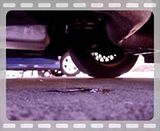
The video below should give you an idea of how well the system dehumidifies the interior of the car.
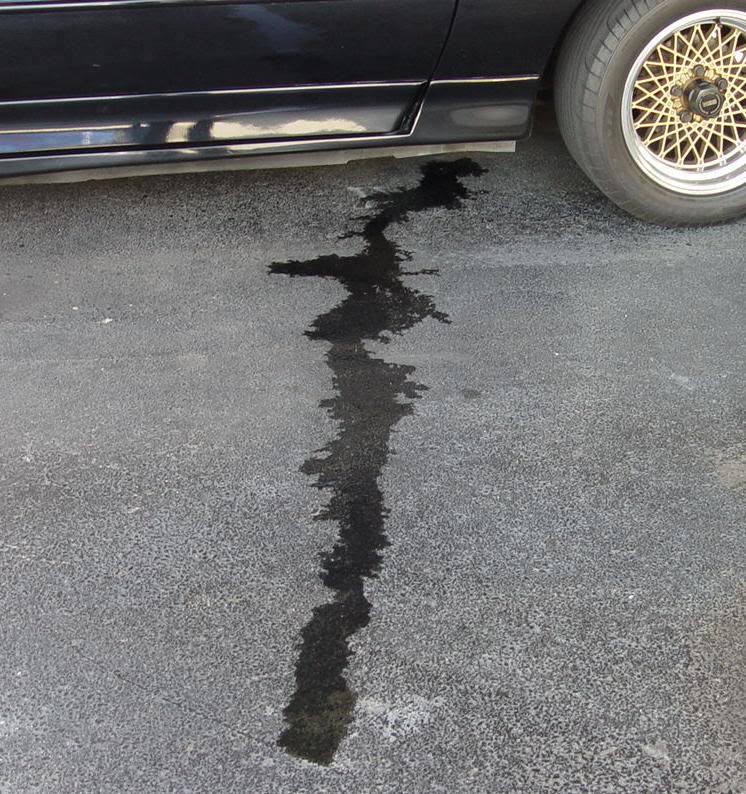
Lastly, here is the drain water after sitting for 15 minutes.
All the air conditioning parts are original. 20 years old now. Original radiator, fans, condenser, compressor, you name it. The only changes other than the refrigerant are a 180° coolant thermostat and radiator fan turn on temps. But the fans will automatically turn on whenever the air conditioning is switched on anyways. I also have a large (11"x12") external transmission cooler in front of the condenser (with an air gap between the two. Not touching each other.)
The cold air is nice. And it definitely cools down fast upon initial startup. But in a climate like Houston, the powerful dehumidifying aspect of Autofrost is what really makes the system comfortable.
 06-20-2009, 10:26 PM
#2
Supreme Member
iTrader: (26)

Join Date: Nov 2002
Location: Moneta, VA
Posts: 2,108
Likes: 0
Received 5 Likes
on
5 Posts
Car: 89 formula 350
Engine: ls1 magnuson tvs2300 supercharger
Transmission: T56
Axle/Gears: 4.11 Dana 44!
Re: Autofrost (R-406a) video demo
cool, never heard of autofrost. And you're saying the water you see dripping from under cars is the humidity from inside the vehicle? Interesting....can you explain how that happens? I'm kinda new to AC stuff.
I just had my compressor, drier, orifice, and orings all replaced after getting my system flushed. I had 134a put in. It seems to cool good I have hot humid virginia air where I'm at.
I just had my compressor, drier, orifice, and orings all replaced after getting my system flushed. I had 134a put in. It seems to cool good
I have hot humid virginia air where I'm at.  06-20-2009, 10:36 PM
#4
Supreme Member
iTrader: (2)

Join Date: Aug 2007
Location: Fairhope, AL
Posts: 2,529
Likes: 0
Received 1 Like
on
1 Post
Car: 89RS(other cars & pics in vBgarage)
Engine: LO3, 305 TBI Mildly Modified
Transmission: BakerBuilt 700R4 w/B&M Megashifter
Axle/Gears: 3.23 Auburn Pro Series LSD
Re: Autofrost (R-406a) video demo
this is the direct replacement for r-12 correct
06-20-2009, 11:10 PM
#5
Supreme Member
Thread Starter
iTrader: (2)
Join Date: Sep 2006
Location: Houston, TX
Posts: 2,118
Likes: 0
Received 14 Likes
on
11 Posts
Car: 1989 GTA
Engine: SuperRam 350
Transmission: Pro Built S/S TH700R4
Axle/Gears: 3.27
Re: Autofrost (R-406a) video demo
cool, never heard of autofrost. And you're saying the water you see dripping from under cars is the humidity from inside the vehicle? Interesting....can you explain how that happens? I'm kinda new to AC stuff.
I just had my compressor, drier, orifice, and orings all replaced after getting my system flushed. I had 134a put in. It seems to cool good I have hot humid virginia air where I'm at.
I just had my compressor, drier, orifice, and orings all replaced after getting my system flushed. I had 134a put in. It seems to cool good
I have hot humid virginia air where I'm at.
When you cool air below it's dew point, it becomes water (100% humidity). Colder air can hold less moisture than hot air can. This is why when the temperature outside at night goes down, the humidity percent tends to rise. The actual moisture in the air is about the same. Think pouring 20% of a beer stein into a shot glass. The shot glass (nighttime) can't hold as much "moisture" as the beer stein (daytime). Thus the shot glass is 100% full compared to the 20% full beer stein. The "moisture" amount is the same either way. It's just the capacity (humidity) is different.
Once you cool to the point of 100% humidity (aka dew point), you get water. The colder your A/C coils run below the dew point, the more water it wrings out of the air......If my A/C ran hotter than it does, less water would drip out of the evaporator.
Let's throw some numbers out there to get away from the science and weather aspect.
80°F/50% humidity = 59° dew point.
70°F/70% humidity = 59° dew point.
59°F/100% humidity = 59° dew point.
Using the above, if the temperature is 59° or below, you get water. The farther you go below 59°, the more water you get.
Now Houston runs 95° and 50-60% humidity during the summertime days. Those are dew points in the 73-78°F range. Occasionally we'll hit an 80° dew point day.
95°/63% humidity = dew point 80°
80°/100% humidity = dew point 80°
These are miserable.
Your fridge at home will do the same thing. Drips into a pan at the bottom which then evaporates over time from the heat being exhausted. Window A/C units will drip to the outside. If you take something out of the freezer and leave it on your countertop, it will drip water on your counter. The frozen food is below the dew point of the room. Once the frozen food warms up, it assumes the same temperature and humidity as the room. It stops sweating water onto your counter since it's the same dew point as the room.
Now Arizona and Nevada, you get a lot less water (if any at all) drip out. 115° and 5% humidity gives you a dew point of 28°F......115°/30% = dew point of 75°...... 115°/50% = dew point of 91° (95° dew point is the world record) This shows why even a 5% difference in daytime humidity in Florida can make a huge difference in how you feel. But a 50% increase in humidity in Alaska makes very little difference in how you feel.
People who live where it's -40° complain about dry skin and chapped hands and lips. That's because even at 100% humidity, it's still a -40° dew point.
Last edited by Reid Fleming; 06-20-2009 at 11:13 PM.
06-20-2009, 11:12 PM
#6
Supreme Member
Thread Starter
iTrader: (2)
Join Date: Sep 2006
Location: Houston, TX
Posts: 2,118
Likes: 0
Received 14 Likes
on
11 Posts
Car: 1989 GTA
Engine: SuperRam 350
Transmission: Pro Built S/S TH700R4
Axle/Gears: 3.27
Re: Autofrost (R-406a) video demo
Yes it is. Same oil (mineral), very similar system pressures. More efficient though.
refrigerantsales.com sells it. You'll need an EPA 609 license. (fairly easy and cheap to get) There are a handful of us on the board who use it. We all swear by it.
refrigerantsales.com sells it. You'll need an EPA 609 license. (fairly easy and cheap to get) There are a handful of us on the board who use it. We all swear by it.
06-20-2009, 11:19 PM
#7
Banned
iTrader: (12)

Join Date: Jul 1999
Location: Bertram (outside Austin), TX
Posts: 12,212
Likes: 0
Received 10 Likes
on
10 Posts
Car: 87 GTA
Engine: L98
Transmission: 700R4
Axle/Gears: Dana M78 3.27 posi
Re: Autofrost (R-406a) video demo
What would it take to put this stuff, into a R-12 system that has already been converted to R-134A?
Is it an R-12 or R-134A replacement?
Is it an R-12 or R-134A replacement?
Trending Topics
06-20-2009, 11:29 PM
#8
Supreme Member
Thread Starter
iTrader: (2)
Join Date: Sep 2006
Location: Houston, TX
Posts: 2,118
Likes: 0
Received 14 Likes
on
11 Posts
Car: 1989 GTA
Engine: SuperRam 350
Transmission: Pro Built S/S TH700R4
Axle/Gears: 3.27
Re: Autofrost (R-406a) video demo
Converting a R-134a car to R-406a is the same as converting an R-134a car back to R-12. Oil needs to go. Manually turn the compressor a couple dozen times while dribbling in mineral oil. Probably a new accumulator just to be on the safe side. The PAG and POE oils used in R-134a are awful for absorbing moisture. Mineral oil is pretty good in that regard......Vacuum the system. Fill it up. The Autofrost adapters fit over stock R-12 service ports. The Autofrost adapters themselves have an R-12 service port on top. So it's like putting a coloured R-12 port on top of a stock R-12 port.
Easier alternative would be using Cool Top, which is their Autofrost version meant for poorly cooling R-134a cars. They claim 10° cooler temps. I personally haven't used it though. Converting to Cool Top from R-134a is as simple as evacuate/vacuum/fill up. Available from the same place as R-406a. Cool Top has no special adapters needed. Just uses the R-134a ports.
06-20-2009, 11:35 PM
#9
Banned
iTrader: (12)
Join Date: Jul 1999
Location: Bertram (outside Austin), TX
Posts: 12,212
Likes: 0
Received 10 Likes
on
10 Posts
Car: 87 GTA
Engine: L98
Transmission: 700R4
Axle/Gears: Dana M78 3.27 posi
Re: Autofrost (R-406a) video demo
It's an R-12 replacement. Invented back in 1990 or so. Been around for a number of years. But not a lot of advertisement or info (unless you're looking for it)
Converting a R-134a car to R-406a is the same as converting an R-134a car back to R-12. Oil needs to go. Manually turn the compressor a couple dozen times while dribbling in mineral oil. Probably a new accumulator just to be on the safe side. The PAG and POE oils used in R-134a are awful for absorbing moisture. Mineral oil is pretty good in that regard......Vacuum the system. Fill it up. The Autofrost adaptors fit over stock R-12 service ports. The Autofrost adaptors themselves have an R-12 service port on top. So it's like putting a coloured R-12 port on top of a stock R-12 port.
Easier alternative would be using Cool Top, which is their Autofrost version meant for poorly cooling R-134a cars. They claim 10° cooler temps. I personally haven't used it though. Converting to Cool Top from R-134a is as simple as evacuate/vacuum/fill up. Available from the same place as R-406a.
Converting a R-134a car to R-406a is the same as converting an R-134a car back to R-12. Oil needs to go. Manually turn the compressor a couple dozen times while dribbling in mineral oil. Probably a new accumulator just to be on the safe side. The PAG and POE oils used in R-134a are awful for absorbing moisture. Mineral oil is pretty good in that regard......Vacuum the system. Fill it up. The Autofrost adaptors fit over stock R-12 service ports. The Autofrost adaptors themselves have an R-12 service port on top. So it's like putting a coloured R-12 port on top of a stock R-12 port.
Easier alternative would be using Cool Top, which is their Autofrost version meant for poorly cooling R-134a cars. They claim 10° cooler temps. I personally haven't used it though. Converting to Cool Top from R-134a is as simple as evacuate/vacuum/fill up. Available from the same place as R-406a.
I had a friend with the Vacuum tool, so it might be as simple (for me) as getting the the R-406a (the R-12 replacement stuff, correct?)
06-20-2009, 11:54 PM
#10
Supreme Member
Thread Starter
iTrader: (2)
Join Date: Sep 2006
Location: Houston, TX
Posts: 2,118
Likes: 0
Received 14 Likes
on
11 Posts
Car: 1989 GTA
Engine: SuperRam 350
Transmission: Pro Built S/S TH700R4
Axle/Gears: 3.27
Re: Autofrost (R-406a) video demo
R-406a = R-12 replacement
Cool Top = R-134a replacement
(Both are known as Autofrost although the R-406a is the true Autofrost named product.)
The biggest issue is getting all the PAG/POE oil out of the system.
I recommend getting a high quality R-12 can topper if you're using R-12 or R-406a. Here is mine. Notice how it has a rubber seal on the bottom? The cheap ones usually won't have that rubber seal (and want to leak on you when you pierce it) and use a small leaver rather than the big red turn handle.
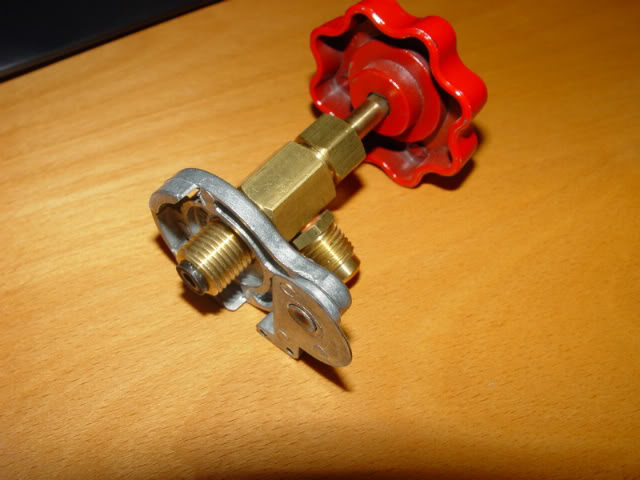
I picked this up from "Frosty Freeze" on Ebay. Nice guy. Has all sorts of A/C related tools for sale.
Cool Top = R-134a replacement
(Both are known as Autofrost although the R-406a is the true Autofrost named product.)
The biggest issue is getting all the PAG/POE oil out of the system.
I recommend getting a high quality R-12 can topper if you're using R-12 or R-406a. Here is mine. Notice how it has a rubber seal on the bottom? The cheap ones usually won't have that rubber seal (and want to leak on you when you pierce it) and use a small leaver rather than the big red turn handle.
I picked this up from "Frosty Freeze" on Ebay. Nice guy. Has all sorts of A/C related tools for sale.
06-22-2009, 11:29 AM
#11
Member

Join Date: Mar 2006
Location: Houston, Texas
Posts: 163
Likes: 0
Received 0 Likes
on
0 Posts
Car: 1991 Camaro RS
Engine: 5.0 TBI
Transmission: T5
Axle/Gears: 3.08
Re: Autofrost (R-406a) video demo
Man, VERY impressive stuff!!
But wow, that 25lb can on the website you gave is 225 bux! Is there a way to purchase it on a smaller scale?
Also, what does it take and what kind of cost are we looking at to get the license required to purchase and service with this product?
But wow, that 25lb can on the website you gave is 225 bux! Is there a way to purchase it on a smaller scale?
Also, what does it take and what kind of cost are we looking at to get the license required to purchase and service with this product?
06-22-2009, 01:51 PM
#12
Supreme Member
Thread Starter
iTrader: (2)
Join Date: Sep 2006
Location: Houston, TX
Posts: 2,118
Likes: 0
Received 14 Likes
on
11 Posts
Car: 1989 GTA
Engine: SuperRam 350
Transmission: Pro Built S/S TH700R4
Axle/Gears: 3.27
Re: Autofrost (R-406a) video demo
Man, VERY impressive stuff!!
But wow, that 25lb can on the website you gave is 225 bux! Is there a way to purchase it on a smaller scale?
Also, what does it take and what kind of cost are we looking at to get the license required to purchase and service with this product?
But wow, that 25lb can on the website you gave is 225 bux! Is there a way to purchase it on a smaller scale?
Also, what does it take and what kind of cost are we looking at to get the license required to purchase and service with this product?
The EPA 609 license allows you to buy automobile refrigerants from anywhere. It is good for life. No expiry. Costs $20 to get it. It takes a few hours of reading and then you can take the test (all done online). epatest.com
I wouldn't say the 609 license makes you a master A/C mechanic. But it is good for covering the basics of safety and environmental issues. $20 well spent regardless, just for the knowledge.
06-22-2009, 02:03 PM
#13
Supreme Member
Thread Starter
iTrader: (2)
Join Date: Sep 2006
Location: Houston, TX
Posts: 2,118
Likes: 0
Received 14 Likes
on
11 Posts
Car: 1989 GTA
Engine: SuperRam 350
Transmission: Pro Built S/S TH700R4
Axle/Gears: 3.27
Re: Autofrost (R-406a) video demo
http://www.autofrost.com/autodisc.pdf
http://www.autofrost.com/autofrost-X3.pdf
Top link is a good write up of how compressors work and how the psi determine your temperature. A good read for the beginner. Also explains why Autofrost works better than other refrigerants.
The second link is an instruction for proper installation of Autofrost. Vital to know.
http://www.autofrost.com/autofrost-X3.pdf
Top link is a good write up of how compressors work and how the psi determine your temperature. A good read for the beginner. Also explains why Autofrost works better than other refrigerants.
The second link is an instruction for proper installation of Autofrost. Vital to know.
07-02-2009, 01:32 PM
#14
Supreme Member
Thread Starter
iTrader: (2)
Join Date: Sep 2006
Location: Houston, TX
Posts: 2,118
Likes: 0
Received 14 Likes
on
11 Posts
Car: 1989 GTA
Engine: SuperRam 350
Transmission: Pro Built S/S TH700R4
Axle/Gears: 3.27
Re: Autofrost (R-406a) video demo
A minor update of sorts.....
O-rings: A slightly confusing topic as there are light green, dark green, blue, and black. Some are referred to as green R-134a O-rings. Others as simply green O-rings..............For R-406a, you want to AVOID the "light green" o-rings. They are known as blend killers.
The best o-rings to get are the Neoprene o-rings. They usually come in black or blue. Possibly dark green. To avoid confusion, I'd just go for GM neoprene black or blue o-rings. Neoprene is the preferred choice instead of HNBR.
R-134a people: An interesting alternative to switching to Cool Top. But first, the information on Cool Top is that it's a mixture of R-152a/R-134a/R-125. There is also a measured amount of Cryo Chem's "R-134a tune air" premixed in there as well. Only 4000 lbs of Cool Top was made once. It's purpose was to give better performance on early R-134a cars (1993 + a few years)..... New cars today tend to have bigger condensers, bigger fans, tighter evap coils all in an effort to increase performance.
What is Cryo Chem's "tune air" kit? Well the problem with R-134a cars is that the PAG/POE oils (especially PAG) tend to soak up any moisture in the system worse than R-12/mineral oil did in the past. This causes acid breakdown, worse performance over time, and eventually worn out system parts. The "tune air" (4 oz can) can be added to an R-134a system and it will convert the moisture in the system down to harmless silicone oil. Thus giving you a 0 ppm of moisture air conditioning system. This should boost your cooling performance by about 8-9°F. This means that simply adding a can of "tune air" to an R-134a car will give it that shot of cooling that it needs without having to evacuate, change to a blend, deal with labels etc. Another nice side effect of this is that mechanic shops can't detect it your system. Long life is enhanced as your air conditioning is now DRY on the inside.
The trouble with R-134a/PAG cars is that the PAG boils before all the moisture comes out. Thus you can't get all the moisture out unless you vacuumed it for about 3 months. Mineral oil based R-12 systems don't have this issue. Using the Tune Air solves the problem of damp, just vacuumed, R-134a vehicles.
Cryo Chem also makes a "Cryo-Seal" kit. This is sort of a leak sealer. But rather than putting a gunk type deal into the system, it remains inert and neutral in a system with no leaks. If it does encounter a leak (by sensing air and moisture), it will bubble up and stop the leak on the outside of the leak rather than plugging the system on the inside. It was originally developed at NASA about 30 years ago as a way to fix fuel tanks that developed a leak. Later on the technology was moved over to air conditioning.
The Cryo-Seal can fix systems that are leaking aprox 1 lb a week of refrigerant. Not bad. It will fix leaking shraeder valves while at the same time allowing you to still use the shraeder valve. Using the valve, it will poke a hole through the sealant and then once you're done it will re-seal itself. It won't fix a leak at the compressor since it's a moving part. Although it should reduce the leak slightly.
I've heard that Cryo-Seal went through the same hell that alternative refrigerant companies went though. The A/C and car company lobbyists who want you to spend big bucks converting to R-134a/replacing parts/living with wet shortened life span systems and/or simply buying a newer car rather than paying to fix the A/C on your old cheap car don't like products like Cryo Chem makes.
Now the average person (me too at first) would think that it would be better to put the leak sealer (Cryo Seal) in before the moisture drier (Tune Air)....But it's actually the other way around. The Cryso Seal depends on your A/C being DRY (since it senses leaks by moisture) If you put it in before putting the Tune Air in, it would simply work it's magic in the (wet) accumulator/drier and none would be left for any leaks elsewhere in the system. A/C still works if you did that. But it's essentially a wasted product.
http://cryochem.com/index.php
So for R-134a people, simply adding (topping off) the 4 oz Tune Air to a functioning R-134a should give you a nice boost as well as dry the system. Shouldn't cause an overcharged system assuming you're not overcharged with R-134a currently. (Check with pressure gauges to make sure pressures aren't too high)
The same R-134a Tune Air product can be used for R-406a people. Cool Top already has 4 oz of Tune Air inside the product, so none is needed.
Cryo Chem makes sealant/moisture stoppers for both R-22 and R-134a. Autofrost already has 55% R-22 in it and is meant as an R-12 substitute instead of converting to R-134a. But, that doesn't mean you should get the R-22 kit. It's actually recommended to get the R-134a kit instead. (The R-22 kit sends the pressure too high. I was told this by the creator of Autofrost. I asked him the exact question about the 22 kit vs 134a kit when using R-406a)
O-rings: A slightly confusing topic as there are light green, dark green, blue, and black. Some are referred to as green R-134a O-rings. Others as simply green O-rings..............For R-406a, you want to AVOID the "light green" o-rings. They are known as blend killers.
The best o-rings to get are the Neoprene o-rings. They usually come in black or blue. Possibly dark green. To avoid confusion, I'd just go for GM neoprene black or blue o-rings. Neoprene is the preferred choice instead of HNBR.
R-134a people: An interesting alternative to switching to Cool Top. But first, the information on Cool Top is that it's a mixture of R-152a/R-134a/R-125. There is also a measured amount of Cryo Chem's "R-134a tune air" premixed in there as well. Only 4000 lbs of Cool Top was made once. It's purpose was to give better performance on early R-134a cars (1993 + a few years)..... New cars today tend to have bigger condensers, bigger fans, tighter evap coils all in an effort to increase performance.
What is Cryo Chem's "tune air" kit? Well the problem with R-134a cars is that the PAG/POE oils (especially PAG) tend to soak up any moisture in the system worse than R-12/mineral oil did in the past. This causes acid breakdown, worse performance over time, and eventually worn out system parts. The "tune air" (4 oz can) can be added to an R-134a system and it will convert the moisture in the system down to harmless silicone oil. Thus giving you a 0 ppm of moisture air conditioning system. This should boost your cooling performance by about 8-9°F. This means that simply adding a can of "tune air" to an R-134a car will give it that shot of cooling that it needs without having to evacuate, change to a blend, deal with labels etc. Another nice side effect of this is that mechanic shops can't detect it your system. Long life is enhanced as your air conditioning is now DRY on the inside.
The trouble with R-134a/PAG cars is that the PAG boils before all the moisture comes out. Thus you can't get all the moisture out unless you vacuumed it for about 3 months. Mineral oil based R-12 systems don't have this issue. Using the Tune Air solves the problem of damp, just vacuumed, R-134a vehicles.
Cryo Chem also makes a "Cryo-Seal" kit. This is sort of a leak sealer. But rather than putting a gunk type deal into the system, it remains inert and neutral in a system with no leaks. If it does encounter a leak (by sensing air and moisture), it will bubble up and stop the leak on the outside of the leak rather than plugging the system on the inside. It was originally developed at NASA about 30 years ago as a way to fix fuel tanks that developed a leak. Later on the technology was moved over to air conditioning.
The Cryo-Seal can fix systems that are leaking aprox 1 lb a week of refrigerant. Not bad. It will fix leaking shraeder valves while at the same time allowing you to still use the shraeder valve. Using the valve, it will poke a hole through the sealant and then once you're done it will re-seal itself. It won't fix a leak at the compressor since it's a moving part. Although it should reduce the leak slightly.
I've heard that Cryo-Seal went through the same hell that alternative refrigerant companies went though. The A/C and car company lobbyists who want you to spend big bucks converting to R-134a/replacing parts/living with wet shortened life span systems and/or simply buying a newer car rather than paying to fix the A/C on your old cheap car don't like products like Cryo Chem makes.
Now the average person (me too at first) would think that it would be better to put the leak sealer (Cryo Seal) in before the moisture drier (Tune Air)....But it's actually the other way around. The Cryso Seal depends on your A/C being DRY (since it senses leaks by moisture) If you put it in before putting the Tune Air in, it would simply work it's magic in the (wet) accumulator/drier and none would be left for any leaks elsewhere in the system. A/C still works if you did that. But it's essentially a wasted product.
http://cryochem.com/index.php
So for R-134a people, simply adding (topping off) the 4 oz Tune Air to a functioning R-134a should give you a nice boost as well as dry the system. Shouldn't cause an overcharged system assuming you're not overcharged with R-134a currently. (Check with pressure gauges to make sure pressures aren't too high)
The same R-134a Tune Air product can be used for R-406a people. Cool Top already has 4 oz of Tune Air inside the product, so none is needed.
Cryo Chem makes sealant/moisture stoppers for both R-22 and R-134a. Autofrost already has 55% R-22 in it and is meant as an R-12 substitute instead of converting to R-134a. But, that doesn't mean you should get the R-22 kit. It's actually recommended to get the R-134a kit instead. (The R-22 kit sends the pressure too high. I was told this by the creator of Autofrost. I asked him the exact question about the 22 kit vs 134a kit when using R-406a)
Last edited by Reid Fleming; 07-02-2009 at 01:52 PM.
07-02-2009, 04:23 PM
#15
Supreme Member
iTrader: (26)
Join Date: Nov 2002
Location: Moneta, VA
Posts: 2,108
Likes: 0
Received 5 Likes
on
5 Posts
Car: 89 formula 350
Engine: ls1 magnuson tvs2300 supercharger
Transmission: T56
Axle/Gears: 4.11 Dana 44!
Re: Autofrost (R-406a) video demo
what about me? I have new components and fresh freon in my system. Can I still benefit from tune air now, or would it be more preventative maintenance to keep the system dry for years to come?
07-02-2009, 05:15 PM
#16
Supreme Member
Thread Starter
iTrader: (2)
Join Date: Sep 2006
Location: Houston, TX
Posts: 2,118
Likes: 0
Received 14 Likes
on
11 Posts
Car: 1989 GTA
Engine: SuperRam 350
Transmission: Pro Built S/S TH700R4
Axle/Gears: 3.27
Re: Autofrost (R-406a) video demo
Should work pretty good for you Justin.
PAG oil has had issues in the past of being wet (900 ppm) even in a sealed just opened plastic bottle. Leave the bottle open for a week and it will read 2000+ ppm of moisture. In a vehicle A/C you want about 10 ppm or less. Hard to do with R-134a systems. The Tune Air should dry that sucker down to nothing.
Here's a good read on the history of Cryo Chem.
http://www.aircondition.com/wwwboard/current/18951.html
The write up at the link talks about their R-12 kit of the past. As far as I know, they don't make that anymore. Just the 134a version for automobiles. Same idea and principles though. Actually should work better, what with the sponge like moisture absorption that PAG/POE have.
PAG oil has had issues in the past of being wet (900 ppm) even in a sealed just opened plastic bottle. Leave the bottle open for a week and it will read 2000+ ppm of moisture. In a vehicle A/C you want about 10 ppm or less. Hard to do with R-134a systems. The Tune Air should dry that sucker down to nothing.
Here's a good read on the history of Cryo Chem.
http://www.aircondition.com/wwwboard/current/18951.html
The write up at the link talks about their R-12 kit of the past. As far as I know, they don't make that anymore. Just the 134a version for automobiles. Same idea and principles though. Actually should work better, what with the sponge like moisture absorption that PAG/POE have.
Last edited by Reid Fleming; 07-02-2009 at 05:25 PM.
07-02-2009, 06:14 PM
#17
Banned
iTrader: (12)
Join Date: Jul 1999
Location: Bertram (outside Austin), TX
Posts: 12,212
Likes: 0
Received 10 Likes
on
10 Posts
Car: 87 GTA
Engine: L98
Transmission: 700R4
Axle/Gears: Dana M78 3.27 posi
Re: Autofrost (R-406a) video demo
You share some great info with us, but it is virtually useless for 99% of us.
Only licensed people can buy it. I'm not interested in buying the license, just to put 1 can of Tune Air in my 2 yr old 134a system.....
Only licensed people can buy it. I'm not interested in buying the license, just to put 1 can of Tune Air in my 2 yr old 134a system.....
07-02-2009, 06:40 PM
#18
Supreme Member
Thread Starter
iTrader: (2)
Join Date: Sep 2006
Location: Houston, TX
Posts: 2,118
Likes: 0
Received 14 Likes
on
11 Posts
Car: 1989 GTA
Engine: SuperRam 350
Transmission: Pro Built S/S TH700R4
Axle/Gears: 3.27
Re: Autofrost (R-406a) video demo
EPA 609 license? It's easy. And cheap! $20. Good for life. Handy if you ever want to buy R-12, nevermind Autofrost or the Tune Air stuff.
 07-02-2009, 09:47 PM
#20
Supreme Member
Thread Starter
iTrader: (2)
Join Date: Sep 2006
Location: Houston, TX
Posts: 2,118
Likes: 0
Received 14 Likes
on
11 Posts
Car: 1989 GTA
Engine: SuperRam 350
Transmission: Pro Built S/S TH700R4
Axle/Gears: 3.27
Re: Autofrost (R-406a) video demo
Hey, the next time a tech tries to bill you $40 to add a lb of R-22, just tell him to go ahead and use your tank. 
07-02-2009, 09:48 PM
#21
Supreme Member
Thread Starter
iTrader: (2)
Join Date: Sep 2006
Location: Houston, TX
Posts: 2,118
Likes: 0
Received 14 Likes
on
11 Posts
Car: 1989 GTA
Engine: SuperRam 350
Transmission: Pro Built S/S TH700R4
Axle/Gears: 3.27
Re: Autofrost (R-406a) video demo
Actually everybody here has it easy. When I lived in Canada, I couldn't even buy R-134a in the stores. Only licensed A/C guys could buy it. And even then it was only sold in 30 lb cylinders.
I think California is looking at outlawing R-134a to consumers as well.
I think California is looking at outlawing R-134a to consumers as well.
07-03-2009, 06:55 AM
#22
Senior Member
iTrader: (2)

Join Date: May 2002
Location: Chester, VA
Posts: 731
Likes: 0
Received 0 Likes
on
0 Posts
Car: '88 GTA
Engine: L-98
Transmission: T-56
Re: Autofrost (R-406a) video demo
I dont quite get the temps that Reid gets but my system still gets plenty cold enough to have passengers ask that I turn it down.
In my experiences with my own system, autofrost>134a any day of the week and twice on tuesday.
07-03-2009, 12:54 PM
#23
Supreme Member
iTrader: (26)
Join Date: Nov 2002
Location: Moneta, VA
Posts: 2,108
Likes: 0
Received 5 Likes
on
5 Posts
Car: 89 formula 350
Engine: ls1 magnuson tvs2300 supercharger
Transmission: T56
Axle/Gears: 4.11 Dana 44!
Re: Autofrost (R-406a) video demo
how do I go about getting one of those licenses?
07-03-2009, 01:27 PM
#24
Supreme Member
iTrader: (26)
Join Date: Nov 2002
Location: Moneta, VA
Posts: 2,108
Likes: 0
Received 5 Likes
on
5 Posts
Car: 89 formula 350
Engine: ls1 magnuson tvs2300 supercharger
Transmission: T56
Axle/Gears: 4.11 Dana 44!
Re: Autofrost (R-406a) video demo
actually I dont think its worth my time to get a license. I'll just have to convince my AC guy that this isnt snake oil and it wont hurt all the new stuff he just installed lol I definitely want to get some, though. My air is cold, but feels like it could be colder. This might do the trick
07-03-2009, 01:31 PM
#25
Supreme Member
Thread Starter
iTrader: (2)
Join Date: Sep 2006
Location: Houston, TX
Posts: 2,118
Likes: 0
Received 14 Likes
on
11 Posts
Car: 1989 GTA
Engine: SuperRam 350
Transmission: Pro Built S/S TH700R4
Axle/Gears: 3.27
Re: Autofrost (R-406a) video demo
http://www.epatest.com
OK, I don't know why I can't edit the link above. But it's actually .com not .gov
OK, I don't know why I can't edit the link above. But it's actually .com not .gov
Last edited by Reid Fleming; 07-03-2009 at 01:45 PM.
07-03-2009, 02:08 PM
#26
Senior Member
iTrader: (2)
Join Date: May 2002
Location: Chester, VA
Posts: 731
Likes: 0
Received 0 Likes
on
0 Posts
Car: '88 GTA
Engine: L-98
Transmission: T-56
Re: Autofrost (R-406a) video demo
actually I dont think its worth my time to get a license. I'll just have to convince my AC guy that this isnt snake oil and it wont hurt all the new stuff he just installed lol I definitely want to get some, though. My air is cold, but feels like it could be colder. This might do the trick

Let me know if you want the tuneair, I might know somebody
 07-03-2009, 03:22 PM
#27
Supreme Member
iTrader: (26)
Join Date: Nov 2002
Location: Moneta, VA
Posts: 2,108
Likes: 0
Received 5 Likes
on
5 Posts
Car: 89 formula 350
Engine: ls1 magnuson tvs2300 supercharger
Transmission: T56
Axle/Gears: 4.11 Dana 44!
Re: Autofrost (R-406a) video demo
Why spend the time for a license I might need once? or is it a lifetime thing?
07-03-2009, 03:26 PM
#28
Supreme Member
iTrader: (26)
Join Date: Nov 2002
Location: Moneta, VA
Posts: 2,108
Likes: 0
Received 5 Likes
on
5 Posts
Car: 89 formula 350
Engine: ls1 magnuson tvs2300 supercharger
Transmission: T56
Axle/Gears: 4.11 Dana 44!
Re: Autofrost (R-406a) video demo
nevermind, I see its good for life. Eh, maybe once 134a becomes hard to get I'll sign up since both my vehicles now take 134 lol
07-03-2009, 07:58 PM
#29
Supreme Member
iTrader: (2)

Join Date: Jan 2005
Location: Hurst, Texas
Posts: 10,010
Received 389 Likes
on
332 Posts
Car: 1983 G20 Chevy
Engine: 305 TPI
Transmission: 4L60
Axle/Gears: 14 bolt with 3.07 gears
Re: Autofrost (R-406a) video demo
Agreed. It took me a 3-4 hours of reading and then I took the test. Its not a big deal.
I dont quite get the temps that Reid gets but my system still gets plenty cold enough to have passengers ask that I turn it down.
In my experiences with my own system, autofrost>134a any day of the week and twice on tuesday.
I dont quite get the temps that Reid gets but my system still gets plenty cold enough to have passengers ask that I turn it down.
In my experiences with my own system, autofrost>134a any day of the week and twice on tuesday.
I had a back seat passenger in my Black Dodge Ram ask me to turn it down.
The trucks thermostatic cycling setup is non-adjustable and cycles the compressor just below freezing on the evaporator. My van gets even colder since the dual evaporators keep the compressor engaged more, the condensor is much larger, and the a the cycling switch has been adjusted. Last edited by Fast355; 07-03-2009 at 08:14 PM.
07-03-2009, 08:31 PM
#30
Banned
iTrader: (12)
Join Date: Jul 1999
Location: Bertram (outside Austin), TX
Posts: 12,212
Likes: 0
Received 10 Likes
on
10 Posts
Car: 87 GTA
Engine: L98
Transmission: 700R4
Axle/Gears: Dana M78 3.27 posi
Re: Autofrost (R-406a) video demo
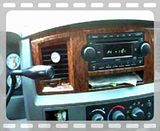
My 134a results on a cold engine at idle, in park, Max AC, high speed setting on the fan.......
56 degrees max (or would it be called minimum? )
56 degrees max (or would it be called minimum?
)
07-03-2009, 08:37 PM
#31
Supreme Member
iTrader: (2)
Join Date: Jan 2005
Location: Hurst, Texas
Posts: 10,010
Received 389 Likes
on
332 Posts
Car: 1983 G20 Chevy
Engine: 305 TPI
Transmission: 4L60
Axle/Gears: 14 bolt with 3.07 gears
Re: Autofrost (R-406a) video demo
 07-03-2009, 08:51 PM
#32
Banned
iTrader: (12)
Join Date: Jul 1999
Location: Bertram (outside Austin), TX
Posts: 12,212
Likes: 0
Received 10 Likes
on
10 Posts
Car: 87 GTA
Engine: L98
Transmission: 700R4
Axle/Gears: Dana M78 3.27 posi
Re: Autofrost (R-406a) video demo
Yep.....Recirculate.
All I had was an outdoor (which was laying around inside) thermometer, but hey. A thermometer is a thermometer, right?
I held it there, letting it cool both sides, so it wasn't warm (anymore) or anything like that.
All I had was an outdoor (which was laying around inside) thermometer, but hey. A thermometer is a thermometer, right?
I held it there, letting it cool both sides, so it wasn't warm (anymore) or anything like that.
07-20-2009, 09:40 PM
#34
Junior Member

Join Date: Feb 2009
Posts: 67
Likes: 0
Received 0 Likes
on
0 Posts
Engine: LO5 350 (TBI 220)
Transmission: 200R4
Axle/Gears: 2.73
Re: Autofrost (R-406a) video demo
So here my situation: I've got an '89 Chevy Caprice with the old R-12 system in it; I had it 'converted' to R-134a (i.e., evacuated of R-12 and then backfilled with R-134a and oil) and withing two months, the compressor's seals were broken and the R-134a leaked out. Since then I've been driving without A/C, but I have a long trip coming up that I will need it for. This R-406a sounds like it's the answer, as the R-134a doesn't seem like it will cut it in my car given the evaporator and condenser size.
My plan was to have the system evacuated again to try and remove as much oil as possible, then replace the compressor, the hoses and the receiver/dryer and fill up with R-406a.
My question is this: Are the new AC/Delco compressors sold compatible with R-406a or am I going to have to rebuild or find an old R-12 compressor? Or are they the same thing? I've had trouble finding this out as I hear a lot of conflicting information, and the last thing I want to do is replace the compressor only to find out it's the wrong thing, or worse, break it.
Thanks in advance!
My plan was to have the system evacuated again to try and remove as much oil as possible, then replace the compressor, the hoses and the receiver/dryer and fill up with R-406a.
My question is this: Are the new AC/Delco compressors sold compatible with R-406a or am I going to have to rebuild or find an old R-12 compressor? Or are they the same thing? I've had trouble finding this out as I hear a lot of conflicting information, and the last thing I want to do is replace the compressor only to find out it's the wrong thing, or worse, break it.
Thanks in advance!
07-21-2009, 04:58 AM
#35
Senior Member
iTrader: (2)
Join Date: May 2002
Location: Chester, VA
Posts: 731
Likes: 0
Received 0 Likes
on
0 Posts
Car: '88 GTA
Engine: L-98
Transmission: T-56
Re: Autofrost (R-406a) video demo
So here my situation: I've got an '89 Chevy Caprice with the old R-12 system in it; I had it 'converted' to R-134a (i.e., evacuated of R-12 and then backfilled with R-134a and oil) and withing two months, the compressor's seals were broken and the R-134a leaked out. Since then I've been driving without A/C, but I have a long trip coming up that I will need it for. This R-406a sounds like it's the answer, as the R-134a doesn't seem like it will cut it in my car given the evaporator and condenser size.
My plan was to have the system evacuated again to try and remove as much oil as possible, then replace the compressor, the hoses and the receiver/dryer and fill up with R-406a.
My question is this: Are the new AC/Delco compressors sold compatible with R-406a or am I going to have to rebuild or find an old R-12 compressor? Or are they the same thing? I've had trouble finding this out as I hear a lot of conflicting information, and the last thing I want to do is replace the compressor only to find out it's the wrong thing, or worse, break it.
Thanks in advance!
My plan was to have the system evacuated again to try and remove as much oil as possible, then replace the compressor, the hoses and the receiver/dryer and fill up with R-406a.
My question is this: Are the new AC/Delco compressors sold compatible with R-406a or am I going to have to rebuild or find an old R-12 compressor? Or are they the same thing? I've had trouble finding this out as I hear a lot of conflicting information, and the last thing I want to do is replace the compressor only to find out it's the wrong thing, or worse, break it.
Thanks in advance!
07-21-2009, 06:22 AM
#36
Junior Member

Join Date: Sep 2008
Location: Jackson, MI
Posts: 95
Likes: 0
Received 0 Likes
on
0 Posts
Car: 1991 Pontiac Firebird
Engine: 3.1L V6
Transmission: 700R4
Axle/Gears: 3.23
Re: Autofrost (R-406a) video demo
I'm gonna charge my A/C with propane one of these days. It works quite well (on a house A/C atleast) and is R12 compatible.
07-21-2009, 12:57 PM
#37
Junior Member
Join Date: Feb 2009
Posts: 67
Likes: 0
Received 0 Likes
on
0 Posts
Engine: LO5 350 (TBI 220)
Transmission: 200R4
Axle/Gears: 2.73
Re: Autofrost (R-406a) video demo
It is compatible! I went through almost the same exact thing with my car. I bought a new compressor, seals, O-tube... Flushed it out and installed everything, vacuumed it down and topped it off with the autofrost and couldnt be happier. I believe my new compressor was bought at napa. There is nothing different about it.
08-29-2009, 09:15 PM
#38
Member

Join Date: Aug 2006
Posts: 164
Likes: 0
Received 0 Likes
on
0 Posts
Car: 82 TA
Re: Autofrost (R-406a) video demo
I was looking at the test page and it brings up test results etc and it asks for ssn, do you have to give the site your ssn to register to take the test, i'm not comfortable with giving some site my ssn.
09-03-2009, 01:02 AM
#39
Supreme Member
Thread Starter
iTrader: (2)
Join Date: Sep 2006
Location: Houston, TX
Posts: 2,118
Likes: 0
Received 14 Likes
on
11 Posts
Car: 1989 GTA
Engine: SuperRam 350
Transmission: Pro Built S/S TH700R4
Axle/Gears: 3.27
Re: Autofrost (R-406a) video demo
Is is an EPA license. Federal jurisdiction etc. It's the site that everybody uses to get their license.
09-03-2009, 06:55 PM
#40
Member
iTrader: (3)

Join Date: Apr 2006
Location: NE Indiana
Posts: 100
Likes: 0
Received 0 Likes
on
0 Posts
Car: 82' T/A
Engine: LG4
Transmission: THM200c
Re: Autofrost (R-406a) video demo
True propane does work very well for a refrigerant but it is also very flammable, so your taking your chances there....if in a wreck one of your lines is ruptured well you know what could happen. The A/C system may only hold 1.5lbs of this stuff but it risky none the less.
Here is a good link to some background on R406a http://yarchive.net/ac/r406a.html
Being 55% R-22, a home-air cond. refrig., R-406a is safe to use, R-22 is going to be phased out by the EPA just like R-12 was.
If you do plan on using this 406a remember that most shops will not want to work on your A/C system as it will show up as "contaminated", they would have to recover it into a special ordered storage tank then re-retrofit R134a. Just seems like it might be a hassle down the road.
Considering most of our cars are past there prime a/c component failure is even more likely just from regular wear & tear.
Here is a good link to some background on R406a http://yarchive.net/ac/r406a.html
Being 55% R-22, a home-air cond. refrig., R-406a is safe to use, R-22 is going to be phased out by the EPA just like R-12 was.
If you do plan on using this 406a remember that most shops will not want to work on your A/C system as it will show up as "contaminated", they would have to recover it into a special ordered storage tank then re-retrofit R134a. Just seems like it might be a hassle down the road.
Considering most of our cars are past there prime a/c component failure is even more likely just from regular wear & tear.
09-06-2009, 04:27 PM
#41
Supreme Member
iTrader: (2)
Join Date: Jan 2005
Location: Hurst, Texas
Posts: 10,010
Received 389 Likes
on
332 Posts
Car: 1983 G20 Chevy
Engine: 305 TPI
Transmission: 4L60
Axle/Gears: 14 bolt with 3.07 gears
Re: Autofrost (R-406a) video demo
True propane does work very well for a refrigerant but it is also very flammable, so your taking your chances there....if in a wreck one of your lines is ruptured well you know what could happen. The A/C system may only hold 1.5lbs of this stuff but it risky none the less. Considering most of our cars are past there prime a/c component failure is even more likely just from regular wear & tear.
Most cars won't even hold 1 lb of HC refrigerant in them. There is more GASOLINE in the fuel rail and engine compartment than that. Gasoline is about 6 lbs to the gallon.
09-06-2009, 09:19 PM
#42
Senior Member
iTrader: (1)

Join Date: Feb 2009
Location: La Grange Park, IL
Posts: 972
Likes: 0
Received 1 Like
on
1 Post
Car: 1987 Iroc Z28/ 1982 Z28
Engine: 355 TPI IP/ 305 CFI
Transmission: T-56/ 300C
Axle/Gears: 3.42 Open/ 3.73 Posi
Re: Autofrost (R-406a) video demo
R-134a, is also just as flammable... i know... i tried it 
09-06-2009, 11:43 PM
#43
Supreme Member
iTrader: (2)
Join Date: Jan 2005
Location: Hurst, Texas
Posts: 10,010
Received 389 Likes
on
332 Posts
Car: 1983 G20 Chevy
Engine: 305 TPI
Transmission: 4L60
Axle/Gears: 14 bolt with 3.07 gears
Re: Autofrost (R-406a) video demo
I have too. Mix in a fine cloud of atomized PAG oil and BOOM.
I will cruise around in a refrigerator while the R134a users bake in their ovens knowing their a/c will flash just the same.
FWIW, if you have a sound evaporator it would take a hell of an impact to pierce the evaporator and even then, the rest of the system would discharge first as the condensor, hoses, and compressor sheared away. It would spew out immediately and disperse.
Mix in a fine cloud of atomized PAG oil and BOOM.I will cruise around in a refrigerator while the R134a users bake in their ovens knowing their a/c will flash just the same.
FWIW, if you have a sound evaporator it would take a hell of an impact to pierce the evaporator and even then, the rest of the system would discharge first as the condensor, hoses, and compressor sheared away. It would spew out immediately and disperse.
Last edited by Fast355; 09-06-2009 at 11:47 PM.
09-14-2009, 02:30 AM
#45
Junior Member
Join Date: Feb 2009
Posts: 67
Likes: 0
Received 0 Likes
on
0 Posts
Engine: LO5 350 (TBI 220)
Transmission: 200R4
Axle/Gears: 2.73
Re: Autofrost (R-406a) video demo
Reid--
I got my license and am looking to get my cans of autofrost ordered here this week, but was wondering a few things:
1. Did you remove your Schrader valve as is recommended in the Autofrost instructions? They say the adapters come with a new Schrader valve, and that it works better if you remove the old one.
2. Do you need any special connections to the Autofrost adapters? Those handles you mentioned from the guy on e-bay look a lot nicer than the ones on the Autofrost site, but do those hoses connect directly to the Autofrost adapters?
3. On the old R-12 manifolds, there are two pressure gauges; a high side and low side, I believe. Is it sufficient while charging to have only one gauge, on the low (fill) side?
I'm just about ready to do this; I've replaced the entire system except the evaporator, which I pulled out and flushed free of PAG oil, refilled with mineral oil and replaced. Got new o-rings, new hoses, new compressor, new condenser, new accumulator; I should be good to go.
Thanks for posting about Autofrost; I would have never have known there were good R-12 substitutes out there had I not read your posts.
And, for the record, as someone who has gone from R-12 to R-134a, R-134a sucks in the older cars, which is why I'm converting back. Save yourself the headache and don't convert to R-134a in the first place if you are thinking of it.
I got my license and am looking to get my cans of autofrost ordered here this week, but was wondering a few things:
1. Did you remove your Schrader valve as is recommended in the Autofrost instructions? They say the adapters come with a new Schrader valve, and that it works better if you remove the old one.
2. Do you need any special connections to the Autofrost adapters? Those handles you mentioned from the guy on e-bay look a lot nicer than the ones on the Autofrost site, but do those hoses connect directly to the Autofrost adapters?
3. On the old R-12 manifolds, there are two pressure gauges; a high side and low side, I believe. Is it sufficient while charging to have only one gauge, on the low (fill) side?
I'm just about ready to do this; I've replaced the entire system except the evaporator, which I pulled out and flushed free of PAG oil, refilled with mineral oil and replaced. Got new o-rings, new hoses, new compressor, new condenser, new accumulator; I should be good to go.
Thanks for posting about Autofrost; I would have never have known there were good R-12 substitutes out there had I not read your posts.
And, for the record, as someone who has gone from R-12 to R-134a, R-134a sucks in the older cars, which is why I'm converting back. Save yourself the headache and don't convert to R-134a in the first place if you are thinking of it.
05-13-2011, 09:49 PM
#46

Re: Autofrost (R-406a) video demo
I just want to post an update...
I am getting vent temps as low as 24.1 but averaging 28 or so. I used an infrared electronic point and shoot thermometer into my dash vents. Fan speed was on the highest setting.
I used the TUNEair/CRYOseal system with McCool R414a. I also have a new condenser, receiver/dryer (accumulator), compressor, & orifice tube. Also all new o-rings and oil. I am still using my original evaporator and hoses but I never had R134a in the system for PAG oil, only ever R12 and mineral/ester.
The TUNEair/CRYOseal system can do up to a 4lb system so I only used about 2/3 of the TUNEair can and 1/2 of the CRYOseal can.I had the system drawn to 29" of vacuum and held for over 45mins, not the smallest sign of leak down so hopefully I don't even need that 1/2 can of CRYOseal I even put in there.
I am getting vent temps as low as 24.1 but averaging 28 or so. I used an infrared electronic point and shoot thermometer into my dash vents. Fan speed was on the highest setting.
I used the TUNEair/CRYOseal system with McCool R414a. I also have a new condenser, receiver/dryer (accumulator), compressor, & orifice tube. Also all new o-rings and oil. I am still using my original evaporator and hoses but I never had R134a in the system for PAG oil, only ever R12 and mineral/ester.
The TUNEair/CRYOseal system can do up to a 4lb system so I only used about 2/3 of the TUNEair can and 1/2 of the CRYOseal can.I had the system drawn to 29" of vacuum and held for over 45mins, not the smallest sign of leak down so hopefully I don't even need that 1/2 can of CRYOseal I even put in there.
05-13-2011, 10:26 PM
#48
Supreme Member
Thread Starter
iTrader: (2)
Join Date: Sep 2006
Location: Houston, TX
Posts: 2,118
Likes: 0
Received 14 Likes
on
11 Posts
Car: 1989 GTA
Engine: SuperRam 350
Transmission: Pro Built S/S TH700R4
Axle/Gears: 3.27
Re: Autofrost (R-406a) video demo
Considering that Cryoseal will seal leaks as much as 0.5 lb/week, I'd say you're sealed! .....If I had to do it again, I'd go for the Tune Air/Cryoseal combo along with Autofrost.
You are part of a rare club. You (California), Fast355 and myself (Texas) are all at 24° duct temps. Although I now have mine set to cycle off at 30°. I found 24° to be too cold. Shaking arms. Hypothermia setting in. I drove to Austin and back to Houston last summer and the 2 hour drive with the A/C on even at 30° was quite chilling. Especially coming back after the sun had gone down.
Lately, I've noticed that when I pull my car in to park at home after work, I'll see a "trail" of water on the ground that follows me to my parking spot. Such is life in a humid climate with good air conditioning.
I still remember driving home on Dec 31st, 2010. It was muggy but not too hot that day. (75°F/65%) So I had it on NORM with lowest fan speed. Running it for minimal cooling, but getting rid of the humidity. Switched it to VENT while sitting at a stop light close to home since I wanted to warm up a bit...... I thought nothing of it until I noticed a bunch of fog blowing out the ducts. I thought it was my heater core for a second (I'd replaced it a month before), but realized that there was no antifreeze smell. It was simply the evaporator shedding itself of moisture. Fun stuff I tell ya'.
.....If I had to do it again, I'd go for the Tune Air/Cryoseal combo along with Autofrost.You are part of a rare club. You (California), Fast355 and myself (Texas) are all at 24° duct temps. Although I now have mine set to cycle off at 30°. I found 24° to be too cold. Shaking arms. Hypothermia setting in. I drove to Austin and back to Houston last summer and the 2 hour drive with the A/C on even at 30° was quite chilling. Especially coming back after the sun had gone down.
Lately, I've noticed that when I pull my car in to park at home after work, I'll see a "trail" of water on the ground that follows me to my parking spot.
Such is life in a humid climate with good air conditioning.I still remember driving home on Dec 31st, 2010. It was muggy but not too hot that day. (75°F/65%) So I had it on NORM with lowest fan speed. Running it for minimal cooling, but getting rid of the humidity. Switched it to VENT while sitting at a stop light close to home since I wanted to warm up a bit...... I thought nothing of it until I noticed a bunch of fog blowing out the ducts. I thought it was my heater core for a second (I'd replaced it a month before), but realized that there was no antifreeze smell. It was simply the evaporator shedding itself of moisture. Fun stuff I tell ya'.
05-13-2011, 10:42 PM
#49
Re: Autofrost (R-406a) video demo
If it weren't for you I wouldn't even have the stuff, so thank you again!
I've found that on the second fan setting my temps are up around 30 and on the first fan setting then are also around 30-32. Only seem to get down to 24 when on high speed and I'm on the freeway. Must be from the plastic in the vents getting colder with the fan on high lol!
I just hope I did the math right and that I have enough oil in the system my compressor doesn't burn up.
I've found that on the second fan setting my temps are up around 30 and on the first fan setting then are also around 30-32. Only seem to get down to 24 when on high speed and I'm on the freeway. Must be from the plastic in the vents getting colder with the fan on high lol!
I just hope I did the math right and that I have enough oil in the system my compressor doesn't burn up.
05-22-2011, 09:15 PM
#50
Supreme Member
iTrader: (2)
Join Date: Jan 2005
Location: Hurst, Texas
Posts: 10,010
Received 389 Likes
on
332 Posts
Car: 1983 G20 Chevy
Engine: 305 TPI
Transmission: 4L60
Axle/Gears: 14 bolt with 3.07 gears
Re: Autofrost (R-406a) video demo
Considering that Cryoseal will seal leaks as much as 0.5 lb/week, I'd say you're sealed! .....If I had to do it again, I'd go for the Tune Air/Cryoseal combo along with Autofrost.
You are part of a rare club. You (California), Fast355 and myself (Texas) are all at 24° duct temps. Although I now have mine set to cycle off at 30°. I found 24° to be too cold. Shaking arms. Hypothermia setting in. I drove to Austin and back to Houston last summer and the 2 hour drive with the A/C on even at 30° was quite chilling. Especially coming back after the sun had gone down.
Lately, I've noticed that when I pull my car in to park at home after work, I'll see a "trail" of water on the ground that follows me to my parking spot. Such is life in a humid climate with good air conditioning.
I still remember driving home on Dec 31st, 2010. It was muggy but not too hot that day. (75°F/65%) So I had it on NORM with lowest fan speed. Running it for minimal cooling, but getting rid of the humidity. Switched it to VENT while sitting at a stop light close to home since I wanted to warm up a bit...... I thought nothing of it until I noticed a bunch of fog blowing out the ducts. I thought it was my heater core for a second (I'd replaced it a month before), but realized that there was no antifreeze smell. It was simply the evaporator shedding itself of moisture. Fun stuff I tell ya'.
.....If I had to do it again, I'd go for the Tune Air/Cryoseal combo along with Autofrost.You are part of a rare club. You (California), Fast355 and myself (Texas) are all at 24° duct temps. Although I now have mine set to cycle off at 30°. I found 24° to be too cold. Shaking arms. Hypothermia setting in. I drove to Austin and back to Houston last summer and the 2 hour drive with the A/C on even at 30° was quite chilling. Especially coming back after the sun had gone down.
Lately, I've noticed that when I pull my car in to park at home after work, I'll see a "trail" of water on the ground that follows me to my parking spot.
Such is life in a humid climate with good air conditioning.I still remember driving home on Dec 31st, 2010. It was muggy but not too hot that day. (75°F/65%) So I had it on NORM with lowest fan speed. Running it for minimal cooling, but getting rid of the humidity. Switched it to VENT while sitting at a stop light close to home since I wanted to warm up a bit...... I thought nothing of it until I noticed a bunch of fog blowing out the ducts. I thought it was my heater core for a second (I'd replaced it a month before), but realized that there was no antifreeze smell. It was simply the evaporator shedding itself of moisture. Fun stuff I tell ya'.
My brothers 03 Dakota and the 02 Sentra are both on HC now as well.