When you click on links to various merchants on this site and make a purchase, this can result in this site earning a commission. Affiliate programs and affiliations include, but are not limited to, the eBay Partner Network.
Anyone used an Eaton Air Compressor? I am looking to upgrade my air compressor when i move into the new house and have been looking at these from Eaton.. Seem pretty good from the specs, wondered if anyone had any experience of them?
I use my compressor to power my air tools that i use to work on my 92Z. I posted it in fabrication, seemed to be the best place to start since i will be using air tools to fabricate things for my 92Z.
I thought that was a pretty good response...? He went to the trouble to go find you another unit that has similar specs but is priced a bit cheaper. What kind of answer were you looking for ? An air compressor is an air compressor is an air compressor, nothing magical or special about that Eaton one.
I didnt suggest that there was anything magical or special about it.. I just asked if had anyone had experience of that manufacturer...
I liked the fact that they show the full specs of their equipment such as the low RPM, the noise is one of my biggest concerns and nowhere does HF or many others list those specs. Nowhere does it mention the duty cycle of the HF one either...
I have already done quite a bit of research and have indeed looked at that and all the other compressors HF lists (as well as Compressorsdirect, Northerntool, Lowes, Home Depot, Summit, Sears, ToolsUSA, National Tool Warehouse etc etc) but i prefer to know what i am buying before i buy it which is what led me to the Eaton compressor..
The point of my thread was really to make sure that Eatons compressors werent particulalrly poor quality or anything however since it is expanding into others also, let me ask for some opinions on the others i have been looking at
My requirements are maximum CFM per $ and quietness.. Question is, do i really need 27CFM (is it worth me spending the extra) and how much quieter is a 2 stage versus a single stage compressor?
The things i will be using the compressor for are
Some sandblasting
Air Hammer
DA Sander
Impact wrench
Air Ratchet
Die Grinder
Possibly spray painting
Keep editing - I want to buy a compressor that will last a long time and fulfill all my air needs in the future which is why i am looking at good sized units, i dont want to get an 13CFM unit now and find out it really isnt up to snuff a few months down the line and wish i had bought the 27CFM one...
I bought the ~$500 one from sears, about 10 cfm @ 100 i believe... single stage, had it for a couple years its not bad.. I looked for awhile but could not justify doubling the price for an extra 3 cfm, then you step outside of sears and everyone wants 1k more for the same specs
mine can run a DA all day long, but the motor will be going constantly and everything will get very moist, heh
DA, die grinder.. air hammer probably, sandblasting, all need alot of cfm.. but alot of the smaller units can meet the requirements they will just have to run longer todo it.. that doesnt really bother me personally, id rather save the $2000 to buy more tools then go way overkill on the compressor for what a hobbyist like myself actually needs :P
Look at the CFM rating at 90 psi for your air tools. How many of them will be operating at the same time? You only need a compressor big enough to handle the demand. A compressor that size can handle most small multi bay repair shops.
Look at the CFM rating at 90 psi for your air tools. How many of them will be operating at the same time? You only need a compressor big enough to handle the demand. A compressor that size can handle most small multi bay repair shops.
I have only some places dont list CFM at 90PSI, maybe at 100 PSI or max PSI so i listed either CFM @ 90 PSI or at whatever PSI they listed.
Originally Posted by Stephen 87 IROC
A compressor that size can handle most small multi bay repair
This is what i was looking for, but what about the noise if it is running all the time, i would rather go too big and have it run less b/c of the noise.. I could always just try and install it in a shed and pipe the air in.. I have a small direct drive compressor right now and it is just waaay too loud - it is offensively loud and it runs non stop when using almost anything.. plus it doesnt have enough puff to even run my cut off tool continously. Almost everything i have read says to just get the biggest CFM you can afford, but is there such a thing as too much when talking about an air compressor?
Originally Posted by Stephen 87 IROC
You only need a compressor big enough to handle the demand.
I do and dont agree with this, yes you need need only enough to run what you got but like i said earlier, i dont want to get a 13CFM unit now only to find i wished i had got a much bigger one down the road and have to go through the time and expense again...
I've owned the Eaton compressor your considering for about 5 years. Overall I'm very happy with the unit. What kind of sandblasting are you considering doing? This Eaton compressor replaced my SEARS model 18419 60 gallon vertical compressor (likely the $500 one previously mentioned). I owned that compressor just one year and sold it because it wouldn't keep up with my Harbor Freight ITEM 93608-1VGA sand blast cabinet. I'd sand blast for about 7 minutes, then run out or air and have to wait about 6-7 minutes for it to cycle off again. I decided to sell it before I beat it to death by running it continuously. The Eaton (which I nicknamed "Big Red") is a huge improvement. I never run out of air now. The only complaint I had with the Eaton was the air pressure gauge used on it. The gauge isn't oil-filled. I've mounted my compressor on rubber isolating pads, yet it still killed the air gauge in a few short months. After I destroyed the second gauge (which was replaced under warranty) I purchased an oil-filled gauge which is what Eaton should have installed in the first place and haven't had any problems since. I did have to adjust the belt guard slightly because it was making an annoying buzzing when the compressor was on, but it's been quiet and trouble free since. I've since upgraded to a larger sand blast cabinet which uses quite a bit more air and the compressor still keeps up with the air requirement. Also my auto-drain went bad after a couple of years. I've removed it and installed a manual ball valve instead. The auto-drain only makes sense if you're using the compressor on a daily basis. I don't. I'd only plug it in when I ran the compressor. Otherwise it would pop off every hour and scare my wife. The valve corroded and was sticking open. A cheap brass ball valve from Home Depot solved the problem.
Thanks man, good review. It sounds like the compressor itself can't be all that loud then if you were able to hear the belt gaurd buzz over it? I have no idea how much noise one of these big units makes, but anything must be an improvement over the little direct drive i have now :-)
what usesful things can do you with sandblasting? I am considering an air compressor, and did not think about sandblasting... i know for removing paint and stuff down to the metal, what else? thanks!
80% of the noise involved in running an air compressor is generated by the air intake, compression noise coming out of the intake... I have seen a few compressors that had fabricated mount over the intake and mounted a cherry bomb type muffler pointed strait up... That made them MUCH quieter. No real restriction, muffler stopped some noise, and the rest bounced off the ceiling and dissipated. Better muffler probably would work better but you can buy a cherry bomb for like $20. If you have a welder, tap some holes, and get some pipe from the store, you could probably have the thing fabricated for less than $50.
Something you may not have considered is the power requirements for some of these compressors.
A compressor around the mid-20 CFM mark will have a motor larger than 5HP. Many power companies forbid single phase motors larger than 5HP (running). In this case a larger motor may only be used if it is approved by the power company. Basically what they are trying to do is to make sure you aren't overloading part of the supply system or affecting your neighbors by causing voltage dips during startup.
A few years ago I went down the road of "which compressor to buy." My drive at the time was that my 5HP (peak) compressor was just a little too small for some air-tools, but ended up damaging it trying to keep up with sand blasting. Sand blasting just takes a tremendous volume of air to be effective. The compressor was also generating very hot and damp air while trying to keep up with the demand.
After checking around, I found that most hobbyist class compressors were only good for and average of three to five years before they blew up. Considering the use of the compressor it was reasonable to conclude that the life span of a cheap compressor would be on the short side. These hobbyist compressors were meant more for running a small air tool for a few hours, not for throwing sand for 30 minutes at a time.
When I sat down and thought about things I realized that I would own this compressor for decades to come. This pretty much set me on the idea that I would want to buy a compressor that was a low-end version of a commercial unit. After shopping around I found that I could locally buy Ingersoll Rand compressors, a brand that has been around for a long time and manufactures commercial grade units. It took a while to save up the money, but in the end I ended up buying a 7.5HP unit that has worked wonderfully. Parts won't be an issue, and I am doubtful that I will ever need more compressed air than it can supply.
The only down sides are, as previously mentioned, the huge power requirements and that the compressor is a pain to install and relocate due to its hefty 550lb stature.
Just a few thoughts from someone who has been down this road, and one that followed the "do it once and do it right" philosophy.
Something you may not have considered is the power requirements for some of these compressors.
A compressor around the mid-20 CFM mark will have a motor larger than 5HP. Many power companies forbid single phase motors larger than 5HP (running). In this case a larger motor may only be used if it is approved by the power company. Basically what they are trying to do is to make sure you aren't overloading part of the supply system or affecting your neighbors by causing voltage dips during startup.
A few years ago I went down the road of "which compressor to buy." My drive at the time was that my 5HP (peak) compressor was just a little too small for some air-tools, but ended up damaging it trying to keep up with sand blasting. Sand blasting just takes a tremendous volume of air to be effective. The compressor was also generating very hot and damp air while trying to keep up with the demand.
After checking around, I found that most hobbyist class compressors were only good for and average of three to five years before they blew up. Considering the use of the compressor it was reasonable to conclude that the life span of a cheap compressor would be on the short side. These hobbyist compressors were meant more for running a small air tool for a few hours, not for throwing sand for 30 minutes at a time.
When I sat down and thought about things I realized that I would own this compressor for decades to come. This pretty much set me on the idea that I would want to buy a compressor that was a low-end version of a commercial unit. After shopping around I found that I could locally buy Ingersoll Rand compressors, a brand that has been around for a long time and manufactures commercial grade units. It took a while to save up the money, but in the end I ended up buying a 7.5HP unit that has worked wonderfully. Parts won't be an issue, and I am doubtful that I will ever need more compressed air than it can supply.
The only down sides are, as previously mentioned, the huge power requirements and that the compressor is a pain to install and relocate due to its hefty 550lb stature.
Just a few thoughts from someone who has been down this road, and one that followed the "do it once and do it right" philosophy.
Thanks, thats exactly what i am trying to do, do it right first time so i dont have to do it again.. I didnt know about the power company thing though, good tip... I am currently thinking i will go for something like the new Craftsman 5.4hp, 13CFM @100PSI. Just hope i dont regret not getting something that puts out nearer 20CFM or more....
----------
Originally Posted by scribbles
80% of the noise involved in running an air compressor is generated by the air intake, compression noise coming out of the intake... I have seen a few compressors that had fabricated mount over the intake and mounted a cherry bomb type muffler pointed strait up... That made them MUCH quieter. No real restriction, muffler stopped some noise, and the rest bounced off the ceiling and dissipated. Better muffler probably would work better but you can buy a cherry bomb for like $20. If you have a welder, tap some holes, and get some pipe from the store, you could probably have the thing fabricated for less than $50.
Thanks for the tip.. I might give something like that a try when i get moved into my new garage
Last edited by Ricco; 10-03-2007 at 11:02 PM.
Reason: Automerged Doublepost
Thanks, thats exactly what i am trying to do, do it right first time so i dont have to do it again.. I didnt know about the power company thing though, good tip... I am currently thinking i will go for something like the new Craftsman 5.4hp, 13CFM @100PSI. Just hope i dont regret not getting something that puts out nearer 20CFM or more....
----------
Thanks for the tip.. I might give something like that a try when i get moved into my new garage
In fact i will prob go for this over the craftsman, the only drawback is that it has a max 135PSI... Is that a big deal?
I can only talk from experience on my Eaton compressor. It is assembled in America, but it uses some globally sourced components. For example the motor is from Brazil made by a company called WEG.
Hey folks, I ended up going for the IR from Northern for a few reasons - It has by far the highest CFM rating from ANY compressor i have seen in the price range (18.1 CFM @ 90 PSI and ~21CFM @ 40PSI - sub $1000), 100% duty cycle when using synthentic oil, 135 PSI max, I have read a lot of people think it is fantastic for home hobby use AND I havent seen any bad things written about it...
Cons seem to be the 60Gallon tank and the 135PSI max (due to being single stage) however, in my research, most people say that an 80 gallon will only allow for 2 or 3 seconds additional air before the motor kicks in, and the motor has to run longer each time to fill the tank, which isnt necessarily a bad thing, (kind of like 5 min runs to the shops isnt enough to let your car warm up)..
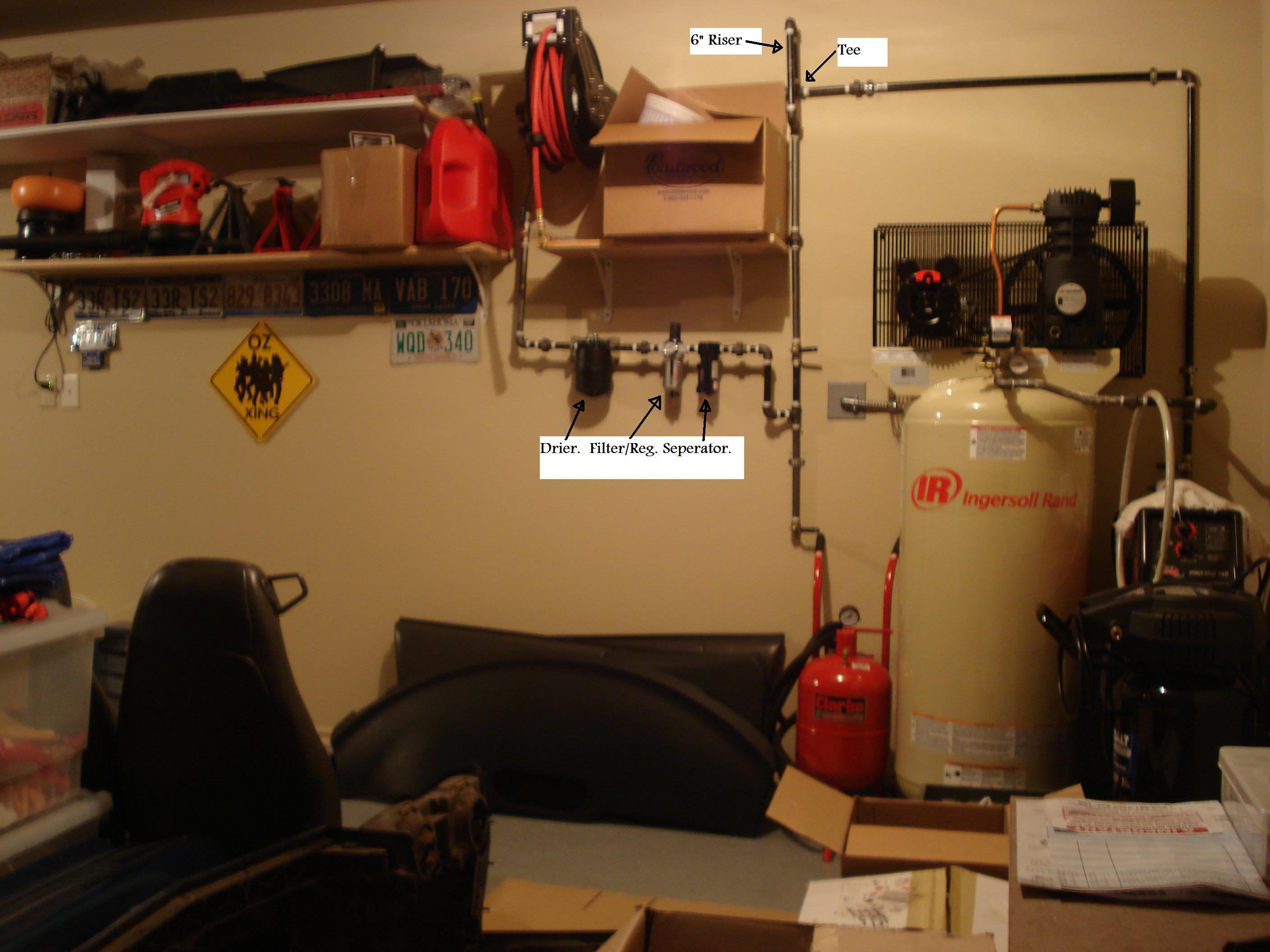
Anyway, I am also thinking that the 135 PSI max is actually a plus for me since the black iron pipe i plan on installing for it (from Lowes) is only rated for 150PSI.. I know i could put an extra regulator at the outlet of the tank but then thats an extra regulator i would of had to buy and all the 2 stage compressors in the price range have a lower CFM rating.
Anyway, thats my update and reasons I decided to go with the IR.. I only ordered it yesterday so will let you all know how i like it when we get moved into our new house The builders have installed a 240v outlet in my garage where i will be putting the compressor and I believe it will be rated at 30amps which I think will be OK for the 5hp (running) motor on the compressor.
wow and i was proud when i got my 1.7 hp 4.9cfm 33 gallon craftsman compressor.....i feel "tiny" now...lol. sounds like you got a good compressor. i didnt see this post till just now but my friends dad does auto body and paint and he has an 80 gallon compressor i cant remember the brand but it runs around 18cfm at 90psi. he sand blasts and everything and has no problems at all with it keeping up. it cost him around 900 bucks i think.
Last edited by 86irocterror; 02-08-2008 at 02:24 AM.
As i mentioned, i did end up getting the IR.. Here it is after i got it setup, have only used it for cutting and grinding so far but havent had to put an air tool down yet to wait for it to catch up
So, how it is going with IR compressors? Would you like to share your opinion of how good or bad it is. You said you chose IR compressors over Eaton Compressors just because of highest CFM rating from any other compressor. I am also looking to install one in my factory area for cutting purpose.
The last time I checked for 6.5HP 3 Cylinder 18 CFM air compressor from Eaton, they claimed that all parts are manufactured in USA and they are putting "American flag sticker" on all the items that are made in the USA since 2008. With so many products out in the market with these stickers, it is hard to ignore such a huge brand. I would appreciate if you can share your experience as you have been using IR compressors for 7 years now.
Last edited by OliviaGrey; 03-12-2015 at 06:32 AM.
Reason: spelling mistake
I have the same compressor as Ricco, for around 5 years now and it works well for what I use it for. It keeps up with the bead cabinet, most of the air tools and I haven't had any problems with it.
So far the only tool I have used that it doesn't keep up with as we as the others is the DA, I have to stop for a few seconds when the pressure gets low, but it isn't that bad. I am talking almost 100% duty on the DA, maybe like 95%.
I do wish I had the 80 gallon because it has the two stage pump so I could get above the 135psi for the bead cabinet, but it does pretty well still.
I got mine at Tractor Supply on sale after I bought my house, would recommend.
Waffling over an IR or going with Eaton if I buy new, can't seem to find any decent deals used.
PS You should have about 50 ft(PIA I know, but loop it up and down behind compressor) before you have your drier, lets everything condense and get the most water our possible minus running a dryer.
Water is really a bad thing if anywhere near a compressor without the use of an air dryer. You should consider why the major industries like car washes, body shops, and machine shops need the driest air.
Here, I would definitely say the new improved Eaton high temperature air dryer with 28 CFM air displacement can come to your rescue. I have been using their air dryers in my compressors. It is almost five and a half year old compressor and I am planning to go with Eaton compressors to maintain good compatibility with my air dryer.
I just build my own compressors and mount them on skids made of 4 inch C-channel.
I get a compressor then try to find a motor that will match it or vise versa.
The bank of compressors I have only cost a few hundred dollars and put out way more air than any $2000+ single phase powered IR compressor. They can run my sand blaster non stop with out dropping below 90 psi.
Then if one of my big 220 volt powered compressors breaks, I still have the other one.
I just build my own compressors and mount them on skids made of 4 inch C-channel.
I get a compressor then try to find a motor that will match it or vise versa.
The bank of compressors I have only cost a few hundred dollars and put out way more air than any $2000+ single phase powered IR compressor. They can run my sand blaster non stop with out dropping below 90 psi.
Then if one of my big 220 volt powered compressors breaks, I still have the other one.
Thats great to know that you have good amount of BACK UP . How about installing a 100 HP variable speed drive (VSD) on air compressor to save energy and money with 6,555% increased ROI. Here is an interesting analysis that can grow sales by helping end-users. Obviously, that goes for big industries.
I thought that was a pretty good response...? He went to the trouble to go find you another unit that has similar specs but is priced a bit cheaper. What kind of answer were you looking for ? An air compressor is an air compressor is an air compressor, nothing magical or special about that Eaton one.
Ummmm, no not at all. there are many different kinds,types,stages, of compressors.. All depends on what you want to do.. It was nice of him tho to find a link like that. people are too sensitive on this site...
I didnt suggest that there was anything magical or special about it.. I just asked if had anyone had experience of that manufacturer...
I liked the fact that they show the full specs of their equipment such as the low RPM, the noise is one of my biggest concerns and nowhere does HF or many others list those specs. Nowhere does it mention the duty cycle of the HF one either...
I have already done quite a bit of research and have indeed looked at that and all the other compressors HF lists (as well as Compressorsdirect, Northerntool, Lowes, Home Depot, Summit, Sears, ToolsUSA, National Tool Warehouse etc etc) but i prefer to know what i am buying before i buy it which is what led me to the Eaton compressor..
The point of my thread was really to make sure that Eatons compressors werent particulalrly poor quality or anything however since it is expanding into others also, let me ask for some opinions on the others i have been looking at
My requirements are maximum CFM per $ and quietness.. Question is, do i really need 27CFM (is it worth me spending the extra) and how much quieter is a 2 stage versus a single stage compressor?
The things i will be using the compressor for are
Some sandblasting
Air Hammer
DA Sander
Impact wrench
Air Ratchet
Die Grinder
Possibly spray painting
Keep editing - I want to buy a compressor that will last a long time and fulfill all my air needs in the future which is why i am looking at good sized units, i dont want to get an 13CFM unit now and find out it really isnt up to snuff a few months down the line and wish i had bought the 27CFM one...
Two factors need to be considered when selecting the optimum size and type of compressor, air volume and pressure. The air volume required , usually expressed as CFM. This is the actual volume of air delivered by the compressor as measured when discharged to the atmosphere at a set pressure. Once the CFM requirements have been determined, the compressor can be selected. It is important to allow for a 50% duty cycle for the compressor to prevent the system from cycling continuously.
(Total cfm required x 1.5 = Total cfm)
A compressor will turn approximately 7 cubic feet of ambient air into 1 cubic foot of compressed air. The net result is seven times as much moisture and contamination inside the compressor receiver and lines. The compression process will also increase the ambient temperature of the air inside the receiver. Air compressors can generate over 20 gallons of water in a 8-hour operating period. If not removed, the moisture and contaminants can cause premature failure or the air lines and pumping equipment. Compressors should therefor include the following accessories; an aftercooler, a receiver and auto drain, depending on the climate conditions where the compressor will be used, an air dryer.
A simple calculation for running cost is as follows,
Annual electricity costs = (motor full-load brake horsepower) x (0.746 kW/hp) x (1/0.9) x (Annual hours of operation) x (Electricity cost in $/kWh)
So an example is... (100hp) x (0.746 kW/hp) x (8,760 hours) x ($0.05/kWh) /0.9 = $$36,305.00. Obviously this is a huge set up but it gives you an idea. The 0.9 stands for the compressor being 90% efficient.
High pressure air is more expensive to produce that low air pressure. For a system operating at around 100 psig, a rule of thumb is that every 2 psi in operating pressures requires 1% in operating energy costs. So running a system at 110 psig instead of 100 psig would increase the energy costs by 5%.
One more thing to consider is the plumbing type. 8 cfm flowing through a 1/2 inch tubing at 97.81 fps has a pressure drop of 4.748 every 100ft. Also avoid 90 degree bends or sharp angles. Always tap off the top of the main line too.
So choose well! there are a lot of options and you have to think about what you want/need/future need. Anyone can go out and buy a compressor, but if you want a ultimate set up for your needs, I recommend doing a little research, crunching some numbers and pull the trigger. I am currently in college taking fluid power and we just finished Pneumatic components. So this was nice to see this so I could see what I remembered!
what usesful things can do you with sandblasting? I am considering an air compressor, and did not think about sandblasting... i know for removing paint and stuff down to the metal, what else? thanks!
Etch glass... there is tons of different media as well. just careful what you blast. sand will get everywhere, dont care if you have it blocked off or not. **** gets everywhere. and if it goes places you dont want it or places where it shouldnt go, it can/will destroy stuff. Sand blasters are mainly for removing paint/rust and cleaning/prep a part for paint. I recommend pressure washing all the grease and dirt and **** b4 blasting. also make sure its dry. if not you will be replacing your media more often and your sand lines will clog.
Thats great to know that you have good amount of BACK UP . How about installing a 100 HP variable speed drive (VSD) on air compressor to save energy and money with 6,555% increased ROI. Here is an interesting analysis that can grow sales by helping end-users. Obviously, that goes for big industries.
The ones where I work are IR 100hp screw type and ran off a VFD and there are 4 of them.
I could buy 3 phase motors, VFDs and PLCs off ebay but I rather just be able to go to geibos or tractor supply and get another motor or pressure switch if one goes bad.
The roughly 12 horsepower worth of power factor corrected electric compressors I have now are sufficient.
You can build your own compressor, you don't have to depend on someone to build one for you. I say if you cant figure out how to build an air compressor, have no idea how to build one and feel you must buy one what are you doing trying to build a car?
I used to use my 6hp gas compressor plus the electrics but with the price of gas last year I decided to build another electric and stop using gas when ever I wanted to run the sand blaster hard.
You can build your own compressor, you don't have to depend on someone to build one for you. I say if you cant figure out how to build an air compressor, have no idea how to build one and feel you must buy one what are you doing trying to build a car?
I think this is a terrible thing to compare to. In theory I COULD figure out how to build my own "compressor" (Even though you haven't built that either, you've just bought parts separately and assembled them in the proper order) which would take me a lot of time in research, then to gather the needed materials and parts, plus assembly, but that would take time away from the projects that I actually need the compressor setup in the first place. It is much more efficient for me to buy an already assembled product that provides me with the end result. Time is way more important than money as I make more money than I need to survive, but I can't make more time, or buy more time, or reverse time, but money is easily come buy, and more can be made (it is made all the time by the government!) I think like most people, Time is a commodity that is move valuable than money because most people need to work for a living. I bought the second "best" compressor for what I could afford, and that's is good enough for 99% of people.
I know you're not directing this at me, but maybe some people prefer my method, for the same reasons, or maybe they can turn a wrench, but lack the other skills to figure out the calculations to assemble his/her own setup. Not to mention that most consumer products come with some sort of warranty, but if you buy separate components one manufacturer may blame you or another product and not honor the warranty. Why buy a store made computer when you can build your own cheaper? Why buy a pre-made car when you can buy the materials and assemble your own? You shouldn't try to belittle someone for something when you have no idea what his/her reasoning for wanting it is in the first place.
Originally Posted by oil pan 4
The bank of compressors I have only cost a few hundred dollars and put out way more air than any $2000+ single phase powered IR compressor. They can run my sand blaster non stop with out dropping below 90 psi.
Oh and my $900 IR can do that too with 100% duty cycle which is only 5 horse single phase with 135psi single stage compressor
When things slowed down there for a while back around 2012 I only had a part time job there for a while, then during those 4 and 5 day weekends I had every week I did things like rewire the house, ran air lines under the floor while tearing out and rebuilding old water damaged sections of wall and floor, converted my AC only stick welders to DC then scratch start tig, built each welder a rolling cart, design test and build these electric compressors built a couple gas powered ones too. Then using my increased air capacity, DC welders I built and using the numerous 220 volt outlets I added I then built my 18 foot deck over trailer, built some other trailers and sold them put a second turbocharger and intercooler on my diesel, stripped down and completely rebuilt my generator, sand blasted and repainted almost everything, plus all kinds of other stuff I wished I had time to do for years. A lot of it I had bought the parts for and never had time to start or finish.
Be careful what you wish for, it may come true.
And as seen here, poverty is the mother of invention.
Also how do you move one of those monolithic IR compressors?
(another reason I never wanted one)
Be careful what you wish for, it may come true.
And as seen here, poverty is the mother of invention.
Also how do you move one of those monolithic IR compressors?
(another reason I never wanted one)
They always looked disastrously top heavy to me.
I haven't wish for more time yet, not too hard at least
It wasn't too bad to move. I only did it once, off the pallet to where it sits now at the back of the garage. If I have to move it again, I will bolt it to a makeshift pallet and strap it down like it came. They sell anti-tipping kits, to bolt it to the wall, but I don't have kids and there is stuff around it, so it can't really fall, plus the whip to the air distribution and the electric to the wall should prevent it from falling all the way


 09-24-2007, 12:02 AM


 The builders have installed a 240v outlet in my garage where i will be putting the compressor and I believe it will be rated at 30amps which I think will be OK for the 5hp (running) motor on the compressor.


 . How about installing a 100 HP variable speed drive (VSD) on air compressor to save energy and money with 6,555% increased ROI. Here is an interesting analysis that can grow sales by helping end-users. Obviously, that goes for big industries.