


Best ideas for 350cid build


Thread Starter
Junior Member
Joined: Sep 2003
Posts: 44
Likes: 0
Best ideas for 350cid build
This spring I am planning to build a 355cid and swap it into my RS. My goal is to make around 400hp (carbed) with no more than $3000. I already have a 2-bolt Block bored .030 over, a cast crankshaft, and p&p aluminum vette heads. I just need some suggestions from experienced builders out there on the right combo or setup. Oh, I currently have a 700r4, Edelbrock TES headers w/ y-pipe (3in outlet), car sound perfromace cat, Flomaster single 3in cat-back with dual 3in outlets, and 3.73 richmond gears.
Any thoughts, suggestions, previous build advice, or whatever would be GREATLY appreciated.
-thanks!!!
Any thoughts, suggestions, previous build advice, or whatever would be GREATLY appreciated.
-thanks!!!


Senior Member
Joined: Oct 2002
Posts: 603
Likes: 0
From: Ohio
Car: 1985 Iroc-z
Engine: 355 sbc
Transmission: 700r4
i'd suggest (if your handy at tuning carbs n want the best) is to get an holley 4 barrel... vac.. secondaries. about a 650 cfm would do ya with the proper float level and shooters.. that on top a edelbrock peformer intake (if you can spare the extra $, get a holley street dominator, i love mine to death but I know many people have had good luck those performers)
what sort of compression ratio are you wanting?
what sort of compression ratio are you wanting?
Thread Starter
Junior Member
Joined: Sep 2003
Posts: 44
Likes: 0
In addition, what driveshaft do you guys recommend for my 400hp setup? I've seem many (aluminum 1LE, aluminum LPE, and others). Also, should I look into replacing my stock 7.5" rear for somthing like a 12 bolt or 9"? All the help is appreciated.:hail: 

Supreme Member
Joined: Jun 2003
Posts: 1,521
Likes: 0
From: Cypress,Tx
Car: 89 Camaro RS
Engine: 350 carbed now
Transmission: World Class T5
Axle/Gears: Peg Leg w/ 3.73's
Ive heard good things about the ls1 driveshaft there are a few guys on this board who run em and Ive heard nothing but good things about them. Also if your not worried about emissions I would recommend using the performer RPM intake instead of the performer it delivers a significant amount more hp than the performer. What cam are you planning on running with this setup?
Thread Starter
Junior Member
Joined: Sep 2003
Posts: 44
Likes: 0
I'm not exactly sure what cam I'd like to use yet. There is a guy on ebay who is selling rebuild kits and each kit comes with your choice of 8 different Clevite cams. I havn't heard if "clevite" makes good cams but if there are alright, which one do you think would work the best with the performer RPM intake?:
1.)#229-1730 - 204/214@.050 - 270/280 ADV. DUR. - 420/443 LIFT - LOBE SEP 107/117. Good daily usage, economy, smooth idle, and light towing.
2.)#229-1713 - 327/350hp GM# 3863151 222/222 Dur.@.050 - 306/306 ADV. DUR. - LIFT 447/447 - 110/118 LOBE SEP. - PERFORMER - GOOD IDLE
3.)#229-1993 - 230/230 DUR@.050 ADV. DUR 320/320 - LIFT 480/480. THIS IS A SERIOUS CAM - FAIR IDLE - SUPER PERFORMER CLASS III
4.)#229-1988 - 214/224 @.050 - ADV. DUR. 280/290 - LIFT 443/465 - LOBE SEP. 107/117 - PERFORMER CLASS II
5.)#229-1991 - 224/224@.050 - 290/290 ADV. DUR. - 465/465 LIFT - LOBE SEP 107/117 - PERFORMER CLASS II
6.)#229-1994 - 232/234@.050 - 292/300 ADV. DUR. - 488/488 LIFT - 106/110 LOBE SEP. - SUPER PERFORMER CLASS III
7.)#229-2202 209/209@.050 - 266/266 ADV. DUR - 414/414 LIFT - 108/112 LOBE SEP. - MPG PERFORMER RV CAM CLASS I
8.)#229-2205 214/224@.050 - 280/290 ADV. DUR - 443/465 LIFT - 100/124 LOBE SEP. - PERFORMER CLASS II
1.)#229-1730 - 204/214@.050 - 270/280 ADV. DUR. - 420/443 LIFT - LOBE SEP 107/117. Good daily usage, economy, smooth idle, and light towing.
2.)#229-1713 - 327/350hp GM# 3863151 222/222 Dur.@.050 - 306/306 ADV. DUR. - LIFT 447/447 - 110/118 LOBE SEP. - PERFORMER - GOOD IDLE
3.)#229-1993 - 230/230 DUR@.050 ADV. DUR 320/320 - LIFT 480/480. THIS IS A SERIOUS CAM - FAIR IDLE - SUPER PERFORMER CLASS III
4.)#229-1988 - 214/224 @.050 - ADV. DUR. 280/290 - LIFT 443/465 - LOBE SEP. 107/117 - PERFORMER CLASS II
5.)#229-1991 - 224/224@.050 - 290/290 ADV. DUR. - 465/465 LIFT - LOBE SEP 107/117 - PERFORMER CLASS II
6.)#229-1994 - 232/234@.050 - 292/300 ADV. DUR. - 488/488 LIFT - 106/110 LOBE SEP. - SUPER PERFORMER CLASS III
7.)#229-2202 209/209@.050 - 266/266 ADV. DUR - 414/414 LIFT - 108/112 LOBE SEP. - MPG PERFORMER RV CAM CLASS I
8.)#229-2205 214/224@.050 - 280/290 ADV. DUR - 443/465 LIFT - 100/124 LOBE SEP. - PERFORMER CLASS II
Trending Topics
Supreme Member
Joined: Jun 2003
Posts: 1,521
Likes: 0
From: Cypress,Tx
Car: 89 Camaro RS
Engine: 350 carbed now
Transmission: World Class T5
Axle/Gears: Peg Leg w/ 3.73's
If I had to pick out of those cams I would say either # 5 or 6. but if your not stuck on just picking out of one of those I would go with comp cams XE274 cam. I would also get decent gears and a little bit bigger than stock stall if your going to use that big of a cam aswell. Chances are your gonna need to run a cam with around .470 lift or better to be around your 400 hp mark so your gonna need a stall and some good gears. My friend ran the XE 274 on a 350 with modded aluminum L98 heads, 10:5 compression,Performer RPM intake, Holley 750 carb, and 1 5/8 headers in a 71 Chevelle and he made 390 hp at the flywheel without doing any performence tuning on the carb. He ran a 13.0 with no traction and his car weighs like 300 more pounds than our cars. Just thought I would give you some Ideas, oh and also make sure your heads can handle the lift of what ever cam you get.
Last edited by IROCaholic; Feb 8, 2004 at 12:20 AM.

Member
Joined: Dec 2003
Posts: 192
Likes: 0
From: DFW,TX
Car: 1983 G20 Van
Engine: 305 4bbl
Transmission: Possesed 700r4
I say with the P&P aluminum vette heads you are going to be lucky to make 380 hp. I would look into a set of vortecs. Car Craft put some on a 10.4:1 350, it had a cam similar to the old solid duntov cam .490-.513 lift. The only thing different was the valve springs on the vortec heads. You usually can't run over .480 lift on vortecs. The motor made 427 hp and 44? ft/lbs of torque. That is with a stock port vortec head, open them up a little and you would certainly have something. 450-475 hp wouldn't be out of question.

Supreme Member
Joined: Mar 2002
Posts: 1,176
Likes: 0
From: Springfield, MO
Car: 92 T/A VERT
Engine: LB9
Transmission: AUTO
Axle/Gears: 7.5 / 3.42's
The comp xe274 is a proven 400 hp cam with good heads. I would use it or a similar grind from the crane powermax line.

Supreme Member
Joined: Jul 1999
Posts: 18,457
Likes: 16
From: Loveland, OH, US
Car: 4
Engine: 6
Transmission: 5
I would not put any of those cams in anything that I build, at least not for myself. They are either copies of stock cams (like the crappy 151 cam) or generic grinds that are OK but have been improved on and supplanted many times over in the decades since they came out. The only one that comes close to being any good is the one with part # ending in 1988; and it's not really "good", it's just "not too bad". The 1730 is about a quarter of a notch more than a stock cam, in fact it's about the same as the L69 cam (or rather, the L69 cam is the same as that one...) The rest are terrible.
For 400 HP, any stock drive shaft is fine. The LS1 one is the best of them out there, but the one you already have is perfectly adequate. But, I don't think you'll get anywhere close to that out of any of the combos you have posted, so it's not really something to worry about.
With the XE274 or similar high-quality modern cam (unlike any ofthe ones you posted), a Performer RPM, 1¾" headers (instead of the mixed 1½" & 1-5/8" ones you have, and a set of those heads professionally ported, you might crack 400 HP. I thin kthe best you'll be able to do with the TES on there is about 375-380 HP. The "1988" cam, home-ported those heads, and a Performer intake will probably give about 330-340 HP.
A good intake to go with the 1988 cam would be the ZZ4 one. You can pick those up off of eBay or wherever all the time, from people buying the ZZ4 to use with FI intakes.
For 400 HP, any stock drive shaft is fine. The LS1 one is the best of them out there, but the one you already have is perfectly adequate. But, I don't think you'll get anywhere close to that out of any of the combos you have posted, so it's not really something to worry about.
With the XE274 or similar high-quality modern cam (unlike any ofthe ones you posted), a Performer RPM, 1¾" headers (instead of the mixed 1½" & 1-5/8" ones you have, and a set of those heads professionally ported, you might crack 400 HP. I thin kthe best you'll be able to do with the TES on there is about 375-380 HP. The "1988" cam, home-ported those heads, and a Performer intake will probably give about 330-340 HP.
A good intake to go with the 1988 cam would be the ZZ4 one. You can pick those up off of eBay or wherever all the time, from people buying the ZZ4 to use with FI intakes.
Thread Starter
Junior Member
Joined: Sep 2003
Posts: 44
Likes: 0
Even with the xe274 cam and maybe even vortec heads would I be able to make what I want (around 400) with the TES headers or not. If you still think I can't, what headers/y-pipe do you suggest (brand name and costs). I paid alot for my TES but maybe I just wasn't looking into the future far enough
I'm defintely going to get the performer RPM intake and probably the xe274 cam but still need help deciding on the heads and headers if I need to change my plans (my headers are already on and the p&p vette heads are only going to cost me $400).
Oh, what do you guys think about the rest of this kit I'm looking at:
http://cgi.ebay.com/ebaymotors/ws/eB...=STRK:MEBWA:IT
Again, thanks for all of the help and advice!!!
I'm defintely going to get the performer RPM intake and probably the xe274 cam but still need help deciding on the heads and headers if I need to change my plans (my headers are already on and the p&p vette heads are only going to cost me $400).
Oh, what do you guys think about the rest of this kit I'm looking at:
http://cgi.ebay.com/ebaymotors/ws/eB...=STRK:MEBWA:IT
Again, thanks for all of the help and advice!!!
Supreme Member
Joined: Jul 1999
Posts: 18,457
Likes: 16
From: Loveland, OH, US
Car: 4
Engine: 6
Transmission: 5
The RPM intake, that cam, and those heads will get you pretty close to your goal. Like I said, around 375-380 would be my guess, with good careful port work on the heads (not just some hilljack type of "hogging out" the ports).
Motor building for HP is pretty simple really. All you have to do to understand it is to start at the basics, and move forward mentally one step at a time.
Each gasoline molecule releases a certain amount of enrgy when it's burned. Energy is another name for work. That means, each gasoline molecule does a certain amount of work when burned. Torque is another name for "work" or "energy", it just means that the "work" is being done in rotational fashion rather than in a straight line. There are 2 ways to burn more gasoline molecules in each cylinder fill: make the cylinders larger, or fill them fuller.
This is why it always amuses me to see people talk about their Pontiac or Olds or whatever motors being "torque monsters", as if the gasoline molecules look around themselves while burning, and then gauge the car owner's fondness for the particular brand of cast iron that they find themselves in, and release a varying amount of energy according to the brand. What a total crock! The thing that makes those motors "torque monsters" compared to a Chevy 350 or whatever, is their cubic inches, not the brand of castings. They always talk about their 455 having lots of torque, and then try to infer that it's because it's a Buick or something; in reality, it's because it's 455 cubic inches.
Anyway, I digress.... It's pretty obvious how one would go about making the cylinders larger. Filling them fuller is the job of the induction system. A motor's peak torque will always occur at the RPM at which cylinder fill is greatest. In a motor without forced induction, the most you can fill the cyls is to atmospheric pressure, with only a few exceptions.
Horsepower is the measure of an amount of work done in a unit of time. That is, how much force the engine exerts times the distance it moves something, divided by how long it takes it to do it. The exact formula is 33,000 lbs x 1 foot / 1 minute. In the case of rotational power, it's 33,000 lbs x 1 foot / 2*pi / 1 minute, which works out to torque x RPM / 5252.11. The 2 x pi comes in because a thing that's 1 foot in diameter (one foot being the length unit in torque measurement) moves 2 x pi feet per revolution.
So, you can see, HP is exactly equal to the number of gasoline molecules you can burn per unit time. It takes oxygen to burn gasoline, so ultimately, you can only burn as much gasoline as you can move oxygen. The ability of an engine to flow oxygen, part of the air, as a function of air quantity per unit time is something you se everywhere.... cubic feet per minute.
You want HP, you gotta have flow. Pure and simple. If you have a flow restriction, you can only produce HP up to the limit of that restriction. Think of your engine's induction system as being like a series of pieces of garden hose all in a string; if one of them is pinched, then it doesn't matter how big all the others are, the hose will only flow as much as the pinch. That's exactly how your engine works.
There's more to it in the real world of course, since one must concern oneslef with details like the RPM at which the flow occurs, and the overall curve of torque vs RPM; but the basics are .... well, basic. There is no replacement for displacement, and no substitute for flow.
Motor building for HP is pretty simple really. All you have to do to understand it is to start at the basics, and move forward mentally one step at a time.
Each gasoline molecule releases a certain amount of enrgy when it's burned. Energy is another name for work. That means, each gasoline molecule does a certain amount of work when burned. Torque is another name for "work" or "energy", it just means that the "work" is being done in rotational fashion rather than in a straight line. There are 2 ways to burn more gasoline molecules in each cylinder fill: make the cylinders larger, or fill them fuller.
This is why it always amuses me to see people talk about their Pontiac or Olds or whatever motors being "torque monsters", as if the gasoline molecules look around themselves while burning, and then gauge the car owner's fondness for the particular brand of cast iron that they find themselves in, and release a varying amount of energy according to the brand. What a total crock! The thing that makes those motors "torque monsters" compared to a Chevy 350 or whatever, is their cubic inches, not the brand of castings. They always talk about their 455 having lots of torque, and then try to infer that it's because it's a Buick or something; in reality, it's because it's 455 cubic inches.
Anyway, I digress.... It's pretty obvious how one would go about making the cylinders larger. Filling them fuller is the job of the induction system. A motor's peak torque will always occur at the RPM at which cylinder fill is greatest. In a motor without forced induction, the most you can fill the cyls is to atmospheric pressure, with only a few exceptions.
Horsepower is the measure of an amount of work done in a unit of time. That is, how much force the engine exerts times the distance it moves something, divided by how long it takes it to do it. The exact formula is 33,000 lbs x 1 foot / 1 minute. In the case of rotational power, it's 33,000 lbs x 1 foot / 2*pi / 1 minute, which works out to torque x RPM / 5252.11. The 2 x pi comes in because a thing that's 1 foot in diameter (one foot being the length unit in torque measurement) moves 2 x pi feet per revolution.
So, you can see, HP is exactly equal to the number of gasoline molecules you can burn per unit time. It takes oxygen to burn gasoline, so ultimately, you can only burn as much gasoline as you can move oxygen. The ability of an engine to flow oxygen, part of the air, as a function of air quantity per unit time is something you se everywhere.... cubic feet per minute.
You want HP, you gotta have flow. Pure and simple. If you have a flow restriction, you can only produce HP up to the limit of that restriction. Think of your engine's induction system as being like a series of pieces of garden hose all in a string; if one of them is pinched, then it doesn't matter how big all the others are, the hose will only flow as much as the pinch. That's exactly how your engine works.
There's more to it in the real world of course, since one must concern oneslef with details like the RPM at which the flow occurs, and the overall curve of torque vs RPM; but the basics are .... well, basic. There is no replacement for displacement, and no substitute for flow.
Last edited by RB83L69; Feb 8, 2004 at 12:37 PM.
Supreme Member
Joined: Jun 2003
Posts: 1,521
Likes: 0
From: Cypress,Tx
Car: 89 Camaro RS
Engine: 350 carbed now
Transmission: World Class T5
Axle/Gears: Peg Leg w/ 3.73's
I thought you already had the vette heads.Since you dont I would reccomend getting a set of upgraded vortec heads from www.sdpc2000.com they have mild work done to them and can handle up to .550'' of lift. I think they cost like $550 but they are well worth it. With those heads, performer RPM intake, the XE 274 cam, probably some slp 1 3/4 headers ( although I know guys making around 400 hp with 1 5/8), and a good holley carb you will easily make around 400 hp.
Thread Starter
Junior Member
Joined: Sep 2003
Posts: 44
Likes: 0
What exactly is wrong with the Corvette heads. Is it the flow, port design, valve size or what? Also, if my block is from the 70's could I still be able to use a roller cam setup?
Thanks again --- Steve
Thanks again --- Steve
Supreme Member
Joined: Jul 1999
Posts: 18,457
Likes: 16
From: Loveland, OH, US
Car: 4
Engine: 6
Transmission: 5
Nothing is "wrong" with them. Like anything else, they simply have their limits.
You can use the roller system that all of us had been using for all those years before the factory hipped up to the idea, and then instead of just using what works so well, sodomized the concept by putting their engineering dept's intern's sophomore project into production. It's now commonly referred to as the "retrofit" system.
You can use the roller system that all of us had been using for all those years before the factory hipped up to the idea, and then instead of just using what works so well, sodomized the concept by putting their engineering dept's intern's sophomore project into production. It's now commonly referred to as the "retrofit" system.
Supreme Member
Joined: Jun 2003
Posts: 1,521
Likes: 0
From: Cypress,Tx
Car: 89 Camaro RS
Engine: 350 carbed now
Transmission: World Class T5
Axle/Gears: Peg Leg w/ 3.73's
Theres nothing wrong with the vette heads but the vortecs have been provin performers time and time again they are pretty much the best bang for your buck. Also the XE 274 cam isnt roller. It will work pefect in your 70's engine.
Member
Joined: Dec 2003
Posts: 192
Likes: 0
From: DFW,TX
Car: 1983 G20 Van
Engine: 305 4bbl
Transmission: Possesed 700r4
The vortecs port design flows much better. The chamber is also a fast burn type meaning the spark can be triggered later also giving more power (less time the piston is being forced backwords as combustion pressure builds). Vortecs are the BEST small block head in terms of effieciency becasue they were designed to be which also means with efficiency you usually get power.
Thread Starter
Junior Member
Joined: Sep 2003
Posts: 44
Likes: 0
How much better is a hydraulic roller set-up compared to the regular hydraulic flat-tappet one? The conversion is expensive and I am curious if it is worth it. I mean, does a roller set-up last longer, give more horspower, withstand higher rpms, or what? It makes sense that they have less friction but they are heavier than the flat tappet lifters. All in all, I just want to know if it is worth the extra cash for a conversion roller set-up ($300-$400 is what I've seen).
Thanks --- Steve
Thanks --- Steve

TGO Supporter
Joined: Jul 2003
Posts: 4,803
Likes: 2
From: Grand Rapids, MI
Car: Z28
Engine: Sb2.2 406
Transmission: Jerico 4 speed
Axle/Gears: Ford 9" 3.60
Hydraulic roller setups reduce friction greatly compared a flat tappet design. if you look at the lifters of both, you will see that on the flat tappet, its basically a flat surface...basically. Compare that to a roller design, either hydraulic or solid and you will see that there is a little roller at the end that acts as sort of a bearing point.
as a flat tappet cam rotates, the lobes push up on the lifters. becuase the lifters are designed in the manner that they are, its basically putting pressure on a flat surface. that "pressure" is what causes the lifter to rise. incorrect lobe profiles can cause the lifter to gouge into the lobe due to this design.
as a roller cam rotates, the lobe comes in contact with the roller on the end of the lifter. that roller then spins, reducing the friction between the lobe and the lifter itself, while maintaining the "pressure" needed to raise he lifter/pushrod. The roller design also allows for a more aggressive ramp design to be used.
This reduced friction from the roller setup does reduce wear and tear on the cam. it is for this reason that it is safe(r) to buy a used roller cam versus a flat tappet cam. as for the amount of hp that is gained by converting from flat tappet to hydraulic, ive read from 10-20. but i dont know. due to the reduced friction im sure there is some, im not sure how much. IMO its worth it.
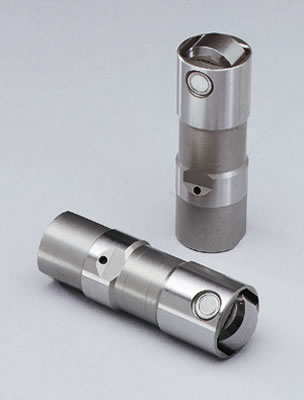
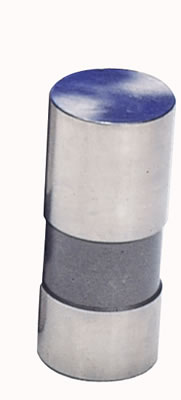
Comp high energy hydraulic roller (right) versus Comp high energy hydraulic flat tappet (left)
as a flat tappet cam rotates, the lobes push up on the lifters. becuase the lifters are designed in the manner that they are, its basically putting pressure on a flat surface. that "pressure" is what causes the lifter to rise. incorrect lobe profiles can cause the lifter to gouge into the lobe due to this design.
as a roller cam rotates, the lobe comes in contact with the roller on the end of the lifter. that roller then spins, reducing the friction between the lobe and the lifter itself, while maintaining the "pressure" needed to raise he lifter/pushrod. The roller design also allows for a more aggressive ramp design to be used.
This reduced friction from the roller setup does reduce wear and tear on the cam. it is for this reason that it is safe(r) to buy a used roller cam versus a flat tappet cam. as for the amount of hp that is gained by converting from flat tappet to hydraulic, ive read from 10-20. but i dont know. due to the reduced friction im sure there is some, im not sure how much. IMO its worth it.
Comp high energy hydraulic roller (right) versus Comp high energy hydraulic flat tappet (left)
Thread Starter
Junior Member
Joined: Sep 2003
Posts: 44
Likes: 0
How many of you guys use hydraulic flat tappet setups and how many of you use hydraulic roller setups? How much horsepower do you usually make with either setup? I just don't think I'll have the money for a full roller valvetrain but if it really gives that much improvement over flat tappets I'll work my a$$ off to get the money for the conversion. Also, what springs do you recommend? There are a set of vortecs I'm looking at that will come with single springs which offer 110 lbs of pressure at 1.800" and will handle up to .600" lift. Are these decent or should I get something else? Remember I want around 400 ponies!
-Thanks again guys :hail:
-Thanks again guys :hail:

Member
Joined: Feb 2004
Posts: 193
Likes: 0
Maybe my question is stupid, but I'll ask it anyway...
Why 400HP? RWHP? Fly wheel HP?
Just want to throw that number out in conversation?
do you have a certain ET goal in mind?
Will the car be street driven regularly?
RB had a great explanation of the whole HP / Torque relation. Here's my ******* version...
Torque pushes, HP pulls.....
That's why lots of torque in the low / mid range makes a car get out of the hole quick. And that's why higher HP cars will pull at the top end of the track.
Build a motor suited to what you will use the car for.
Just my opinion.
Why 400HP? RWHP? Fly wheel HP?
Just want to throw that number out in conversation?
do you have a certain ET goal in mind?
Will the car be street driven regularly?
RB had a great explanation of the whole HP / Torque relation. Here's my ******* version...
Torque pushes, HP pulls.....
That's why lots of torque in the low / mid range makes a car get out of the hole quick. And that's why higher HP cars will pull at the top end of the track.
Build a motor suited to what you will use the car for.
Just my opinion.
TGO Supporter
Joined: Jul 2003
Posts: 4,803
Likes: 2
From: Grand Rapids, MI
Car: Z28
Engine: Sb2.2 406
Transmission: Jerico 4 speed
Axle/Gears: Ford 9" 3.60
Originally posted by destroyer1
How many of you guys use hydraulic flat tappet setups and how many of you use hydraulic roller setups? How much horsepower do you usually make with either setup? I just don't think I'll have the money for a full roller valvetrain but if it really gives that much improvement over flat tappets I'll work my a$$ off to get the money for the conversion. Also, what springs do you recommend? There are a set of vortecs I'm looking at that will come with single springs which offer 110 lbs of pressure at 1.800" and will handle up to .600" lift. Are these decent or should I get something else? Remember I want around 400 ponies!
-Thanks again guys :hail:
How many of you guys use hydraulic flat tappet setups and how many of you use hydraulic roller setups? How much horsepower do you usually make with either setup? I just don't think I'll have the money for a full roller valvetrain but if it really gives that much improvement over flat tappets I'll work my a$$ off to get the money for the conversion. Also, what springs do you recommend? There are a set of vortecs I'm looking at that will come with single springs which offer 110 lbs of pressure at 1.800" and will handle up to .600" lift. Are these decent or should I get something else? Remember I want around 400 ponies!
-Thanks again guys :hail:
As for spring choice, when you purchase your camshaft, the manufacturer will usually always give a suggested spring. Get the spring that the manufacturer suggests.
Thread Starter
Junior Member
Joined: Sep 2003
Posts: 44
Likes: 0
I'm not sure if I want 400 crank or rw hp. Which one would give decent track runs of around say the 13's. I have a 700r4 so I realize that I would loose alot of power from 400hp at the crank to the wheels (I'm guessing i'd make near 320hp or something at the wheels, correct me if I'm wrong please).
Supreme Member
Joined: Jun 2003
Posts: 1,521
Likes: 0
From: Cypress,Tx
Car: 89 Camaro RS
Engine: 350 carbed now
Transmission: World Class T5
Axle/Gears: Peg Leg w/ 3.73's
400 hp at the crank is more than enough to get you in the 13's. with that much hp and everything else you need to support it you could have a daily driven 12 second car. Get the modified vortec heads from sdpc2000.com and run the comp cams XE 274 cam, edelbrocke performer RPM intake, a good carb, headers a high flow exhaust, and you should make around 400 hp at the crank and youll be able to knock down some awesome times at the track. Good Luck.
Thread Starter
Junior Member
Joined: Sep 2003
Posts: 44
Likes: 0
I was looking at some vortec heads on ebay and I came accross a good looking deal. Let me know what you guys think?:
This auction is for a set of genuine ProAction cylinder heads by Pro Topline.These are are similar to the 96-99 factory GM pieces and these give race head type flow numbers. They feature 170 CC intake runners making them ideal for street/strip applications and all out competition on smaller displacement small blocks. These will fit 55-99 small block chevys. 64 CC, high compression, high swirl combustion chambers, straight plugs, fully machined stainless valves, hydraulic high lift springs, chrome moly retainers, hardened locks and positive seals. These heads have had the guide bosses machined for over .600" valve lift.
Extra features:
-Chromoly 3/8 screw in studs and guide plates
-Z-28 "+.100" springs (110lbs @ 1.800lift and .600 max lift)
He said it would cost me $615 shipped. They look pretty good in the pictures and he has kept up good communication with me but I just wanna ask you all to make sure. I'm wondering if the springs will be alright with my setup because COMP recommends dual valve springs with 120lbs.
This auction is for a set of genuine ProAction cylinder heads by Pro Topline.These are are similar to the 96-99 factory GM pieces and these give race head type flow numbers. They feature 170 CC intake runners making them ideal for street/strip applications and all out competition on smaller displacement small blocks. These will fit 55-99 small block chevys. 64 CC, high compression, high swirl combustion chambers, straight plugs, fully machined stainless valves, hydraulic high lift springs, chrome moly retainers, hardened locks and positive seals. These heads have had the guide bosses machined for over .600" valve lift.
Extra features:
-Chromoly 3/8 screw in studs and guide plates
-Z-28 "+.100" springs (110lbs @ 1.800lift and .600 max lift)
He said it would cost me $615 shipped. They look pretty good in the pictures and he has kept up good communication with me but I just wanna ask you all to make sure. I'm wondering if the springs will be alright with my setup because COMP recommends dual valve springs with 120lbs.

Senior Member
Joined: Mar 2002
Posts: 755
Likes: 0
From: Newport News, Va
Car: 84 Z28
Engine: GMPP 350 HO
Transmission: 700R4 + Shift Kit
Axle/Gears: Auburn Posi; Richmond 3:73 Gears
Those Pro Topline's are suppost to be a good head. If you do a search on Vortec heads you will find a comparison on ProActions by Topline, Edelbrock's E-tecs and the stock vortecs but those Toplines are $$$. They are only 495.95 at Competiton Products. ( Website )
EDIT:
I got board and found where they comapred them https://www.thirdgen.org/techbb2/sho...ghlight=vortec . Hope this helps you a little..
EDIT:
I got board and found where they comapred them https://www.thirdgen.org/techbb2/sho...ghlight=vortec . Hope this helps you a little..
Last edited by zNucleaRz; Feb 27, 2004 at 09:02 PM.
TGO Supporter
Joined: Jul 2003
Posts: 4,803
Likes: 2
From: Grand Rapids, MI
Car: Z28
Engine: Sb2.2 406
Transmission: Jerico 4 speed
Axle/Gears: Ford 9" 3.60
The cylinder heads are fine for 400 crank hp. Stock Vortecs can be made to handle 400 crank hp. There are several buildups that document the process. So the ProToplines should be just fine. However, if you do get them, i would swap out the springs and get the springs that the manufacturer recommends. (i.e. If you get a Comp cam, get comp springs. Crane cam, crane springs). Manufacturer usually knows best as to what their cam can handle spring rate wise and load wise. Also, i know in comps case, not sure about Crane, Lunati, Isky, etc, that if you use any spring OTHER than the recommended, you void the warranty. That and there are several stories floating around here on TGO of the factory springs going bad. I know Trick Flow has those problems, as does AFR. Just another thing to keep in mind.
And i agree on the Vortec heads and XE274 setup. Id recommend the Vortec RPM AirGap. Ive seen some pretty awesome results with that. The Victor Jr. Vortec COULD be used, however, there is substantial power lost in the low to midrange, with only minimal gains on the top end. Whatever manifold you get, make sure its the Vortec as they have different mounting patterns.
If you REALLY want some solid times, look into doing some suspension mods. What good is all the power you're making if you can't hook up?
And i agree on the Vortec heads and XE274 setup. Id recommend the Vortec RPM AirGap. Ive seen some pretty awesome results with that. The Victor Jr. Vortec COULD be used, however, there is substantial power lost in the low to midrange, with only minimal gains on the top end. Whatever manifold you get, make sure its the Vortec as they have different mounting patterns.
If you REALLY want some solid times, look into doing some suspension mods. What good is all the power you're making if you can't hook up?
Last edited by Stekman; Feb 28, 2004 at 10:36 AM.
Thread Starter
Junior Member
Joined: Sep 2003
Posts: 44
Likes: 0
What type of rods should I buy? I've seen brand new Eagle 4340 H-beam rods for about $330.00. I'm just not sure if they are what I need or if I will have clearance problems with them. Do any of you guys use h-beam rods and if so are they worth it and are there and clearance problems with them?
Thanks again to everyone that has helped me so far!!!
Thanks again to everyone that has helped me so far!!!
Last edited by destroyer1; Feb 28, 2004 at 06:47 PM.
TGO Supporter
Joined: Jul 2003
Posts: 4,803
Likes: 2
From: Grand Rapids, MI
Car: Z28
Engine: Sb2.2 406
Transmission: Jerico 4 speed
Axle/Gears: Ford 9" 3.60
4340 H beams are strong, yes. They resist twisting more than I beams. They are also heavier and can be harder to balance (or so ive heard). For 400 crank hp, I beams should be fine. the PM rods from GM would even be fine. Eagle offers an "SIR" rod which is an I beam, made of 5140, not 4340. But, they claim that they can take 500 hp. I run these rods in my ZZ4 with no problems at all.
Thread Starter
Junior Member
Joined: Sep 2003
Posts: 44
Likes: 0
What rod lenght should I use? I've read about the benifits of 6.0" rods but would they have any clearance problems in my 355?
Also, what pistons do you recommend? Forged ones sound pretty nice but I want good reliable pistons that can handle up to about 6500rpm. Would hypereutectics do the job or do you recommend forged ones?
Also, what pistons do you recommend? Forged ones sound pretty nice but I want good reliable pistons that can handle up to about 6500rpm. Would hypereutectics do the job or do you recommend forged ones?
TGO Supporter
Joined: Jul 2003
Posts: 4,803
Likes: 2
From: Grand Rapids, MI
Car: Z28
Engine: Sb2.2 406
Transmission: Jerico 4 speed
Axle/Gears: Ford 9" 3.60
Are you planning on running a power adder ever? If you are, get forged. If you arent, hyereutectics should be fine. Either way, keep in mind that hypereutectic pistons are harder than forged and cast. Therefore, they tend to shatter when detonation occurs. Forged and even cast will distort and deform a bit before they fail.
If you really want to squeeze every ounce of power out of your engine, run a 6" rod. It places the most amount of torque on the crankshaft (comparing to 5.7" rods). That transfers to maximum amount of energy being trasfered from the combustion to the crankshaft. While there is nothing "wrong" about running 5.7" rods, running 6" rods is just more efficient. less of a parasitic loss, if you will.
If the block is already .030" over, why not just get a crank from a 400ci and make a 383 stroker? Whatever you do, its always a good practice to check clearances. Better safe than sorry.
If you really want to squeeze every ounce of power out of your engine, run a 6" rod. It places the most amount of torque on the crankshaft (comparing to 5.7" rods). That transfers to maximum amount of energy being trasfered from the combustion to the crankshaft. While there is nothing "wrong" about running 5.7" rods, running 6" rods is just more efficient. less of a parasitic loss, if you will.
If the block is already .030" over, why not just get a crank from a 400ci and make a 383 stroker? Whatever you do, its always a good practice to check clearances. Better safe than sorry.
Last edited by Stekman; Feb 29, 2004 at 01:44 AM.

Junior Member
Joined: Dec 2003
Posts: 78
Likes: 0
Originally posted by zNucleaRz
I got board and found where they comapred them https://www.thirdgen.org/techbb2/sho...ghlight=vortec . Hope this helps you a little..
I got board and found where they comapred them https://www.thirdgen.org/techbb2/sho...ghlight=vortec . Hope this helps you a little..
Thread Starter
Junior Member
Joined: Sep 2003
Posts: 44
Likes: 0
If I went with more displacement, would everything on this forum thread still apply to a 383 or more as long as it is still a small block? I mean would I still want Vortec heads, xe274 cam, bigger headers, performer RPM intake, etc.? If not what would be different?
Also, I don't think I'll be running to much of a power adder. I would like to be able to run a little bit of nitrous but not any more that a 100 shot.
Oh, I'm just finishing putting on my Competition Engineering SFC's and will be putting in a posi carrier very soon (if not today, tuesday).
Thanks for all the help again guys!!!
Also, I don't think I'll be running to much of a power adder. I would like to be able to run a little bit of nitrous but not any more that a 100 shot.
Oh, I'm just finishing putting on my Competition Engineering SFC's and will be putting in a posi carrier very soon (if not today, tuesday).
Thanks for all the help again guys!!!
TGO Supporter
Joined: Jul 2003
Posts: 4,803
Likes: 2
From: Grand Rapids, MI
Car: Z28
Engine: Sb2.2 406
Transmission: Jerico 4 speed
Axle/Gears: Ford 9" 3.60
If you have a 355 block now, the easiest modification for displacement is a 383. If you do a search, you will see tons of into regarding every aspect of a 383 build. Yes, the Vortec heads will fit etc etc. You will want to check for clearances on both your camshaft and oil pan rails. I know some times a cam wont clear the connecting rods. Also, if you DO build a 383, it will need external balancing, rather than internal. But in general, if it bolts onto the block in the 355 form, it can be used in the 383 form.

Member
Joined: Oct 2001
Posts: 264
Likes: 0
From: Webster, MA
Car: 1982 Camaro Z28
Engine: Self-built 350
Transmission: Pro-Built 700r4 w/2800 Vigilante
Axle/Gears: Eaton 3.73 w/Moser axles
I plan on using the SD Upgraded Vortec's and a Performer RPM when I build my 355. I am looking for about the same HP #'s as you and was planning on using the COMP XE-274 Cam with this kit:
http://www.sdpc2000.com/cart.asp?act...2175&pid=89540
I figure I could always later on swap to a roller cam to gain some extra hp...
http://www.sdpc2000.com/cart.asp?act...2175&pid=89540
I figure I could always later on swap to a roller cam to gain some extra hp...
Thread Starter
Junior Member
Joined: Sep 2003
Posts: 44
Likes: 0
I figure I could always later on swap to a roller cam to gain some extra hp...
I got my SFC's and zexel rear in yesterday and it rides nice. Its a little slower (I guess from the added weight) but the rear doesn't whine like it did before (I think I have better backlash now).
It was a pain in the a$$ but I probably saved a couple hundred bucks doing it myself and I learned alot too.
Does anyone recommend getting splayed main caps for the two bolt I have? I haven't read up on the cost so does anyone know how much it'll set me back if I do go for it?
Thread Starter
Junior Member
Joined: Sep 2003
Posts: 44
Likes: 0
I've decided to go forged pistons with 6" rods.
Now, what brand of piston do you you suggest? There are some nice ones on ebay but which brand name is the best or pretty good? Any previous experience with the brand names or advice is highly appretiated!
Now, what brand of piston do you you suggest? There are some nice ones on ebay but which brand name is the best or pretty good? Any previous experience with the brand names or advice is highly appretiated!
Last edited by destroyer1; Mar 2, 2004 at 08:54 PM.
TGO Supporter
Joined: Jul 2003
Posts: 4,803
Likes: 2
From: Grand Rapids, MI
Car: Z28
Engine: Sb2.2 406
Transmission: Jerico 4 speed
Axle/Gears: Ford 9" 3.60
Ive run Speed Pro forged. Theres nothing wrong with them. Ive also had a set of JE. What i wouldnt do for those pistons again......
TGO Supporter
Joined: Jul 2003
Posts: 4,803
Likes: 2
From: Grand Rapids, MI
Car: Z28
Engine: Sb2.2 406
Transmission: Jerico 4 speed
Axle/Gears: Ford 9" 3.60
nothing was wrong with them. I sold the block that they were in and the guy gave me a good chunk of change for the rotating assembly.
Like all things, you get what you pay for. For 400 crank hp, Speed Pro forged will be fine.
If youve got AIM, you can hit me up on there sometime and we can talk.
Like all things, you get what you pay for. For 400 crank hp, Speed Pro forged will be fine.
If youve got AIM, you can hit me up on there sometime and we can talk.
Thread Starter
Junior Member
Joined: Sep 2003
Posts: 44
Likes: 0
Speed pro doesn't make forged pistons for the 6" rod. What about Venolia, has anyone used them before and liked them? How about JE? I know of a couple selling for less than $300 with rings, wrist pins, and pin retainers.
BTW, thanks for all the help so far Stekman
BTW, thanks for all the help so far Stekman
Thread Starter
Junior Member
Joined: Sep 2003
Posts: 44
Likes: 0
I wouldn't like to spend much more then $350 for the pistons w/ rings, wrist pins, and retainers. Although, if I have to spend more to get good pistons that will last, I guess it would be alright. This is my first engine build and I just don't want to make any mistakes in purchasing the right parts.
Thread Starter
Junior Member
Joined: Sep 2003
Posts: 44
Likes: 0
I think I'll still go with a 355 since I already have the crank and I don't really want to deal with the clearancing problems that I might encouter w/ a 383. I know that all of the same parts can still be used on a 383 stroker (minus the crank and pistons) but wouldn't the different stroke of the 383 mean that I should use a different cam, intake, heads or what not to have a good setup? This is just what I would think but I could be wrong.
Sorry about this attempt at IMing but I don't have AIM. But thanks again!!!
Sorry about this attempt at IMing but I don't have AIM. But thanks again!!!
TGO Supporter
Joined: Jul 2003
Posts: 4,803
Likes: 2
From: Grand Rapids, MI
Car: Z28
Engine: Sb2.2 406
Transmission: Jerico 4 speed
Axle/Gears: Ford 9" 3.60
if you have ANY messeger service LMK
I know a person on my street thats run Venolia pistons. Hes happy with their quality. I say, if you can get a set of Venolias, go for it.
I know a person on my street thats run Venolia pistons. Hes happy with their quality. I say, if you can get a set of Venolias, go for it.
Last edited by Stekman; Mar 5, 2004 at 07:48 PM.