


how to determine engine type


Thread Starter
Member
Joined: Feb 2013
Posts: 398
Likes: 0
From: Michigan
Car: 1986 Pontiac Trans Am
Engine: 5.0
Transmission: 700R4
how to determine engine type
ok there was a member on this site that has me guessing about my engine size now (305 or 350) so i guess i need to fine the number stamped on the engine somewhere. where are they? a little back story is, when i was looking at the car the PO told me engine has about 102k and the body had over 200k so im guessing the engine was either swapped out or rebuilt. he told me it was a LT1 which is found in Corvettes (which i come to find out its not true) what i have is a Tuned Port Injection engine either a 305 or 350


Joined: Sep 2005
Posts: 28,023
Likes: 2,496
Car: Yes
Engine: Usually
Transmission: Sometimes
Axle/Gears: Behind me somewhere
Re: how to determine engine type
The ONLY reliable way, short of measuring the bore & stroke, is the block casting number.
It is conveniently located in the most conspicuous place they could find to put it, easily read in all circumstances. (yeah right) On top of the bell housing flange behind the driver's side head.
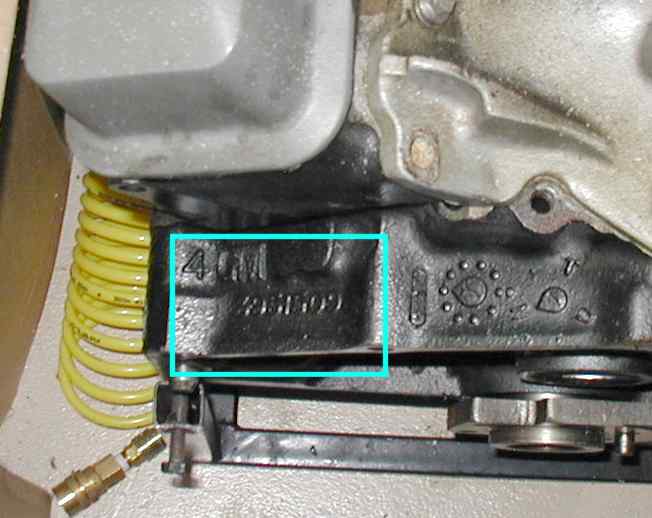
Every "rebuilt" or "swapped" engine is "from a Vette". There are probably 50 times as many rebuilt motors running around "from a Vette" than there ever have been Vettes. It's probably the single most common lie in all of hot-rodding. Next most common lie is that it's from a 69 Z28. Calling some random motor a "LT1", more often mutilated into what the hood badge said which was "LT-1", is the most common of all of the variants of that. Basically that means the owner has no idea what it is, and is ripping you off. It is especially common when the block is a 3970010, which is itself the most common casting there is; it was used in everything from the old LT1, to 75 Impala 2-bbl motors, to trucks, you name it.
Get the numbers you find and post them.
Someone will pipe up about the stamping codes in front of the pass side head. Those are NOT reliable, because they can be easily removed (in fact are INEVITABLY removed when the block is decked) and re-stamped. Ignore such talk, it is worthless. Those numbers can lie: the block casting cannot.
It is conveniently located in the most conspicuous place they could find to put it, easily read in all circumstances. (yeah right) On top of the bell housing flange behind the driver's side head.
Every "rebuilt" or "swapped" engine is "from a Vette". There are probably 50 times as many rebuilt motors running around "from a Vette" than there ever have been Vettes. It's probably the single most common lie in all of hot-rodding. Next most common lie is that it's from a 69 Z28. Calling some random motor a "LT1", more often mutilated into what the hood badge said which was "LT-1", is the most common of all of the variants of that. Basically that means the owner has no idea what it is, and is ripping you off. It is especially common when the block is a 3970010, which is itself the most common casting there is; it was used in everything from the old LT1, to 75 Impala 2-bbl motors, to trucks, you name it.
Get the numbers you find and post them.
Someone will pipe up about the stamping codes in front of the pass side head. Those are NOT reliable, because they can be easily removed (in fact are INEVITABLY removed when the block is decked) and re-stamped. Ignore such talk, it is worthless. Those numbers can lie: the block casting cannot.
Thread Starter
Member
Joined: Feb 2013
Posts: 398
Likes: 0
From: Michigan
Car: 1986 Pontiac Trans Am
Engine: 5.0
Transmission: 700R4
Re: how to determine engine type
The ONLY reliable way, short of measuring the bore & stroke, is the block casting number.
It is conveniently located in the most conspicuous place they could find to put it, easily read in all circumstances. (yeah right) On top of the bell housing flange behind the driver's side head.
Every "rebuilt" or "swapped" engine is "from a Vette". There are probably 50 times as many rebuilt motors running around "from a Vette" than there ever have been Vettes. It's probably the single most common lie in all of hot-rodding. Next most common lie is that it's from a 69 Z28. Calling some random motor a "LT1", more often mutilated into what the hood badge said which was "LT-1", is the most common of all of the variants of that. Basically that means the owner has no idea what it is, and is ripping you off. It is especially common when the block is a 3970010, which is itself the most common casting there is; it was used in everything from the old LT1, to 75 Impala 2-bbl motors, to trucks, you name it.
Get the numbers you find and post them.
Someone will pipe up about the stamping codes in front of the pass side head. Those are NOT reliable, because they can be easily removed (in fact are INEVITABLY removed when the block is decked) and re-stamped. Ignore such talk, it is worthless. Those numbers can lie: the block casting cannot.
It is conveniently located in the most conspicuous place they could find to put it, easily read in all circumstances. (yeah right) On top of the bell housing flange behind the driver's side head.
Every "rebuilt" or "swapped" engine is "from a Vette". There are probably 50 times as many rebuilt motors running around "from a Vette" than there ever have been Vettes. It's probably the single most common lie in all of hot-rodding. Next most common lie is that it's from a 69 Z28. Calling some random motor a "LT1", more often mutilated into what the hood badge said which was "LT-1", is the most common of all of the variants of that. Basically that means the owner has no idea what it is, and is ripping you off. It is especially common when the block is a 3970010, which is itself the most common casting there is; it was used in everything from the old LT1, to 75 Impala 2-bbl motors, to trucks, you name it.
Get the numbers you find and post them.
Someone will pipe up about the stamping codes in front of the pass side head. Those are NOT reliable, because they can be easily removed (in fact are INEVITABLY removed when the block is decked) and re-stamped. Ignore such talk, it is worthless. Those numbers can lie: the block casting cannot.
Thread Starter
Member
Joined: Feb 2013
Posts: 398
Likes: 0
From: Michigan
Car: 1986 Pontiac Trans Am
Engine: 5.0
Transmission: 700R4
Re: how to determine engine type
ok i was able to make out some numbers on the front of the passenger side block VO513SNB and below from what i could make out was 2HN246776 this help out?

Member

Joined: Sep 2007
Posts: 340
Likes: 0
From: bremerton
Car: 87 trans am
Engine: 5.7
Transmission: t-5
Axle/Gears: 9 bolt posi 3:27
Re: how to determine engine type
no sofa has it on the spot. you need that number on the drivers side. chances are it's a 3970010 block but those also came in 2 bolt and 4 bolt main. You would have to pull the pan to be sure. Hey sounds like a great time to pull and engine and stroke it yeah?

Joined: Mar 2000
Posts: 43,187
Likes: 46
From: Littleton, CO USA
Car: 82 Berlinetta/57 Bel Air
Engine: L92/LQ4 (both w/4" stroke)
Transmission: 4L80E/4L80E
Axle/Gears: 12B-3.73/9"-3.89
Oftentimes the last 3 digits of the casting number are cast into the side of the block in large numbers (seen from underneath). The last 3 are all you need to ID the casting.

Moderator


Joined: Jul 1999
Posts: 17,274
Likes: 171
From: 51°N 114°W, 3500'
Car: 87 IROC L98
Engine: 588 Alcohol BBC
Transmission: Powerglide
Axle/Gears: Ford 9"/31 spline spool/4.86
Re: how to determine engine type
Later blocks also have 5.0L and 5.7L cast into the blocks since there were no other variations to make with those castings.

Thread
Thread Starter
Forum
Replies
Last Post
colton_carlson
Firebirds for Sale
7
Mar 8, 2019 12:21 PM