When you click on links to various merchants on this site and make a purchase, this can result in this site earning a commission. Affiliate programs and affiliations include, but are not limited to, the eBay Partner Network.
Right. You didn't notice that nobody with a 4th gen sender ever actually got it to work right in their car? The OP had a 3rd gen sender in the car, and it would work with damn near any resistor in the gage. Like I said, just one big misunderstanding.
Originally Posted by anesthes
Anyhow. I'll be using the grand prix sender or at least float assembly.
Yep, the only practical solution is get a 0-90 Ohm sender in there.
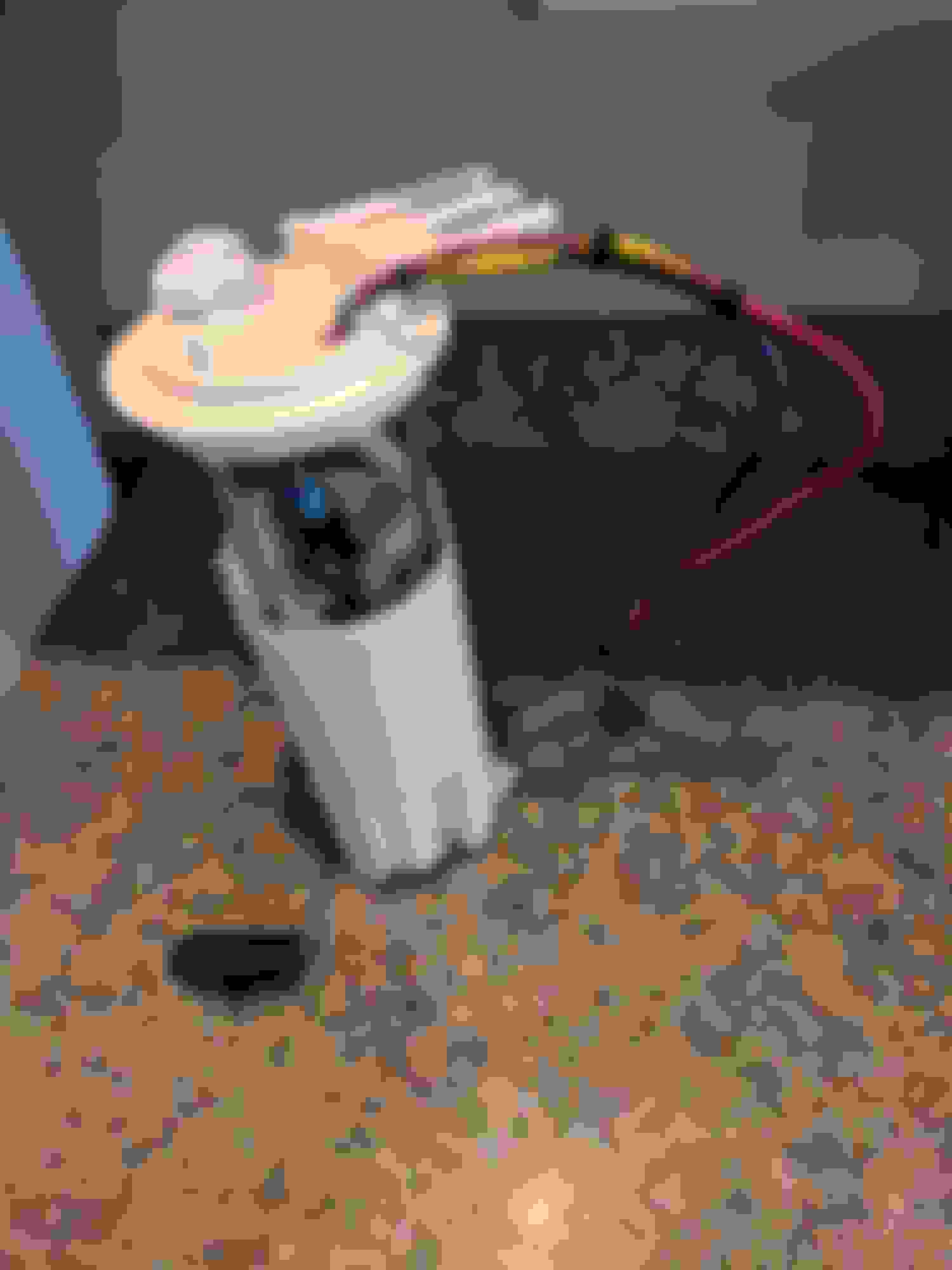
I bought an Apex 4th gen fbody module for an LSx car. The module was designed with a dual inlet fuel pump and two strainers. One goes below the tank with a neat checkvalve, and the other sits inside the module picking up fuel from the module.
Obviously I could not make the new Walbro pump work with this, so I had to cut up the module. I ran the walbro down the bottom so it picks fuel up basically below the module in the little 'sump' area of the plastic 4th gen tank.
I bought a chinese Grand Prix sending unit as well. The orientation and a few other things made this not really something I could use, but for $18 it gave me the 0-90ohm sending unit I needed to swap into the LSx unit. The sending unit itself was a direct snap-in.
I removed the pressure sensor from the top of the fuel module, which gave me a hole to route the higher gauge (12awg) wires supplied by Walbro through the top, and the wires for the sending unit. I spliced those into a heavy 12awg weather pack connector, which then splices to my new 10awg wiring. By using 10awg from the alternator to the rear of the car I don't have voltage drop.
That works for what you're doing, but totally defeats the purpose of the bucket. Do you plan on only going in a straight line with 1/2 a tank or more?
I’ve been down to less than 1/8 tank with no bucket at all and didnt have any issues normal driving and no issues with 1/4-1/8 levels doing drag runs. Suprised me because i had starvation with stock thirdgen tanks.
the 4th gen tank just didnt have issues for me
That works for what you're doing, but totally defeats the purpose of the bucket. Do you plan on only going in a straight line with 1/2 a tank or more?
Yup. The car goes to car shows and the drag strip. The Corvette is for cornering.
I agree, it defeats the purpose of the bucket. There is no way to retain the use of the bucket with the hellcat pump. The LSx pump has two inlets and is designed to fit into a rubber seal in the bottom of the bucket that has a one way valve. That pulls fuel from the outside of the bucket while the other inlet pulls fuel from the bucket itself.
If you were to run a single inlet pump inside the bucket, fuel would never get in the bucket to begin with. You need that second inlet to initially charge the lines, and then return fuel flows into the bucket.
There is a little one way valve at the bottom of the bucket, and I tested how long it takes for a bucket submerged into the tank to fill with fuel. It was like 2 minutes for a half a liter. Probably OK at idle, but under throttle you'd suck the bucket dry quicker than it could re-fil naturally.
That works for what you're doing, but totally defeats the purpose of the bucket. Do you plan on only going in a straight line with 1/2 a tank or more?
I’ve been down to less than 1/8 tank with no bucket at all and didnt have any issues normal driving and no issues with 1/4-1/8 levels doing drag runs. Suprised me because i had starvation with stock thirdgen tanks on hills and corners.
the 4th gen tank just didnt have issues for me
I fired the car up, and my idle fuel pressure is between 58-60psi.
When I took the module apart, I didn't see any sign of a regulator.
I backed the adjustment all the way out on my miniram regulator and still 58-60psi.
I'm not sure if it's a return restriction and coicidentally, it's LS1 fuel pressure. Or if there is a regulator in the module hidden.
What is interesting, is when I run the pump without the engine running, it's at 30 psi constant. But that's at 11.5 volts.
When running, it's at 58-60 psi at 14.0 volts (13.98-14.01).
So.. wtf.
I was thinking of disconnecting the return line, putting it in a bucket and starting it up, but that would just tell me if the restriction is between the fuel rail regulator and the tank. If the module itself had a restriction, or a regulator I'd get the same result.
What is interesting, is when I run the pump without the engine running, it's at 30 psi constant. But that's at 11.5 volts.
When running, it's at 58-60 psi at 14.0 volts (13.98-14.01).
Does the pump prime with key on or is 30 PSI just residual pressure in the line?
If the pump does prime with key on then it is maybe sounding like the pump is failing. Kind of in that walking wounded mode where it can't even meet spec pressure at 11 volts and barely works at 14 volts.
Does the pump prime with key on or is 30 PSI just residual pressure in the line?
If the pump does prime with key on then it is maybe sounding like the pump is failing. Kind of in that walking wounded mode where it can't even meet spec pressure at 11 volts and barely works at 14 volts.
Yes, it primes to about 30 psi which is what it runs at at 11.5 volts.
The pump is fine, it's about 2 hours old. The problem is a restriction somewhere between the fuel rail and the tank. I took the line off at the fuel module and I still get like 60psi at idle. The regulator adjuster is backed all the way out.
My initial though is it's probably because the miniram uses an LT1 fuel pressure regulator which has a 5/16 orfice. Maybe that's too small ?
Well if that's the case then that means the regulated pressure is set at 30 psi and anything over that is because the regulator and return is overwhelmed by the output of the pump. Although I'm not really understanding why the pressure would be lower without engine running.
Maybe you can test that theory by adjusting your regulator to higher pressure and seeing if the key-on prime goes above 30 psi.
Well if that's the case then that means the regulated pressure is set at 30 psi and anything over that is because the regulator and return is overwhelmed by the output of the pump. Although I'm not really understanding why the pressure would be lower without engine running.
Maybe you can test that theory by adjusting your regulator to higher pressure and seeing if the key-on prime goes above 30 psi.
Yeah, sorry if I wasn't clear. I can adjust the key on prime higher. What I'm saying is with the adjuster all the way backed out it still flows too much running.
I'm wondering if I should just thread the fuel rail and run a remote regulator.
Sure if it was regulated to 58psi. Problem of course is, when RPM's go up the pressure will go down due to consumption.
The problem is the hole in the regulator is like less than 1/4".
Now that I look at these rails, the crossover is like 1/4" as well.
Anyway. So I took some LT1 rails that I had on the shelf, and I cut them down, then machined the angle so they bolt up to the miniram. Bolt spacing and injector spacing is the same, just the angle on the back side was a little different.
I pulled out the tubes. The rail inside diameter is about .620", which is a bit more than the miniram rails.
I ordered some weld on bungs. I'm going to put a bung on each end, and wye them into a remote regulator. No more silly (and leaky) crossover tube, larger diameter rail, and no silly small regulator. Should be good after that!
Beyond the fact that you have to adjust it almost all the way until you rise above the restriction, and then back off a hair, running 58psi at idle doesn't leave much room to rise 1:1 with boost.
Also, when you look at the flow chart, your flow really goes down at that point.
Perhaps. I know I was pushing around 80gph with the other pump before it would lean out at 5800 RPM. It would free flow
The 140gph pump is probably overkill, but I figure do it right and it won't blow up. I have 109 gph worth of injector at 58psi, so I want to make sure I stay within those operational limits. I figure if I run 43.5psi base and I add another 10-12 psi with boost rise, I'm well within the safety margin.
If my base was 58 and I added 10-12 psi I'd be right the limit.
i think you are probably on track with the larger lines/regulator setup. im thinking your current setup would show 58 at idle with the adjuster backed all the way out. once under full throttle, there will be less fuell trying to return to the tank, and less restriction. with the regulator backed all the way out, pressure would fall to 20-25psi. let off the gas and it would zing back up to 58 again.
Been busy with other things, houses, etc but I've been working on updates to the fuel system.
The stock Miniram fuel rails have some flaws when it comes to flow and distribution. For those who don't know, the rail feeds from the passenger side. The fuel flows from the rear of the rail to the front, turning up a cavity and then back down to the rear (there is a divider in the rail). Then it crosses over a small tube via an orifice that is around .200" to the top of the driver fuel rail, goes to the front, turns down and then back feeding the injectors, then ultimately entering the regulator.
The regulator orifice is about .170" which is another issue with guys like me that are running 525lph fuel pumps.
This setup is almost identical to the 92-93 LT1.
The other issue is they use TPI style injector retainers, which I'm not a huge fan of.
So anyhow, rather than modifying the MR rails I took some off the shelf 92-93 LT1 rails and cut them down. I removed the factory divider tube (it just floats in the rail). I did have to machine the rails slightly as the angle on the miniram is slightly different than the LT1, but the bolt spacing is the same. I'm not the worlds best TIG welder, so a member of my club welded some AN fittings on the front and rear of both rails.
So Now I have a feed that splits and feeds both rails from the rear, and then both rails in the front exit into a regulator that has two inlets.
I'll take some pictures this weekend. But basically it's a cheap mod that could probably support well over 1,000 hp.
In hindsight, the miniram is probably not the appropriate manifold for this car - a blown 412" small block. I probably should have gone back to a singleplane with a 4bbl throttle body, but this will work.