


More egr questions


Thread Starter
Junior Member
Joined: Jan 2010
Posts: 32
Likes: 0
From: Central New Jersey
Car: 1987 IROC Z
Engine: 305
More egr questions
Hey guys.
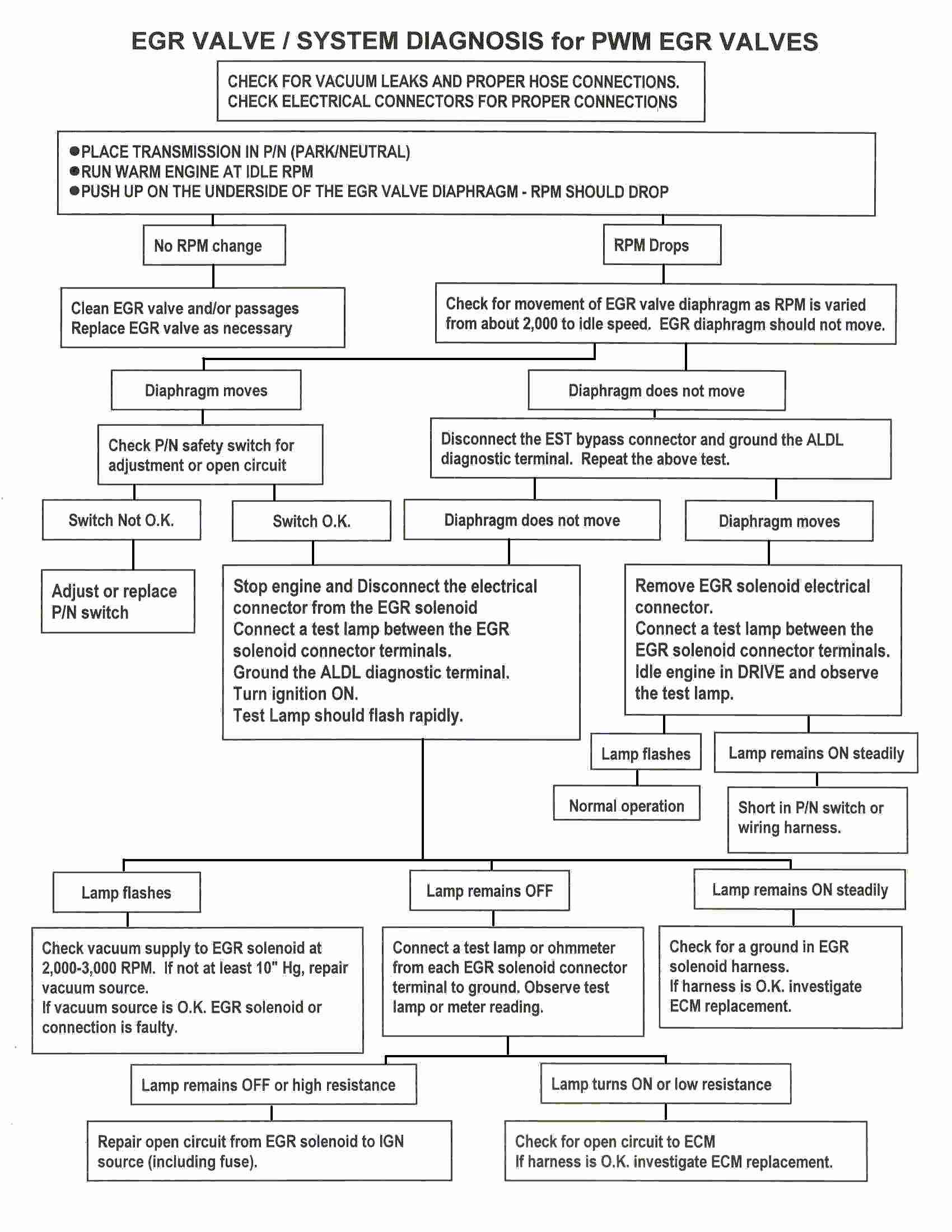
I just recently replaced my egr valve just to find the passages were clogged. Went and cleared the passageways and still seems like the egr valve isnt doing its job. When i hook up vacuum to it from what i read its supposed to stall. For some reason mine isnt stalling.
I suspect maybe its the solonoid but im not sure. Is there anyway to test the egr solonoid? Maybe is there another problem?
It seems to be running great no hesitation or anything.
I just recently replaced my egr valve just to find the passages were clogged. Went and cleared the passageways and still seems like the egr valve isnt doing its job. When i hook up vacuum to it from what i read its supposed to stall. For some reason mine isnt stalling.
I suspect maybe its the solonoid but im not sure. Is there anyway to test the egr solonoid? Maybe is there another problem?
It seems to be running great no hesitation or anything.

Joined: Mar 2000
Posts: 43,187
Likes: 45
From: Littleton, CO USA
Car: 82 Berlinetta/57 Bel Air
Engine: L92/LQ4 (both w/4" stroke)
Transmission: 4L80E/4L80E
Axle/Gears: 12B-3.73/9"-3.89
Unless you removed the intake manifold completely and cleaned up all of the passages in the intake and heads, you didn't clean up the EGR passages.
Did you hook up vacuum directly to the EGR valve, or just to the solenoid like it is supposed to be normally?
Did you hook up vacuum directly to the EGR valve, or just to the solenoid like it is supposed to be normally?

Member
Joined: Jan 2010
Posts: 138
Likes: 0
From: Dardanelle, AR
Car: 1985 El Camino SS, 2004 Trailblazer
Engine: Hybrid 305, 91 SD TPI, lots of mods
Transmission: 200-4R
Axle/Gears: 3.42
Re: More egr questions
More than likely the intake is completely stopped up with carbon. The passages are small and the carbon can build up and get hard as rocks. If you apply vacuum directly to the egr with a vacuum pump and pull it open with the car idling, the engine should almost stall or maybe die completely. No change indicates a plugged up passage deeper inside the intake. Basically the EGR valve connects to the center exhaust cross over through the EGR valve and then through passages into the intake ports. The EGR valve regulates the flow of exhaust gas into the intake to reduce NOX in the exhaust gas. either set of ports can be stopped up. This would be almost impossible to clear without removing the intake.
Thread Starter
Junior Member
Joined: Jan 2010
Posts: 32
Likes: 0
From: Central New Jersey
Car: 1987 IROC Z
Engine: 305
Re: More egr questions
When i cleaned the ports i removed the plenum and runners to get to the manifold but did not take off the manifold itself. Are there ports underneath the manifold?

Moderator


Joined: Jan 2000
Posts: 19,677
Likes: 314
Re: More egr questions
More than likely the EGR valve is a negative backpressure type, like all TPIs had. Simply connecting vacuum to it won't operate the diaphragm like a conventional ported EGR.
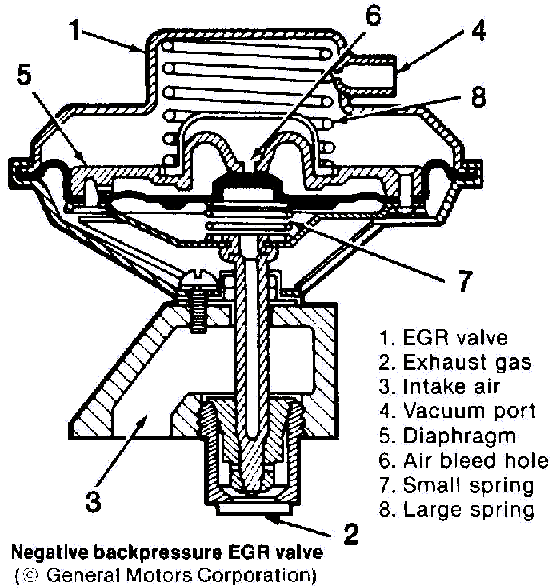
There is a pilot valve within the EGR that will bleed off the main vacuum source unless there is a slight pressure differential across the two valve ports to force the pilot valve to close and allow the valve to operate. Testing with a handheld vacuum pump or manifold vacuum may not yield the results you expect, or those which may have been advised by the counter person at AutoZone or members of some inferior tech sites.
There is a pilot valve within the EGR that will bleed off the main vacuum source unless there is a slight pressure differential across the two valve ports to force the pilot valve to close and allow the valve to operate. Testing with a handheld vacuum pump or manifold vacuum may not yield the results you expect, or those which may have been advised by the counter person at AutoZone or members of some inferior tech sites.
Member
Joined: Jan 2010
Posts: 138
Likes: 0
From: Dardanelle, AR
Car: 1985 El Camino SS, 2004 Trailblazer
Engine: Hybrid 305, 91 SD TPI, lots of mods
Transmission: 200-4R
Axle/Gears: 3.42
Re: More egr questions
Negative back pressure and standard old style ported EGR valves WILL hold vacuum with the engine stopped, a positive back pressure EGR will not hold when the engine is stopped. GM used all three types.
The problem with testing the Negative back pressure valve with the engine running is that if it is functioning correctly, the valve will not open, because the negative back pressure against the bottom of the control diaphragm of the valve is holding the control port open and bleeding the signal. However, if there is NO NEGATIVE back pressure (suction) on the control diaphragm to open the port, the spring pressure will hold the diaphragm against the bleed port, thus closing the bleed port and allow the valve to open using a vacuum pump The Negative back pressure valve is analogous to a "normally closed" switch or relay. The diagram shows that the bleed port is closed by spring pressure and exhaust pressure and is PULLED open by negative pulses in the exhaust system acting through the hollow shaft and against the bottom of the secondary or control diaphragm. The negative pulses in the system are what modulates the exhaust flow.
Positive back pressure systems must have exhaust pressure to close a similar port in the EGR valve, again to modulate the exhaust gas flow. A Positive back pressure system is analogous to a "normally open" relay or switch. So a positive back pressure valve cannot be manually pulled open with vacuum AND without sufficient exhaust pressure to close the control port.
The problem with testing the Negative back pressure valve with the engine running is that if it is functioning correctly, the valve will not open, because the negative back pressure against the bottom of the control diaphragm of the valve is holding the control port open and bleeding the signal. However, if there is NO NEGATIVE back pressure (suction) on the control diaphragm to open the port, the spring pressure will hold the diaphragm against the bleed port, thus closing the bleed port and allow the valve to open using a vacuum pump The Negative back pressure valve is analogous to a "normally closed" switch or relay. The diagram shows that the bleed port is closed by spring pressure and exhaust pressure and is PULLED open by negative pulses in the exhaust system acting through the hollow shaft and against the bottom of the secondary or control diaphragm. The negative pulses in the system are what modulates the exhaust flow.
Positive back pressure systems must have exhaust pressure to close a similar port in the EGR valve, again to modulate the exhaust gas flow. A Positive back pressure system is analogous to a "normally open" relay or switch. So a positive back pressure valve cannot be manually pulled open with vacuum AND without sufficient exhaust pressure to close the control port.

Thread
Thread Starter
Forum
Replies
Last Post
