


3970010


Joined: Sep 2005
Posts: 27,893
Likes: 2,435
Car: Yes
Engine: Usually
Transmission: Sometimes
Axle/Gears: Behind me somewhere
Re: 3970010
Don't know... over here, we don't use those other numbers for anything.
The only ones on the block that are of any real use, besides the casting # on th etop of the bell housing flange, are the date codes. They're right next to the casting #, and will look something like "C233". That particular combination of digits would mean that it was cast in the "C"th month (the 3rd, March), the 23rd day, in a year ending in 3 (which would be 73 in the case of a 010 casting). You can't quite see them in this pic, but they're in the little oval pad feature that's just to the right of the rectangle.
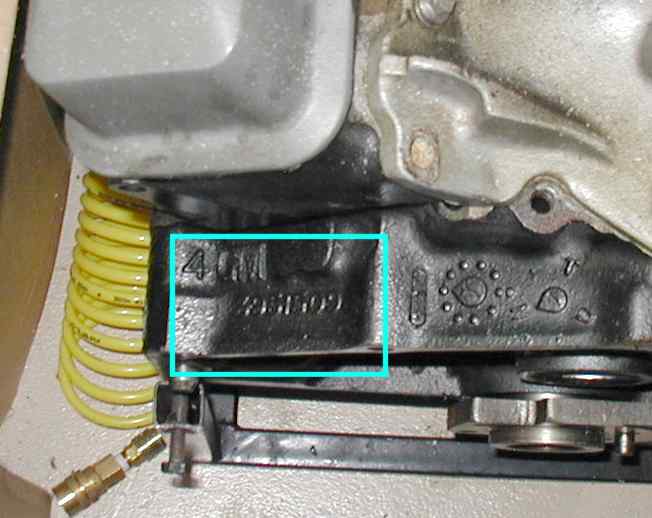
There is one of those ignorant hot-rodding myths that JUST WON'T DIE, that says that the other "010 020" means it's 1% nickel and 2% tin, or maybe the other way around. However the people who worked in the casting foundry at the time say that even though that's how it was originally supposed to work, the system only actually "worked" for a couple of weeks (as is what typically happens when some engineer the sum total of whose experience consists of sitting at a desk, designs a process to be used on the actual factory floor); then after those few weeks of confusion, the molds for the sand cores got all mixed up because it was MUCH too hard to manage all of that, and ALL blocks with a given casting number ended up getting the same metal alloys, so those other numbers are meaningless as well. Just left over artifacts from a failed experiment. Kind of like, your appendix.
The only ones on the block that are of any real use, besides the casting # on th etop of the bell housing flange, are the date codes. They're right next to the casting #, and will look something like "C233". That particular combination of digits would mean that it was cast in the "C"th month (the 3rd, March), the 23rd day, in a year ending in 3 (which would be 73 in the case of a 010 casting). You can't quite see them in this pic, but they're in the little oval pad feature that's just to the right of the rectangle.
There is one of those ignorant hot-rodding myths that JUST WON'T DIE, that says that the other "010 020" means it's 1% nickel and 2% tin, or maybe the other way around. However the people who worked in the casting foundry at the time say that even though that's how it was originally supposed to work, the system only actually "worked" for a couple of weeks (as is what typically happens when some engineer the sum total of whose experience consists of sitting at a desk, designs a process to be used on the actual factory floor); then after those few weeks of confusion, the molds for the sand cores got all mixed up because it was MUCH too hard to manage all of that, and ALL blocks with a given casting number ended up getting the same metal alloys, so those other numbers are meaningless as well. Just left over artifacts from a failed experiment. Kind of like, your appendix.
Last edited by sofakingdom; Dec 15, 2012 at 12:51 PM.

Moderator


Joined: Jul 1999
Posts: 17,264
Likes: 168
From: 51°N 114°W, 3500'
Car: 87 IROC L98
Engine: 588 Alcohol BBC
Transmission: Powerglide
Axle/Gears: Ford 9"/31 spline spool/4.86
Re: 3970010
The 010 and 020 are normally considered nickel and tin content. 1% and 2% but there's never any absolute proof that it really means that.
151, who knows. Just another casting mark that probably only the foundry knows what it really means.
151, who knows. Just another casting mark that probably only the foundry knows what it really means.

Junior Member
Joined: Jul 2012
Posts: 62
Likes: 0
From: illinois
Car: 1991 camaro rs
Engine: 350 bored .030 over, 438rwhp 429tq
Transmission: 700r4 stage 3 race 700hp
Axle/Gears: stock axles and 3.23 gears
Re: 3970010
3970010 is assumedly one of the strongest casting blocks GM made. usually out of a mid 70s truck. I just don't understand why GM put horrible heads and cam in them. most only had around 200HP
Joined: Sep 2005
Posts: 27,893
Likes: 2,435
Car: Yes
Engine: Usually
Transmission: Sometimes
Axle/Gears: Behind me somewhere
Re: 3970010
3970010 is probably the single most plentiful block casting in the history of the automobile. Usually out of a .... 70s Chevrolet product. Just yerbasic most typical ordinary run-of-the-mill regular average {blah blah blah} BLOCK. And I don't mean that in a "bad" way; just, that there's absolutely nothing whatsoever "special" about that casting, good bad or indifferent, in any manner way shape or form. It's just .... a ........ BLOCK. Nothing more, nothing less.
Reason they put terrible heads and cam on them, was the law and the conusmer demands (the oil price shocks) of the day, coupled with GM having been bled dry in one direction by the unions, and bled in the other direction into total oblivious complacency by oblivious complacent groupthink management. Plenty of blame to go around for ALL involved. If you had BEEN THERE at the time, you wouldn't "not" understand. It's kinda just the way it was right then in American history. Which incidentally is why, not these cars or any other from about the same time frame (73), have any kind of "romantic" "sentinmental" value in the mind of the general public; just like, cars from before about 1954 don't either. You don't hear about "numbers matching" 30s or 40s cars; you don't see people "restoring" to original "perfection" cars from before the mid 50s; you won't EVER see people treating cars from after around 73 the same as they do ones from about 55 to about 70.
Reason they put terrible heads and cam on them, was the law and the conusmer demands (the oil price shocks) of the day, coupled with GM having been bled dry in one direction by the unions, and bled in the other direction into total oblivious complacency by oblivious complacent groupthink management. Plenty of blame to go around for ALL involved. If you had BEEN THERE at the time, you wouldn't "not" understand. It's kinda just the way it was right then in American history. Which incidentally is why, not these cars or any other from about the same time frame (73), have any kind of "romantic" "sentinmental" value in the mind of the general public; just like, cars from before about 1954 don't either. You don't hear about "numbers matching" 30s or 40s cars; you don't see people "restoring" to original "perfection" cars from before the mid 50s; you won't EVER see people treating cars from after around 73 the same as they do ones from about 55 to about 70.

Thread
Thread Starter
Forum
Replies
Last Post


