


How to test EGR


Thread Starter
Junior Member
Joined: Nov 2012
Posts: 8
Likes: 0
From: Orcutt, Ca.
Car: '89 Camaro IROC Z
Engine: 5.7 TPI
Transmission: AOD
How to test EGR
I am installing new fuel injectors on my '89 5.7 TPI.
While it is apart I took off the EGR.
Should you be able to apply vacuum to the diaphram using a hand vacuum pump and see the EGR move? and should it hold vacuum?
(edit)
I found out that there are negative pressure EGR's and positive pressure EGR's.
To test a pos. press. EGR you would...
Diagnosis of Positive Backpressure EGR Valve
With the engine at normal operating temperature and running at idle speed, disconnect the vacuum hose from the EGR valve. Connect a hand vacuum pump to the EGR valve vacuum fitting, and operate the hand pump to supply vacuum to the valve. The vacuum should be bled off, and the EGR valve diaphragm and stem should not move. If the EGR valve does not operate properly, replace the valve.
Disconnect the EGR vacuum supply hose from the TBI unit and connect a long hose from this port directly to the EGR valve. Accelerate the engine to the 2,000 rpm and observe the ERG valve. The valve should open at this engine speed. Allow the engine to return to idle speed. The EGR valve should close. If the EGR valve does not open properly, remove the valve and check for a plugged or restricted exhaust passage under the valve. When these passages are not restricted, replace the valve.
So now my question is, does this engine have the pos. press. EGR or a neg. press. EGR?
While it is apart I took off the EGR.
Should you be able to apply vacuum to the diaphram using a hand vacuum pump and see the EGR move? and should it hold vacuum?
(edit)
I found out that there are negative pressure EGR's and positive pressure EGR's.
To test a pos. press. EGR you would...
Diagnosis of Positive Backpressure EGR Valve
With the engine at normal operating temperature and running at idle speed, disconnect the vacuum hose from the EGR valve. Connect a hand vacuum pump to the EGR valve vacuum fitting, and operate the hand pump to supply vacuum to the valve. The vacuum should be bled off, and the EGR valve diaphragm and stem should not move. If the EGR valve does not operate properly, replace the valve.
Disconnect the EGR vacuum supply hose from the TBI unit and connect a long hose from this port directly to the EGR valve. Accelerate the engine to the 2,000 rpm and observe the ERG valve. The valve should open at this engine speed. Allow the engine to return to idle speed. The EGR valve should close. If the EGR valve does not open properly, remove the valve and check for a plugged or restricted exhaust passage under the valve. When these passages are not restricted, replace the valve.
So now my question is, does this engine have the pos. press. EGR or a neg. press. EGR?
Last edited by tlap; Nov 15, 2012 at 09:50 AM.
Thread Starter
Junior Member
Joined: Nov 2012
Posts: 8
Likes: 0
From: Orcutt, Ca.
Car: '89 Camaro IROC Z
Engine: 5.7 TPI
Transmission: AOD
Re: How to test EGR
I just found this thread, question answered.
https://www.thirdgen.org/forums/tech...wont-open.html
And this article explained it further.......
How Does an EGR Valve Work
On a gasoline engine, when the temperature of the combustion chamber approaches 2500 degrees Fahrenheit, nitrous oxide emissions increase. The fuel air mixture can also spontaneously combust, causing valve clatter and damaging the engine. Allowing a small amount of exhaust gas back into the intake reduces combustion chamber temperature. Regulating the flow of exhaust gas is the job of the EGR system.
EGR stands for exhaust gas recycle
The most basic form of EGR would be a hole between the exhaust and intake manifolds. In the early 1970's EGR systems were little more. It was soon discovered that too much EGR or applying it at the wrong time creates problems. Over the years hundreds of EGR designs have been developed. Every design attempts to serve the same purpose, regulating exhaust flow.
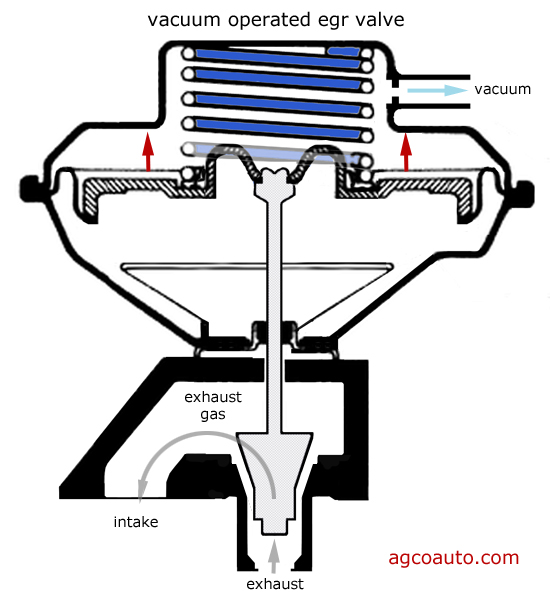
Most early EGR valves were vacuum-operated. A vacuum diaphragm opened and closed a valve, allowing and cutting off exhaust flow. An early refinement was a temperature-controlled shut-off in the vacuum source. This kept the EGR valve from opening when the engine was too cool. The cool engine did not require EGR and cutting it off made the engine run smoother.

EGR flow is also undesirable at other times, for instance at idle. At very low speed, combustion temperature is naturally lower. Adding exhaust gas at low speed can cause rough idle. The positive back-pressure EGR valve helped solve this problem.
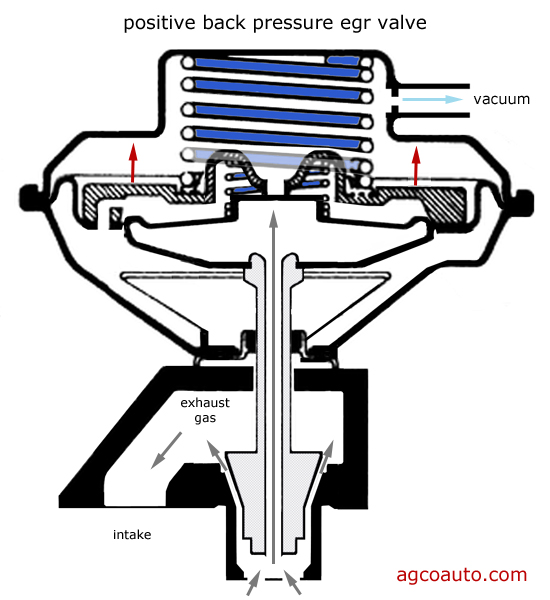
Similar to a standard vacuum model, the positive back-pressure design has a hollow valve stem. This allows exhaust gas pressure to push against a spring loaded vacuum valve. When back pressure rises, such as on acceleration, exhaust pressure closes the spring-valve and seals the vacuum opening. This allows an engine vacuum to open the EGR valve.

When back pressure is low, such as at an idle, the spring opens the vacuum port. Engine-vacuum is bled off and the EGR valve closes. The design change has caused many good EGR valves to be replaced needlessly.
Vacuum operated valves are often tested by applying vacuum to see if the valve opens. If the valve does not open or if the vacuum cannot be held, the valve is considered bad. This works okay on a standard or on a negative back-pressure EGR valve.
A positive back-pressure valve will not hold a vacuum or operate without positive back-pressure. Testing this valve by that method will give false results. The positive back-pressure valve would have to be tested with the engine speed raised to around two-thousand RPM, creating positive back-pressure.

EGR valves on modern vehicles are controlled by the engine computer as an output, using several sensors as inputs. Ford uses a differential pressure feedback EGR or DPFE sensor. This monitors exhaust back pressure before and after the valve. By comparing the two, EGR flow can be more precisely calculated. The vacuum source is regulated to open and close the EGR valve and control exhaust flow.

Electrically operated EGR valves are also common. These may have up to three valves in one unit. The engine computer can open and close any or all the valves in response to input from sensors. For instance the electronic temperature control or ETC sensor informs the computer when the engine is cold. Knock sensor(s) signal valve clatter or detonation. A sensor built into the unit informs the computer of the position of each valve.
Problems with EGR
Because exhaust gas contains carbon, the passages though which it flows are prone to stopping up. When this happens, the flow is interrupted. On post 1996 vehicles this will set a diagnostic trouble code or DTC and the check engine light will come on. These codes are very often misdiagnosed as a bad EGR valve.
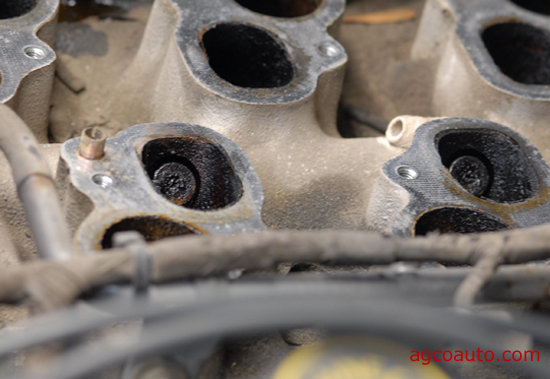
Many engines have multiple EGR ports for discharging exhaust into the intake. If several ports plug up, all flow can be directed to a single cylinder. This can cause a misfire, which is very often misdiagnosed. Countless injection flushes and "tune ups" are needlessly sold for this problem, without success. Removing the intake and clearing the passages are the only repair.

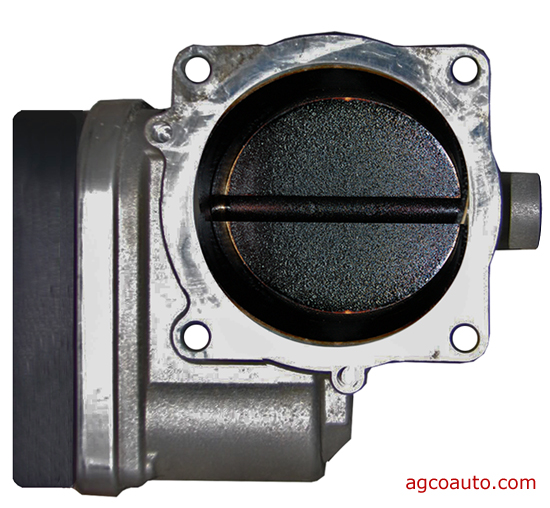
The carbon in the exhaust gas can also coat the throttle body plate. When this happens, rough idle and dying can occur. The engine may set a general misfire code, which is often misdiagnosed. Cleaning the throttle body will generally clear the problem.
Actual failure of the EGR valve is rare
An EGR valve can stick open when it should not, causing a rough idle or hesitation. It can also stick closed, causing valve clatter and a check engine light. Far more common are failures of the sensors that read and monitor the flow or the hoses and wires that control the system.
An EGR code needs to be properly diagnosed to learn the cause. Replacing parts without understanding how the system operates, can be a very expensive lesson in Swaptronics.
And from http://www.howstuffinmycarworks.com/EGR_valve.html
Note that is states that Negative Backpressure EGR "is tipically used on engines that have less than normal backpressure such as high performance vehicles with free flowing mufflers and large diameter exhaust systems."
Here is the whole article.......
How does the EGR valve work?
The EGR valve is designed specifically to recirculate the exhaust gas into the air/fuel mixture, thereby diluting the air/fuel mixture enough to keep the NOx compounds within breathable limits. This is done by allowing a specific amount of inert gas to pass from the exhaust manifold into the intake manifold through the EGR valve.
It was discovered that short peak combustion temperatures create NOx. By blending an inert gas with the air/fuel mixture, scientists discovered that the rate of combustion slowed down, the high temperatures were reduced and the NOx compounds were kept within limits.
Modern engines are equipped with oxidation/reduction catalysts and fuel injection systems that keep the NOx compounds to a minimum. But even with these newer, more efficient systems, the EGR system is still necessary to reduce the excess emissions.
Early EGR systems are made up of a vacuum-operated valve( EGR valve ) that admits exhaust gas into the intake manifold, a hose that is connected to a carburator port above the throttle plate and a thermostatic vacuum switch ( TVS ) spliced into a pipe that is threaded into the coolant passage near the thermostat. The TVS detects the operating temperature of the engine.
At idle, the throttle plate blocks the cacuum port so no vacuum reaches the EGR valve and it remains closed. As you accelerate, the throttle uncovers the port in the carburator or the throttle body, the vacuum signal reaches the EGR valve and slowly opens it, allowing exhaust gases to circulate into the intake manifold.
Since the exhaust gas causes a rough idle and stalling when the engine is cold, the TVS only allows vacuum to the EGR valve when the engine is at normal operating temperature.
Also, when the pedal is pushed all the way to the floor under acceleration, ther is very little vacuum available, resulting in very little mixture dilution that would interfere with power output.
The EGR valve on early carburated engines without computer controls acts solely in response to the temperature and venturi vacuum characteristics of the engine.
The EGR valve on engines with electronic fuel injection systems is controlled by the engine control computer ( ECM ) . EGR valves on computarized vehicles normally have a computer controlled solenoid in line between the valve and the vacuum source. They also often have an EGR position sensor that informs the computer what position the EGR valve is in.
There are 2 common types of EGR valves: Ported vacuum EGR valves and backpressure EGR valves.
The valve we described earlier is the ported EGR valve, besides this type, there are basically 2 types of backpressure EGR valves; The most common type is the positive backpressure valve, the other one is the negative backpressure valve.
It is important to know the difference between positive and negative backpressure valves because they work differently and they are tested differently also.
Positive backpressure EGR valve:
This type o valve is used largely on domestic models. It uses exhaust pressure to regulate the EGR flow through a vacuum control valve. The stem of the EGR valve is hollow and allows backpressure to enter at the bottom of the diaphragm. When sufficient exhaist backpressure is present, the diaphragm moves up and closes off the control valve, allowing the full vacumm signal to be applied to the upper portion of the EGR diaphragm. This opens the valve and allows recirculation to occur during heavy loads.
Be careful not to incorrectly diagnose this type of EGR valve. Because backpressure must be present to close the bleed hole, it is not possible to operate the EGR valve with a vacuum pump at idle or with the engine off. The valve is acting correctly when it refuses to move when vacuum is applied or it refuses to hold vacuum. Remember that anything that changes the pressure in the exhaust stream will disturb the calibration of the backpressure system including aftaermarket exhaust systems, headers and even clogged catalytic converters.
To distinguish this valve, turn it upside down and note the pattern of the diaphragm plate. Positive backpressure valves have slightly raised X-shaped rib. Negative backpressure EGR valves are raised considerably higher. On some GM EGR valves, the only way to distinguish each type is by a letter next to the date code and part number. N means negative and P means positive.
Negative backpressure EGR valve:
In this system, the bleed hole is normally closed when exhaust backpressure drops, the bleed valve opens and reduces the vacuum above the diaphragm, cutting the vacuum to the EGR valve. The negative backpressure EGR valve is similar to the positive backpressure EGR valve but operates in the opposite way. This type of valve is tipically used on engines that have less than normal backpressure such as high performance vehicles with free flowing mufflers and large diameter exhaust systems.
https://www.thirdgen.org/forums/tech...wont-open.html
And this article explained it further.......
How Does an EGR Valve Work
On a gasoline engine, when the temperature of the combustion chamber approaches 2500 degrees Fahrenheit, nitrous oxide emissions increase. The fuel air mixture can also spontaneously combust, causing valve clatter and damaging the engine. Allowing a small amount of exhaust gas back into the intake reduces combustion chamber temperature. Regulating the flow of exhaust gas is the job of the EGR system.
EGR stands for exhaust gas recycle
The most basic form of EGR would be a hole between the exhaust and intake manifolds. In the early 1970's EGR systems were little more. It was soon discovered that too much EGR or applying it at the wrong time creates problems. Over the years hundreds of EGR designs have been developed. Every design attempts to serve the same purpose, regulating exhaust flow.
Most early EGR valves were vacuum-operated. A vacuum diaphragm opened and closed a valve, allowing and cutting off exhaust flow. An early refinement was a temperature-controlled shut-off in the vacuum source. This kept the EGR valve from opening when the engine was too cool. The cool engine did not require EGR and cutting it off made the engine run smoother.
EGR flow is also undesirable at other times, for instance at idle. At very low speed, combustion temperature is naturally lower. Adding exhaust gas at low speed can cause rough idle. The positive back-pressure EGR valve helped solve this problem.
Similar to a standard vacuum model, the positive back-pressure design has a hollow valve stem. This allows exhaust gas pressure to push against a spring loaded vacuum valve. When back pressure rises, such as on acceleration, exhaust pressure closes the spring-valve and seals the vacuum opening. This allows an engine vacuum to open the EGR valve.
When back pressure is low, such as at an idle, the spring opens the vacuum port. Engine-vacuum is bled off and the EGR valve closes. The design change has caused many good EGR valves to be replaced needlessly.
Vacuum operated valves are often tested by applying vacuum to see if the valve opens. If the valve does not open or if the vacuum cannot be held, the valve is considered bad. This works okay on a standard or on a negative back-pressure EGR valve.
A positive back-pressure valve will not hold a vacuum or operate without positive back-pressure. Testing this valve by that method will give false results. The positive back-pressure valve would have to be tested with the engine speed raised to around two-thousand RPM, creating positive back-pressure.
EGR valves on modern vehicles are controlled by the engine computer as an output, using several sensors as inputs. Ford uses a differential pressure feedback EGR or DPFE sensor. This monitors exhaust back pressure before and after the valve. By comparing the two, EGR flow can be more precisely calculated. The vacuum source is regulated to open and close the EGR valve and control exhaust flow.
Electrically operated EGR valves are also common. These may have up to three valves in one unit. The engine computer can open and close any or all the valves in response to input from sensors. For instance the electronic temperature control or ETC sensor informs the computer when the engine is cold. Knock sensor(s) signal valve clatter or detonation. A sensor built into the unit informs the computer of the position of each valve.
Problems with EGR
Because exhaust gas contains carbon, the passages though which it flows are prone to stopping up. When this happens, the flow is interrupted. On post 1996 vehicles this will set a diagnostic trouble code or DTC and the check engine light will come on. These codes are very often misdiagnosed as a bad EGR valve.
Many engines have multiple EGR ports for discharging exhaust into the intake. If several ports plug up, all flow can be directed to a single cylinder. This can cause a misfire, which is very often misdiagnosed. Countless injection flushes and "tune ups" are needlessly sold for this problem, without success. Removing the intake and clearing the passages are the only repair.
The carbon in the exhaust gas can also coat the throttle body plate. When this happens, rough idle and dying can occur. The engine may set a general misfire code, which is often misdiagnosed. Cleaning the throttle body will generally clear the problem.
Actual failure of the EGR valve is rare
An EGR valve can stick open when it should not, causing a rough idle or hesitation. It can also stick closed, causing valve clatter and a check engine light. Far more common are failures of the sensors that read and monitor the flow or the hoses and wires that control the system.
An EGR code needs to be properly diagnosed to learn the cause. Replacing parts without understanding how the system operates, can be a very expensive lesson in Swaptronics.
And from http://www.howstuffinmycarworks.com/EGR_valve.html
Note that is states that Negative Backpressure EGR "is tipically used on engines that have less than normal backpressure such as high performance vehicles with free flowing mufflers and large diameter exhaust systems."
Here is the whole article.......
How does the EGR valve work?
The EGR valve is designed specifically to recirculate the exhaust gas into the air/fuel mixture, thereby diluting the air/fuel mixture enough to keep the NOx compounds within breathable limits. This is done by allowing a specific amount of inert gas to pass from the exhaust manifold into the intake manifold through the EGR valve.
It was discovered that short peak combustion temperatures create NOx. By blending an inert gas with the air/fuel mixture, scientists discovered that the rate of combustion slowed down, the high temperatures were reduced and the NOx compounds were kept within limits.
Modern engines are equipped with oxidation/reduction catalysts and fuel injection systems that keep the NOx compounds to a minimum. But even with these newer, more efficient systems, the EGR system is still necessary to reduce the excess emissions.
Early EGR systems are made up of a vacuum-operated valve( EGR valve ) that admits exhaust gas into the intake manifold, a hose that is connected to a carburator port above the throttle plate and a thermostatic vacuum switch ( TVS ) spliced into a pipe that is threaded into the coolant passage near the thermostat. The TVS detects the operating temperature of the engine.
At idle, the throttle plate blocks the cacuum port so no vacuum reaches the EGR valve and it remains closed. As you accelerate, the throttle uncovers the port in the carburator or the throttle body, the vacuum signal reaches the EGR valve and slowly opens it, allowing exhaust gases to circulate into the intake manifold.
Since the exhaust gas causes a rough idle and stalling when the engine is cold, the TVS only allows vacuum to the EGR valve when the engine is at normal operating temperature.
Also, when the pedal is pushed all the way to the floor under acceleration, ther is very little vacuum available, resulting in very little mixture dilution that would interfere with power output.
The EGR valve on early carburated engines without computer controls acts solely in response to the temperature and venturi vacuum characteristics of the engine.
The EGR valve on engines with electronic fuel injection systems is controlled by the engine control computer ( ECM ) . EGR valves on computarized vehicles normally have a computer controlled solenoid in line between the valve and the vacuum source. They also often have an EGR position sensor that informs the computer what position the EGR valve is in.
There are 2 common types of EGR valves: Ported vacuum EGR valves and backpressure EGR valves.
The valve we described earlier is the ported EGR valve, besides this type, there are basically 2 types of backpressure EGR valves; The most common type is the positive backpressure valve, the other one is the negative backpressure valve.
It is important to know the difference between positive and negative backpressure valves because they work differently and they are tested differently also.
Positive backpressure EGR valve:
This type o valve is used largely on domestic models. It uses exhaust pressure to regulate the EGR flow through a vacuum control valve. The stem of the EGR valve is hollow and allows backpressure to enter at the bottom of the diaphragm. When sufficient exhaist backpressure is present, the diaphragm moves up and closes off the control valve, allowing the full vacumm signal to be applied to the upper portion of the EGR diaphragm. This opens the valve and allows recirculation to occur during heavy loads.
Be careful not to incorrectly diagnose this type of EGR valve. Because backpressure must be present to close the bleed hole, it is not possible to operate the EGR valve with a vacuum pump at idle or with the engine off. The valve is acting correctly when it refuses to move when vacuum is applied or it refuses to hold vacuum. Remember that anything that changes the pressure in the exhaust stream will disturb the calibration of the backpressure system including aftaermarket exhaust systems, headers and even clogged catalytic converters.
To distinguish this valve, turn it upside down and note the pattern of the diaphragm plate. Positive backpressure valves have slightly raised X-shaped rib. Negative backpressure EGR valves are raised considerably higher. On some GM EGR valves, the only way to distinguish each type is by a letter next to the date code and part number. N means negative and P means positive.
Negative backpressure EGR valve:
In this system, the bleed hole is normally closed when exhaust backpressure drops, the bleed valve opens and reduces the vacuum above the diaphragm, cutting the vacuum to the EGR valve. The negative backpressure EGR valve is similar to the positive backpressure EGR valve but operates in the opposite way. This type of valve is tipically used on engines that have less than normal backpressure such as high performance vehicles with free flowing mufflers and large diameter exhaust systems.
Last edited by tlap; Nov 15, 2012 at 02:06 PM.

Thread
Thread Starter
Forum
Replies
Last Post
sailtexas186548
Engine/Drivetrain/Suspension Parts for Sale
8
Feb 17, 2017 03:07 PM
