


TPI V6?


Thread Starter
Senior Member
Joined: Jun 2009
Posts: 976
Likes: 0
From: Montgomery, PA
Car: 1990 Camaro RS
Engine: 355 Vortec TPI LT4 Hotcam
Transmission: TH700-R4
Axle/Gears: 3.23
TPI V6?
Searching through the junkyard a few days ago, I cam across this:
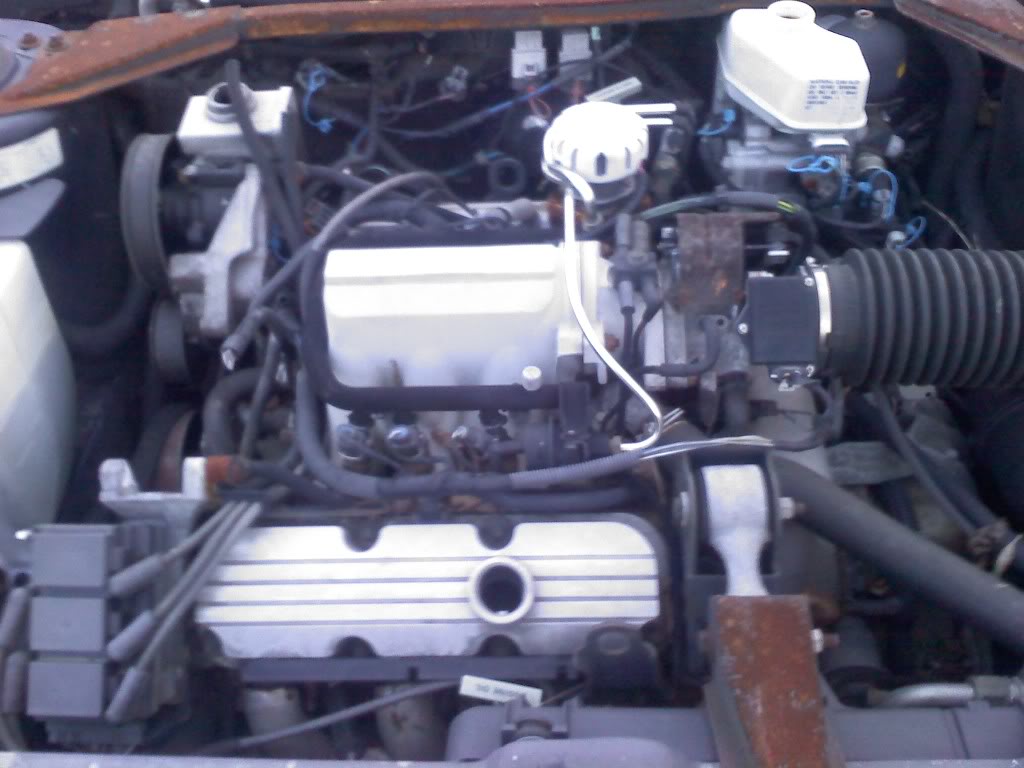
Its not the greatest picture, but its an intake manifold that I've never seen before on a Gen II V6 like ours...
I checked the VIN on the car, and it was a T-code too, so 3.1L V6, but its got this weird manifold on it, anyone see anything like this before?
Its kinda got me confused too....it was a T-code, but its got a coil pack, and if you look, its got headers too, so is this just some crazy mod or is this factory?
Its not the greatest picture, but its an intake manifold that I've never seen before on a Gen II V6 like ours...
I checked the VIN on the car, and it was a T-code too, so 3.1L V6, but its got this weird manifold on it, anyone see anything like this before?
Its kinda got me confused too....it was a T-code, but its got a coil pack, and if you look, its got headers too, so is this just some crazy mod or is this factory?
Last edited by FireInMe17; Jan 5, 2011 at 09:30 PM.


Joined: Sep 2004
Posts: 2,777
Likes: 7
From: Casselberry, FLA
Car: 88 V6 'bird/89TBI bird/85 T/A
Engine: 2.8/TBI/TPI
Transmission: V8 T-5/700R4 x2
Axle/Gears: 3.42 open/2.73 open/ 3.27 9 bolt
Re: TPI V6?
That's a Buick V6, I think. I will try to find the particular one. Well, technically a corporate V6 (like the 3800) that has Buick roots.
I'll post when I find it.
Do you remember what car it was in?
It looks like the Vin code C 3800 from my 88 Bonneville.
I'll post when I find it.
Do you remember what car it was in?
It looks like the Vin code C 3800 from my 88 Bonneville.
Last edited by KrisW; Jan 5, 2011 at 10:00 PM.
Thread Starter
Senior Member
Joined: Jun 2009
Posts: 976
Likes: 0
From: Montgomery, PA
Car: 1990 Camaro RS
Engine: 355 Vortec TPI LT4 Hotcam
Transmission: TH700-R4
Axle/Gears: 3.23
Re: TPI V6?
No, I don't remember what it was in, but it was def from the same time period as the 2.8/3.1. And who knows, maybe I read the VIN wrong and it isn't a T-code because I've never seen anything like this for a T-code...

Joined: Mar 2006
Posts: 4,370
Likes: 19
Car: 1973 Datsun 240Z/ 1985 S-15 Jimmy
Engine: Turbo LX9/To be decided
Transmission: 5-speed/T-5
Axle/Gears: R200 3.90/7.5" 3.73
Re: TPI V6?
The 2.8/3.1 in the F-bodies are generation 1, NOT 2. Gen2 60 degree V6s were only installed in front wheel drive vehicles.
The engine in the picture in the first post is NOT a 60 degree V6, it is a 90* V6, based on the Buick 3.8.
No, the intake will not swap onto a 60 degree V6.
The engine in the picture in the first post is NOT a 60 degree V6, it is a 90* V6, based on the Buick 3.8.
No, the intake will not swap onto a 60 degree V6.

Thread Starter
Senior Member
Joined: Jun 2009
Posts: 976
Likes: 0
From: Montgomery, PA
Car: 1990 Camaro RS
Engine: 355 Vortec TPI LT4 Hotcam
Transmission: TH700-R4
Axle/Gears: 3.23
Re: TPI V6?
1) I did not know what the engine was, the only time I spent looking at it was the time I took to take the picture, me being at the junkyard, I was searching for much more important things.
2) I always want to call the 3.1L part of Gen II because when I first read about the engines, the website I was on referred to the 3.1 as the second i iteration of the 60* V6 engines that were here talking about, thus always making me think 3.1=Gen II.
3) Had I known this was a 90* V6 before posting (And I should have if I would have payed more attention to just how wide the engine was....) I probably would have asked why no one has tried to fabricate anything like this, or something to match the TPI systems on the 305/350 instead of what the heck is this manifold doing on this engine like so....
4) Your right, your infinite knowledge is just so handy at times
2) I always want to call the 3.1L part of Gen II because when I first read about the engines, the website I was on referred to the 3.1 as the second i iteration of the 60* V6 engines that were here talking about, thus always making me think 3.1=Gen II.
3) Had I known this was a 90* V6 before posting (And I should have if I would have payed more attention to just how wide the engine was....) I probably would have asked why no one has tried to fabricate anything like this, or something to match the TPI systems on the 305/350 instead of what the heck is this manifold doing on this engine like so....
4) Your right, your infinite knowledge is just so handy at times
Trending Topics
Joined: Mar 2006
Posts: 4,370
Likes: 19
Car: 1973 Datsun 240Z/ 1985 S-15 Jimmy
Engine: Turbo LX9/To be decided
Transmission: 5-speed/T-5
Axle/Gears: R200 3.90/7.5" 3.73
Re: TPI V6?
There is a manifold similar to the one on that 3800 for the SBC, the name of it is eluding me right now, but people seem to like it.
You need to stop calling all 3.1s "gen2", while there is a generation 2 3.1, RWD vehicles never had them installed from the factory. Gen2 engines all use aluminum heads, and DIS ignition., among other differences from the genI engine. Before anyone says it, the 3.4 in the '93 to '95 F-body does use DIS, but it is still a gen1 660, due to the design of it, using the iron heads. It does use more advanced controls, than the older genI engines, however.
You need to stop calling all 3.1s "gen2", while there is a generation 2 3.1, RWD vehicles never had them installed from the factory.
Gen2 engines all use aluminum heads, and DIS ignition., among other differences from the genI engine. Before anyone says it, the 3.4 in the '93 to '95 F-body does use DIS, but it is still a gen1 660, due to the design of it, using the iron heads. It does use more advanced controls, than the older genI engines, however. Joined: Sep 2004
Posts: 2,777
Likes: 7
From: Casselberry, FLA
Car: 88 V6 'bird/89TBI bird/85 T/A
Engine: 2.8/TBI/TPI
Transmission: V8 T-5/700R4 x2
Axle/Gears: 3.42 open/2.73 open/ 3.27 9 bolt
Re: TPI V6?
I believe that is the ramjet intake from GMPP, that you are talking about.

Supreme Member
iTrader: (5)
Joined: Dec 2001
Posts: 2,873
Likes: 5
From: East Tennessee
Car: 1992 Z28 Heritage Edition
Engine: L98
Transmission: T56
Axle/Gears: 3.23:1
Re: TPI V6?
Its not the greatest picture, but its an intake manifold that I've never seen before on a Gen II V6 like ours...
I checked the VIN on the car, and it was a T-code too, so 3.1L V6, but its got this weird manifold on it, anyone see anything like this before?
Its kinda got me confused too....it was a T-code, but its got a coil pack, and if you look, its got headers too, so is this just some crazy mod or is this factory?
I checked the VIN on the car, and it was a T-code too, so 3.1L V6, but its got this weird manifold on it, anyone see anything like this before?
Its kinda got me confused too....it was a T-code, but its got a coil pack, and if you look, its got headers too, so is this just some crazy mod or is this factory?
Just some FYI. Now, more about the LG7, or 3300 GM V6:
3300 (LG7)
A smaller 3.3 L 3300 was introduced in 1989 and produced through 1993. It is effectively a lower-deck version of the 3800, with a smaller 3.7 in (93.98 mm) bore and 3.16 in (80.26 mm) stroke for 3,344 cc (204.1 cu in). Like the 3800, it used a cast iron block and heads, push rods, and hydraulic lifters. Unlike the 3800, however, it used a batch-fire injection system rather than sequential injection, as evidenced by the lack of a cam position sensor. It also did not have a balance shaft. Power output was 160 hp (120 kW) at 5200 rpm and 185 lb·ft (251 N·m) at 2000 rpm with a 5500 rpm redline.
Applications:
* Buick Century
* Buick Skylark
* Pontiac Grand Am
* Oldsmobile Achieva
* Oldsmobile Calais
* Oldsmobile Cutlass Ciera
Not really a common engine anymore, but they're still out there...
[edit]It MAY be a 1st series 3800 as well - I'm looking for photos of the engines, they're very close in external appearance. What car was this engine in?
Last edited by Dante93GTZ; Jan 6, 2011 at 08:54 AM.
Joined: Sep 2004
Posts: 2,777
Likes: 7
From: Casselberry, FLA
Car: 88 V6 'bird/89TBI bird/85 T/A
Engine: 2.8/TBI/TPI
Transmission: V8 T-5/700R4 x2
Axle/Gears: 3.42 open/2.73 open/ 3.27 9 bolt
Re: TPI V6?
I think all of those 3300 engines were vin code N, right?
Supreme Member
iTrader: (5)
Joined: Dec 2001
Posts: 2,873
Likes: 5
From: East Tennessee
Car: 1992 Z28 Heritage Edition
Engine: L98
Transmission: T56
Axle/Gears: 3.23:1

Supreme Member
iTrader: (4)
Joined: Nov 2003
Posts: 1,049
Likes: 1
From: Oklahoma City
Car: 1991 Firebird
Engine: 3.1L +bolt ons
Transmission: 700R4
Axle/Gears: Moser forged, 3.73, SLP posi
Re: TPI V6?
Next time you're unsure in the yard, look at the emissions sticker. It should be on the hood or radiator support, and shows a diagram of the serpentine belt routing. It also will list engine displacement.
Thread Starter
Senior Member
Joined: Jun 2009
Posts: 976
Likes: 0
From: Montgomery, PA
Car: 1990 Camaro RS
Engine: 355 Vortec TPI LT4 Hotcam
Transmission: TH700-R4
Axle/Gears: 3.23
Re: TPI V6?
the car was pretty torn apart, it didnt have a hood, and some of the bumpers and body panels were missing, and most of the interior was trashed but it was a coupe. the thing what im most interested in is just the possibilities of an intake like this. project89 makes this kinda stuff all the time right? maybe a tpi rip off for the 60* v6 engines would be something good to try in the future.
as for the vin, i dont know where the t came from, but now we know that its from the 90* v6 family. but thats not really the point. ive just never seen anything like that on an old v6 and i got excited with the possibilites
as for the vin, i dont know where the t came from, but now we know that its from the 90* v6 family. but thats not really the point. ive just never seen anything like that on an old v6 and i got excited with the possibilites
Thread Starter
Senior Member
Joined: Jun 2009
Posts: 976
Likes: 0
From: Montgomery, PA
Car: 1990 Camaro RS
Engine: 355 Vortec TPI LT4 Hotcam
Transmission: TH700-R4
Axle/Gears: 3.23
Re: TPI V6?
the car was pretty torn apart, it didnt have a hood, and some of the bumpers and body panels were missing, and most of the interior was trashed but it was a coupe. the thing what im most interested in is just the possibilities of an intake like this. project89 makes this kinda stuff all the time right? maybe a tpi rip off for the 60* v6 engines would be something good to try in the future.
as for the vin, i dont know where the t came from, but now we know that its from the 90* v6 family. but thats not really the point. ive just never seen anything like that on an old v6 and i got excited with the possibilites
as for the vin, i dont know where the t came from, but now we know that its from the 90* v6 family. but thats not really the point. ive just never seen anything like that on an old v6 and i got excited with the possibilites
Joined: Sep 2004
Posts: 2,777
Likes: 7
From: Casselberry, FLA
Car: 88 V6 'bird/89TBI bird/85 T/A
Engine: 2.8/TBI/TPI
Transmission: V8 T-5/700R4 x2
Axle/Gears: 3.42 open/2.73 open/ 3.27 9 bolt
Re: TPI V6?
There are tons of those intakes on 3300 and 3800 engines (up to 89) and the yards are full of them. If you put two together, you can use it on a Buick 300, 340, 215 or Rover V8.
They are not fitting chevy stuff...
They are not fitting chevy stuff...
Thread Starter
Senior Member
Joined: Jun 2009
Posts: 976
Likes: 0
From: Montgomery, PA
Car: 1990 Camaro RS
Engine: 355 Vortec TPI LT4 Hotcam
Transmission: TH700-R4
Axle/Gears: 3.23
Re: TPI V6?
Well yeah, I'm wondering about fabricating one to fit a 660....I'd pay to have it done if it would have a similar effect as Carb/Crossfire FI to TPI did for the small blocks...
Joined: Sep 2004
Posts: 2,777
Likes: 7
From: Casselberry, FLA
Car: 88 V6 'bird/89TBI bird/85 T/A
Engine: 2.8/TBI/TPI
Transmission: V8 T-5/700R4 x2
Axle/Gears: 3.42 open/2.73 open/ 3.27 9 bolt
Re: TPI V6?
honestly, I don't think it's the way to go for the 6/60...
If you were looking for a similar intake, try a carb intake. Then make yourself an air inlet to bolt onto the intake that will accept your throttle body, or another that you prefer. If you look at the Grand National intake, that is similar.
And if you're gonna turbo it, it doesn't matter so much. You'd be surprised at how pressurized air coming in overcomes things like port design. Bigger size will help, but the shape starts to not matter so much.
I prefer a wet manifold myself, so I end up with carb manifolds most of the time that are modified.
If you were looking for a similar intake, try a carb intake. Then make yourself an air inlet to bolt onto the intake that will accept your throttle body, or another that you prefer. If you look at the Grand National intake, that is similar.
And if you're gonna turbo it, it doesn't matter so much. You'd be surprised at how pressurized air coming in overcomes things like port design. Bigger size will help, but the shape starts to not matter so much.
I prefer a wet manifold myself, so I end up with carb manifolds most of the time that are modified.
Thread Starter
Senior Member
Joined: Jun 2009
Posts: 976
Likes: 0
From: Montgomery, PA
Car: 1990 Camaro RS
Engine: 355 Vortec TPI LT4 Hotcam
Transmission: TH700-R4
Axle/Gears: 3.23
Re: TPI V6?
Yeah, I love the TBI on my 4.3 on my Blazer, but its not really a performance engine with that intake, its a truck engine, its made to haul and tow, and to get your *** out of ditches with the 4x4.
GM gave the small blocks TPI to give them better performance. TPI has GOT to have some uncovered potential somewhere, if not on a V8, maybe something smaller. And I've really always thought that some knock off TPI system for a V6 like the 2.8 or 3.1 would be good if put into good enough heads.
Why has no one ever tried it before? Or at least ran some numbers?
GM gave the small blocks TPI to give them better performance. TPI has GOT to have some uncovered potential somewhere, if not on a V8, maybe something smaller. And I've really always thought that some knock off TPI system for a V6 like the 2.8 or 3.1 would be good if put into good enough heads.
Why has no one ever tried it before? Or at least ran some numbers?
Last edited by FireInMe17; Jan 6, 2011 at 05:50 PM.
Joined: Sep 2004
Posts: 2,777
Likes: 7
From: Casselberry, FLA
Car: 88 V6 'bird/89TBI bird/85 T/A
Engine: 2.8/TBI/TPI
Transmission: V8 T-5/700R4 x2
Axle/Gears: 3.42 open/2.73 open/ 3.27 9 bolt
Re: TPI V6?
Well, first off, I love TBI. I think of TBI as a very well managed carburetor that should self tune when it needs to. No worrying about elevation or atmospheric conditions. There are plenty of examples of carburetors winning races, so I figure this should too. Port injection seems to me to be about efficiency more than winning the race.
I want to win the race, but be more efficient on the drive home than my carburetor was. TBI can do that.
I think nobody got on the project you are describing because the 6/60 is severely displacement limited. Most people will spend money on twin cam heads, or at the least the front wheel drive heads, and forced induction (and then screw the intake, who cares) to get the power they want out of the little guys.
Ultimately, I think if you spent the money it would take to make an N/A 2.8 really perform, you could have spent that money on a turbo kit that makes it REALLY perform. That's how it seems to me, anyway.
The multi port setup that our 2.8 and 3.1 engines run seems to me to be about efficiency over performance as well. I had an S-10 with a TBI 3.1 and that engine pulled harder than my port injected 3.1 in my firebird. I will be doing a few more tests on my 2.8 before I pull it out in favor of a Buick V6. the last test it will get will be the install of the aluminum TBI intake and TBI unit to see how it performs versus the mpfi it has now. I am betting that it will drive better, and with the high mileage the engine has, I also bet I won't see a difference in mileage unless I am whipping it.
I am sure the mpfi ecm can handle the TBI unit, so I am gonna do it. I saw FAST355 do a mass air flow system TBI on a V8 so I am sure it will work on a V6.
I'll start the thread in the V6 section when I do it. I want to do that to get the bugs worked out of the system so that I can use that system on my Buick V6 engine.
Then come the turbos.
Its gonna take time, but I will get it done.
I want to win the race, but be more efficient on the drive home than my carburetor was. TBI can do that.
I think nobody got on the project you are describing because the 6/60 is severely displacement limited. Most people will spend money on twin cam heads, or at the least the front wheel drive heads, and forced induction (and then screw the intake, who cares) to get the power they want out of the little guys.
Ultimately, I think if you spent the money it would take to make an N/A 2.8 really perform, you could have spent that money on a turbo kit that makes it REALLY perform. That's how it seems to me, anyway.
The multi port setup that our 2.8 and 3.1 engines run seems to me to be about efficiency over performance as well. I had an S-10 with a TBI 3.1 and that engine pulled harder than my port injected 3.1 in my firebird. I will be doing a few more tests on my 2.8 before I pull it out in favor of a Buick V6. the last test it will get will be the install of the aluminum TBI intake and TBI unit to see how it performs versus the mpfi it has now. I am betting that it will drive better, and with the high mileage the engine has, I also bet I won't see a difference in mileage unless I am whipping it.
I am sure the mpfi ecm can handle the TBI unit, so I am gonna do it. I saw FAST355 do a mass air flow system TBI on a V8 so I am sure it will work on a V6.
I'll start the thread in the V6 section when I do it. I want to do that to get the bugs worked out of the system so that I can use that system on my Buick V6 engine.
Then come the turbos.
Its gonna take time, but I will get it done.
Thread Starter
Senior Member
Joined: Jun 2009
Posts: 976
Likes: 0
From: Montgomery, PA
Car: 1990 Camaro RS
Engine: 355 Vortec TPI LT4 Hotcam
Transmission: TH700-R4
Axle/Gears: 3.23
Re: TPI V6?
I love TBI too, I've been driving around my Blazer since I got it over a month ago and only drove the Camaro once to keep it away from the snow....but I know what you mean.
TBI is great, but imagine combining the fuel efficiency properties of a MPFI system with the power and ease of a TBI system. Thats what I think TPI is.
TPI gave the 350 40 more horses when it was implemented in 1985, and it also gave it better fuel economy. 40 more horses is a pretty big gain if you ask me with just the addition of a new induction method.
- Fuelinjection.com
And yes, your right, TBI requires nothing like TPI or MPFI to operate properly, with a good TBI system its just plug and play, no worrying about your elevation, or the air pressure, or the manifold pressure or any of that. It just works the same way that a carburetor does, but instead of dumping fuel into the engine, it injects it and thus gives it better performance, and mileage.
But isn't that pretty much the same thing that the step up from MPFI to TPI would provide? MPFI isn't dumping fuel into the engine, but TPI of course is "Tuned Port Injection" meaning that the air is much better metered into each cylinder, carrying the right amount of fuel and air mixture to each cylinder, taking into account the air pressure, and the elevation, and all vacuums of the engine, the things that make this type of induction so efficient when driven nice. But at the same time, when you step on it, you can get serious response and performance.
Just look at the 4.3L. After they moved away from TBI, they moved to CPI or Central Port Fuel Injection, which pretty much is the V6 equivalent form of TPI, but a little bit different. The old TBI 4.3L like the one in my Blazer, make 160hp and 230ft/ilbs. The CPI made 200hp and 260 ft/ilbs. So the improvements are definitely there. Even with a 6 banger. Theres also the difference between the swirl port heads and the Vortec heads, but thats a different story.


And yes, the 6/60's are small little engines really, but the gains are pretty much the same for the 4.3L and the 5.0L, and the 5.7L engines. We shouldn't assume that the gains wouldn't be there for a 2.8/3.1L.
Correct me if I'm wrong with any of this, but thats what I got with it, and I think its worth it to try, and I'd do it if I could, but can't.
Turbocharging is pretty much the route that everyone will take to get more performance out of their V6, because its safe, and its proven, and thanks to bl85c, we know just how much a V6 can take until it pops. And thats what people want.
Right now, your other option, is to do a hybrid, that is pretty much a mix match of parts of similarly compatible parts put together to make a working, running engine. This route would be more or less the same exact thing of what a V6 TPI system would look like. It would most likely need V8 sensors adjusted to the lower volumes and pressures of a smaller engine, it would also take ECM working to get it to all fire correctly, and it would probably take different injectors to get it done too.
But look at a hybrid. You have Gen I and Gen II, sometimes even Gen III stuff all put together to make an engine(heads/intakes/throttle bodies), different injectors, different custom ECM's for every different application based on a multitude of different variables that the user wants on their build, and different ignition systems whether it be through a distributor, or coil packs.
With a V6 TPI system what would you need really? Well first a custom intake and plenum construction that would be TPI, fuel injectors possibly, an assortment of V8 sensors adapted to run a smaller engine environment, a custom flashed ECM/PROM to make it all work, which isn't really a big deal because everyone's doing it, and if you really want to get into it, ported/polished heads to help the TPI flow better, and headers and a full exhaust on the other side of that. P&P is no big deal, and neither is a full exhaust.
The biggest part of the work, is going to be copying the V8 TPI system, and learning all the variables associated with how it works on a V8, and an understanding of how it would translate onto a smaller displacement V6, effectively downsizing it and removing two of the runners, and there are more than enough people between the TPI and V6 threads that could come together to make it work right. And beyond that, it would just be people getting the proper sensors to work together and adapted. Then its just fabrication work.
I mean come on guys, if we can figure out that we can slap together Gen II/III heads and intakes onto Gen I blocks and get it to work, then why can't we figure out a little bit of fabrication and ingenuity to make a V6 TPI system? I only wish that I knew how to do it all myself...
TBI is great, but imagine combining the fuel efficiency properties of a MPFI system with the power and ease of a TBI system. Thats what I think TPI is.
TPI gave the 350 40 more horses when it was implemented in 1985, and it also gave it better fuel economy. 40 more horses is a pretty big gain if you ask me with just the addition of a new induction method.
The first production TUNED PORT INJECTION (TPI) appeared on General Motors vehicles in 1985. The GM vehicles built with these systems were Corvette, Pontiac Firebird & Trans AM, and the Chevrolet Camaro. These systems according to the manufacturer rendered up to 30 % improvement in Horsepower, torque and economy over carbureted systems, Independent labratories conducted numerous test on the TPI systems and indicated these claims were conservative and that increases of up to 35% in these three areas are attainable.
And yes, your right, TBI requires nothing like TPI or MPFI to operate properly, with a good TBI system its just plug and play, no worrying about your elevation, or the air pressure, or the manifold pressure or any of that. It just works the same way that a carburetor does, but instead of dumping fuel into the engine, it injects it and thus gives it better performance, and mileage.
But isn't that pretty much the same thing that the step up from MPFI to TPI would provide? MPFI isn't dumping fuel into the engine, but TPI of course is "Tuned Port Injection" meaning that the air is much better metered into each cylinder, carrying the right amount of fuel and air mixture to each cylinder, taking into account the air pressure, and the elevation, and all vacuums of the engine, the things that make this type of induction so efficient when driven nice. But at the same time, when you step on it, you can get serious response and performance.
Just look at the 4.3L. After they moved away from TBI, they moved to CPI or Central Port Fuel Injection, which pretty much is the V6 equivalent form of TPI, but a little bit different. The old TBI 4.3L like the one in my Blazer, make 160hp and 230ft/ilbs. The CPI made 200hp and 260 ft/ilbs. So the improvements are definitely there. Even with a 6 banger. Theres also the difference between the swirl port heads and the Vortec heads, but thats a different story.
And yes, the 6/60's are small little engines really, but the gains are pretty much the same for the 4.3L and the 5.0L, and the 5.7L engines. We shouldn't assume that the gains wouldn't be there for a 2.8/3.1L.
Correct me if I'm wrong with any of this, but thats what I got with it, and I think its worth it to try, and I'd do it if I could, but can't.
Turbocharging is pretty much the route that everyone will take to get more performance out of their V6, because its safe, and its proven, and thanks to bl85c, we know just how much a V6 can take until it pops. And thats what people want.
Right now, your other option, is to do a hybrid, that is pretty much a mix match of parts of similarly compatible parts put together to make a working, running engine. This route would be more or less the same exact thing of what a V6 TPI system would look like. It would most likely need V8 sensors adjusted to the lower volumes and pressures of a smaller engine, it would also take ECM working to get it to all fire correctly, and it would probably take different injectors to get it done too.
But look at a hybrid. You have Gen I and Gen II, sometimes even Gen III stuff all put together to make an engine(heads/intakes/throttle bodies), different injectors, different custom ECM's for every different application based on a multitude of different variables that the user wants on their build, and different ignition systems whether it be through a distributor, or coil packs.
With a V6 TPI system what would you need really? Well first a custom intake and plenum construction that would be TPI, fuel injectors possibly, an assortment of V8 sensors adapted to run a smaller engine environment, a custom flashed ECM/PROM to make it all work, which isn't really a big deal because everyone's doing it, and if you really want to get into it, ported/polished heads to help the TPI flow better, and headers and a full exhaust on the other side of that. P&P is no big deal, and neither is a full exhaust.
The biggest part of the work, is going to be copying the V8 TPI system, and learning all the variables associated with how it works on a V8, and an understanding of how it would translate onto a smaller displacement V6, effectively downsizing it and removing two of the runners, and there are more than enough people between the TPI and V6 threads that could come together to make it work right. And beyond that, it would just be people getting the proper sensors to work together and adapted. Then its just fabrication work.
I mean come on guys, if we can figure out that we can slap together Gen II/III heads and intakes onto Gen I blocks and get it to work, then why can't we figure out a little bit of fabrication and ingenuity to make a V6 TPI system? I only wish that I knew how to do it all myself...
Last edited by FireInMe17; Jan 6, 2011 at 07:11 PM.
Joined: Sep 2004
Posts: 2,777
Likes: 7
From: Casselberry, FLA
Car: 88 V6 'bird/89TBI bird/85 T/A
Engine: 2.8/TBI/TPI
Transmission: V8 T-5/700R4 x2
Axle/Gears: 3.42 open/2.73 open/ 3.27 9 bolt
Re: TPI V6?
Wow, that's a lot to respond to, so I will take it a piece at a time...
The TPI system that supposedly did so much better than the carb system? Well, guess what? There were a lot of other factors that happened because TPI wasn't SO much better when everything else was equal.
The carb and TBI engines got lousy, and I mean absolutely lousy, cams in stock form. The carb heads were slightly better, the TBI heads suck. The TPI got better flowing exhaust manifolds, a better built y-pipe, and a better cat-back. Try and tell me that all that stuff doesn't influence those big horsepower gains you are getting. If you tune the ecm for the carb or TBI engine with the same heads, exhaust and cam as the TPI, I'd love to see the dyno difference. I would put money down that it made more horsepower, but probably was a little less efficient.
That TPI intake is neat, but its dead in stock form over 4500 rpm. If you just use a retrofitted LT1 intake the gain can be felt in the seat of your pants. Which brings me to my next point.
Your mpfi for the V6 IS a tuned port setup. Look at the runners and the way they are configured with the upper and lower base. It is the same evolution that the V8 took from carb to tbi to tpi.
You may be trying to get from TPI to LT1 style, and I can understand why, but trust me when I tell you that your engine is TPI, for all intents and purposes.
The TPI system that supposedly did so much better than the carb system? Well, guess what? There were a lot of other factors that happened because TPI wasn't SO much better when everything else was equal.
The carb and TBI engines got lousy, and I mean absolutely lousy, cams in stock form. The carb heads were slightly better, the TBI heads suck. The TPI got better flowing exhaust manifolds, a better built y-pipe, and a better cat-back. Try and tell me that all that stuff doesn't influence those big horsepower gains you are getting. If you tune the ecm for the carb or TBI engine with the same heads, exhaust and cam as the TPI, I'd love to see the dyno difference. I would put money down that it made more horsepower, but probably was a little less efficient.
That TPI intake is neat, but its dead in stock form over 4500 rpm. If you just use a retrofitted LT1 intake the gain can be felt in the seat of your pants. Which brings me to my next point.
Your mpfi for the V6 IS a tuned port setup. Look at the runners and the way they are configured with the upper and lower base. It is the same evolution that the V8 took from carb to tbi to tpi.
You may be trying to get from TPI to LT1 style, and I can understand why, but trust me when I tell you that your engine is TPI, for all intents and purposes.
Thread Starter
Senior Member
Joined: Jun 2009
Posts: 976
Likes: 0
From: Montgomery, PA
Car: 1990 Camaro RS
Engine: 355 Vortec TPI LT4 Hotcam
Transmission: TH700-R4
Axle/Gears: 3.23
Re: TPI V6?
True, in their basic forms they are the same. But the TPI still has its advantages over a MPFI system, especially in the form represented on a 2.8/3.1.
The biggest problem with the MPFI system on the V6's is well this:
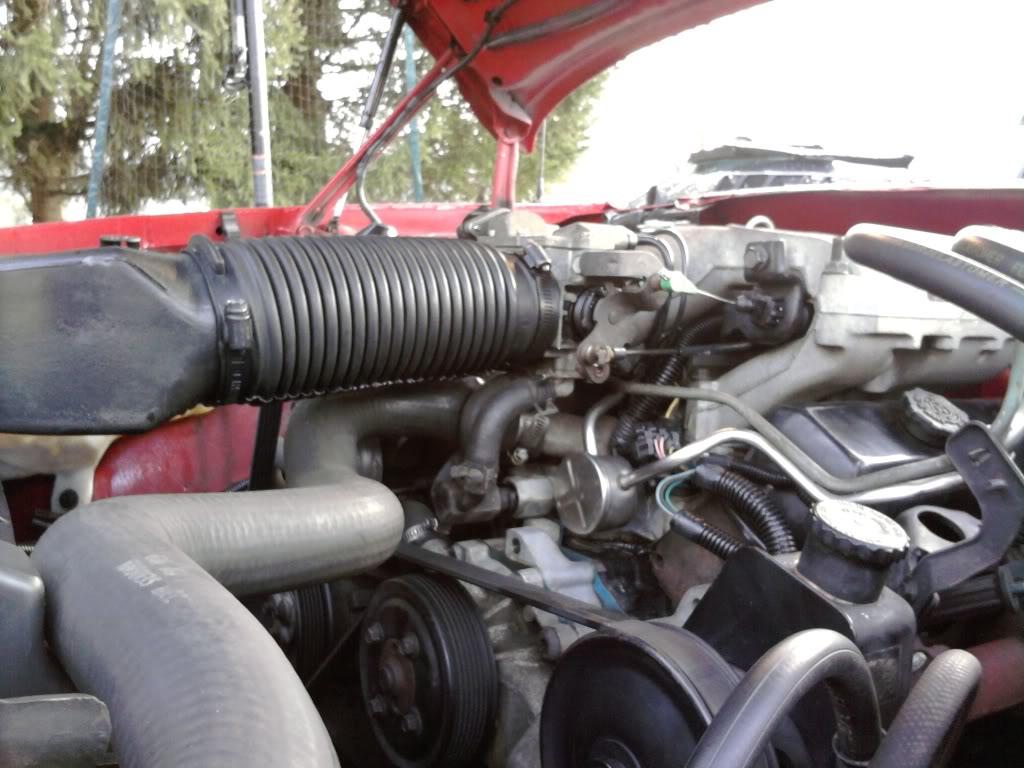
The flow that that 135* bend creates right there. And it gets worse. What little air that those runners can force into the heads(only about ~140cfm or so...), only gets distorted, and slowed down even more than it was AFTER that bend. Ok so now the air got into the combustion chamber and combusted with the fuel and is on its way out. But wait.
Like you said, the TPI systems had better flowing exhaust manifolds, y-pipe, and better cat back system. But the V6 exhaust is restrictive and prevents it from exiting the exhaust pipe easily.
Every aspect of the air and fuel delivery of a stock 6/60 is flawed for performance more or less.
So imagine taking the much improved aspects of a TPI system, and modeling it all to a smaller system, say a V6. Now what? EVerything is a lot less restrictive, and we start to see the power ratings go up 30-35% as GM and independent labs indicated, and numbers show on engines like the 4.3L.
The fact is that TPI is more precise than its MPFI counterpart, and flows better which get more air into the engine which means more power, and allows for more complete fuel combustion which means better fuel economy. All while being able to deliver the performance that you want when you need it, and the fuel economy when you want it.
Now what I'm suggesting is not a hybrid or anything of the sorts. Hybrids try to take what other improvements GM made after the Gen I 6/60 did its duty. Which is a good idea, but to me it just seems like a menagerie of parts that weren't meant to work together. And just as you said, my MPFI pretty much is TPI, so just making the modifications to model the lower level TPI "MPFI" systems after the upper level V8 TPI systems, would be quick and easy minus actually getting a whole new intake to work right.

And it doesn't even have to be modeled after a TPI system, even an LTX/LSX would be better, but a bit different.
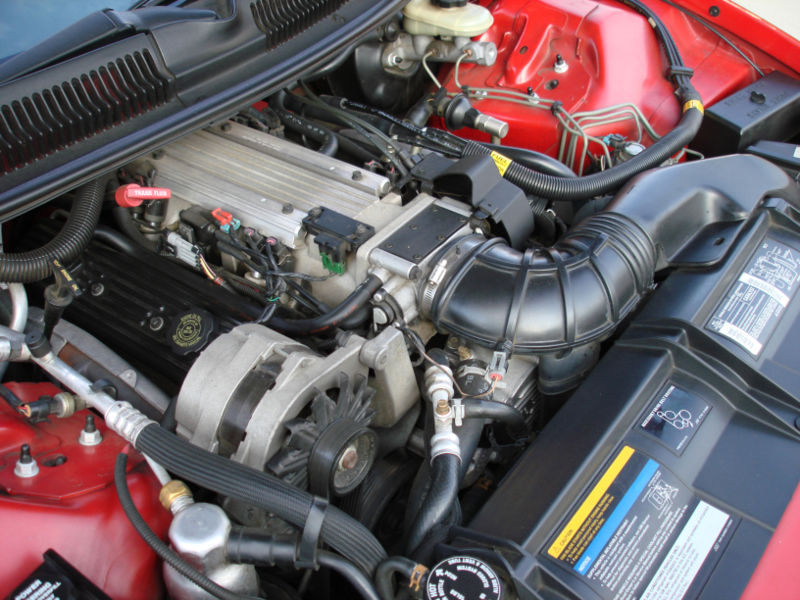
The biggest problem with the MPFI system on the V6's is well this:
The flow that that 135* bend creates right there. And it gets worse. What little air that those runners can force into the heads(only about ~140cfm or so...), only gets distorted, and slowed down even more than it was AFTER that bend. Ok so now the air got into the combustion chamber and combusted with the fuel and is on its way out. But wait.
Like you said, the TPI systems had better flowing exhaust manifolds, y-pipe, and better cat back system. But the V6 exhaust is restrictive and prevents it from exiting the exhaust pipe easily.
Every aspect of the air and fuel delivery of a stock 6/60 is flawed for performance more or less.
So imagine taking the much improved aspects of a TPI system, and modeling it all to a smaller system, say a V6. Now what? EVerything is a lot less restrictive, and we start to see the power ratings go up 30-35% as GM and independent labs indicated, and numbers show on engines like the 4.3L.
The fact is that TPI is more precise than its MPFI counterpart, and flows better which get more air into the engine which means more power, and allows for more complete fuel combustion which means better fuel economy. All while being able to deliver the performance that you want when you need it, and the fuel economy when you want it.
Now what I'm suggesting is not a hybrid or anything of the sorts. Hybrids try to take what other improvements GM made after the Gen I 6/60 did its duty. Which is a good idea, but to me it just seems like a menagerie of parts that weren't meant to work together. And just as you said, my MPFI pretty much is TPI, so just making the modifications to model the lower level TPI "MPFI" systems after the upper level V8 TPI systems, would be quick and easy minus actually getting a whole new intake to work right.
And it doesn't even have to be modeled after a TPI system, even an LTX/LSX would be better, but a bit different.
Joined: Sep 2004
Posts: 2,777
Likes: 7
From: Casselberry, FLA
Car: 88 V6 'bird/89TBI bird/85 T/A
Engine: 2.8/TBI/TPI
Transmission: V8 T-5/700R4 x2
Axle/Gears: 3.42 open/2.73 open/ 3.27 9 bolt
Re: TPI V6?
Well, I'll tell you...
I think the ONLY thing you can do, intake wise, to make a difference is like I suggested earlier. You can pick between a carb intake or a TBI intake, both aluminum, and then put your multiport injectors in there. That is similar to many aftermarket port fuel injection systems. After that, you make a throttle body work and you are in business. This is the basis of your Grand National intake, and the basis of where lots of your port intakes came from. The TPI thing was an experiment that turned out not to work so well, or else GM would still use it.
I still think TBI is better hahahha.
I think the ONLY thing you can do, intake wise, to make a difference is like I suggested earlier. You can pick between a carb intake or a TBI intake, both aluminum, and then put your multiport injectors in there. That is similar to many aftermarket port fuel injection systems. After that, you make a throttle body work and you are in business. This is the basis of your Grand National intake, and the basis of where lots of your port intakes came from. The TPI thing was an experiment that turned out not to work so well, or else GM would still use it.
I still think TBI is better hahahha.
Thread Starter
Senior Member
Joined: Jun 2009
Posts: 976
Likes: 0
From: Montgomery, PA
Car: 1990 Camaro RS
Engine: 355 Vortec TPI LT4 Hotcam
Transmission: TH700-R4
Axle/Gears: 3.23
Re: TPI V6?
GM does still use it, just not quite the same as the version were talking about...
Joined: Mar 2006
Posts: 4,370
Likes: 19
Car: 1973 Datsun 240Z/ 1985 S-15 Jimmy
Engine: Turbo LX9/To be decided
Transmission: 5-speed/T-5
Axle/Gears: R200 3.90/7.5" 3.73
Re: TPI V6?
TPI IS MPFI....
MPFI is short for MultiPort Fuel Injection
TPI is short for Tuned Port Injection, which is simply a name that GM gave the intake design that was used on the "performance" V8s between 1985 an 1991 IIRC. There really is nothing special about a "TPI" system, just that GM decided to use a name that made it sound special, because they knew this would help it sell to the buying public.
Talk to anyone that is serious about SBC performance and a large majority of them will either ditch the TPI or just never use it to start with. They are very good at producing low end torque, but because of the extremely long runners they start to choke the engine, even the stock 305 at around 4500 RPM IIRC. Try to build an engine that breathes better and this asthmatic effect starts lower and lower in the RPM range. You will see many products offered over the years, that were to help combat this, larger plenums, like what Accel offered, this had the side benefit of shortening the runners due to the new plenum design, siamesed runners, larger runners, and many back yard tricks. Then most people got smart and just would just start with a different, better suited intake for increased performance.
I think there is also some misunderstanding of TBI here as well. Regardless if the engine uses TBI or MPFI, the ECM still functions very much the same. There is no magic automatic compensation abilities of a TBI system that an MPFI system doesn't have. The only real difference between the two systems is the point at which the fuel itself is injected. TBI injects the fuel above the throttle blades. MPFI injects it, in most cases, as close to the intake valve as possible. That's the only real difference, that's it, nothing else. The only reason a TBI system looks closer to a carb intake is because the TBI intake is a "wetflow" intake, meaning it also has to transport the fuel from the injector, located above the throttle blade, along with the air to the cylinder. It would be difficult to get close to even fuel distribution, injecting the fuel in front of the throttle blades on an MPFI system, that looks like a TPI, or the common MPFI style intakes. Air has a MUCH easier time of turning and flowing evenly to each cylinder than fuel does, hence the advent of the MPFI system. I think you'll also find that intakes that have been modified from carb or TBI, will make a broader torque range and usually a bit more peak power, because of the better fuel distribution control they offer.
Honestly, the best upgrade for the genI 660 is to build a hybrid. The intake on the genI 660 is not the issue, and while the different designs have their pros and cons, it is the heads that are really the limiting factor here. Move to a GenIII top end and you will really unlock the potential. You just need to set a genI head next to a genIII head to make it obvious why this is the way to go.
If you really, for some reason wanted to stay with TBI, or your own made MPFI intake, you could build an intake for the genIII heads and the increased flow potential they offer.
MPFI is short for MultiPort Fuel Injection
TPI is short for Tuned Port Injection, which is simply a name that GM gave the intake design that was used on the "performance" V8s between 1985 an 1991 IIRC. There really is nothing special about a "TPI" system, just that GM decided to use a name that made it sound special, because they knew this would help it sell to the buying public.
Talk to anyone that is serious about SBC performance and a large majority of them will either ditch the TPI or just never use it to start with. They are very good at producing low end torque, but because of the extremely long runners they start to choke the engine, even the stock 305 at around 4500 RPM IIRC. Try to build an engine that breathes better and this asthmatic effect starts lower and lower in the RPM range. You will see many products offered over the years, that were to help combat this, larger plenums, like what Accel offered, this had the side benefit of shortening the runners due to the new plenum design, siamesed runners, larger runners, and many back yard tricks. Then most people got smart and just would just start with a different, better suited intake for increased performance.
I think there is also some misunderstanding of TBI here as well. Regardless if the engine uses TBI or MPFI, the ECM still functions very much the same. There is no magic automatic compensation abilities of a TBI system that an MPFI system doesn't have. The only real difference between the two systems is the point at which the fuel itself is injected. TBI injects the fuel above the throttle blades. MPFI injects it, in most cases, as close to the intake valve as possible. That's the only real difference, that's it, nothing else. The only reason a TBI system looks closer to a carb intake is because the TBI intake is a "wetflow" intake, meaning it also has to transport the fuel from the injector, located above the throttle blade, along with the air to the cylinder. It would be difficult to get close to even fuel distribution, injecting the fuel in front of the throttle blades on an MPFI system, that looks like a TPI, or the common MPFI style intakes. Air has a MUCH easier time of turning and flowing evenly to each cylinder than fuel does, hence the advent of the MPFI system. I think you'll also find that intakes that have been modified from carb or TBI, will make a broader torque range and usually a bit more peak power, because of the better fuel distribution control they offer.
Honestly, the best upgrade for the genI 660 is to build a hybrid. The intake on the genI 660 is not the issue, and while the different designs have their pros and cons, it is the heads that are really the limiting factor here. Move to a GenIII top end and you will really unlock the potential. You just need to set a genI head next to a genIII head to make it obvious why this is the way to go.
If you really, for some reason wanted to stay with TBI, or your own made MPFI intake, you could build an intake for the genIII heads and the increased flow potential they offer.
Joined: Sep 2004
Posts: 2,777
Likes: 7
From: Casselberry, FLA
Car: 88 V6 'bird/89TBI bird/85 T/A
Engine: 2.8/TBI/TPI
Transmission: V8 T-5/700R4 x2
Axle/Gears: 3.42 open/2.73 open/ 3.27 9 bolt
Re: TPI V6?
I did read something (probably from this site) that mentioned TPI being the term to refer to the use of wave pulses, "tuned" by the length and size of the runners. Not sure if there is anything to it, but GM sure did gain a lot by going to untuned intakes in the LT1, hahaha.
I didn't mean to state that TBI had some great ability that multiport didn't have, although it may have been understood that way. Sorry about that. I meant it in reference of the TBI to the carburetor setup that it was designed to replace; carbs often need tuning if the weather changes or the altitude changes and TBI doesn't. That's all I meant.
I do think there is something more to be said for wet flow systems versus port injection and I stand by statement that I believe port injection is purely about efficiency (and emissions cleanliness) and not concerned with maximum power potential per unit of fuel. Maximum efficiency lags power by just a bit according to the math.
I like the way the fuel and air is knocked around and turbulent in the wet manifold more than the super efficient spray pattern used in port injection. There are all kinds of arguments, one versus the other and I am not trying to argue; just stating my case of why I like it. I mean, I also like Buick better than Chevy and the color Blue better than Green. There is a little bit of romance involved, I guess, in the decisions we make.
I was also advising converting the carb manifold to port injection because I see decent horsepower engines running them as retrofits when you are putting it somewhere it wasn't designed to go. I wanted to suggest something practical, not something crazy like building a manifold from scratch or heavily modding a different piece that would like as not hurt performance.
I didn't mean to state that TBI had some great ability that multiport didn't have, although it may have been understood that way. Sorry about that. I meant it in reference of the TBI to the carburetor setup that it was designed to replace; carbs often need tuning if the weather changes or the altitude changes and TBI doesn't. That's all I meant.
I do think there is something more to be said for wet flow systems versus port injection and I stand by statement that I believe port injection is purely about efficiency (and emissions cleanliness) and not concerned with maximum power potential per unit of fuel. Maximum efficiency lags power by just a bit according to the math.
I like the way the fuel and air is knocked around and turbulent in the wet manifold more than the super efficient spray pattern used in port injection. There are all kinds of arguments, one versus the other and I am not trying to argue; just stating my case of why I like it. I mean, I also like Buick better than Chevy and the color Blue better than Green. There is a little bit of romance involved, I guess, in the decisions we make.
I was also advising converting the carb manifold to port injection because I see decent horsepower engines running them as retrofits when you are putting it somewhere it wasn't designed to go. I wanted to suggest something practical, not something crazy like building a manifold from scratch or heavily modding a different piece that would like as not hurt performance.
Joined: Mar 2006
Posts: 4,370
Likes: 19
Car: 1973 Datsun 240Z/ 1985 S-15 Jimmy
Engine: Turbo LX9/To be decided
Transmission: 5-speed/T-5
Axle/Gears: R200 3.90/7.5" 3.73
Re: TPI V6?
You don't think that GM "tuned" the LT1 intakes? By "tuned" meaning designed for the power curve of the engine. None of the intakes that were used on any of the GM engines with MPFI were just hap-hazardly thrown together. GM, nor any auto manufacturer would take a chance like that. Today (and starting a number or years ago) computer modeling takes place of building multiple intakes and dyno testing, but they are all matched to the intended use of the engine in the vehicle(s) they will be installed in.
By shear definition of the words "increased efficiency," means that, in the case of engines, power output will go up for each unit of fuel, and air mixture used. This is true even looking at a fuel economy result. It would take X amount of power to move car A along the road at a constant speed, increasing efficiency of an engine will create more power per unit of fuel used, therefore increasing both power and economy. I'm not sure what math you are using but if your power output goes down when there is "increased efficiency", then you're using some inverse table that no one else is using.
Really you should have stated EFI, versus carb. All (closed loop) EFI systems will self compensate. That goes for TBI, MPFI or SFI. CPI, TPI, and other acronyms are just derivatives of these three.
There are a few reasons why carb manifold to EFI conversions are popular, especially in the racing scene. There is still more R&D in the aftermarket concerning carb manifolds than purpose built EFI intakes, though that is slowly changing. With some much R&D spent on a carb manifold for increasing efficiency and power of a given engine, it only makes sense to use a known good manifold to deliver the air distribution to the cylinders in that engine, and since people want to make a lot of power, reliably and well delivered fuel to each cylinder the next logical step is to convert it to MPFI, and control it with an EMS of some sort. There isn't any romance or underlying mystery to this, just simple use of what is available and has time spent on making the design work well. For people wanting to squeak out every little ounce they can in the RPM range they will be using and have the tools to do so, a properly designed and matched purpose built EFI intake with matched runners for all cylinders will have the edge due to superior air distribution over a carb style intake. ALL carb style intakes are a compromise between air flow distribution and ability to keep the fuel in suspension, because of this, you will find different lengths of runners between cylinders. Back when carbs were the only available means of fuel distribution, or friendly means, since mechanical injection has been a round for a long time, but is not friendly to those that don't know how to tune it, people started making "high rise" intakes, to try to equalize the runner lengths, but keep fuel in suspension. Some went as far as mounting two 4 bbl carbs above an engine, on a common plenum, with very long tubes under each bbl of the carbs to help direct the flow of air and fuel more evenly to each cylinder.
Don't get me wrong, I'm not knocking TBI and carb intakes, but buy shear basic design capabilities of an MPFI intake, they can produce more power, while decreasing fuel consumption and fitting in a compact package.
By "tuned" meaning designed for the power curve of the engine. None of the intakes that were used on any of the GM engines with MPFI were just hap-hazardly thrown together. GM, nor any auto manufacturer would take a chance like that. Today (and starting a number or years ago) computer modeling takes place of building multiple intakes and dyno testing, but they are all matched to the intended use of the engine in the vehicle(s) they will be installed in.By shear definition of the words "increased efficiency," means that, in the case of engines, power output will go up for each unit of fuel, and air mixture used. This is true even looking at a fuel economy result. It would take X amount of power to move car A along the road at a constant speed, increasing efficiency of an engine will create more power per unit of fuel used, therefore increasing both power and economy. I'm not sure what math you are using but if your power output goes down when there is "increased efficiency", then you're using some inverse table that no one else is using.
Really you should have stated EFI, versus carb.
All (closed loop) EFI systems will self compensate. That goes for TBI, MPFI or SFI. CPI, TPI, and other acronyms are just derivatives of these three.There are a few reasons why carb manifold to EFI conversions are popular, especially in the racing scene. There is still more R&D in the aftermarket concerning carb manifolds than purpose built EFI intakes, though that is slowly changing. With some much R&D spent on a carb manifold for increasing efficiency and power of a given engine, it only makes sense to use a known good manifold to deliver the air distribution to the cylinders in that engine, and since people want to make a lot of power, reliably and well delivered fuel to each cylinder the next logical step is to convert it to MPFI, and control it with an EMS of some sort. There isn't any romance or underlying mystery to this, just simple use of what is available and has time spent on making the design work well. For people wanting to squeak out every little ounce they can in the RPM range they will be using and have the tools to do so, a properly designed and matched purpose built EFI intake with matched runners for all cylinders will have the edge due to superior air distribution over a carb style intake. ALL carb style intakes are a compromise between air flow distribution and ability to keep the fuel in suspension, because of this, you will find different lengths of runners between cylinders. Back when carbs were the only available means of fuel distribution, or friendly means, since mechanical injection has been a round for a long time, but is not friendly to those that don't know how to tune it, people started making "high rise" intakes, to try to equalize the runner lengths, but keep fuel in suspension. Some went as far as mounting two 4 bbl carbs above an engine, on a common plenum, with very long tubes under each bbl of the carbs to help direct the flow of air and fuel more evenly to each cylinder.
Don't get me wrong, I'm not knocking TBI and carb intakes, but buy shear basic design capabilities of an MPFI intake, they can produce more power, while decreasing fuel consumption and fitting in a compact package.
Thread Starter
Senior Member
Joined: Jun 2009
Posts: 976
Likes: 0
From: Montgomery, PA
Car: 1990 Camaro RS
Engine: 355 Vortec TPI LT4 Hotcam
Transmission: TH700-R4
Axle/Gears: 3.23
Re: TPI V6?
And again, NO to a hybrid
Joined: Sep 2004
Posts: 2,777
Likes: 7
From: Casselberry, FLA
Car: 88 V6 'bird/89TBI bird/85 T/A
Engine: 2.8/TBI/TPI
Transmission: V8 T-5/700R4 x2
Axle/Gears: 3.42 open/2.73 open/ 3.27 9 bolt
Re: TPI V6?
Well, I think we are on the same page its just that my terminology is not up to speed! Hahahha well I am sorry about that. I am still learning and hurting my brain regularly reading in the DIY PROM section...
What I am talking about when I speak of efficiency is efficiency vs power. When the engine is running in super efficient mode, at 14.7 to 1 afr, or even lean as GM does it in cruise mode sometimes, it is more efficient. When it is in power mode, like running above 10 and less than 14 to 1 afr, it is in the power enrichment mode. Or something like that. I am sorry that I am butchering the terminology that you use.
About manifold design, I meant that the carb (or wet) manifold seems to be more beneficial to me when I am trying to make power in a raw sense (like racing) versus the long port mpfi piece that seems to make the mileage a little better and the emissions happier.
Even on multi port setups, when I see people going for power to win the race, they are ditching the TPI and going with an LT1 short ram manifold, or a ram jet, or a holley stealth ram, or or or.
I think the idea of the long tubes GIVING torque is wrong; it may change where in the rpm range you get your torque, but if it flows the same cfm as the short tube, then I don't think you will get any benefit from the longer tubes.
And the first thing I think about when I want to increase torque is increasing displacement. That is why I think if you're gonna run a 6/60 in here you should start with a 3.4, or use the hybrid 3.5 or 3.6. I mean, why not? The block is the foundation that everything else is built on.
Just my two cents
What I am talking about when I speak of efficiency is efficiency vs power. When the engine is running in super efficient mode, at 14.7 to 1 afr, or even lean as GM does it in cruise mode sometimes, it is more efficient. When it is in power mode, like running above 10 and less than 14 to 1 afr, it is in the power enrichment mode. Or something like that. I am sorry that I am butchering the terminology that you use.
About manifold design, I meant that the carb (or wet) manifold seems to be more beneficial to me when I am trying to make power in a raw sense (like racing) versus the long port mpfi piece that seems to make the mileage a little better and the emissions happier.
Even on multi port setups, when I see people going for power to win the race, they are ditching the TPI and going with an LT1 short ram manifold, or a ram jet, or a holley stealth ram, or or or.
I think the idea of the long tubes GIVING torque is wrong; it may change where in the rpm range you get your torque, but if it flows the same cfm as the short tube, then I don't think you will get any benefit from the longer tubes.
And the first thing I think about when I want to increase torque is increasing displacement. That is why I think if you're gonna run a 6/60 in here you should start with a 3.4, or use the hybrid 3.5 or 3.6. I mean, why not? The block is the foundation that everything else is built on.
Just my two cents
Thread Starter
Senior Member
Joined: Jun 2009
Posts: 976
Likes: 0
From: Montgomery, PA
Car: 1990 Camaro RS
Engine: 355 Vortec TPI LT4 Hotcam
Transmission: TH700-R4
Axle/Gears: 3.23
Re: TPI V6?
Legacy. Why keep a 40 year old 350 in your 69 Camaro when instead you could get an LS1 or LS2 or LS4 or anything like that?
I want to keep my 3.1L to say yeah its got the right type of engine in it, or at least time specific engine in it. And well a TPI or similar set up is something that is time specific to 85-92 Third gens. Which kinda almost makes it OK to do if your wanting to represent a time period of Camaro history instead of butchering it.
If I wanted something else, then I would have bought something else....
I want to keep my 3.1L to say yeah its got the right type of engine in it, or at least time specific engine in it. And well a TPI or similar set up is something that is time specific to 85-92 Third gens. Which kinda almost makes it OK to do if your wanting to represent a time period of Camaro history instead of butchering it.
If I wanted something else, then I would have bought something else....
Joined: Mar 2006
Posts: 4,370
Likes: 19
Car: 1973 Datsun 240Z/ 1985 S-15 Jimmy
Engine: Turbo LX9/To be decided
Transmission: 5-speed/T-5
Axle/Gears: R200 3.90/7.5" 3.73
Re: TPI V6?
Well, I think we are on the same page its just that my terminology is not up to speed! Hahahha well I am sorry about that. I am still learning and hurting my brain regularly reading in the DIY PROM section...
What I am talking about when I speak of efficiency is efficiency vs power. When the engine is running in super efficient mode, at 14.7 to 1 afr, or even lean as GM does it in cruise mode sometimes, it is more efficient. When it is in power mode, like running above 10 and less than 14 to 1 afr, it is in the power enrichment mode. Or something like that. I am sorry that I am butchering the terminology that you use.
About manifold design, I meant that the carb (or wet) manifold seems to be more beneficial to me when I am trying to make power in a raw sense (like racing) versus the long port mpfi piece that seems to make the mileage a little better and the emissions happier.
Even on multi port setups, when I see people going for power to win the race, they are ditching the TPI and going with an LT1 short ram manifold, or a ram jet, or a holley stealth ram, or or or.
I think the idea of the long tubes GIVING torque is wrong; it may change where in the rpm range you get your torque, but if it flows the same cfm as the short tube, then I don't think you will get any benefit from the longer tubes.
And the first thing I think about when I want to increase torque is increasing displacement. That is why I think if you're gonna run a 6/60 in here you should start with a 3.4, or use the hybrid 3.5 or 3.6. I mean, why not? The block is the foundation that everything else is built on.
Just my two cents
What I am talking about when I speak of efficiency is efficiency vs power. When the engine is running in super efficient mode, at 14.7 to 1 afr, or even lean as GM does it in cruise mode sometimes, it is more efficient. When it is in power mode, like running above 10 and less than 14 to 1 afr, it is in the power enrichment mode. Or something like that. I am sorry that I am butchering the terminology that you use.
About manifold design, I meant that the carb (or wet) manifold seems to be more beneficial to me when I am trying to make power in a raw sense (like racing) versus the long port mpfi piece that seems to make the mileage a little better and the emissions happier.
Even on multi port setups, when I see people going for power to win the race, they are ditching the TPI and going with an LT1 short ram manifold, or a ram jet, or a holley stealth ram, or or or.
I think the idea of the long tubes GIVING torque is wrong; it may change where in the rpm range you get your torque, but if it flows the same cfm as the short tube, then I don't think you will get any benefit from the longer tubes.
And the first thing I think about when I want to increase torque is increasing displacement. That is why I think if you're gonna run a 6/60 in here you should start with a 3.4, or use the hybrid 3.5 or 3.6. I mean, why not? The block is the foundation that everything else is built on.
Just my two cents
Don't worry, I agree that the first thing I would do, and I think I mentioned this in an earlier reply, is to ditch the TPI intake system if overall power and performance is what the purpose of the SBC would be.
There's nothing wrong with trying to use old tech to make power, but if you are trying to run with other people that are making some real power, you just simply won't be able to using the old genI heads.
If I were to modify a '69 Camaro, I'd first ask myself "WTF I was doing, owning a '69 Camaro?" then I would rip that SBC out and throw it away, there would be an LSx or some other power plant going in there.
If you want to "stay true to the period and the car", then why even look at using a different intake? Then it wouldn't be true to the car, but yet again, the intake is not the issue here, the heads are the bottle neck, and the first thing that need work or replaced. That "135 degree turn" is not a problem for air to make, if there was fuel involved that would be the issue.

Supreme Member
iTrader: (4)
Joined: Nov 2003
Posts: 1,049
Likes: 1
From: Oklahoma City
Car: 1991 Firebird
Engine: 3.1L +bolt ons
Transmission: 700R4
Axle/Gears: Moser forged, 3.73, SLP posi
Re: TPI V6?
Yeah, gets ya thinkin. Makes me wonder what it would take to get a composite LSx intake on those pos heads....

Supreme Member
iTrader: (2)
Joined: May 2007
Posts: 2,574
Likes: 0
From: right behind you
Car: '85 maro
Engine: In the works...
Transmission: TH700 R4
Axle/Gears: 3.73 posi
Re: TPI V6?
Ooo, that's a real TPI v6! Must make alot of power!
KrisW, long runners make torq because of time. Air has mass and like anything that has mass it needs time to reach a particular speed. The higher the air velocity (up to a pont) entering the cylinder the greater the charge density and the lower pumping losses. What this means is that with a motor designed to make power at a low speed it either needs a narrower runner or more time to bring air velocity up to ideal because of the slower 'draw' of the piston. A longer runner gives more time.
My motor makes peak torq at 5000rpm and peak power at 6250rpm so it doesn't need much time to bring air up to speed.
KrisW, long runners make torq because of time. Air has mass and like anything that has mass it needs time to reach a particular speed. The higher the air velocity (up to a pont) entering the cylinder the greater the charge density and the lower pumping losses. What this means is that with a motor designed to make power at a low speed it either needs a narrower runner or more time to bring air velocity up to ideal because of the slower 'draw' of the piston. A longer runner gives more time.
My motor makes peak torq at 5000rpm and peak power at 6250rpm so it doesn't need much time to bring air up to speed.
Last edited by bl85c; Jan 7, 2011 at 09:32 PM.


Re: TPI V6?
Tuned Port Injection refers to the intake being designed to provide power within a specific range. Keeping in mind all the requirements that GM was trying to meet at the time (make power out of a 305), the intake was tuned to give strong low end performance with a lackluster engine. It does exactly what it was intended to do. GM wasn't trying to build race cars, they were trying to find the best compromise between cost, efficiency, and performance. Considering everything, TPI works great. The problems come in when people try to change part of the package, without considering how the intake is going to react. An intake TUNED to make power from idle to 4,500rpm isn't going to work too great with a cam tuned to make power from 3k rpm to 7k rpm. Numerically higher gears just run the engine out of it's ideal RPM range faster, etc.
TPI doesn't just apply to the 5.0 and 5.7 F and Y body cars. The terminology was also applied to 3.8L V6's, etc. Anytime the intake is tuned to bring about a specific performance result, you could say it's TPI. MPFI is pretty much the same thing without the intentional tuning.
The 2.8 and 3.1 were intended to move the cars, but weren't intended to really blow anyone's skirt up. The MPFI system they received works great at boosting power, and efficiency, if not making the most power. But then it didn't need to make more power, because if someone wanted more power there was a 305 available.
Why try to reinvent the wheel? This thread is like "Hey guys, I want to get a waterproof suit so I can **** into the wind". If you want more power, there are ways to get there that don't involve building your own intake.
TPI doesn't just apply to the 5.0 and 5.7 F and Y body cars. The terminology was also applied to 3.8L V6's, etc. Anytime the intake is tuned to bring about a specific performance result, you could say it's TPI. MPFI is pretty much the same thing without the intentional tuning.
The 2.8 and 3.1 were intended to move the cars, but weren't intended to really blow anyone's skirt up. The MPFI system they received works great at boosting power, and efficiency, if not making the most power. But then it didn't need to make more power, because if someone wanted more power there was a 305 available.
Why try to reinvent the wheel? This thread is like "Hey guys, I want to get a waterproof suit so I can **** into the wind". If you want more power, there are ways to get there that don't involve building your own intake.
Supreme Member
iTrader: (2)
Joined: May 2007
Posts: 2,574
Likes: 0
From: right behind you
Car: '85 maro
Engine: In the works...
Transmission: TH700 R4
Axle/Gears: 3.73 posi
Re: TPI V6?
LOL. That's how I've always viewed messing with the iron head induction. Boost it or smash with a hammer.

Thread
Thread Starter
Forum
Replies
Last Post
Sanjay
Engine/Drivetrain/Suspension Parts for Sale
1
Aug 12, 2015 03:41 PM
