


ATTN: ChevyKen, GGA, et al...


Thread Starter
Moderator


Joined: Jan 2000
Posts: 19,655
Likes: 309
ATTN: ChevyKen, GGA, et al...
Ken,
Sorry for possibly confusing the issue, but that other thread was getting so long it wouldn't always load completely and took forever. This is the original thread: https://www.thirdgen.org/techbb2/new...threadid=80231
Regardless - Great! You repaired the vacumm leak. My theory is that between the failed plug and the vacuum leak, the majority of your problems were solved. I'm still very suspicious about the ECM. It is possible that the 5VDC regulated supply was a problem, but very, very often, just removing and reseating the edge connectors (and thereby cleaning them) solves many rogue ECM problems. The fact that you reinitialized the ECM by removing backup power from it and forcing it to relearn couldn't have hurt your cause either. We'll never be sure, since the replacement unit is in and running, apperently well.
A few miscellaneous points:
I've heard that complaint about the Crane AFPR kits as well. I installed a much shorter ¼-28 bolt in my conversion AFPR and have very little extra room, but enough at least. If the bolt is actually touching the underside of the plenum, it can't be good for steady fuel pressure since the spring cap can be distorted by the thermal expansion of engine components and change the pressure.
Disregard the apparent lack of cooling fans for now. The stock PROM will turn the fan(s) on at around 232°F and off at 223°F. The fan(s) should also turn on in Field Service Mode, or with the A/C high-side pressure switch.
As for the apparent lack of minimum air adjustment, this method has always worked for me:
Throttle Minimum Air Position
Tools needed:
1. Torx driver # T-20
2. Paper Clip
3. Small Punch
4. Tachometer
GENERAL NOTE: The engine should be at normal operating temperature before performing any adjustments. Never rely on the dash mounted instruments for diagnostics and adjustments. The oil pressure and temperature gauges and the voltmeter and tachometer just aren't calibrated accurately enough for diagnosis, but are a relative indication for monitoring the vehicle while driving.
For this adjustment, the transmission will be in DRIVE while you're under the hood. You will need to securely set the parking brake and block the drive wheels. It would also be a good idea to have an assistant hold the service brakes while you perform the adjustments.
In order to successfully complete the adjustment, the IAC air passages and pintle need to be clean. The throttle plates and bores need to be clean as well. If this is not the case, you'll need to remove the air cleaner from TBI engines or the intake air bellows from TPI engines to gain access to the area to be cleaned. A spray-type carburetor cleaner works well for this. Cleaning the IAC passages on a TPI/MAF engine will set a DTC, but we'll be clearing that later. With the engine idling, direct the spray cleaner into the IAC air passages and around the throttle plates. Shut off the engine and continue cleaning the throttle plates by opening the throttle manually. Once everything is satisfactorily cleaned, replace the air bellows on TPI engines. Many times, this alone can solve IAC/idle speed problems.
If this doesn't solve the problem, you may need to remove and clean the IAC stepper motor. If the IAC appears to be clean and functioning properly, continue with the adjustment procedure.
- - - - - - - - - - - - - - - - - - - - - - - - - - - - - - - - - - - - - - - -
Idle Air Control Cleaning
Hopefully you IAC is already cleaned. If not, you may want to do this to be certain. Remove the electrical connector from the IAC. Unscrew the IAC unit from the throttle body.
You can gently rock the pintle back and forth and allow the spring to extend it until it comes apart in your hands. Clean everything with lint-free cloths and a mild solvent. Harsh solvents can affect the insulation of the stepper motor coils. It's generally the dirt and buildup on this worm shaft that causes sluggish IAC operation.
When the worm gear on the pintle shaft is clean and dry, apply one drop of clean light oil to the shaft and work the pintle back into the rack gears of the motor by the same rocking motion. It takes a while to get the pintle back into the worm gears, but you'll get it. It is important to get the pintle fully retracted into the housing so that the pintle is not forced against the gears when reinstalling the IAC unit in the throttle body.
While the IAC is out, clean the air passages in the throttle body. The oriface in the TB where the IAC resides is the seat that the IAC valve closes against, and it can accumulate a lot of carbon, dirt, and debris. The easy way to do this is with carburetor cleaner and a small stiff brush.
When everything is clean and dry, replace the gasket if it is damaged, apply a little anti-seize to the threads, and torque the IAC to the proper specs. (13 ft/lb for '85-'89 , 30 in/lb for 1990-on.) Proceed with setting the TPS and minimum air position.
- - - - - - - - - - - - - - - - - - - - - - - - - - - - - - - - - - - - - - - -
Locate the Assembly Line Diagnostic Link connector under your dash panel. Remove the cover if it is still there.
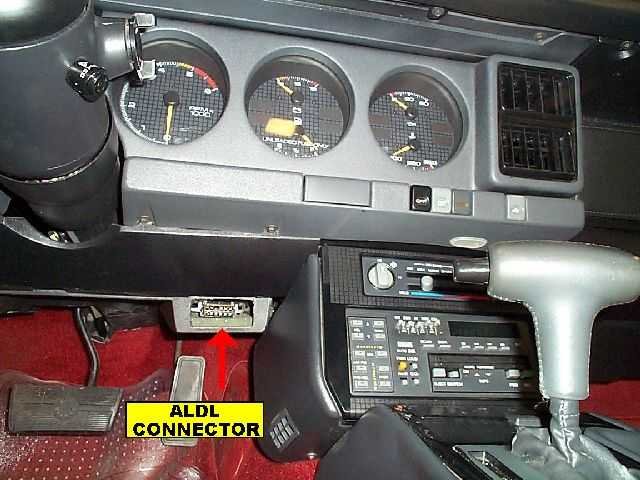
Cut and form a paper clip into a "U" shape. Insert the clip ends into the ALDL in the 'A' and 'B' sockets.
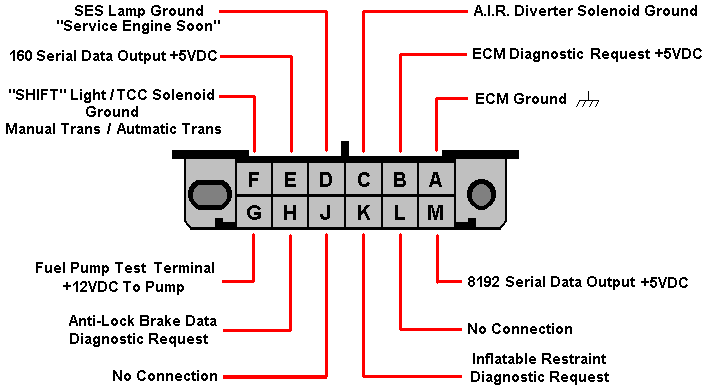
Turn on the ignition, but DON'T start the engine. This will force the ECM into its diagnostic mode. Wait 30 seconds to allow the IAC pintle to fully extend. With the ignition still ON, go under the hood, remove the electrical connector from the IAC, then turn off the ignition and remove the paper clip jumper from the ALDL. With the IAC pintle fully extended (closed) all idle air will be controlled by the position of the throttle plates. Some manuals indicate that the EST bypass connector should be disconnected for this procedure, while some make no mention of it. While timing is a factor in idle speed, the EST should only operate as a function of engine RPM, temperature, and detonation sensor inputs. To remove all doubt, disconnect the EST bypass connector is your car is so equipped.
Locate the Torx screw on the left side of the throttle body. Block the drive wheels and set the parking brake. Start the engine and place the transmission in DRIVE. Adjust the throttle stop to obtain 400-450 RPM with the transmission in "DRIVE" on an automatic transmission car, 450-550 in neutral on a manual transmission car, rotating the Torx screw clockwise to raise speed and counter-clockwise to lower speed. Once the idle RPM is set, place the transmission in PARK and turn off the engine. You may actually want to set your base RPM toward the higher end of the range, since your aftermarket cam profile is causing a little less idle vacuum.
Re-connect the electrical connector onto the IAC. Start engine. Idle speed should be governed by the ECM at approximately 600-650 rpm in "DRIVE" (for unmodified cars). Idle speed in NEUTRAL or PARK is less significant, and will be higher.
Recheck the TPS voltage and adjust as necessary. if you moved the throttle plates to set minimum air position, the TPS voltage should have changed.
You may also have set a DTC since the EST was bypassed and the IAC was disconnected. You may want to remove power from the ECM to reinitialize it and force it to relearn one more time. It will eventually adjust itself, but will be forced to do so immediately if you remove the backup power.
Good luck.
Sorry for possibly confusing the issue, but that other thread was getting so long it wouldn't always load completely and took forever. This is the original thread: https://www.thirdgen.org/techbb2/new...threadid=80231
Regardless - Great! You repaired the vacumm leak. My theory is that between the failed plug and the vacuum leak, the majority of your problems were solved. I'm still very suspicious about the ECM. It is possible that the 5VDC regulated supply was a problem, but very, very often, just removing and reseating the edge connectors (and thereby cleaning them) solves many rogue ECM problems. The fact that you reinitialized the ECM by removing backup power from it and forcing it to relearn couldn't have hurt your cause either. We'll never be sure, since the replacement unit is in and running, apperently well.
A few miscellaneous points:
I've heard that complaint about the Crane AFPR kits as well. I installed a much shorter ¼-28 bolt in my conversion AFPR and have very little extra room, but enough at least. If the bolt is actually touching the underside of the plenum, it can't be good for steady fuel pressure since the spring cap can be distorted by the thermal expansion of engine components and change the pressure.
Disregard the apparent lack of cooling fans for now. The stock PROM will turn the fan(s) on at around 232°F and off at 223°F. The fan(s) should also turn on in Field Service Mode, or with the A/C high-side pressure switch.
As for the apparent lack of minimum air adjustment, this method has always worked for me:
Throttle Minimum Air Position
Tools needed:
1. Torx driver # T-20
2. Paper Clip
3. Small Punch
4. Tachometer
GENERAL NOTE: The engine should be at normal operating temperature before performing any adjustments. Never rely on the dash mounted instruments for diagnostics and adjustments. The oil pressure and temperature gauges and the voltmeter and tachometer just aren't calibrated accurately enough for diagnosis, but are a relative indication for monitoring the vehicle while driving.
For this adjustment, the transmission will be in DRIVE while you're under the hood. You will need to securely set the parking brake and block the drive wheels. It would also be a good idea to have an assistant hold the service brakes while you perform the adjustments.
In order to successfully complete the adjustment, the IAC air passages and pintle need to be clean. The throttle plates and bores need to be clean as well. If this is not the case, you'll need to remove the air cleaner from TBI engines or the intake air bellows from TPI engines to gain access to the area to be cleaned. A spray-type carburetor cleaner works well for this. Cleaning the IAC passages on a TPI/MAF engine will set a DTC, but we'll be clearing that later. With the engine idling, direct the spray cleaner into the IAC air passages and around the throttle plates. Shut off the engine and continue cleaning the throttle plates by opening the throttle manually. Once everything is satisfactorily cleaned, replace the air bellows on TPI engines. Many times, this alone can solve IAC/idle speed problems.
If this doesn't solve the problem, you may need to remove and clean the IAC stepper motor. If the IAC appears to be clean and functioning properly, continue with the adjustment procedure.
- - - - - - - - - - - - - - - - - - - - - - - - - - - - - - - - - - - - - - - -
Idle Air Control Cleaning
Hopefully you IAC is already cleaned. If not, you may want to do this to be certain. Remove the electrical connector from the IAC. Unscrew the IAC unit from the throttle body.
You can gently rock the pintle back and forth and allow the spring to extend it until it comes apart in your hands. Clean everything with lint-free cloths and a mild solvent. Harsh solvents can affect the insulation of the stepper motor coils. It's generally the dirt and buildup on this worm shaft that causes sluggish IAC operation.
When the worm gear on the pintle shaft is clean and dry, apply one drop of clean light oil to the shaft and work the pintle back into the rack gears of the motor by the same rocking motion. It takes a while to get the pintle back into the worm gears, but you'll get it. It is important to get the pintle fully retracted into the housing so that the pintle is not forced against the gears when reinstalling the IAC unit in the throttle body.
While the IAC is out, clean the air passages in the throttle body. The oriface in the TB where the IAC resides is the seat that the IAC valve closes against, and it can accumulate a lot of carbon, dirt, and debris. The easy way to do this is with carburetor cleaner and a small stiff brush.
When everything is clean and dry, replace the gasket if it is damaged, apply a little anti-seize to the threads, and torque the IAC to the proper specs. (13 ft/lb for '85-'89 , 30 in/lb for 1990-on.) Proceed with setting the TPS and minimum air position.
- - - - - - - - - - - - - - - - - - - - - - - - - - - - - - - - - - - - - - - -
Locate the Assembly Line Diagnostic Link connector under your dash panel. Remove the cover if it is still there.
Cut and form a paper clip into a "U" shape. Insert the clip ends into the ALDL in the 'A' and 'B' sockets.
Turn on the ignition, but DON'T start the engine. This will force the ECM into its diagnostic mode. Wait 30 seconds to allow the IAC pintle to fully extend. With the ignition still ON, go under the hood, remove the electrical connector from the IAC, then turn off the ignition and remove the paper clip jumper from the ALDL. With the IAC pintle fully extended (closed) all idle air will be controlled by the position of the throttle plates. Some manuals indicate that the EST bypass connector should be disconnected for this procedure, while some make no mention of it. While timing is a factor in idle speed, the EST should only operate as a function of engine RPM, temperature, and detonation sensor inputs. To remove all doubt, disconnect the EST bypass connector is your car is so equipped.
Locate the Torx screw on the left side of the throttle body. Block the drive wheels and set the parking brake. Start the engine and place the transmission in DRIVE. Adjust the throttle stop to obtain 400-450 RPM with the transmission in "DRIVE" on an automatic transmission car, 450-550 in neutral on a manual transmission car, rotating the Torx screw clockwise to raise speed and counter-clockwise to lower speed. Once the idle RPM is set, place the transmission in PARK and turn off the engine. You may actually want to set your base RPM toward the higher end of the range, since your aftermarket cam profile is causing a little less idle vacuum.
Re-connect the electrical connector onto the IAC. Start engine. Idle speed should be governed by the ECM at approximately 600-650 rpm in "DRIVE" (for unmodified cars). Idle speed in NEUTRAL or PARK is less significant, and will be higher.
Recheck the TPS voltage and adjust as necessary. if you moved the throttle plates to set minimum air position, the TPS voltage should have changed.
You may also have set a DTC since the EST was bypassed and the IAC was disconnected. You may want to remove power from the ECM to reinitialize it and force it to relearn one more time. It will eventually adjust itself, but will be forced to do so immediately if you remove the backup power.
Good luck.
Last edited by Vader; Mar 31, 2018 at 10:42 AM. Reason: Updated links

Joined: Jul 1999
Posts: 1,421
Likes: 24
From: Stavanger area, Norway
Car: 86 IROC Convt
Engine: 305TPI
Transmission: TH700R4
Vader,
Good idea to start it over! I noticed that it started getting slow as well.
As far as the ECM goes - yeah, there is no telling if re-seating it would have changed anything as I never did that with the stock one. The battery has been disconnected many times though, if that is what you mean by the backup, so that for sure didn't fix it.
Another thing that has come to mind now is that if the ECM was faulty, it probably has been for a while. The reason I think so is that the car previously to the mods occationally did throw a code 43 - and especially when driving for a long period of time. Nothing noticable happend to the car or the way it ran, but nevertheless it happend. I had forgotten about that as it only happend occationally. Either way, it seems to be fine now.
I was thinking the same thing about replacing the bolt with a shorter one as it is at least 1/2" longer than what would ever be neccessary for adjusting. That sure is rediculous!
That is also a very good point with the thermal expansion. I had not thought about that, but I will check if it is infact touching the plenum. I know it is mighty close. I'd just hate to have to take it all apart to replace that d@mn bolt.
Well, I need to do something with the cooling fans, because something obviously happend. Before the temp would never be more than 220 or maybe a tad over, if the car was idling for a good while. Now if I drive the car until it is warm and I stop for a few minutes, it goes to 240-250 and climbing. The fan does infact start in field service mode though.
Regarding the IAC, sounds like cleaning is the next step, because I have not done that - and who knows if it has ever been done ehe? But the way you describe what happens if there is a lot of dirt, sure sounds familiar.
When I tried to set the IAC, I did not have the car in drive though. However, as I mentioned - I had a hard time getting the car started, period - after disconnecting the IAC after following the procedure you described with warm car, paper clip etc. - and it is at this point impossible to get it to idle with the IAC discconected. So, cleaning will definitely be the next step then.
Now, am I better off taking off the throttle body to clean the IAC itself and its orifice in the TB? Also, Im not confident that I understood what parts exactly to clean while the engine is idling?
Thanks again,

Ken
Good idea to start it over! I noticed that it started getting slow as well.
As far as the ECM goes - yeah, there is no telling if re-seating it would have changed anything as I never did that with the stock one. The battery has been disconnected many times though, if that is what you mean by the backup, so that for sure didn't fix it.
Another thing that has come to mind now is that if the ECM was faulty, it probably has been for a while. The reason I think so is that the car previously to the mods occationally did throw a code 43 - and especially when driving for a long period of time. Nothing noticable happend to the car or the way it ran, but nevertheless it happend. I had forgotten about that as it only happend occationally. Either way, it seems to be fine now.
I was thinking the same thing about replacing the bolt with a shorter one as it is at least 1/2" longer than what would ever be neccessary for adjusting. That sure is rediculous!
That is also a very good point with the thermal expansion. I had not thought about that, but I will check if it is infact touching the plenum. I know it is mighty close. I'd just hate to have to take it all apart to replace that d@mn bolt.
Well, I need to do something with the cooling fans, because something obviously happend. Before the temp would never be more than 220 or maybe a tad over, if the car was idling for a good while. Now if I drive the car until it is warm and I stop for a few minutes, it goes to 240-250 and climbing. The fan does infact start in field service mode though.
Regarding the IAC, sounds like cleaning is the next step, because I have not done that - and who knows if it has ever been done ehe? But the way you describe what happens if there is a lot of dirt, sure sounds familiar.
When I tried to set the IAC, I did not have the car in drive though. However, as I mentioned - I had a hard time getting the car started, period - after disconnecting the IAC after following the procedure you described with warm car, paper clip etc. - and it is at this point impossible to get it to idle with the IAC discconected. So, cleaning will definitely be the next step then.
Now, am I better off taking off the throttle body to clean the IAC itself and its orifice in the TB? Also, Im not confident that I understood what parts exactly to clean while the engine is idling?
Thanks again,
Ken
Thread Starter
Moderator
Joined: Jan 2000
Posts: 19,655
Likes: 309
Ken,
I wouldn't advise trying to clean a lot while the engine is running. You should remove the rubber bellows from the front of the throttle body, then remove the IAC motor. Clean out the lower opening between the throttle bores (the place labelled "IAC AIR PASSAGES" in the photo).
Also clean out the place that the IAC motor was removed from. The recess in the TB has the seat that the IAC pintle closes against. You can see in the photo that the IAC passage air hole leads to the inner portion of the IAC stepper motor, where the pintle would reside.

You can also remove the pintle, clean and lightly lubricate it as described earlier, and replace it. Once it is cleaned, you should be able to rely on the IAC to react quickly and control the idle speed correctly.
I wouldn't advise trying to clean a lot while the engine is running. You should remove the rubber bellows from the front of the throttle body, then remove the IAC motor. Clean out the lower opening between the throttle bores (the place labelled "IAC AIR PASSAGES" in the photo).
Also clean out the place that the IAC motor was removed from. The recess in the TB has the seat that the IAC pintle closes against. You can see in the photo that the IAC passage air hole leads to the inner portion of the IAC stepper motor, where the pintle would reside.
You can also remove the pintle, clean and lightly lubricate it as described earlier, and replace it. Once it is cleaned, you should be able to rely on the IAC to react quickly and control the idle speed correctly.
Joined: Jul 1999
Posts: 1,421
Likes: 24
From: Stavanger area, Norway
Car: 86 IROC Convt
Engine: 305TPI
Transmission: TH700R4
Vader,
Thanks for the great pics!
Okay, I misread your post then - I thought you said I would get an error code, that's why I assumed the engine would be running.
Looks like I will have to take off the TB to get the IAC out? It probably would be better anyway in order to make sure it got completely clean.
That will be next weekends project then. The more I drive it, the more I believe that the dirt can be the cause, because it varies a lot. Sometimes it will barely idle at around 4-500 rpms (rough idle), and other times it is up around 11-1200rpms running pretty smooth.
We'll see where the cleaning takes it.
BTW, the temperature has been perfectly fine, or actually lower than usual after unplugging the connector at the A/C line - so since that helped, what is going on there??
One last question, should I leave the timing at 15° ?
Thanks!
Ken
Thanks for the great pics!
Okay, I misread your post then - I thought you said I would get an error code, that's why I assumed the engine would be running.
Looks like I will have to take off the TB to get the IAC out? It probably would be better anyway in order to make sure it got completely clean.
That will be next weekends project then. The more I drive it, the more I believe that the dirt can be the cause, because it varies a lot. Sometimes it will barely idle at around 4-500 rpms (rough idle), and other times it is up around 11-1200rpms running pretty smooth.
We'll see where the cleaning takes it.
BTW, the temperature has been perfectly fine, or actually lower than usual after unplugging the connector at the A/C line - so since that helped, what is going on there??
One last question, should I leave the timing at 15° ?
Thanks!
Ken

Senior Member

Joined: Jul 2001
Posts: 548
Likes: 3
From: Culleoka, Tn
Car: 85 iroc,96 z28,96 Ram 2500,69RR
Engine: 383 with AFR heads.
Transmission: richmond 5 speed
Axle/Gears: 1991 w/1LE.auburn pro series.2.73's
hi-back for more-nope please reset initial timing to spec.keeping in mind the related idle snafu may throw a monkey wrench for a bit into the dial in mix. whats the tps voltage at idle now? if she is sitting at .54 or a bit lower-try this-note tps voltage -with car off turn min air screw 1/2 turn in-open-maybe a little less than 1/2-but not much less, and copy and paste the amount into the brain housing group for future reference. start it and drive a bit-initially try to get on a flat road where a steady cruise can be maintained for a few miles-slowly decellerate and come to a complete stop.and remain in place and observe the idle speed-if it is already down to the earlier speed.good.if its not wait and see if it will come down gradually on its own. still idles high-put in park and shut er off for a second or so-not critical how long-start again and drive home observe idle speed-if it is still too high return screw to previous position-if it is where it should be, i.e. what it was or thereabouts-post results for next step in this. we will sneak up on her and she will never know we tricked her.

Trending Topics
Joined: Jul 1999
Posts: 1,421
Likes: 24
From: Stavanger area, Norway
Car: 86 IROC Convt
Engine: 305TPI
Transmission: TH700R4
gga,
Is 12° the stock setting?
Actually, I tried to adjust the min air screw a little to make it idle with the IAC disconnected, but it didn't help. However, Im not 100% confident that I did sufficient driving with it after adjusting the min air screw, before I started the IAC adjustment procedure.
Either way, let me go through that cleaning procedure of the IAC/passages as Vader described, because I am strongly suspicious of it being mighty dirty - then we'll get back to the actual IAC adjustment.
Just to revisit, what is the probable cause of the fan not starting, but running all the time when the plug on the A/C line is disconnected?
Tomorrow is the weekend and we're set for another blizzard, so it'd be a good time to be in the garage fiddling with it tomorrow night or saturday!
Ken
Is 12° the stock setting?
Actually, I tried to adjust the min air screw a little to make it idle with the IAC disconnected, but it didn't help. However, Im not 100% confident that I did sufficient driving with it after adjusting the min air screw, before I started the IAC adjustment procedure.
Either way, let me go through that cleaning procedure of the IAC/passages as Vader described, because I am strongly suspicious of it being mighty dirty - then we'll get back to the actual IAC adjustment.
Just to revisit, what is the probable cause of the fan not starting, but running all the time when the plug on the A/C line is disconnected?
Tomorrow is the weekend and we're set for another blizzard, so it'd be a good time to be in the garage fiddling with it tomorrow night or saturday!
Ken
Senior Member
Joined: Jul 2001
Posts: 548
Likes: 3
From: Culleoka, Tn
Car: 85 iroc,96 z28,96 Ram 2500,69RR
Engine: 383 with AFR heads.
Transmission: richmond 5 speed
Axle/Gears: 1991 w/1LE.auburn pro series.2.73's
factory turn on settings for most all car lines is 232 degrees F. this factory setting is frightening to most people. truth be known-a camaro with all scheduled maintenance items performed kind of on time-without second guessing the factory recommendations-ie, coolant, lubricants,tune items, at least a tip of the hat to some of the inspections, etc is fully capable of living a long and healthy life at those "elevated" operating temps. the stock settings may not be the best for maximum power output, but thats the compromise struck by gm and the epa. the actual operating temp for maximum efficiency-this was results from tests i read that caterpillar did a couple years ago-was somewhere up around 250-260 yikes. chances are that 232 is taking a long time to get to-as you idle in place, probably real close to the red on the gauge then its panic button time. calibration isnt always the best on the gauge-i would let it get up there some more and see what happens-chances are the fan will operate-the fan turns on when the hi side switch goes open because the ecm is monitoring 12 volts thru its internal circuits and open (disconnected) simulates a high side pressure of i think ,around 230psi or so ecm kicks the fan on to provide airflow across the condenser-and drop the pressure-(boyles law?) sumtin like dat- six degrees before is factory spec. to shoot for. for now anyhow. blizzard schmizzard t-shirts and cocktails with them little umbrellas in em- well OK a can of bud with the greasy fingerprints wiped off where your mouth fits. how romantic
Joined: Jul 1999
Posts: 1,421
Likes: 24
From: Stavanger area, Norway
Car: 86 IROC Convt
Engine: 305TPI
Transmission: TH700R4
gga,
I just realized that my last post was kinda confusing - what I meant with the 12°'s was for the stock timing
I see what you are saying with the fans and temperatures etc. - but I guarantee that something has changed because I've driven this car every day for going on 4 years and the temp has always been dead steady right below 220 on the gauge when fully warm, possibly touching 220 if idling for a long time. On 95°F summerdays in city traffic it would get up around 230-35.
Now all of a sudden if the plug in the A/C line is connected it will run around the regular 220 on normal driving, but if you let it idle it goes up to 250'ish within minutes, and then if I proceed driving and get some "wind" it'll cool down to around 220 again, but stopping at a light is enough to make it start climbing again.
So, there is no doubt something has changed, but I have no idea what
All I know is that I cut it off or get rolling when it gets up there and starts smelling "warm".
The sensor for the fan and the one for the gauge are two different ones, right? The gauge one is the one in the drivers side head, correct? But which one is the fan relying on, is it the CTS on the front of the intake ?
BTW, just for clarification - the fan problem happened right before I swapped the ECM's, so it is not a result of that.
Thanks again,
Ken
I just realized that my last post was kinda confusing - what I meant with the 12°'s was for the stock timing
I see what you are saying with the fans and temperatures etc. - but I guarantee that something has changed because I've driven this car every day for going on 4 years and the temp has always been dead steady right below 220 on the gauge when fully warm, possibly touching 220 if idling for a long time. On 95°F summerdays in city traffic it would get up around 230-35.
Now all of a sudden if the plug in the A/C line is connected it will run around the regular 220 on normal driving, but if you let it idle it goes up to 250'ish within minutes, and then if I proceed driving and get some "wind" it'll cool down to around 220 again, but stopping at a light is enough to make it start climbing again.
So, there is no doubt something has changed, but I have no idea what
All I know is that I cut it off or get rolling when it gets up there and starts smelling "warm".
The sensor for the fan and the one for the gauge are two different ones, right? The gauge one is the one in the drivers side head, correct? But which one is the fan relying on, is it the CTS on the front of the intake ?
BTW, just for clarification - the fan problem happened right before I swapped the ECM's, so it is not a result of that.
Thanks again,
Ken
Senior Member
Joined: Jul 2001
Posts: 548
Likes: 3
From: Culleoka, Tn
Car: 85 iroc,96 z28,96 Ram 2500,69RR
Engine: 383 with AFR heads.
Transmission: richmond 5 speed
Axle/Gears: 1991 w/1LE.auburn pro series.2.73's
check the coolant concentration-you are running good old green? should be diluted with water to 50/50 which gets ya -34 degrees of protection thats as in 34 below zero. undiluted coolant is ng and trouble. the cooling fan is controlled by the ecm which relies only on the cts for its input. the stat is a new 180 correct? did you drill any bypass holes in it? cant beat the protection that a couple 1/8th holes can offer. in the event of steam pockets forming in the cylinder head-the holes allow the steam to be displaced easily by liquid coolant and it keeps a little flowing around so if pockets form they are bubbled out. that in conjunction with plugging the real bypass keeps some coolant always flowing thru the radiator.if water pump was replaced-did you check it for correct impeller orientation-your year has seperate belts and its a standard rotation. 12 degrees, are we talking the base adjustment? the one that is set when the black/tan wire is pulled? im not sure what is the question then. are you needing the factory spec.its 6 btdc in drive with all accessories off. the spec is calling for a 400 rpm idle speed while checking-in drive. there is also on 86's a fan switch similar to the later years setup. only it controls the single fan-in my experience-some have the switch and some are still like the 85's. find the wire, dark green and white wire and ground it. it should cause the fan to kick on pull the connector off the sensor and ground it right at the head. gotta go for now ck back later
Joined: Jul 1999
Posts: 1,421
Likes: 24
From: Stavanger area, Norway
Car: 86 IROC Convt
Engine: 305TPI
Transmission: TH700R4
woppssss...could've sworn I replied to this one!!
Anyways,
Yes, Im running on green at 50/50.
Stat is just a couple of months, and is a 180°, but I have not drilled any holes in it. I had never heard that before - but it certainly makes sense. I'll do that tomorrow when I drain out some coolant to take the TB off.
Yes, the waterpump is correct - besides I have driven with the new water pump since I was done with the mods around christmas, and the temp problem started only about 2 weeks ago.
Yes, I was wondering about the base timing with the blk/tan connector disconnected. I was asking since I set the timing to 15° as suggested earlier in the thread - but I was not sure if maybe I needed to set it to whatever the stock setting is in order to do the IAC adjustment, or if I should be able to do it with the engine at 15° - and also if I should keep the timing set at 15° permanently or only until she is running right?
Where is the fan switch located if I have it? BTW, I have a single fan car.
Thanks again, and my apologies for the delay in the reply.
Ken
Anyways,
Yes, Im running on green at 50/50.
Stat is just a couple of months, and is a 180°, but I have not drilled any holes in it. I had never heard that before - but it certainly makes sense. I'll do that tomorrow when I drain out some coolant to take the TB off.
Yes, the waterpump is correct - besides I have driven with the new water pump since I was done with the mods around christmas, and the temp problem started only about 2 weeks ago.
Yes, I was wondering about the base timing with the blk/tan connector disconnected. I was asking since I set the timing to 15° as suggested earlier in the thread - but I was not sure if maybe I needed to set it to whatever the stock setting is in order to do the IAC adjustment, or if I should be able to do it with the engine at 15° - and also if I should keep the timing set at 15° permanently or only until she is running right?
Where is the fan switch located if I have it? BTW, I have a single fan car.
Thanks again, and my apologies for the delay in the reply.
Ken
Senior Member
Joined: Jul 2001
Posts: 548
Likes: 3
From: Culleoka, Tn
Car: 85 iroc,96 z28,96 Ram 2500,69RR
Engine: 383 with AFR heads.
Transmission: richmond 5 speed
Axle/Gears: 1991 w/1LE.auburn pro series.2.73's
no problemo.-the 15 degree suggestion i told you oh so many typewriter sessions ago was thrown out by me to have you do as a diagnostic thing for me. what it would tell me if the driveability became more manageable or not. soooooooo-then you have been driving around with it twisted up to 15? oy, no wonder you are experiencing the elevated operating temps. back er down to spec. which is really going to turn the idle into another relearn task. open the throttle butterflies 1/2 turn on the min air as the timing is put in spec.-recheck tps .54 + or-.7
Joined: Jul 1999
Posts: 1,421
Likes: 24
From: Stavanger area, Norway
Car: 86 IROC Convt
Engine: 305TPI
Transmission: TH700R4
Hey gga,
Wopppssii ya' busted me on the Appearance board
Anyways, here is what I did today:
I took the throttle body off in order to give it some thorough cleaning of it and the IAC. There is no doubt that was necessary! So, after cleaning both the IAC, the passages and the TB, I slipped it back in and started back up again. After letting it go up to operating temperature, it still would not idle as soon as I pulled the IAC plug. It was even hard to start - like it was last weekend when I tried that. SO, in order to make it idle with the IAC disconnected, I had to adjust the idle screw at least one and a half turns!!! Oh and at this point I had reduced the timing down to 12°.
Now, of course after adjusting that much on the idle screw, the TPS was way off - I believe .71V if my mind serves me. So I reset that back to .54V
I then again went through the IAC setting procedure, and it seemed fine, idled at about 750 rpms with everything hooked up as normal.
However, after letting the car sit for a while I was going to head home (using my in-laws garage) - and when I started it, I gave it a quick hit on the throttle after it started, and it went right up to about 2200rpms and then very slowly went down to around 1000-1100 rpms where it would now idle.
Im not quite sure what is going on or why it takes so long to slow down the rpms, but I suspect that it is all a matter of getting the TPS and the IAC "synchronized", what do you think?
Also, how far down should I set the timing - is 12°'s still too much?
Thanks,
Ken
Wopppssii ya' busted me on the Appearance board
Anyways, here is what I did today:
I took the throttle body off in order to give it some thorough cleaning of it and the IAC. There is no doubt that was necessary! So, after cleaning both the IAC, the passages and the TB, I slipped it back in and started back up again. After letting it go up to operating temperature, it still would not idle as soon as I pulled the IAC plug. It was even hard to start - like it was last weekend when I tried that. SO, in order to make it idle with the IAC disconnected, I had to adjust the idle screw at least one and a half turns!!! Oh and at this point I had reduced the timing down to 12°.
Now, of course after adjusting that much on the idle screw, the TPS was way off - I believe .71V if my mind serves me. So I reset that back to .54V
I then again went through the IAC setting procedure, and it seemed fine, idled at about 750 rpms with everything hooked up as normal.
However, after letting the car sit for a while I was going to head home (using my in-laws garage) - and when I started it, I gave it a quick hit on the throttle after it started, and it went right up to about 2200rpms and then very slowly went down to around 1000-1100 rpms where it would now idle.
Im not quite sure what is going on or why it takes so long to slow down the rpms, but I suspect that it is all a matter of getting the TPS and the IAC "synchronized", what do you think?
Also, how far down should I set the timing - is 12°'s still too much?
Thanks,
Ken
Thread Starter
Moderator
Joined: Jan 2000
Posts: 19,655
Likes: 309
Ken,
I'm sure Grump is going to have his own opinion, but I'd set the base timing back to 6° for now, while the ECM relearns the sensors.
The idle should go fairly high when starting cold. 2,200 sounds too high. I believe the cold target idle can be as high as 1,600 RPM, if memory serves me. As the CTS gains temperature, the target idle speed decreases. Once the CTS is reporting 176°F or higher, the target idle should be at the oft-quoted 650 RPM in drive, or around 850-900 RPM in neutral (obviously higher in neutral).
The good news is that the system is reacting as it should - starting at higher RPM then slowly stepping down to a reasonable level. My TPI hits about 1,500 when cold starting in a 50°F garage, and takes about 3-4 minutes to drop below 1,000 RPM.
The fact that you had to turn the throttle stop screw back 1½ turns to get the minimum air idle speed back to normal tells me that the TB was really dirty. Your point that "There is no doubt that was necessary" is likely an understatement.
Give the ECM a little time to adjust, then you can tinker with the base ignition timing if you like. Mine does pretty well at 10°BTC on 94 corn gas, but all out engines are slightly different.
Not to belabor the point, but the outline of the procedure for setting the throttle minimum air position does state that the throttle plates and bores need to be clean. I've been burned by that before, and it never hurts to be certain.
Let us know how it works out.
I'm sure Grump is going to have his own opinion, but I'd set the base timing back to 6° for now, while the ECM relearns the sensors.
The idle should go fairly high when starting cold. 2,200 sounds too high. I believe the cold target idle can be as high as 1,600 RPM, if memory serves me. As the CTS gains temperature, the target idle speed decreases. Once the CTS is reporting 176°F or higher, the target idle should be at the oft-quoted 650 RPM in drive, or around 850-900 RPM in neutral (obviously higher in neutral).
The good news is that the system is reacting as it should - starting at higher RPM then slowly stepping down to a reasonable level. My TPI hits about 1,500 when cold starting in a 50°F garage, and takes about 3-4 minutes to drop below 1,000 RPM.
The fact that you had to turn the throttle stop screw back 1½ turns to get the minimum air idle speed back to normal tells me that the TB was really dirty. Your point that "There is no doubt that was necessary" is likely an understatement.
Give the ECM a little time to adjust, then you can tinker with the base ignition timing if you like. Mine does pretty well at 10°BTC on 94 corn gas, but all out engines are slightly different.
Not to belabor the point, but the outline of the procedure for setting the throttle minimum air position does state that the throttle plates and bores need to be clean. I've been burned by that before, and it never hurts to be certain.
Let us know how it works out.
Senior Member
Joined: Jul 2001
Posts: 548
Likes: 3
From: Culleoka, Tn
Car: 85 iroc,96 z28,96 Ram 2500,69RR
Engine: 383 with AFR heads.
Transmission: richmond 5 speed
Axle/Gears: 1991 w/1LE.auburn pro series.2.73's
hi fellas-im not playing if yer not readin. neener-neener yes please back the initial down to spec. 6btdc. (see above-3 up) the idle flare you experienced is a good sign things are coming together inside the happy ecm-thats been engineered into the system and will usually show up even warm-the idle flare is the engineers attempt to get the converter lit off asap. and remember-its not a q-jet so stabbing the throttle wont get it off the fast idle cam.just let the rpms decay and go. 
Joined: Jul 1999
Posts: 1,421
Likes: 24
From: Stavanger area, Norway
Car: 86 IROC Convt
Engine: 305TPI
Transmission: TH700R4
Alright,
I've spent some time today just driving around at different speeds to make sure the ecm has relearned - and this is what is going on at this point.
The car starts right up now, and goes to an immediate idle of 1600rpms, and slowly sinks down to about 1100rpms.
Now, this is the kicker - it never goes below 1100rpms on idle, even after it has gotten warm. So, Im guessing I just have to re-do the IAC adjustment to a lower rpm, right? I also checked the TPS and it is dead on .54V right now, so that shouldn't be causing any trouble.
Now, this is what is bothering me though - the car drives like $#!t once you get more than about 2-2300 rpms, like when accelerating (just normal). It will pop and shoot in the exhaust like crazy, but once I come to a normal cruise at 15-1800rpms, it runs smooth. This happend after everything was cleaned AND the IAC + timing was set. I am suspicious to the timing (which I still have at 12°) because it did use to pop and shoot in the exhaust a couple of weeks ago before I bumped the timing from 9 to 15°.
What is the most likely cause of this? The timing or the high idle?
I have also seen on several occations now that right when I start the car it pops a Code 32 and sometimes also a Code 42. This ONLY happens right when it starts and then it goes away after a couple of minutes and remain gone...
gawd this pos is getting on my nerves. I've got a TON of programming homework that is due before springbreak and I havent even gotten started on it yet....argghhhhh

Ken
I've spent some time today just driving around at different speeds to make sure the ecm has relearned - and this is what is going on at this point.
The car starts right up now, and goes to an immediate idle of 1600rpms, and slowly sinks down to about 1100rpms.
Now, this is the kicker - it never goes below 1100rpms on idle, even after it has gotten warm. So, Im guessing I just have to re-do the IAC adjustment to a lower rpm, right? I also checked the TPS and it is dead on .54V right now, so that shouldn't be causing any trouble.
Now, this is what is bothering me though - the car drives like $#!t once you get more than about 2-2300 rpms, like when accelerating (just normal). It will pop and shoot in the exhaust like crazy, but once I come to a normal cruise at 15-1800rpms, it runs smooth. This happend after everything was cleaned AND the IAC + timing was set. I am suspicious to the timing (which I still have at 12°) because it did use to pop and shoot in the exhaust a couple of weeks ago before I bumped the timing from 9 to 15°.
What is the most likely cause of this? The timing or the high idle?
I have also seen on several occations now that right when I start the car it pops a Code 32 and sometimes also a Code 42. This ONLY happens right when it starts and then it goes away after a couple of minutes and remain gone...
gawd this pos is getting on my nerves. I've got a TON of programming homework that is due before springbreak and I havent even gotten started on it yet....argghhhhh
Ken
Senior Member
Joined: Jul 2001
Posts: 548
Likes: 3
From: Culleoka, Tn
Car: 85 iroc,96 z28,96 Ram 2500,69RR
Engine: 383 with AFR heads.
Transmission: richmond 5 speed
Axle/Gears: 1991 w/1LE.auburn pro series.2.73's
hang in there bro-its sunday nite 9pm and im at my shop scramblin to get some work out and finished too, if it makes you feel any better (probably not though) cuz tommorows comin fast-monday too. later
Joined: Jul 1999
Posts: 1,421
Likes: 24
From: Stavanger area, Norway
Car: 86 IROC Convt
Engine: 305TPI
Transmission: TH700R4
I've been driving it for a few days now - and it is acting really nice. I just need to get the idle down some, and I think I'll be set.
It has been down in the single digit temperature wise the last couple of days, and she starts right up and idles by itself, even though slightly high.
I have this feeling Im real close now!!
Ken
It has been down in the single digit temperature wise the last couple of days, and she starts right up and idles by itself, even though slightly high.
I have this feeling Im real close now!!
Ken
Senior Member
Joined: Jul 2001
Posts: 548
Likes: 3
From: Culleoka, Tn
Car: 85 iroc,96 z28,96 Ram 2500,69RR
Engine: 383 with AFR heads.
Transmission: richmond 5 speed
Axle/Gears: 1991 w/1LE.auburn pro series.2.73's
ken-read what i said about sneaking up on the idle speed a few posts up-only try it in reverse-back that screw out about 1/2 turn or little less-dont worry the ecm will take it and run with the new setting and settle in to a lower idle speed-try it-you dont have to do a min air drudgery adjust every time-plus if the iac is really zero thats going to take itself and possibly the ecm out. the iac motor is one of the few ecm inputs/outputs that if it fails it has the potential to fry the driver inside the ecm too. most circuits are worked via the ground side with the way the system is set up-not the iac-close the plates a bit even if its the ghetto way.