When you click on links to various merchants on this site and make a purchase, this can result in this site earning a commission. Affiliate programs and affiliations include, but are not limited to, the eBay Partner Network.
Organized Drag Racing and AutocrossDrag racing and autocross discussions and questions. Techniques, tips, suggestions, and "what will I run?" questions.
The track was a little loose and I never did get a crisp launch...
This is all off of a footbrake with rpms ranging from 2100-2800 launch.
MT ET street radials
- 2 all motor were 1.62 and 1.52 (19 psi and 17.5 psi)
Switched over to the Hoosier QTP Bias Ply
- 3 all motor were 1.51, 1.47, and 1.50 ( 16 psi, 15 psi, 15.4 psi)
My initial thought on this was that's it's along the lines of how bias-ply and radials compare when it comes to a "tricky" track. I see a tenth difference with the ET Streets but only four hundredths when comparing the Hoosiers.
Conventional thinking, all else being equal, is that bias-ply performs better on a poor track prep.
I won't say that's scientific proof but it is the same car on the same day so there's something to be said for that.
Thanks for posting those results. Seeing as I went with the radials (it was both a price point and convenience of purchase that drove the decision) I'll have to be prepared should the track be sloppy because of all the T and T street cars making a mess.
If I can find 2/10ths off of my best 1.70 60' I'll be thrilled. There's more in play here than just new shoes so I remain hopeful. What is it they say (and I've repeated)? A tenth in the 60 is worth two tenths at the stripe. That could mean me and the little 357 streeter will see 11's.
That'll take a certain alignment of the cosmos to happen but you never know. 6 months to go and counting...
Probably for most tires, atleast mickey radials, when brand new the first burnout should be big and hot. After that not much is needed. They hook so well with little when new
So I've read. Both in the forums and on MT's website.
It'll be truly strange not spinning the slicks up in 2nd gear prior to making a pass. My transmission will probably thank me though.
So I've read. Both in the forums and on MT's website.
It'll be truly strange not spinning the slicks up in 2nd gear prior to making a pass. My transmission will probably thank me though.
i didnt think it mattered and i was wrong lol first pass i did my normal short burnout and spun. Next pass it hooked fine lol
This thread was a good read. Was going to start a new thread with some questions on race tires but asking in here might fit the topic.
I'd like to run wednesday and fridays, which require a DOT tire. I have an enclosed trailer so I'm not actually driving on the street.
Manual trans car, 700+ crank HP turbo.
I was going to go with drag radials but then some folks have said with the manual trans a lot of time when you shift you lose traction and never recover.
But then other folks have said you need a stiff sidewall with a manual trans.
These seem to be opposing viewpoints.
What do you guys recommend for a manual trans car running a DOT tire. Looking for 26" on a 15" drag wheel.
Lastly, what width are you guys fitting without making major fender mods? I was looking at like a QTP 26x9.5-15, which has a section width of 10" and an 8" tread. An ET street in a 275/50-15 (either the S/S or R) has a section width of around 11.2", and a 10" tread.
Curious if either or none of these would make a good DOT tire for a manual trans.
I think what a manual trans really needs is a controlled slip. If your primary purpose is drag racing, have you considered an adjustable clutch like the Ram? Or a Clutch Tamer if using a street clutch?
This thread was a good read. Was going to start a new thread with some questions on race tires but asking in here might fit the topic.
I'd like to run wednesday and fridays, which require a DOT tire. I have an enclosed trailer so I'm not actually driving on the street.
Manual trans car, 700+ crank HP turbo.
I was going to go with drag radials but then some folks have said with the manual trans a lot of time when you shift you lose traction and never recover.
But then other folks have said you need a stiff sidewall with a manual trans.
These seem to be opposing viewpoints.
What do you guys recommend for a manual trans car running a DOT tire. Looking for 26" on a 15" drag wheel.
Lastly, what width are you guys fitting without making major fender mods? I was looking at like a QTP 26x9.5-15, which has a section width of 10" and an 8" tread. An ET street in a 275/50-15 (either the S/S or R) has a section width of around 11.2", and a 10" tread.
Curious if either or none of these would make a good DOT tire for a manual trans.
-- Joe
It was many years ago that we raced the big block (502) Trans Am. A TKO 5 speed, a 3.73 rear gear and BFG drag radials made for an undrivable combination. Admittedly it wasn't set up to be a drag car but with the big block (guestimate of 600 lb-ft+) it would blow the tires off on all shifts. I'm of the mind that the all out Mickey Thompson (no DOT) slick of the day would have been a far better choice. Things have changed in those twenty years though.
That sidewall thing is also related to suspension. A street car like the TA with a somewhat compliant ride, would tolerate a stiffer sidewall. The stiffer sidewall is also said to be "quicker" in that it doesn't allow the tire to wad up around the rim.
Personally, I think your choice of the Hoosier QTP is the right one.
While our cars differ in power and transmission, I would have preferred the QTP rather the MT radials I eventually picked. I've had reasonable results, as have my racing friends, with bias slicks and I was of the mind to continue with. I got a solid deal from a local shop so now I'll be the first to re-visit the radial camp in a long while.
Originally Posted by QwkTrip
I think what a manual trans really needs is a controlled slip.
It would seem that this is a trait that the bias slick produces. Controlled being the operative word.
Originally Posted by Orr89RocZ
I guess depends on how well track is prepped. Typically radials dont want any slip and want a glued track. Not exactly ideal for manual trans.
im not sure what all is DOT rated but maybe hoosier quick time pros for less than ideal tracks? Et street bias maybe but 28” tires
stiff sidewalls are good for high hp cars that hit the tire hard and also heavy cars.
It comes around to the conversation above. Track prep vs tire construction choice. Here again it appears the bias tire comes out on top for those sometimes messy T and T events.
I think what a manual trans really needs is a controlled slip. If your primary purpose is drag racing, have you considered an adjustable clutch like the Ram? Or a Clutch Tamer if using a street clutch?
This is a street car that will see street night track time, not points racing. I don't even have a roll bar in the car, which is going to be the next issue.
I'm using a spec stage 3 clutch. I have looked at the clutch tamer, which appears to basically be a storm door damper. I totally get how it works, makes sense and it is an option. Though I've heard they are very weird getting used to.
I guess depends on how well track is prepped. Typically radials dont want any slip and want a glued track. Not exactly ideal for manual trans.
im not sure what all is DOT rated but maybe hoosier quick time pros for less than ideal tracks? Et street bias maybe but 28” tires
stiff sidewalls are good for high hp cars that hit the tire hard and also heavy cars.
New England Dragway. Track is very well prepped.
I was going to buy the QTP's but then some folks said the sidewall is too soft for a manual trans.
I probably should have left the auto in the car but it felt lazy with the converter on the street.
I'm running a 3.50 9" through a TKX, and the cam is good for about 6200 max.
Even with a 26" tire, we're talking about 135+ mph if we want to cross the finish line at peak in 4th gear. A 28" tire I feel is way too big, puts peak rpm closer to 150mph.. That's never happening on a 700 crank HP combo.
It was many years ago that we raced the big block (502) Trans Am. A TKO 5 speed, a 3.73 rear gear and BFG drag radials made for an undrivable combination. Admittedly it wasn't set up to be a drag car but with the big block (guestimate of 600 lb-ft+) it would blow the tires off on all shifts. I'm of the mind that the all out Mickey Thompson (no DOT) slick of the day would have been a far better choice. Things have changed in those twenty years though.
That sidewall thing is also related to suspension. A street car like the TA with a somewhat compliant ride, would tolerate a stiffer sidewall. The stiffer sidewall is also said to be "quicker" in that it doesn't allow the tire to wad up around the rim.
Personally, I think your choice of the Hoosier QTP is the right one.
While our cars differ in power and transmission, I would have preferred the QTP rather the MT radials I eventually picked. I've had reasonable results, as have my racing friends, with bias slicks and I was of the mind to continue with. I got a solid deal from a local shop so now I'll be the first to re-visit the radial camp in a long while.
The QTP as far as I know is the only slick that you can run tubeless as well, which is attractive to me.
I'm not familiar with your car, but what is the largest section width that typically fits in a stock wheel housing on these cars? I have offset control arms but it looks to me like the inner fender structure is going to be the impact zone. I'm running
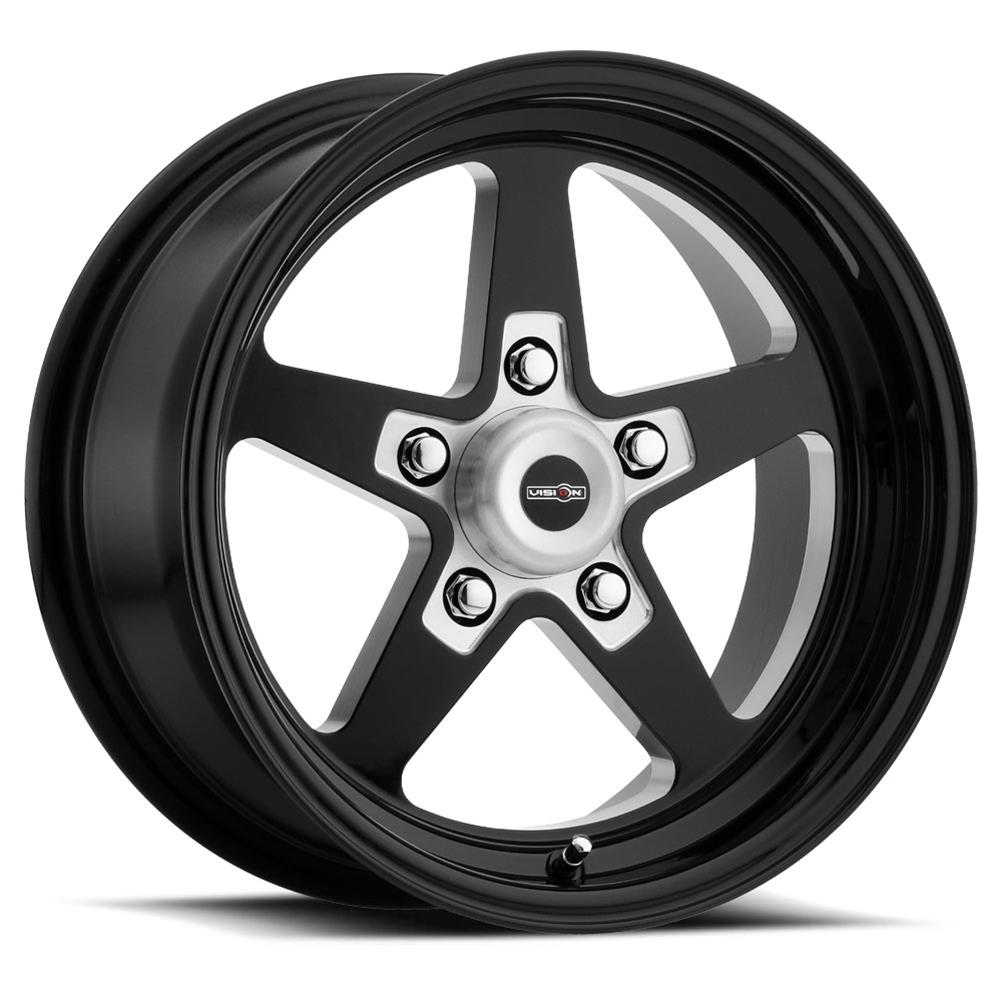
Running these wheels:
In 15x7 all around for the street. Was going to order two more in 15x8 with a 4.50" back space for the slicks. I do not want to screw the tires though.
My 86 Coupe comfortably fit the MT ET Streets of old. That was a 26" x 9.5 on an IROC rear rim. More than an inch to spare on all points inboard and similarly at the front of the wheel opening and fender lip.
I understand a 28" will squeeze in there although there are reports of a little metal massaging being needed. Most notably the bump stop IIRC.
To provide input you Fitment questions:
I have a lowered setup, adjustable suspension, and a Moser rear axle (built to stock width), but I fit two different sets of tires/wheels. I also use air-bags inside the coils to lift the car body up when I load it down heavy with gear during the street drives to races and events. I actually use a 1/8" steel wheel spacer to push both set sof wheels outboard 1/8" for brake caliper clearance assistance. No rubbing.
MT ET Street SS Drag Radials which are 28" tall 275/60/R15 and are on a Jegs SSR Star Wheel 15x8"
Hoosier QTP Bias Ply which are 27" tall at 27x11.50/15LT and this gives a 10" treadwidth. They are on that same 15x8" Jegs SSR Star wheel
I don't have any feedback for the stick-shift questions, but I can get two guys I know with fast 3rd gen stick-shifts to write in if I send them this link.
Last edited by IROCZman15; Dec 25, 2024 at 12:26 PM.
To provide input you Fitment questions:
I have a lowered setup, adjustable suspension, and a Moser rear axle (built to stock width), but I fit two different sets of tires/wheels. I also use air-bags inside the coils to lift the car body up when I load it down heavy with gear during the street drives to races and events. I actually use a 1/8" steel wheel spacer to push both set sof wheels outboard 1/8" for brake caliper clearance assistance. No rubbing.
MT ET Street SS Drag Radials which are 28" tall 275/60/R15 and are on a Jegs SSR Star Wheel 15x8"
Hoosier QTP Bias Ply which are and are on that same 15x8" Jegs SSR Star wheel
I don't have any feedback for the stick-shift questions, but I can get two guys I know with fast 3rd gen stick-shifts to write in if I send them this link.
My mistake, I forgot to put the actual tire specs.
the tire is 27" tall a 27x11.50/15LT and this gives a 10" treadwidth. I'll add that into my post above too.
My mistake, I forgot to put the actual tire specs.
the tire is 27" tall a 27x11.50/15LT and this gives a 10" treadwidth. I'll add that into my post above too.
I'll bet you won't be disappointed with a bias-ply DOT slick.
These two rose to the top (albeit in 16" for me) when rim size I had on hand and ease of fitment where considered.