


Engine removal chain location?


Thread Starter
Member
Joined: Jul 2010
Posts: 109
Likes: 0
From: MI
Car: 85 Trans AM
Engine: Chevy 355
Transmission: T-5
Axle/Gears: 3.73
Engine removal chain location?
What part of the motor does everybody hook the chain to when removing a Chevy 350? I have a carbed 75 350,if that matters.

Supreme Member
iTrader: (3)
Joined: Jun 2007
Posts: 2,359
Likes: 5
From: Pennsylvania
Car: 1992 Camaro RS
Engine: Rebuilt 350 going in after paint
Transmission: WCT5, 7k & counting behind the 350
Axle/Gears: 4thgen disc rear w/ 3.73 Posi
Re: Engine removal chain location?
I do one of two things.
Option 1 - Use the same lift hooks as GM did. They are 2 brackets that bolt to the engine using 2 intake manifold bolts. One in front and one in back, on opposite sides of the engine.
Option 2 - Get some grade 8 bolts and washers. 3/8"-16 is the size you need IIRC. Bolt one end of the chain to the front of one of the cylinder heads. Bolt the other end to the rear of the other cylinder head. Make sure you have 2 or 3 washers between the head of the bolt and the chain to keep the bolt head from slipping through the chain link.
Also, make sure you are using at least a 3/8" chain that has the links fully welded. I use a towing safety chain rated for a class 3 trailer.
Option 1 - Use the same lift hooks as GM did. They are 2 brackets that bolt to the engine using 2 intake manifold bolts. One in front and one in back, on opposite sides of the engine.
Option 2 - Get some grade 8 bolts and washers. 3/8"-16 is the size you need IIRC. Bolt one end of the chain to the front of one of the cylinder heads. Bolt the other end to the rear of the other cylinder head. Make sure you have 2 or 3 washers between the head of the bolt and the chain to keep the bolt head from slipping through the chain link.
Also, make sure you are using at least a 3/8" chain that has the links fully welded. I use a towing safety chain rated for a class 3 trailer.

Member
Joined: Jan 2008
Posts: 181
Likes: 0
From: NW Houston
Car: several
Engine: Lots of them
Transmission: also lots of them
Axle/Gears: lots of them
Re: Engine removal chain location?
works fine with iron intake but not aluminum at least I wouldn't do it.
~Couch
~Couch

Supreme Member
iTrader: (10)
Joined: Oct 2007
Posts: 1,881
Likes: 2
From: Fl.
Car: 83 Trans Am / 96 Jeep XJ
Engine: 355 / 4.0 I6
Transmission: TH350 / Auto
Axle/Gears: 3.23 10-bolt / 4wd
Re: Engine removal chain location?
One grade8 bolt in the front driver head, and one grade8 bolt in the back of the passenger head, and lift it that way. Make sure its a good chain!
I have done it about 5 times like this.
I have done it about 5 times like this.

Moderator


Joined: Jul 1999
Posts: 17,274
Likes: 171
From: 51°N 114°W, 3500'
Car: 87 IROC L98
Engine: 588 Alcohol BBC
Transmission: Powerglide
Axle/Gears: Ford 9"/31 spline spool/4.86
Re: Engine removal chain location?
When I was running a single carb intake, even with the BBC and an aluminum intake, I used the carb plate style. I made my own but this Summit version will work fine even with the weight of a BBC.
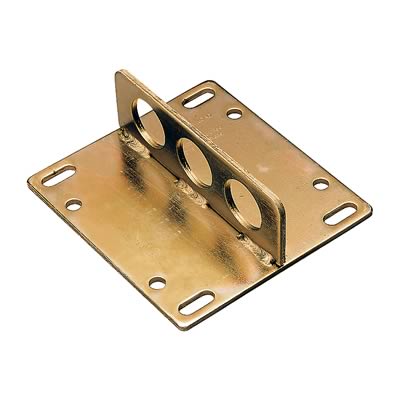
With a tunnel ram, I have to put a bolt at the front and rear of opposite heads to clear the intake and use a leveler to space the chains out enough.
With a tunnel ram, I have to put a bolt at the front and rear of opposite heads to clear the intake and use a leveler to space the chains out enough.

Supreme Member
Joined: Oct 2001
Posts: 8,113
Likes: 6
From: NWOhioToledoArea
Car: 86-FireBird
Engine: -MPFI
Transmission: T5
Axle/Gears: 3:42
Re: Engine removal chain location?
Yep they use the carb plate on aluminum intakes all the time but still scary to me if you had to do allot of twistin yankin or moving around beyond just up and out onto a stand.
Would suck bad to have it come lose
Would suck bad to have it come lose
Trending Topics
Moderator
Joined: Jul 1999
Posts: 17,274
Likes: 171
From: 51°N 114°W, 3500'
Car: 87 IROC L98
Engine: 588 Alcohol BBC
Transmission: Powerglide
Axle/Gears: Ford 9"/31 spline spool/4.86
Re: Engine removal chain location?
How much strength do you want? The carb is held down with four 5/16 NC bolts. If the bolts or threads in the intake are stripped then there is no clamping force. A single 5/16" bolt clamping two pieces of metal together could hold up 2400 pounds. You're using 4 bolts to clamp the plate to the intake to lift "maybe" 600 pounds.
People underestimate how much clamping force bolts have. Clamping a plate to an intake has no shear forces. It's simply pulling on the bolts and the clamping force is higher than the stretch forces.
When you break a bolt by over tightening it, you're twisting it while stretching the bolt. Different forces acting on the bolt than a straight pull.
The intake is bolted to the engine with at least eight 3/8" bolts depending on the style of the intake.
People underestimate how much clamping force bolts have. Clamping a plate to an intake has no shear forces. It's simply pulling on the bolts and the clamping force is higher than the stretch forces.
When you break a bolt by over tightening it, you're twisting it while stretching the bolt. Different forces acting on the bolt than a straight pull.
The intake is bolted to the engine with at least eight 3/8" bolts depending on the style of the intake.
Member
Joined: Jan 2008
Posts: 181
Likes: 0
From: NW Houston
Car: several
Engine: Lots of them
Transmission: also lots of them
Axle/Gears: lots of them
Re: Engine removal chain location?
I've had bolts (yes grade 8) break and had just that happen. When you pancake a pan you get leary of doing anything but proven methods. put the bolts in the head it's cheaper, and bullit proof, anything else and your taking a chance. Any fatigue in those 5/16" diameter holes the threads will pull, and you will have destroyed, an oil pan, and an intake. Why chance it.
~Couch
~Couch
Member
Joined: Jan 2008
Posts: 181
Likes: 0
From: NW Houston
Car: several
Engine: Lots of them
Transmission: also lots of them
Axle/Gears: lots of them
Re: Engine removal chain location?
How much strength do you want? The carb is held down with four 5/16 NC bolts. If the bolts or threads in the intake are stripped then there is no clamping force. A single 5/16" bolt clamping two pieces of metal together could hold up 2400 pounds. You're using 4 bolts to clamp the plate to the intake to lift "maybe" 600 pounds.
People underestimate how much clamping force bolts have. Clamping a plate to an intake has no shear forces. It's simply pulling on the bolts and the clamping force is higher than the stretch forces.
When you break a bolt by over tightening it, you're twisting it while stretching the bolt. Different forces acting on the bolt than a straight pull.
The intake is bolted to the engine with at least eight 3/8" bolts depending on the style of the intake.
People underestimate how much clamping force bolts have. Clamping a plate to an intake has no shear forces. It's simply pulling on the bolts and the clamping force is higher than the stretch forces.
When you break a bolt by over tightening it, you're twisting it while stretching the bolt. Different forces acting on the bolt than a straight pull.
The intake is bolted to the engine with at least eight 3/8" bolts depending on the style of the intake.
~Couch
Last edited by NAASBC355; Aug 6, 2010 at 09:59 PM.

Junior Member
Joined: Aug 2004
Posts: 48
Likes: 0
From: mo
Car: 04 gtp, 96 f150, 88 camaro
Engine: 3.8sc, 5.0, 385ci
Transmission: auto, 5speed, 700r4
Re: Engine removal chain location?
1 bolt in both ends of each head and an engine tilter. no more chains for me
http://www.jcwhitney.com/jcwhitney/s...44191_CL_1.jpg
http://www.jcwhitney.com/jcwhitney/s...44191_CL_1.jpg
Member
Joined: Jan 2008
Posts: 181
Likes: 0
From: NW Houston
Car: several
Engine: Lots of them
Transmission: also lots of them
Axle/Gears: lots of them
Re: Engine removal chain location?
1 bolt in both ends of each head and an engine tilter. no more chains for me
http://www.jcwhitney.com/jcwhitney/s...44191_CL_1.jpg
http://www.jcwhitney.com/jcwhitney/s...44191_CL_1.jpg
Even better way to do it. especially if you are taking the tranny with it.
~Couch
Moderator
Joined: Jul 1999
Posts: 17,274
Likes: 171
From: 51°N 114°W, 3500'
Car: 87 IROC L98
Engine: 588 Alcohol BBC
Transmission: Powerglide
Axle/Gears: Ford 9"/31 spline spool/4.86
Re: Engine removal chain location?
With a tranny then I wouldn't suggest the carb plate adapter but I have to laugh when people won't use four 5/16" bolts to lift an engine but feel quite safe using two 3/8" bolts. A complete engine hangs off an engine stand with only four 3/8" bolts. Well actually the top two keep the end from falling down so they have a lot of stretch forces put on them. The bottom 2 bolts just add some clamping force.
If you manage to break or strip all four bolts in the intake and drop an engine you had more serious issues. Why were the carb stud holes stripped before you decided to lift from there or how old/worn/damaged were the bolts you were using? Out of all the things I've seen dropped, it was rarely from the hardware breaking. Too small a washer used to hold bolts through chains or large holes. Weak chains or straps have broken. Hoists have broken. The weight has shifted and toppled over. If a bolt has ever broken, it's because it was over stressed such as pulling something that was stuck.
There's nothing unsafe about using a carb plate adapter. If they didn't work, they wouldn't be selling them. Accidents happen because the user is careless.
If you manage to break or strip all four bolts in the intake and drop an engine you had more serious issues. Why were the carb stud holes stripped before you decided to lift from there or how old/worn/damaged were the bolts you were using? Out of all the things I've seen dropped, it was rarely from the hardware breaking. Too small a washer used to hold bolts through chains or large holes. Weak chains or straps have broken. Hoists have broken. The weight has shifted and toppled over. If a bolt has ever broken, it's because it was over stressed such as pulling something that was stuck.
There's nothing unsafe about using a carb plate adapter. If they didn't work, they wouldn't be selling them. Accidents happen because the user is careless.
Supreme Member
Joined: Oct 2001
Posts: 8,113
Likes: 6
From: NWOhioToledoArea
Car: 86-FireBird
Engine: -MPFI
Transmission: T5
Axle/Gears: 3:42
Re: Engine removal chain location?
Its not the bolts, its the aluminum and its threads.
Id have no problems with a stock steel intake and using a carb plate.
The bolts are ubar strong, I don't trust the aluminum threads of a sand cast part.
now mill me an intake out of a solid chunk 10k block of the best stuff,
id fear not.
Id have no problems with a stock steel intake and using a carb plate.
The bolts are ubar strong, I don't trust the aluminum threads of a sand cast part.
now mill me an intake out of a solid chunk 10k block of the best stuff,
id fear not.

Member
iTrader: (5)
Joined: Dec 2007
Posts: 115
Likes: 0
From: iowa
Car: 1989 Iroc Camaro
Engine: Stock 350 TPI
Transmission: 700r4
Re: Engine removal chain location?
you know this is why this forum sucks some times a guy asks a simple question what is the best way to pull his engine out and a bunch of know it all fools fill the thread up with arguments about clamping force and the stretching of bolts. when know matter what option you choose if use poor materials, the threads are stripped or wore some how you will have problems.


Joined: Dec 2005
Posts: 6,499
Likes: 31
From: Macon, GA
Car: 1992 Camaro RS
Engine: Vortec headed 355, xe262
Transmission: T56
Axle/Gears: 9-bolt 3.70
Re: Engine removal chain location?
Yeah if the threads in the intake strip, you've got bigger problems to begin with? Im not sure I disagree with that. You can get a carb to seal with stripped threads. Otherwise you can retap it for a larger bolt or heli-coil it or whatever if it's bad enough the carb wont seal. But if you hang it 4 feet in the air and it strips out the threads you're going to pancake an oilpan, potentially damage a crankshaft (And attached goodies), and I dont know about you guys, but my motor never goes more than a few inches off the ground until it's going over the nose or the fender. I'd rather pancake a pan than drop a 500 lb iron onto the top of my frame rails and front suspension pieces.
Not to mention a runaway falling motor hitting a nearby person.
I go with the cylinder head bolt method myself. I feel much better about stressing the bolt than the threads like that. If your cylinder head bolt holes are slightly stripped or damaged, it will probably be okay, but the weight of the engine isnt hanging on the threads, it's sheer load against those bolts which everyone seems to agree are adequate.
Not to mention a runaway falling motor hitting a nearby person.
I go with the cylinder head bolt method myself. I feel much better about stressing the bolt than the threads like that. If your cylinder head bolt holes are slightly stripped or damaged, it will probably be okay, but the weight of the engine isnt hanging on the threads, it's sheer load against those bolts which everyone seems to agree are adequate.
Member
Joined: Jan 2008
Posts: 181
Likes: 0
From: NW Houston
Car: several
Engine: Lots of them
Transmission: also lots of them
Axle/Gears: lots of them
Re: Engine removal chain location?
1 when you use two 3/8" bolts 90 degrees to the lifting direction you actually have two bolts with a rated 150,000 psi sheer strength holding the 1000 pounds or less of motor screwed into one of the strongest parts of the motor. When you have 4 5/16" bolts screwed virtically into a poorly cast, cast aluminum intake manifold the only thing holding the motor up is poorly cast aluminum with very very little "tensile" stregth to hold it in the air. I work with aluminum almost non stop I know how weak it can get over time. I have made sheet metal manifolds, Ive made mid plates for both the dyno and race cars I've made aluminum drive shafts, I've even made degree wheel adapters for sprint car motors, and you know what even billet pieces made of aircraft grade materials arren't worth a dam sometimes. Not to mention the sad job some of these casts are in cheaper manifolds You'll be porting one and all the sudden fall off into a hole somewhere where air got caught during the casting process then you gotta go weld it up and re port it. Like I said before your theory is sound your experiance is whats lacking and it's an unforgiving teacher. There has been no mention one way or the other if he is pulling the tranny with it. Why are we even arguing about this why take the risk in tearing up a manifold, a motor or worse be under it when it drops. When you can lift it the "right" way and do no damage at all 100% guaranteed.
2. No one ever said "stripped" carb. holes we said damaged or fatigued. They already have damage natually because they drilled and cut threads into cast aluminum. Then someone gets a little excited and over torques a carb bolt add a little heat, and there you go a perfectly good hole for doing nothing more than holding a carb on. Anything more and the threads will come right out of there. As a machinist one part of my job is thread repair do you know what the most common material to do thread repair in? I'll give you two guesses... thats right aluminum in fact I cant remember the last time I had to do an actual thread repair to any other material. I have had to helicoil more carb mounting flanges than I can name much less transmissions, rear housings, cylinder heads, the decks of aluminum blocks if it weren't for aluminum I wouldn't have to own a single heli-coil tap or insert. I can usually save cast iron or steel, what happens with them is the bolt breaks first in aluminum the threads pull first. Without fail aluminum threads will pull before you ever break a bolt by over tightening cast iron 50/50 will break the bolt.
"Accidents happen because the user is careless" thats about the most ignorant thing I've ever read. It just goes farther to show your lack of experiance. I've been around this stuff enough to know that sometimes stuff just breaks, without warning without reason.
My engine hoist has lifted hundreds if not thousands of motors over the years by a lot of different people/shops, it has never flenched not once. The chains I use to hoist motors same story. Carb mounting holes failed in that amount of time: millions world wide. Where does my faith lie? My hoist, My chains
They sell carb adapters because they work, and are intended for use in certain instances. Dunno if you noticed but factory carb manifolds by a vast majority are what? CAST IRON
When you mount a motor on an engine stand you are once again screwing bolts into what material? CAST IRON
~Couch
2. No one ever said "stripped" carb. holes we said damaged or fatigued. They already have damage natually because they drilled and cut threads into cast aluminum. Then someone gets a little excited and over torques a carb bolt add a little heat, and there you go a perfectly good hole for doing nothing more than holding a carb on. Anything more and the threads will come right out of there. As a machinist one part of my job is thread repair do you know what the most common material to do thread repair in? I'll give you two guesses... thats right aluminum in fact I cant remember the last time I had to do an actual thread repair to any other material. I have had to helicoil more carb mounting flanges than I can name much less transmissions, rear housings, cylinder heads, the decks of aluminum blocks if it weren't for aluminum I wouldn't have to own a single heli-coil tap or insert. I can usually save cast iron or steel, what happens with them is the bolt breaks first in aluminum the threads pull first. Without fail aluminum threads will pull before you ever break a bolt by over tightening cast iron 50/50 will break the bolt.
"Accidents happen because the user is careless" thats about the most ignorant thing I've ever read. It just goes farther to show your lack of experiance. I've been around this stuff enough to know that sometimes stuff just breaks, without warning without reason.
My engine hoist has lifted hundreds if not thousands of motors over the years by a lot of different people/shops, it has never flenched not once. The chains I use to hoist motors same story. Carb mounting holes failed in that amount of time: millions world wide. Where does my faith lie? My hoist, My chains
They sell carb adapters because they work, and are intended for use in certain instances. Dunno if you noticed but factory carb manifolds by a vast majority are what? CAST IRON
When you mount a motor on an engine stand you are once again screwing bolts into what material? CAST IRON
~Couch
Last edited by NAASBC355; Aug 11, 2010 at 10:35 PM.

Junior Member
Joined: Jan 2005
Posts: 59
Likes: 0
From: Charlotte, NC
Car: 08 G8 GT, 98 Z28, 86 IROC, 85 Z28
Re: Engine removal chain location?
What if you have aluminum heads? Would you still recommend the chain bolted to head method? Reason I ask is I pulled my motor and tranny with this method. I thought about this after the fact and am worried about using the same method for reinstall.
Supreme Member
iTrader: (10)
Joined: Oct 2007
Posts: 1,881
Likes: 2
From: Fl.
Car: 83 Trans Am / 96 Jeep XJ
Engine: 355 / 4.0 I6
Transmission: TH350 / Auto
Axle/Gears: 3.23 10-bolt / 4wd
Re: Engine removal chain location?
Thoughts on aluminum heads?
Moderator
Joined: Jul 1999
Posts: 17,274
Likes: 171
From: 51°N 114°W, 3500'
Car: 87 IROC L98
Engine: 588 Alcohol BBC
Transmission: Powerglide
Axle/Gears: Ford 9"/31 spline spool/4.86
Re: Engine removal chain location?
It's not "The best way". It's just an option.
You want total control over the engine while pulling it, use a leveler with 4 chains. I still wouldn't say it's the best way but it's another option.
You want total control over the engine while pulling it, use a leveler with 4 chains. I still wouldn't say it's the best way but it's another option.

Supreme Member
iTrader: (1)
Joined: Jul 2004
Posts: 10,763
Likes: 4
From: Calgary, AB, Canada
Car: 1982 Trans-Am
Engine: 355 w/ ported 416s
Transmission: T10, hurst shifter
Axle/Gears: 10 bolt, true-trac, 3.73
Re: Engine removal chain location?
This is exactly what I have and use. I have an Edelbrock performer RPM intake manifold, and I generally pull/replace my engine with the tranny bolted onto it as well. The nice thing is the three separate hook holes. With no tranny, the center is generally fine, with the tranny in place, the rear most hole makes it more or less level. Works like a hot damn.
When I was running a single carb intake, even with the BBC and an aluminum intake, I used the carb plate style. I made my own but this Summit version will work fine even with the weight of a BBC.
With a tunnel ram, I have to put a bolt at the front and rear of opposite heads to clear the intake and use a leveler to space the chains out enough.
With a tunnel ram, I have to put a bolt at the front and rear of opposite heads to clear the intake and use a leveler to space the chains out enough.

Moderator
Joined: Jan 2000
Posts: 20,981
Likes: 11
From: Mercedes Norte, Heredia, Costa Rica
Car: 1984 Z28 Hardtop
Engine: 383 Carb
Transmission: 4L60
Axle/Gears: 3.54 Dana 44
Re: Engine removal chain location?
I like having control over the tilt with an engine leveler, so a carb plates is pretty much out.
Member
Joined: Jan 2008
Posts: 181
Likes: 0
From: NW Houston
Car: several
Engine: Lots of them
Transmission: also lots of them
Axle/Gears: lots of them
Re: Engine removal chain location?
With an engine leveler you don't have to drag the tranny up the firewall and let it spring out, there are no supprises, you have complete control, and you can find one these days for not much more than what one of those carb plates cost a tool store here sells them for like $30, and you can use it on ANY motor. V8, V6, 4 cyl., injection, carb, it doesn't matter.
~Couch
~Couch
Last edited by NAASBC355; Aug 13, 2010 at 11:41 AM.

Thread
Thread Starter
Forum
Replies
Last Post
