


MAF problems


Thread Starter
Junior Member
Joined: Aug 2005
Posts: 20
Likes: 0
From: Colorado
Car: 86 Trans Am
Engine: 305 TPI
Transmission: Auto
MAF problems
I took the 86 T/A to a shop and they are having problems, they diagnosed that the problem was the MAF sensor, they replaced it and no change, even two! But the car is doing the same thing before, sometimes you'll start it and it'll run fine, and others it won't idle and the service engine light will go off. If anyone knows anything or previous experience please, I appreciate it.

Supreme Member
Joined: Jul 1999
Posts: 5,183
Likes: 42
From: Oakdale, Ca
Car: 89 IrocZ
Engine: L98-ish
Transmission: 700R4
Welcome to thirdgen.org!
I'd assume they found MAF codes in the ECM? If so, have them check TPS voltage and voltage through WOT.
If okay, have them swap the MAF relays...be cheaper to replace the relays than have them spend time to test them.
Good luck.
I'd assume they found MAF codes in the ECM? If so, have them check TPS voltage and voltage through WOT.
If okay, have them swap the MAF relays...be cheaper to replace the relays than have them spend time to test them.
Good luck.

Junior Member
Joined: Jan 2005
Posts: 26
Likes: 0
From: Indiana
Car: 88 IROC Z
Engine: 5.0 TPI
Transmission: 5 speed manual
As stated before, you should pull the codes to see what the check engine light is throwing. This can be done by yourself if you have a paperclip. You can search this topic, but you will need to ground the test connection on the ALDL and the ECM will flash the code to you.
I had a similar problem, but if the Service Engine Light came on then my car would idle, but ran in limp mode. I replaced the Burn Off Relay ($20.00) and problem solved. You could also have a bad connection to the MAF, or possibly a bad Power Relay.
I had a similar problem, but if the Service Engine Light came on then my car would idle, but ran in limp mode. I replaced the Burn Off Relay ($20.00) and problem solved. You could also have a bad connection to the MAF, or possibly a bad Power Relay.

Moderator


Joined: Jan 2000
Posts: 19,660
Likes: 310
First, Welcome aboard.
Obviously, you're NOT paying for any new MAF(s). There is no such thing as a partially failed MAF. The shop will have to return them or absorb them (they now have spare stock).
Presuming the "shop" had retrieved error codes or run data from the ECM, or measured the MAF's analog output at a known intake air flow, it should have reported that data to you. There would be no other basis for replacing a sensor. Given that, you should have that data at your disposal. Sharing that would help significantly in solving your problem.
If the shop did not share the information/data that you paid for , you can either fight it out with them, or take
midnight's advice and get the data yourself:
First, you'll need to acquire a GM OBD I ECM Diagnostic Trouble Code Retrieval Tool (commonly known as a paper clip to TGO members). Form this wire into a ‘U’ shape.
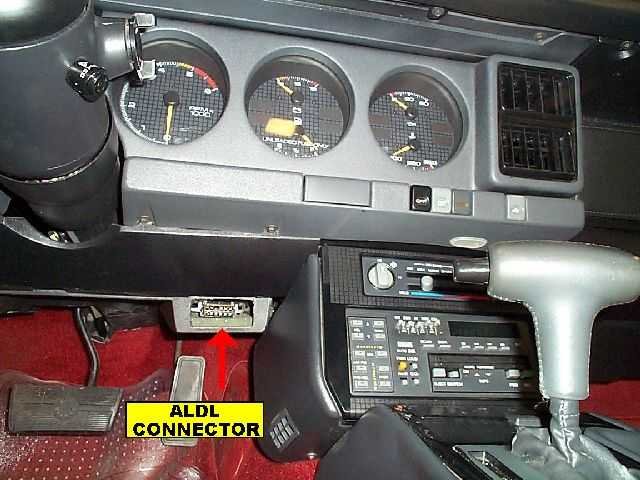
With the engine and ignition turned off, locate the ALDL connector under the dash, just to the right of the steering wheel in the driver's foot well area on some models, and on the left on others, depending on the make and year. There should be a small rectangular cover over the access hole in the lower dash trim, or at least was when the car was delivered.
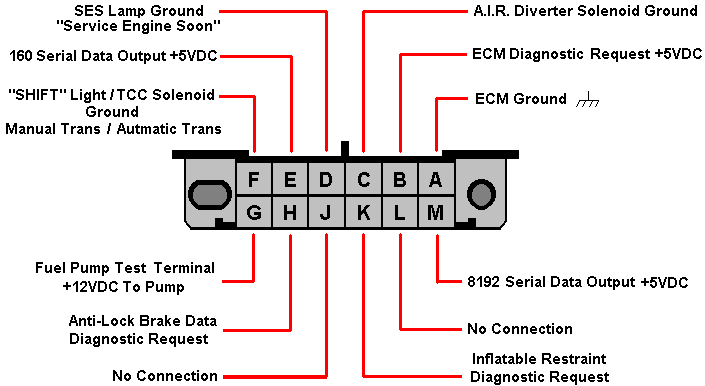
Insert a tool as described above (paper clip) into the 'A' and 'B' terminals on the ALDL connector:
WITHOUT STARTING the engine, turn the ignition to the "RUN" position. Watch the Malfunction Indicator Lamp (MIL) - it will begin to flash. This is also commonly called the "Service Engine Soon" or "SES" lamp. The first code will flash three times, and will usually be a code '12'. This is encoded by one flash of the lamp, a brief pause, then two successive flashes of the lamp. Each code will repeat three times, so you should see a "Code 12" flash three times. Any other error codes will follow in numerical order, and each code should flash three times. After all codes have been displayed three times, the "Code 12" will again flash three times, then all other codes will follow as described earlier. This cycle will continue until the jumper is removed or the ignition is turned off.
After you have made a note of all error codes, turn off the ignition and remove the jumper immediately. If you forget to remove the jumper and attempt to start the engine with it in place, you could damage the ECM. For this reason you should remove it immediately.
Once you have a note of all error codes, check this file for the decoding:
GM Error Codes.pdf.
You'll need Adobe Acrobat Reader to open/print the file.
The minimal expense of the few tools you might need to acquire to accomplish this will prove a worthwhile investment many times over.
Obviously, you're NOT paying for any new MAF(s). There is no such thing as a partially failed MAF. The shop will have to return them or absorb them (they now have spare stock).
Presuming the "shop" had retrieved error codes or run data from the ECM, or measured the MAF's analog output at a known intake air flow, it should have reported that data to you. There would be no other basis for replacing a sensor. Given that, you should have that data at your disposal. Sharing that would help significantly in solving your problem.
If the shop did not share the information/data that you paid for , you can either fight it out with them, or take
midnight's advice and get the data yourself:
First, you'll need to acquire a GM OBD I ECM Diagnostic Trouble Code Retrieval Tool (commonly known as a paper clip to TGO members). Form this wire into a ‘U’ shape.
With the engine and ignition turned off, locate the ALDL connector under the dash, just to the right of the steering wheel in the driver's foot well area on some models, and on the left on others, depending on the make and year. There should be a small rectangular cover over the access hole in the lower dash trim, or at least was when the car was delivered.
Insert a tool as described above (paper clip) into the 'A' and 'B' terminals on the ALDL connector:
WITHOUT STARTING the engine, turn the ignition to the "RUN" position. Watch the Malfunction Indicator Lamp (MIL) - it will begin to flash. This is also commonly called the "Service Engine Soon" or "SES" lamp. The first code will flash three times, and will usually be a code '12'. This is encoded by one flash of the lamp, a brief pause, then two successive flashes of the lamp. Each code will repeat three times, so you should see a "Code 12" flash three times. Any other error codes will follow in numerical order, and each code should flash three times. After all codes have been displayed three times, the "Code 12" will again flash three times, then all other codes will follow as described earlier. This cycle will continue until the jumper is removed or the ignition is turned off.
After you have made a note of all error codes, turn off the ignition and remove the jumper immediately. If you forget to remove the jumper and attempt to start the engine with it in place, you could damage the ECM. For this reason you should remove it immediately.
Once you have a note of all error codes, check this file for the decoding:
GM Error Codes.pdf.
You'll need Adobe Acrobat Reader to open/print the file.
The minimal expense of the few tools you might need to acquire to accomplish this will prove a worthwhile investment many times over.
Last edited by Vader; Aug 21, 2012 at 10:10 PM. Reason: Updated image links
Thread Starter
Junior Member
Joined: Aug 2005
Posts: 20
Likes: 0
From: Colorado
Car: 86 Trans Am
Engine: 305 TPI
Transmission: Auto
thanks vader I've used the paperclip tool before on the vette but this is a little different, the information is very useful I'm going to wait for the shop until tuesday they are going to try something else, plus they're closed this weekend. Thanks again!
Trending Topics

 oops
oops 
Senior Member
iTrader: (1)
Joined: Sep 2001
Posts: 643
Likes: 0
From: Mechanicsburg,Pa usa
Car: 92'Camaro RS
Engine: a loud one
Transmission: bolted to the engine
always wondered what happens if you start the engine with the code reader plugged in oops
 Car runs like crap though.
 Moderator
Joined: Jan 2000
Posts: 19,660
Likes: 310
Starting with the ALDL Diagnostic line grounded does not necessarily cause any problems. There is, however, the remote possibility that the CALPAK and/or ECM firmware can be corrupted,, so it is a good general practice to unground the diagnostic line before starting. After the engine is running, you can ground the diagnostic line again to invoke other ECM modes.

Thread
Thread Starter
Forum
Replies
Last Post
IROCZDAVE (88-L98)
Engine/Drivetrain/Suspension Parts for Sale
0
Sep 2, 2015 08:43 AM