


Installing gears - what tools, and should I use a solid spacer?


Thread Starter
Moderator
Joined: Apr 2000
Posts: 2,337
Likes: 2
Car: 87 IROC
Engine: modded LB9
Transmission: Pro Built 700R4
Installing gears - what tools, and should I use a solid spacer?
I am going to be attempting to rebuild me 10 bolt with new posi, axles and gears. I have the gears and rebuild kit but it comesa with a crush sleeve, am I better to use a solid spacer? I have no idea what the difference is.
Also, as this is the first time I have attempted a rebuild of a rear end, what tools do I need? I already have a dial indicator and magnetic base but is there anything other than wrenches and bearing pullers that I will need?
Any help is much appreciated. I want to attempt the job myself and only have someone else do it as a last resort.
Thanks,
Robert
Also, as this is the first time I have attempted a rebuild of a rear end, what tools do I need? I already have a dial indicator and magnetic base but is there anything other than wrenches and bearing pullers that I will need?
Any help is much appreciated. I want to attempt the job myself and only have someone else do it as a last resort.
Thanks,
Robert

Supreme Member
iTrader: (1)
Joined: Jul 2004
Posts: 10,763
Likes: 4
From: Calgary, AB, Canada
Car: 1982 Trans-Am
Engine: 355 w/ ported 416s
Transmission: T10, hurst shifter
Axle/Gears: 10 bolt, true-trac, 3.73
you shouldn't have a problem. I managed it.
Look for "swim500" 's thread here. I just posted 3 links to my threads circa 6 months ago when I rebuilt my rear, and all the woes I went through. Should have some good tips for ya, along with some pictures.
I didn't replace the gears though.
You'll need the 1 1/4" socket to remove the pinion yoke, and some gizmo to hold the yoke still. I used some 1" angle iron, with 2 5/16" drilled holes in it. It bolts to the yoke, and I stand on that, while using the 24" sliding t-handle with 3/4" drive, to drive the 1 1/4" socket (using a snipe), to remove and tighten the pinion nut.
I'd replace the pinion nut, and stake it as well.
I'd use the ratech 4111, the solid pinion spacer. Over time, hard launches cause the crush spacer to crush some more. This gives you more slack, and makes more impact, crushing it more, etc. This increases shock load, and helps destroy your gears sooner. I'd highly recommend that spacer.
Weird tools I needed were:
5/16" 6 point box end wrench
propane torch to heat up the cross shaft bolt, then used that aforementioned wrench
the big socket, yoke holding tool, and 3/4" driver.
a pair of pry bars, to remove the carrier. Some say it just "falls out". Well, I think that's like saying "yea, I might win the lottery". Well you don't. And it doesn't. I got a gear center to show me how to remove the carrier, since I was fed up. Buddy used 2 pry bars, and made me feel pretty dumb since he made it look so easy. I slipped him $10 for his 5 minutes of time, and saved buying 2 pry bars. :shrug:
oh, a girdle, and or main cap studs are a good idea too.
I didn't use an inch pounds torque wrench to check my preload on the pinion (like to check how many spacers to use on the pinion spacer). I tried, but I found that by feel I could get it more accurate. No slop, no drag, that's what you're looking for.
I rented a bearing puller from the local parts store, to assist in re&re'ing the axle bearings. I thoroughly mangled some 3/4" copper water pipe trying that method first
make sure you remember which spacer goes on which side of the carrier. Actually, this probably won't matter if you're using a new posi and gears, you'll have to reset that yourself.
Hope that helps.
Look for "swim500" 's thread here. I just posted 3 links to my threads circa 6 months ago when I rebuilt my rear, and all the woes I went through. Should have some good tips for ya, along with some pictures.
I didn't replace the gears though.
You'll need the 1 1/4" socket to remove the pinion yoke, and some gizmo to hold the yoke still. I used some 1" angle iron, with 2 5/16" drilled holes in it. It bolts to the yoke, and I stand on that, while using the 24" sliding t-handle with 3/4" drive, to drive the 1 1/4" socket (using a snipe), to remove and tighten the pinion nut.
I'd replace the pinion nut, and stake it as well.
I'd use the ratech 4111, the solid pinion spacer. Over time, hard launches cause the crush spacer to crush some more. This gives you more slack, and makes more impact, crushing it more, etc. This increases shock load, and helps destroy your gears sooner. I'd highly recommend that spacer.
Weird tools I needed were:
5/16" 6 point box end wrench
propane torch to heat up the cross shaft bolt, then used that aforementioned wrench
the big socket, yoke holding tool, and 3/4" driver.
a pair of pry bars, to remove the carrier. Some say it just "falls out". Well, I think that's like saying "yea, I might win the lottery". Well you don't. And it doesn't.
I got a gear center to show me how to remove the carrier, since I was fed up. Buddy used 2 pry bars, and made me feel pretty dumb since he made it look so easy. I slipped him $10 for his 5 minutes of time, and saved buying 2 pry bars. :shrug:oh, a girdle, and or main cap studs are a good idea too.
I didn't use an inch pounds torque wrench to check my preload on the pinion (like to check how many spacers to use on the pinion spacer). I tried, but I found that by feel I could get it more accurate. No slop, no drag, that's what you're looking for.
I rented a bearing puller from the local parts store, to assist in re&re'ing the axle bearings. I thoroughly mangled some 3/4" copper water pipe trying that method first
make sure you remember which spacer goes on which side of the carrier. Actually, this probably won't matter if you're using a new posi and gears, you'll have to reset that yourself.
Hope that helps.

TGO Supporter
Joined: Aug 1999
Posts: 14,811
Likes: 1
From: Jackson County
besides the common hand tools you'll need:
dial type inch pound torque wrench
ft/lbs torque wrench
depth mic or pinion setting tool, i used a piece of 1x.5 aluminum to make a datum surface to measure from for this.
bearing sepreator
press or adaptable gear puller set ,like a snap on universal set
0-1 mic
dial caliper
mag base and indicator
dial type inch pound torque wrench
ft/lbs torque wrench
depth mic or pinion setting tool, i used a piece of 1x.5 aluminum to make a datum surface to measure from for this.
bearing sepreator
press or adaptable gear puller set ,like a snap on universal set
0-1 mic
dial caliper
mag base and indicator

Member
Joined: Apr 2004
Posts: 156
Likes: 0
From: Calgary, AB
Car: 89 GTA
Engine: 5.7L
freeze your bearing and pinion races overnight before reinstallin them. it took me a good couple of hours before i figured that one out  (actually, it was ede who told me about that trick)
what kind of carrier and gears are you gonna be using?
i just used a crush sleeve, but i wish i didnt, also a girdle is a good idea, ill probably upgrade to that, and if you want even more, upgrade to 28 spline axles and carrier if you dont have them. I was broke, so i reused the 26 spline. its fine for anything basically stock and slightly modded in the motor, but be careful when launching hard.
changing your diff is a real pain in the @$$ the first time you do it, make sure you have it on the bench and you have a good workspace,you kinda learn the tricks as you go along. without this board i would have gone mental, have fun!
(actually, it was ede who told me about that trick) what kind of carrier and gears are you gonna be using?
i just used a crush sleeve, but i wish i didnt, also a girdle is a good idea, ill probably upgrade to that, and if you want even more, upgrade to 28 spline axles and carrier if you dont have them. I was broke, so i reused the 26 spline. its fine for anything basically stock and slightly modded in the motor, but be careful when launching hard.
changing your diff is a real pain in the @$$ the first time you do it, make sure you have it on the bench and you have a good workspace,you kinda learn the tricks as you go along. without this board i would have gone mental, have fun!
Thread Starter
Moderator
Joined: Apr 2000
Posts: 2,337
Likes: 2
Car: 87 IROC
Engine: modded LB9
Transmission: Pro Built 700R4
Thank you all for the replies.
I am putting in an Eaton posi and upgrading the axles to 28 spline Superior or Moser units. The gears are 3.42 Yukons. I have everything appart from the axles and posi unit plus a few of the tools. I'm in the UK, so some of these things are not so simple to get here.
Sonix,
Thanks for the info on the crush sleeve. I'll opt for the solid spacer.
I was actually going to attempt to do this job with the rear end still on the car. Maybe this is not the best idea.
I am putting in an Eaton posi and upgrading the axles to 28 spline Superior or Moser units. The gears are 3.42 Yukons. I have everything appart from the axles and posi unit plus a few of the tools. I'm in the UK, so some of these things are not so simple to get here.
Sonix,
Thanks for the info on the crush sleeve. I'll opt for the solid spacer.
I was actually going to attempt to do this job with the rear end still on the car. Maybe this is not the best idea.
Supreme Member
iTrader: (1)
Joined: Jul 2004
Posts: 10,763
Likes: 4
From: Calgary, AB, Canada
Car: 1982 Trans-Am
Engine: 355 w/ ported 416s
Transmission: T10, hurst shifter
Axle/Gears: 10 bolt, true-trac, 3.73
Yes, I definately don't recommend trying to do this in the car, that would be a recipe for frustration.
I got my solid pinion spacer direct from ratech, $70 when the smoke cleared to get it to me. You can probably save some costs by getting everything in one order from summit or something.
I got my solid pinion spacer direct from ratech, $70 when the smoke cleared to get it to me. You can probably save some costs by getting everything in one order from summit or something.
Trending Topics

Member
iTrader: (9)
Joined: Nov 2002
Posts: 439
Likes: 0
From: Detroit Suburbs
Car: 87 IROC
Engine: 5.3L
Transmission: Jerico
Axle/Gears: Aluminum 8.6 w/ T2R
A solid pinion spacer adds ZERO strength to your axle. Don't waste your time or money. Your better off with a crush sleeve. In fact the solid spacer has a better chane of making your axle weaker. Let me explain..
The spacer doesn't get loaded during high torque. If anything, the spacer gets unloaded during torque since torque will try and push the bearings apart, rather than together.
Another problem with the solid spacer is that your stuck with what ever bearing preload it gets you. Once it bottoms out, its not moving, so you can't tighten the nut down more and get more bearing preload. With the crush sleeve, you can set your preload to whatever you want just by tightening the nut a little more. Higher preload is better for a axle that is going to get high impacts from drag racing etc at the expense of more friction and heat. If you want to gain strength set your preload to the high end of the spec 25-30 in-lbs (spec is 15-30). That will give you more stiffness which will keep your gears in line better under torque.
I don't know who invented the solid spacer but they did a good job of fooling a lot of people into spending money on something that does nothing. Like everything else on our cars we think stiffer and bigger is better, but not with this.
The spacer doesn't get loaded during high torque. If anything, the spacer gets unloaded during torque since torque will try and push the bearings apart, rather than together.
Another problem with the solid spacer is that your stuck with what ever bearing preload it gets you. Once it bottoms out, its not moving, so you can't tighten the nut down more and get more bearing preload. With the crush sleeve, you can set your preload to whatever you want just by tightening the nut a little more. Higher preload is better for a axle that is going to get high impacts from drag racing etc at the expense of more friction and heat. If you want to gain strength set your preload to the high end of the spec 25-30 in-lbs (spec is 15-30). That will give you more stiffness which will keep your gears in line better under torque.
I don't know who invented the solid spacer but they did a good job of fooling a lot of people into spending money on something that does nothing. Like everything else on our cars we think stiffer and bigger is better, but not with this.
Last edited by BIG_MODS; Oct 15, 2006 at 10:49 PM.
Supreme Member
iTrader: (1)
Joined: Jul 2004
Posts: 10,763
Likes: 4
From: Calgary, AB, Canada
Car: 1982 Trans-Am
Engine: 355 w/ ported 416s
Transmission: T10, hurst shifter
Axle/Gears: 10 bolt, true-trac, 3.73
You can set the preload to whatever you want with a solid spacer, just swap shims until you get it right. The beauty is, you then tighten the pinion nut to a gargantuan torque, stake it, loctite it, and that preload is never going to change, until hell freezes over.
A crush spacer will crush more from use and age, and you'll lose your preload. We both agree low/no preload is a bad thing in racing.
I guess we can agree to disagree on recommending it's useage.
I will however say that a zytanium cross shaft, is a waste of money in a 3rd gen application. For jeeps and offroaders it's fine, but not useful for us. I however paid upwards of $60 to get one.
A crush spacer will crush more from use and age, and you'll lose your preload. We both agree low/no preload is a bad thing in racing.
I guess we can agree to disagree on recommending it's useage.
I will however say that a zytanium cross shaft, is a waste of money in a 3rd gen application. For jeeps and offroaders it's fine, but not useful for us. I however paid upwards of $60 to get one.
Member
iTrader: (9)
Joined: Nov 2002
Posts: 439
Likes: 0
From: Detroit Suburbs
Car: 87 IROC
Engine: 5.3L
Transmission: Jerico
Axle/Gears: Aluminum 8.6 w/ T2R
You can set the preload to whatever you want with a solid spacer, just swap shims until you get it right. The beauty is, you then tighten the pinion nut to a gargantuan torque, stake it, loctite it, and that preload is never going to change, until hell freezes over.
A crush spacer will crush more from use and age, and you'll lose your preload. We both agree low/no preload is a bad thing in racing.
I guess we can agree to disagree on recommending it's useage.
I will however say that a zytanium cross shaft, is a waste of money in a 3rd gen application. For jeeps and offroaders it's fine, but not useful for us. I however paid upwards of $60 to get one.
A crush spacer will crush more from use and age, and you'll lose your preload. We both agree low/no preload is a bad thing in racing.
I guess we can agree to disagree on recommending it's useage.
I will however say that a zytanium cross shaft, is a waste of money in a 3rd gen application. For jeeps and offroaders it's fine, but not useful for us. I however paid upwards of $60 to get one.
1. An assembly aid to prevent over tightening of the nut and brinelling the bearings, and
2. To preload the inner bearing race a little bit so it doesn't spin relitive to the pinion.
That is it. High torque will unload the spacer monmentaly, not crush it.


Joined: Jun 2002
Posts: 722
Likes: 6
From: Ottawa, Ontario
Car: 86 IROC
Engine: LQ4 6.0L
Transmission: T56
Axle/Gears: 3.55 8.8
KD tools makes a goo in-lb beam torque wrench.
I'd get a solid pinion spacer...you do need to pre-lead the bearings. They are taper rollers and require this..if they are not preloaded they will move around and not seat properly under load.
You can also heat the bearings (not freeze them) to get them on easier. metal expands when heated, ie heat them and they get larger and will slide on. Throw them in the oven at 250F for about 30 minutes and they should fall onto the carrier/pinion. Prepare beforehand with proper tools (old bearing races or some pipe and or pipe caps) to pound them on if still required. Don't overheat as the hardness of the metal will change.
I'd get a solid pinion spacer...you do need to pre-lead the bearings. They are taper rollers and require this..if they are not preloaded they will move around and not seat properly under load.
You can also heat the bearings (not freeze them) to get them on easier. metal expands when heated, ie heat them and they get larger and will slide on. Throw them in the oven at 250F for about 30 minutes and they should fall onto the carrier/pinion. Prepare beforehand with proper tools (old bearing races or some pipe and or pipe caps) to pound them on if still required. Don't overheat as the hardness of the metal will change.


Joined: Sep 2005
Posts: 28,044
Likes: 2,503
Car: Yes
Engine: Usually
Transmission: Sometimes
Axle/Gears: Behind me somewhere
You can freeze the outer races and the pinion gear and the carrier, and heat GENTLY the bearing cones, to help get them in/on. A heat gun is plenty of heat; or, a warm oven as suggested, is also a good way; you DON'T want to use a torch carelessly, for instance. A little goes a long way.
The crush sleeve has a third purpose: it's something for the nut to tighten against. That's where the solid spacer has the advantage. I also prefer to use the spacer rather than a crush sleeve, and I like to set the preload to the high side of the spec; and tighten the nut until it begs for mercy. They DO NOT come loose on me.
If the preload has changed (gone away) to the point that you think you're doing some kind of good by re-tightening the nut, you don't need to be re-tightening the nut in the first place; you need to be replacing the bearings. Tightening the nut is just a band-aid on the symptom of the already-failed part, not a repair of the failure.
The crush sleeve has a third purpose: it's something for the nut to tighten against. That's where the solid spacer has the advantage. I also prefer to use the spacer rather than a crush sleeve, and I like to set the preload to the high side of the spec; and tighten the nut until it begs for mercy. They DO NOT come loose on me.
If the preload has changed (gone away) to the point that you think you're doing some kind of good by re-tightening the nut, you don't need to be re-tightening the nut in the first place; you need to be replacing the bearings. Tightening the nut is just a band-aid on the symptom of the already-failed part, not a repair of the failure.
Member
iTrader: (9)
Joined: Nov 2002
Posts: 439
Likes: 0
From: Detroit Suburbs
Car: 87 IROC
Engine: 5.3L
Transmission: Jerico
Axle/Gears: Aluminum 8.6 w/ T2R
The crush sleeve has a third purpose: it's something for the nut to tighten against. That's where the solid spacer has the advantage. I also prefer to use the spacer rather than a crush sleeve, and I like to set the preload to the high side of the spec; and tighten the nut until it begs for mercy. They DO NOT come loose on me.
If the preload has changed (gone away) to the point that you think you're doing some kind of good by re-tightening the nut, you don't need to be re-tightening the nut in the first place; you need to be replacing the bearings. Tightening the nut is just a band-aid on the symptom of the already-failed part, not a repair of the failure.
If the preload has changed (gone away) to the point that you think you're doing some kind of good by re-tightening the nut, you don't need to be re-tightening the nut in the first place; you need to be replacing the bearings. Tightening the nut is just a band-aid on the symptom of the already-failed part, not a repair of the failure.
Preload can be lost if the bearings wear or if the nut comes loose.

Member
iTrader: (1)
Joined: Jan 2005
Posts: 290
Likes: 0
Car: 1985 z-28
Engine: 350ci
Transmission: 700-r4
Can anybody give me some tips on Pulling the carrier bearings. I bought a bearing seperator/puller kit and it did the pinion bearing like cake. Now i tried to pull the carrier bearings using a socket on the lip of where the axle slides in. I cracked one bearing, rollers came out and now a "lipless" ring is on my carrier!!
Joined: Sep 2005
Posts: 28,044
Likes: 2,503
Car: Yes
Engine: Usually
Transmission: Sometimes
Axle/Gears: Behind me somewhere
if the bearings wear
if the nut comes loose
See #0 above.
To pull the inner races off of a carrier, use a 2- or 3-jaw puller, with an object of the correct diameter to fit in the middle of it and engage the carrier, for the screw to press on. Such as a socket... I have one that's about a 1-1/8" or so, that fits these. It helps if you freeze the carrier with some Freon or by putting it in the freezer for a while, and gently heating the bearing race with a propane torch, and then QUICKLY doing the pulling before the temps equalize.
Another tried-and-true method is to take a Dremel and cut a nice deep groove in the race, and then split it with a chisel. If you go that route though, BE SURE to wear safety glasses, and keep your hands out of the way, and don't do it near anything fragile; because the pieces can REALLY fly off of there.

Senior Member
Joined: Apr 2001
Posts: 976
Likes: 1
Thank you all for the replies.
I am putting in an Eaton posi and upgrading the axles to 28 spline Superior or Moser units. The gears are 3.42 Yukons. I have everything appart from the axles and posi unit plus a few of the tools. I'm in the UK, so some of these things are not so simple to get here.
Sonix,
Thanks for the info on the crush sleeve. I'll opt for the solid spacer.
I was actually going to attempt to do this job with the rear end still on the car. Maybe this is not the best idea.
I am putting in an Eaton posi and upgrading the axles to 28 spline Superior or Moser units. The gears are 3.42 Yukons. I have everything appart from the axles and posi unit plus a few of the tools. I'm in the UK, so some of these things are not so simple to get here.
Sonix,
Thanks for the info on the crush sleeve. I'll opt for the solid spacer.
I was actually going to attempt to do this job with the rear end still on the car. Maybe this is not the best idea.
Speak soon.
Member
iTrader: (1)
Joined: Jan 2005
Posts: 290
Likes: 0
Car: 1985 z-28
Engine: 350ci
Transmission: 700-r4
I need some help with removing and installing pinion races.
1. To remove, do I just hit really hard with a long screwdriver on the two tabs that show through when they are pressed into the housing? With medium force, they didnt budge...
2. Once removed, how do I install the new ones without damaging them? I guess I would freeze them first, then hammer them in with an old bearing inside? Is this the correct way?
Any tips and suggestions as to how to do this correctly would be appreciated.
1. To remove, do I just hit really hard with a long screwdriver on the two tabs that show through when they are pressed into the housing? With medium force, they didnt budge...
2. Once removed, how do I install the new ones without damaging them? I guess I would freeze them first, then hammer them in with an old bearing inside? Is this the correct way?
Any tips and suggestions as to how to do this correctly would be appreciated.
Joined: Jun 2002
Posts: 722
Likes: 6
From: Ottawa, Ontario
Car: 86 IROC
Engine: LQ4 6.0L
Transmission: T56
Axle/Gears: 3.55 8.8
Yes, this is how you remove them. Use a long brass drift if you can get one. You really have to pound it.
I installed new ones by using the old race with a 2" pipe welded to it (on the wider/outside end). I then used a piece of bicycle tube to put over the 2 races to keep the outside edges aligned while hitting in with a hammer...worked great
I installed new ones by using the old race with a 2" pipe welded to it (on the wider/outside end). I then used a piece of bicycle tube to put over the 2 races to keep the outside edges aligned while hitting in with a hammer...worked great
Thread Starter
Moderator
Joined: Apr 2000
Posts: 2,337
Likes: 2
Car: 87 IROC
Engine: modded LB9
Transmission: Pro Built 700R4
Re: Installing gears - what tools, and should I use a solid spacer?
I'm thinking of getting the Proform pinion depth tool from Summit for $100. Has anyone used this one or know of a better option? I take it these are pretty straight forward to use?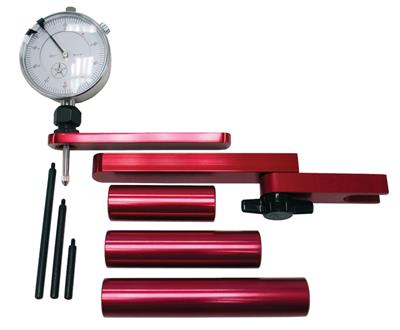
TGO Supporter
Joined: Aug 1999
Posts: 14,811
Likes: 1
From: Jackson County
Re: Installing gears - what tools, and should I use a solid spacer?
i made a datum out of a piece of 1x.5 aluminum bar and use a depth mic. already ahd the depth mic and the aluminum so other than my time i had zero dollars in it and it works just fine.
Thread Starter
Moderator
Joined: Apr 2000
Posts: 2,337
Likes: 2
Car: 87 IROC
Engine: modded LB9
Transmission: Pro Built 700R4
Re: Installing gears - what tools, and should I use a solid spacer?
Bringing this one back from the dead.
This project was put on hold due to other more important things needing done. I have just ordered the last of the parts, the Eaton posi and the axles. I also have another rear end so will be working on it off the car allowing me to use the car while it is being built up.
I will post updates when the work starts, hopefully start cleaning the rear end up this week.
This project was put on hold due to other more important things needing done. I have just ordered the last of the parts, the Eaton posi and the axles. I also have another rear end so will be working on it off the car allowing me to use the car while it is being built up.
I will post updates when the work starts, hopefully start cleaning the rear end up this week.

Supreme Member
Joined: Sep 2008
Posts: 3,777
Likes: 0
Re: Installing gears - what tools, and should I use a solid spacer?
http://rides.webshots.com/album/55411986qgnRwr
Here are some of the tools that I use. Notice that there is no pinion depth tool. I have found them to be a waste of time and inaccurate. Setting the pinion depth should only be done by reading the contact pattern.
As for the crush spacer/solid spacer argument above, I have used both and not found any difference in them. The main purpose for the spacer is to create tension in the pinion shaft, the same as torquing a rod bolt. There must be something for the nut to tighten against, which is where the spacer some in. Without the spacer you would only be tightening the nut against the bearings, which requires VERY LITTLE torque on the nut. The spacer allows you to put 200 to 300 foot pounds of torque on the nut, which provides quite a bit of tension in the pinion shaft. As for which one is better, I don't think it matters. A solid spacer is harder to set up.
Here are some of the tools that I use. Notice that there is no pinion depth tool. I have found them to be a waste of time and inaccurate. Setting the pinion depth should only be done by reading the contact pattern.
As for the crush spacer/solid spacer argument above, I have used both and not found any difference in them. The main purpose for the spacer is to create tension in the pinion shaft, the same as torquing a rod bolt. There must be something for the nut to tighten against, which is where the spacer some in. Without the spacer you would only be tightening the nut against the bearings, which requires VERY LITTLE torque on the nut. The spacer allows you to put 200 to 300 foot pounds of torque on the nut, which provides quite a bit of tension in the pinion shaft. As for which one is better, I don't think it matters. A solid spacer is harder to set up.

Supreme Member
Joined: Jul 1999
Posts: 2,149
Likes: 4
From: Mims, Florida
Car: '87 IROCZ
Engine: 395 ZZ4
Transmission: ProBuilt 700R4
Axle/Gears: 9 bolt 3.70s
Re: Installing gears - what tools, and should I use a solid spacer?
Another tool that I found was extremely helpful in pounding in the shims is a cole chisel that I ground a semi circular edge into the blade. I can beat the shims in now and the shims stay round (as opposed to using a small hammer which only stikes a small portion of the shim).
Thread Starter
Moderator
Joined: Apr 2000
Posts: 2,337
Likes: 2
Car: 87 IROC
Engine: modded LB9
Transmission: Pro Built 700R4
Re: Installing gears - what tools, and should I use a solid spacer?
I've started stripping the rear end but am having serrious issues with getting the axle seals and then bearings out. The problem is I'm having problems even trying to find the correct tool here in the UK.
Any suggestions?
Any suggestions?
Joined: Jun 2002
Posts: 722
Likes: 6
From: Ottawa, Ontario
Car: 86 IROC
Engine: LQ4 6.0L
Transmission: T56
Axle/Gears: 3.55 8.8
Re: Installing gears - what tools, and should I use a solid spacer?
Seals and bearings out of what?
The housing ends or off the axles/carrier/pinion?
The housing ends or off the axles/carrier/pinion?

Thread
Thread Starter
Forum
Replies
Last Post
hectre13
Engine/Drivetrain/Suspension Parts for Sale
2
Dec 11, 2023 08:14 AM
hectre13
Engine/Drivetrain/Suspension Parts for Sale
7
Aug 26, 2015 08:17 AM
