When you click on links to various merchants on this site and make a purchase, this can result in this site earning a commission. Affiliate programs and affiliations include, but are not limited to, the eBay Partner Network.
Battery relocation - questions on fusing / circuit breakers
I relocated my battery to the hatch during my LS swap and everything was working fine but am now trying to add some circuit breakers so everything is protected. Below is a diagram of what I’m trying to do.
The 0ga wire to the starter is only powered during cranking.
The 6ga wire pretty much powers all of the car: factory fuse box, radiator fans, etc
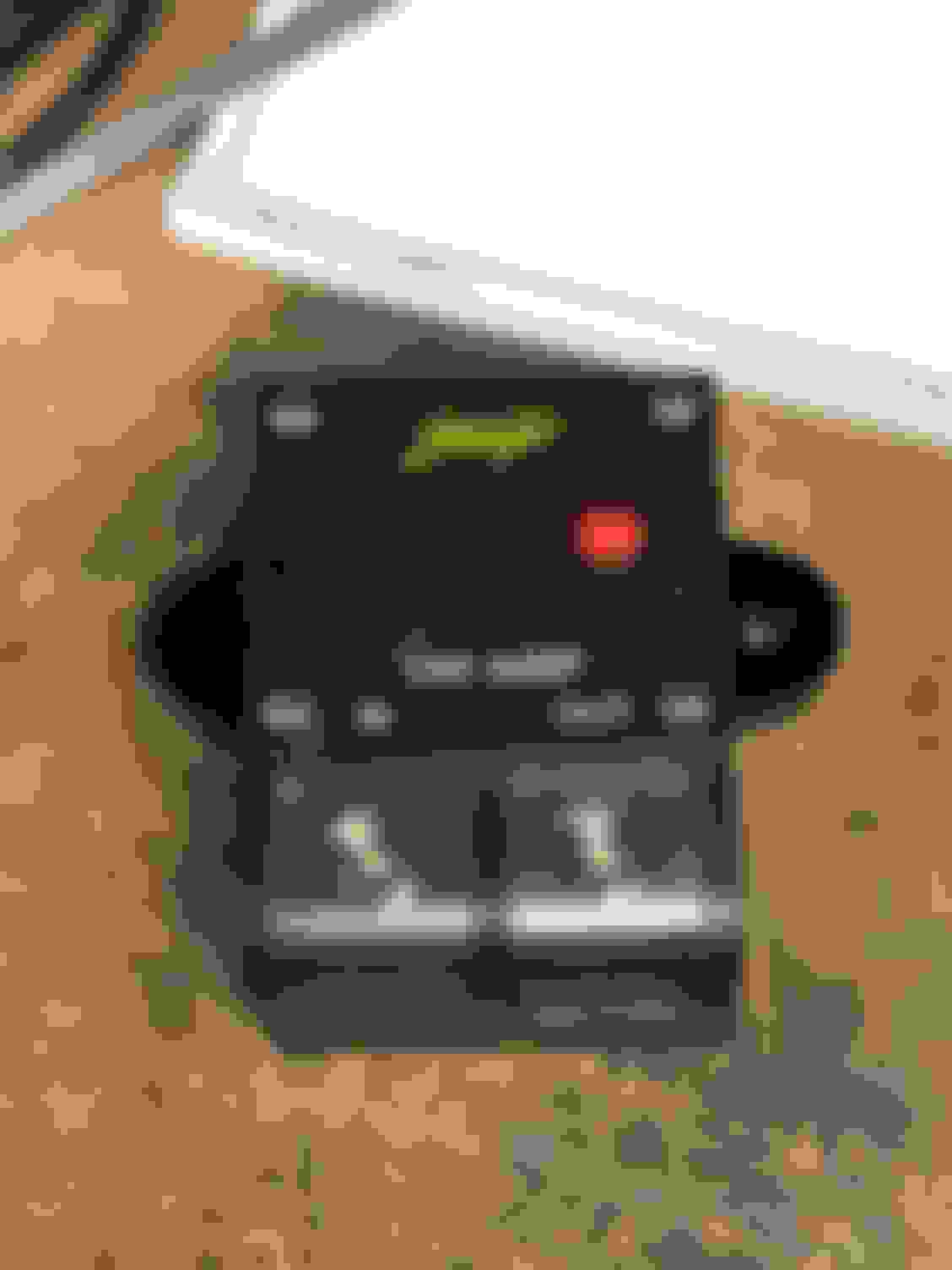
The 4ga wire is for the alternator to charge the battery. Nothing else is connected to this electrical path. I’d like to install a circuit breaker to protect this wire but am not sure which side would be considered IN. Would this be the wire coming from the alternator or the wire coming from the battery? Here’s the circuit breaker I plan to use.
Re: Battery relocation - questions on fusing / circuit breakers
An interesting question......
In normal operation, of course since the alternator is the power source here, it should be the IN, and the battery, as the receiver of the generated power, should be the OUT.
BUT!
The most common failure mode we're trying to protect from here obviously would be a short circuit, either in the wiring or perhaps the diodes in the alternator, which would then indeed make the battery the source of the circuit's power, and not the alternator.
Given that current flow is equal in all parts of a circuit, I'll bet it'd trip either way (shorted alternator drawing mad current from the battery, or shorted battery causing the alternator to push mad current the battery's way) provided the circuit is able to deliver current above the breaker's rating.......
Re: Battery relocation - questions on fusing / circuit breakers
In these configurations the Fuses or Breakers are going to protect the Cables from a Short to Ground.
We need the approximate Cable lengths...
Then an Ampacity Chart can be used to determine the Maximum Continuous Amperage that each Cable can support as it's own Circuit.
Re: Battery relocation - questions on fusing / circuit breakers
Just a note on starter motor cable sizing...
Starter cable is the one cable not sized according to continuous current rating. (Cables would be overly huge if done that way)
Instead, the cranking circuit is sized to manage voltage losses so the starter performs to expectation. Starter will be sluggish if too much voltage drop in cables & connections.
SAE J3053 gives guidance of battery cable sizing for starter motors. For 12V starters in range of 0.5-2.5 kW output, recommendation is to limit voltage losses to maximum (0.3V per 100 Amp). This equates to maximum 0.003 Ohm circuit resistance (all cables and connections from battery B+ to battery B-).
Re: Battery relocation - questions on fusing / circuit breakers
the battery relocation was a kit from Flaming River. it was this one which now looks to be discontinued. the only modification I made was to include a Ford solenoid so this wire is only powered when cranking. https://www.summitracing.com/parts/fla-fr1060
i took some rough measurements on cable lengths:
4ga from battery to alternator = approx. 23'
6ga from battery to fuse block on firewall = approx. 20'
i finished my Terminator X Max install and fired the car for the first time this past week (it's an LQ4 turbo engine). it looks like my alternator isn't charging the battery. i'm not sure if it's the wiring or the alternator. i had a FITech system running my engine last summer and everything worked fine.
over the winter the seal between my PS reservoir and pump failed and leaked fluid into the alternator. i caught that before starting the engine. i didn't want to spray any cleaner in the alternator so i removed the alternator and tried letting the fluid drain out. the alternator is a TuffStuff 175A unit (8242NB). i took the alternator to two different parts stores yesterday to have it tested and both said they can't do it unless it's in the car. i don't trust driving the car that far and you can't really access the alternator with all the turbo piping anyway.
i am using Holley's LS pigtail (197-400). the L terminal wire has a resistor and is connected to an IGN port on my factory fuse block. i added a wire to the S terminal and connected it to the main distribution block on my firewall.
battery is an Odyssey AGM75 86 which was bought brand new July 2023. battery has been on an AGM tender over the winter.
Re: Battery relocation - questions on fusing / circuit breakers
i've been having some issues with my wiring and can't figure it out. i first started driving the car a couple months ago and the breaker serving the distribution block was tripping. i replaced the #6 wire with #2 wire and installed a higher 80A breaker. i really haven't driven the car much since doing that work because it was getting some paint issues fixed but up-sizing the wire appeared to resolve that problem. today i tried going to a cruise night and now the breaker serving the alternator was tripping. nothing else is on this circuit. it's a #4 wire from the alternator back to a 150A circuit breaker in the hatch and then connects to the battery.
here is a revised diagram showing what i currently have.
today was extremely hot & humid and i've never driven the car in the middle of summer until now. i'm not sure what my fix should be. in researching trunk mounted batteries on various forums, some people claim to have a set up to similar to mine and everything works fine. other people have different size wires and connections. i don't want to just throw more money and wires at the problem until i know what will fix my issues. it seems i need to do one of two things:
replace the #4 alternator wire with something larger. i've found wire size / amperage charts online, but they range from #4 to #0 so i'm not sure what size would be correct
remove the solenoid from the starting circuit and reconfigure the 0ga wire. this wire would run from the battery to the starter and then install another wire from the starter to the alternator like in a normal car. i'm not sure if the wire between the starter and alternator should be the same size (0ga) or if it can be smaller since it's a shorter run. i originally installed the solenoid so the large power wire was only hot during starting. if i need a larger wire to make this all work then there's not sense keeping the solenoid in this system
can any electrical gurus out there provide some input / recommendations?
Re: Battery relocation - questions on fusing / circuit breakers
Originally Posted by battmann
i've been having some issues with my wiring and can't figure it out. i first started driving the car a couple months ago and the breaker serving the distribution block was tripping. i replaced the #6 wire with #2 wire and installed a higher 80A breaker. i really haven't driven the car much since doing that work because it was getting some paint issues fixed but up-sizing the wire appeared to resolve that problem. today i tried going to a cruise night and now the breaker serving the alternator was tripping. nothing else is on this circuit. it's a #4 wire from the alternator back to a 150A circuit breaker in the hatch and then connects to the battery.
here is a revised diagram showing what i currently have.
today was extremely hot & humid and i've never driven the car in the middle of summer until now. i'm not sure what my fix should be. in researching trunk mounted batteries on various forums, some people claim to have a set up to similar to mine and everything works fine. other people have different size wires and connections. i don't want to just throw more money and wires at the problem until i know what will fix my issues. it seems i need to do one of two things:
replace the #4 alternator wire with something larger. i've found wire size / amperage charts online, but they range from #4 to #0 so i'm not sure what size would be correct
remove the solenoid from the starting circuit and reconfigure the 0ga wire. this wire would run from the battery to the starter and then install another wire from the starter to the alternator like in a normal car. i'm not sure if the wire between the starter and alternator should be the same size (0ga) or if it can be smaller since it's a shorter run. i originally installed the solenoid so the large power wire was only hot during starting. if i need a larger wire to make this all work then there's not sense keeping the solenoid in this system
can any electrical gurus out there provide some input / recommendations?
Looking at your diagram, I would start with the ground circuit. The chassis of any car is not a good conductor, even though most OEM used that method in the past, most electical gremlins can be traced back to grounds. I ran a 0 gage ground the length of the car with (4) bonded terminals at the rear frame, the firewall, the front frame, and the engine. This gives me (4) solid ground locations for various high amp circuits and the body can be used for low amp circuits. My charging/supply positive wire is 4 gage with a 100 amp MAXI fuse to a (6) post pass through power distribution block at the firewall that provides power to the entire car then continues to the back of the car to the hot side of the starter solenoid and battery. The car has 14.3 V when cruising and 13.8 V with the A/C and the fans on high at idle, without exceeding 100 amp draw of the slow blow fuse. I'm sure that there will be others with different suggestions, but this has been working for me for several years now without issues. Short version, tie your chassis grounds to each other with 0 gage cable and see if it helps, plus it will not hurt anything and you won't have to rewire the entire car. Good luck.
Re: Battery relocation - questions on fusing / circuit breakers
Originally Posted by soloc4
The chassis of any car is not a good conductor, even though most OEM used that method in the past
Uh I don't know about other manufacturers, but pretty much every modern GM vehicle (even EVs) just have a single ~12" #6 cable from the negative post on the 12v battery to a weld stud on the body. If it's good enough for an Escalade with over 40 very sensitive ECUs, four resistive heated seats, 700w engine fans, two HVAC modules... chassis grounds are good enough for anyone. Ground problems are a real thing, and it's critical to ensure that non chassis mounted devices are bound somehow but the body is probably gonna be the best, most convenient conductor a vehicle has.
Re: Battery relocation - questions on fusing / circuit breakers
Originally Posted by battmann
please excuse my ignorance but what are bonded terminals? i tried searching online but am getting results for bonded shipping warehouses. LOL
Sorry, it’s an aerospace term. Basically, the frame or panel should be abraded to parent metal and solvent cleaned before attaching a terminal, lug, or insert (either stud or nut) the most preferred method. Sealed after installation. This maximizes the fay surface contact of the two materials.
Re: Battery relocation - questions on fusing / circuit breakers
@battmann I absolutely must tell you that your Firebird Build looks absolutely AMAZING!
I have gone through your Threads multiple times, and I am so truly impressed with everything that I can see in your Images.
I'm sure the Car looks just as incredible in person!
The excellent work that you achieved in your own garage looks just as great as many of the Third-Gens that I professionally built for my customers.
Congrats on your Build!
I absolutely love it!!!
Here are some of my Power Distribution Wiring Diagrams that you can use to design your own Wiring/ Electrical System:
Re: Battery relocation - questions on fusing / circuit breakers
thanks so much for the kind words @vorteciroc !! i definitely wouldn't have gotten this far in my build without a LOT of help from this website and my friends. also, thanks for posting those diagrams. i ordered more ground cable so i can make some addition (and better) connections. i think running a 1/0 cable from the battery to the engine bay may resolve this problem. i don't currently have a cable connecting the rear and front chassis grounds together with the battery.
the car does look pretty cool in person, but i always seem to have some sort of mechanical issue going on. i'm not a mechanic so it takes me a long time to figure out what the problem is and try to fix it. sometimes it's really hard to not get frustrated.
my one friend makes fun of me and says i have the most expensive garage art statue he's ever seen. i need to get this thing running properly so i can prove him wrong!
Re: Battery relocation - questions on fusing / circuit breakers
Originally Posted by vorteciroc
@battmann I absolutely must tell you that your Firebird Build looks absolutely AMAZING!
I have gone through your Threads multiple times, and I am so truly impressed with everything that I can see in your Images.
I'm sure the Car looks just as incredible in person!
The excellent work that you achieved in your own garage looks just as great as many of the Third-Gens that I professionally built for my customers.
Congrats on your Build!
I absolutely love it!!!
Here are some of my Power Distribution Wiring Diagrams that you can use to design your own Wiring/ Electrical System:
I love your diagram. I'm going to use this for my battery relocation project. Dumb question but I was wondering what UBEC and IPBEC stands for.
Re: Battery relocation - questions on fusing / circuit breakers
Originally Posted by vorteciroc
Not a dumb question...
The proper name (that GM uses) for the Fuse, Relay and Power-Distribution Panels is the Bussed Electrical Center.
Abbreviated as B.E.C.
The UBEC is an Under-Hood Bussed Electrical Center.
The IPBEC is an Instrument Panel Bussed Electrical Center.
Thank you VortecIroc for getting back to me. Very much appreciated. I'm learning as I go and TGO is the greatest education tool for all things Third Gen.
I have a couple more questions. I see on your diagram that your alternator wire starts at the pass through connector. Shouldn't there be a breaker or fuse somewhere in that wire so the unthinkable doesn't happen? I was thinking I would run the 2 gauge (0r 4 gauge) wire from the alternator all the way back to the battery uninterrupted with a breaker near the battery. Does it make any difference if I were to run a 4 gauge. I have watched videos of guys running 4 gauge and it charges just fine. I have a 140 amp alternator.
Also, The two wires running from the C-100 all the way around to the post on the starter are 10 gauge with 14 gauge fusable links? Correct? I want to shorten them to clean up my engine bay a little as I'm doing a 0411 pcm swap. Maybe run them straight down to the starter near the pass through connector or just to the connector itself. My car has working AC and cruise control. The battery relocation is the 1st faze of my project.
Last edited by Duane's 91 Z/28; Aug 12, 2024 at 05:43 PM.
Re: Battery relocation - questions on fusing / circuit breakers
I got the new 1/0 ground cable ran over the weekend. It’s routed under the PS of the car & was a pain. Used rubber lined clamps to mount it. 15’ of cable was the perfect length. It connects the rear chassis ground on the frame to the front of the engine block on the PS. I added another 1/0 ground from that point on the block to the front PS subframe. I already had a 1/0 ground on the DS of the engine from the bellhousing to the frame.
Saturday I took my car to a local show. It was about a 20 minute drive each way. Car ran well and was a steady 14.2V. Weather wasn’t overly hot or humid though. I’ll have to drive it some more to see if everything is good now.
Hoping the new grounds solve my issue
Re: Battery relocation - questions on fusing / circuit breakers
I'm sorry Battmann, I didn't mean to hijack your thread. I'm just trying to make sure I get the right wires for my project so I don't have to order stuff and have to send it back. And VortecIroc is a tremendous help for both of us.
Re: Battery relocation - questions on fusing / circuit breakers
i didn't think you hijacked the thread. i didn't know what UBEC and IPBEC stood for either - but i was too embarrassed to ask after already questioning what bonded terminals were. LOL
vorteciroc is a great guy - very knowledgeable and always willing to provide help and guidance to the community. it's greatly appreciated!! thank you.
Re: Battery relocation - questions on fusing / circuit breakers
Originally Posted by Duane's 91 Z/28
Thank you VortecIroc for getting back to me. Very much appreciated. I'm learning as I go and TGO is the greatest education tool for all things Third Gen.
I have a couple more questions. I see on your diagram that your alternator wire starts at the pass through connector. Shouldn't there be a breaker or fuse somewhere in that wire so the unthinkable doesn't happen? I was thinking I would run the 2 gauge (0r 4 gauge) wire from the alternator all the way back to the battery uninterrupted with a breaker near the battery. Does it make any difference if I were to run a 4 gauge. I have watched videos of guys running 4 gauge and it charges just fine. I have a 140 amp alternator.
Also, The two wires running from the C-100 all the way around to the post on the starter are 10 gauge with 14 gauge fusable links? Correct? I want to shorten them to clean up my engine bay a little as I'm doing a 0411 pcm swap. Maybe run them straight down to the starter near the pass through connector or just to the connector itself. My car has working AC and cruise control. The battery relocation is the 1st faze of my project.
Thank you!
The Fuse or Fusible-Link in a Circuit is there to protect the wire from excessive Heat/ Fire/ Amperage.
With large Power Cables (like Zero Gauge or Two Gauge) there is little to worry about in terms of excessive Amperage, and most Professionals will not use a Fuse.
I personally will at times use a Mega-Fuse close to the Battery for the Zero-Gauge Power Cable that goes to the Starter-Motor and Alternator.
Mega-Fuse shown below:
Here is one of my Sealed In-Line Mega-Fuses shown below:
Re: Battery relocation - questions on fusing / circuit breakers
To try and answer your question regarding using 4 Gauge Cable; it will depend on the maximum Ampacity required of your Charging System.
What is the Maximum Output rating of your Alternator?
Also have you ever put an Ammeter Clamp on the Negative Power Cable at the Battery?
Also to clarify things regarding Negative Power Cables; there are Four Cables that every Vehicle should have (and add them if not there from the Factory).
#1: Negative Battery Terminal to Cylinder Block (Not a Cylinder-Head).
#2: Negative Battery Terminal to Alternator Case.
#3: Negative Battery Terminal to Chassis Ground.
#4: Cylinder Block to Chassis Ground.
Most people have traditionally thought that the "Negative Battery Terminal to Alternator Case" is not required.
Yes, everything will operate correctly without it, but it should still be used.
In a DC 12-Volt Chassis Negative Electrical System (the way our Vehicles are built) Electricity (Electrons) flows from Negative to Positive.
This means that the Alternator must first get Electricity from the Negative Battery Terminal.
Electricity will go from the Negative Battery Terminal through the "Negative Battery Terminal to Alternator Case" Negative Power Cable to the Alternator.
Then through the "Alternator to Positive Battery Terminal" Positive Power Cable to the Battery.
Without the "Negative Battery Terminal to Alternator Case" Negative Power Cable, Electricity must pass through the Chassis.
And instead of Electricity flowing through a Big Clean Highly-Conductive Copper Cable...
It must pass through some Rusty Dirty Not So Conductive Steel Chassis.
Far fromIdeal.
Last edited by vorteciroc; Aug 14, 2024 at 11:44 PM.
Re: Battery relocation - questions on fusing / circuit breakers
I have never used an ammeter clamp. I do have an amp and dc volt meter. I have a 140 amp Powermaster alternator. So you recommend a 175 amp megafuse or will a 150 amp work? I don't have a high powered stereo system in my car. Just a Pioneer double din stereo and speakers. And I really appreciate your insight about where the negative cables need to go. Big help. Thank you.
Last edited by Duane's 91 Z/28; Aug 15, 2024 at 06:19 AM.
Re: Battery relocation - questions on fusing / circuit breakers
I would go with the 175 Amp Fuse.
The 150 Amp Fuse is a little to close to the Rated Output of the Alternator.
A High Quality Alternator will most often come with a Test/ QC Sheet that shows the Maximum Output of the Alternator...
And the Output will often be slightly higher than the stated/ rated Output.
Example of Alternator Test Card show below (Note: I am in NO WAY saying that Powermaster Alternators are High Quality):
This is for a 105 Amp Alternator.
Re: Battery relocation - questions on fusing / circuit breakers
Originally Posted by soloc4
Looking at your diagram, I would start with the ground circuit. The chassis of any car is not a good conductor, even though most OEM used that method in the past, most electical gremlins can be traced back to grounds. I ran a 0 gage ground the length of the car with (4) bonded terminals at the rear frame, the firewall, the front frame, and the engine. This gives me (4) solid ground locations for various high amp circuits and the body can be used for low amp circuits. My charging/supply positive wire is 4 gage with a 100 amp MAXI fuse to a (6) post pass through power distribution block at the firewall that provides power to the entire car then continues to the back of the car to the hot side of the starter solenoid and battery. The car has 14.3 V when cruising and 13.8 V with the A/C and the fans on high at idle, without exceeding 100 amp draw of the slow blow fuse. I'm sure that there will be others with different suggestions, but this has been working for me for several years now without issues. Short version, tie your chassis grounds to each other with 0 gage cable and see if it helps, plus it will not hurt anything and you won't have to rewire the entire car. Good luck.
I would start with the ground circuit by adding cables between the rear chassis point and the front chassis point. This can be done simply by attaching two #0 cables the length of the car. Start with the rear chassis cable from the battery that you currently have and add a cable to the firewall then into the engine bay to the current front chassis cable and then to the engine block. This will be able to support the #4 alternator charging cable. I would remove the circuit breaker and replace it with a 150 amp Mega Fuse. The circuit breaker is designed to trip when it senses 150 amps where a Mega Fuse will allow occasional spikes without burning out. The alternator is an “on demand” system and doesn’t run at 100 percent all of the time which is why you can use a lower amperage Mega Fuse without issues, but with a 175 amp alternator and a 150 amp circuit breaker, the breaker will trip as soon as it senses 150 amps. With these two alterations you should have no more problems. The rest of the system is solid, although the #2 power distribution is overkill. #4 or #6 cable from the battery to the distribution block would suffice.
Re: Battery relocation - questions on fusing / circuit breakers
Spent time working on a fix yesterday. I swapped out the circuit breaker with a 150A mega fuse like soloc4 recommended. I also bought a digital clamp meter from harbor freight to measure amperage after making the switch. Seems like the mega fuse fixed my issue. Drove around for 50 minutes on both back roads and highway. Max amperage reading was only 65A. Not sure why the 150A circuit breaker was tripping. Weird. Just happy this seems to be fixed.
Here’s the meter I bought for testing:
Re: Battery relocation - questions on fusing / circuit breakers
Originally Posted by battmann
Not sure why the 150A circuit breaker was tripping
Circuit breakers can severely derate with increased ambient temperature. For example, a certain bi-metal disc type circuit breaker that is commonly used in construction machines will derate to 0 amps around 85C. Yep, you read that right... it can literally trip itself at zero amps. As a result, you can't put that circuit breaker under hood or anywhere that's hot.
Re: Battery relocation - questions on fusing / circuit breakers
Originally Posted by QwkTrip
Circuit breakers can severely derate with increased ambient temperature. For example, a certain bi-metal disc type circuit breaker that is commonly used in construction machines will derate to 0 amps around 85C. Yep, you read that right... it can literally trip itself at zero amps. As a result, you can't put that circuit breaker under hood or anywhere that's hot.
I just popped into this thread because I'm really into car wiring these days. I never knew this about circuit breakers. I've never used them nor have I really considered them but this is some important information as circuit breakers seem to be a choice that a lot of people go with. One of my local car buddies recommended that I go with CBs for my current build in my signature but I chose to stick with fuses.
Re: Battery relocation - questions on fusing / circuit breakers
This is good information. I think I’m going to remove the other circuit breaker in the system so I don’t have issues down the road. I originally thought that circuit breakers were a good idea so I could easily turn the power off when working on stuff. It’s kind of difficult accessing the side battery terminals where the battery is mounted.
The other topic I stumbled upon while researching this issue is OFC vs CCA wire. The Flaming River battery relocation kit I bought is CCA. Didn’t realize there was a difference when I bought this kit years ago. So the 0 awg cable going from the battery to the starter is CCA but that’s only powered while starting the car. Some of the grounds I installed used the 0 awg CCA cable from the kit. They’re all less than 24” but considering swapping these out for OFC.
Re: Battery relocation - questions on fusing / circuit breakers
Oh, no! Copper clad aluminum ! Not good stuff. I'm not saying that it won't work. It will. It just isn't as good at conducting electricity as pure copper is. You want pure copper.
I think a lot of stereo guys get caught up in the CCA stuff because it is less expensive. Oxygen Free Copper (OFC) is another stereo thing. OFC wiring is a good thing! CCA, not so much.
I'm really surprised that Flaming River would've supplied that CCA cable in their battery relocation kit. That's how they "afforded" to supply 0awg cable vs some of the other companies supplying 2awg cable. Don't skimp on cable size when relocating a battery to the back of the car. If you want to avoid starter issues, make sure you use big cable. I used 00awg pure copper welding cable in my LS376/480 swapped Foxbody Mustang. In 2 1/2 yrs of driving the car, I've never had a starter issue!
In my current IROC build, I'm using the same 00awg welding cable with the battery located where the spare tire used to reside.
Last edited by dannyual320; May 16, 2026 at 10:47 AM.
Reason: added text
Re: Battery relocation - questions on fusing / circuit breakers
Originally Posted by battmann
This is good information. I think I’m going to remove the other circuit breaker in the system so I don’t have issues down the road. I originally thought that circuit breakers were a good idea so I could easily turn the power off when working on stuff. It’s kind of difficult accessing the side battery terminals where the battery is mounted.
Well, before you jump to do that.... all breakers and fuses have temperature derate at elevated temperatures. Some more than others depending on the type of technology. The current carrying derate is usually posted on the manufacturers website. Compare that to the load and temperature you expect and then decide what you want to do. If you haven't had nuisance trips yet, then maybe don't get too worried about it.





 ! Not good stuff. I'm not saying that it won't work. It will. It just isn't as good at conducting electricity as pure copper is. You want pure copper.