


400 SBC Build


Thread Starter
Junior Member
Joined: Aug 2023
Posts: 4
Likes: 0
From: Houston, TX
Car: 1986 Chevrolet Camaro
Engine: 305sbc FI
Transmission: 700R4
Axle/Gears: 3.73
400 SBC Build
I am swapping a 400 (6786133 block) into my 1986 Camaro and have a budget of about $3,000 for the build on this engine. It's going to be mated to the stock 700R4 transmission for the time being and I am hopeful to be making around 400bhp and around 475lb-ft. I want to use 64cc chamber heads and a fairly mean cam. I already have a 650CFM Holley carb (not included in the budget) and essentially need heads, a cam, and any add-ons needed for reliability. I want to leave the rotating assembly stock for the time being, but plan to do 5.75 rods in the future and flat-top pistons (and maybe a supercharger, but we will see). Anybody have any specific parts they recommend or a build list of tried and true builds that fit my budget? I absolutely do not mind buying parts from RockAuto if need be, and I am more than willing to tear this block down in the future, so I am not looking for the pinnacle of reliability. Cam should be fairly choppy, but handle the stock torque converter (maybe something around 230 lift and 110 lobe separation. All comments negative or positive are appreciated.
Note: this is a factory 305 FI car, are there any fitment issues fitting a carb under the hood, I have been looking at ram air and cowl hoods.
Note: this is a factory 305 FI car, are there any fitment issues fitting a carb under the hood, I have been looking at ram air and cowl hoods.


Joined: Sep 2005
Posts: 28,015
Likes: 2,492
Car: Yes
Engine: Usually
Transmission: Sometimes
Axle/Gears: Behind me somewhere
Re: 400 SBC Build
That's a whole new 400 block casting # on me... I thought I knew em all, but maybe not.
400/475 is quite reasonable. Not alot of effort required to get there.
You say $3000... how much of the work are you going to do yourself?
I had a very strong running 400 (509 casting) in my 83 for some years, roughly that same amount of power (400 at the crank). One of its iterations was 12cc dish TRW pistons (don't recall the part #), professionally prepped 186 heads from one of the local race shops (Memphis area) that did lots of work for the circle-track racers THAT WON ALL THE TIME, Comp XE274 cam, Comp steel roller rockers, Manley Street Flo valves, Holley 6211 (spreadbore man sec dbl pump 800 CFM) carb, Performer not RPM intake. Stock L69 air cleaner. It all fit under the stock hood. It had Edelbrock TES on it at the time which probably didn't do it any favors. I'd suggest something similar overall except maybe a bit more compression (less piston dish). Another way to skin that cat would be flat-tops and 76cc (NOT stock) heads. It ran pretty hard... ended up breaking the crank where 400s usually do that, at the front of the front-most rod pin. The nose, 1st main brg journal, counterweight, and the front half of the rod throw detached from the rest. Too much RPMs. It still ran, enough to pull it into the garage to yank it out for a rework.
A 650 CFM carb likely won't flow enough air to make 400 HP unless absolutely everything else is right on the nose. Just because you already have it doesn't mean that you should use it.
Stock converter is not A Good Idea regardless. I urge you to reconsider. Since the 700 has lockup, you can get away with more converter than you could with a T-350 or otehr non-lockup. I'd STRONGLY recommend a 2400 RPM minimum stall; ideally closer to 3000.
If you duplicate my build above, you'll have over $3k in it, just in parts. That's before machine work. You need closer to $5k before you're done. The heads alone, by the time everything was done to them (machine work, porting, screw-in studs & guide plates, guides, the better valves, spring pockets cut out, etc.), had around $1500 in them, in 1987. Today, you could get to a power level like that on ALOT less than inflation alone would indicate, with new aftermarket heads. Still, you'll have the better part of $2k just in the heads. $3k for THE WHOLE PROJECT is way too optimistic. Even if you DO already have a carb.
400/475 is quite reasonable. Not alot of effort required to get there.
You say $3000... how much of the work are you going to do yourself?
I had a very strong running 400 (509 casting) in my 83 for some years, roughly that same amount of power (400 at the crank). One of its iterations was 12cc dish TRW pistons (don't recall the part #), professionally prepped 186 heads from one of the local race shops (Memphis area) that did lots of work for the circle-track racers THAT WON ALL THE TIME, Comp XE274 cam, Comp steel roller rockers, Manley Street Flo valves, Holley 6211 (spreadbore man sec dbl pump 800 CFM) carb, Performer not RPM intake. Stock L69 air cleaner. It all fit under the stock hood. It had Edelbrock TES on it at the time which probably didn't do it any favors. I'd suggest something similar overall except maybe a bit more compression (less piston dish). Another way to skin that cat would be flat-tops and 76cc (NOT stock) heads. It ran pretty hard... ended up breaking the crank where 400s usually do that, at the front of the front-most rod pin. The nose, 1st main brg journal, counterweight, and the front half of the rod throw detached from the rest. Too much RPMs. It still ran, enough to pull it into the garage to yank it out for a rework.
A 650 CFM carb likely won't flow enough air to make 400 HP unless absolutely everything else is right on the nose. Just because you already have it doesn't mean that you should use it.
Stock converter is not A Good Idea regardless. I urge you to reconsider. Since the 700 has lockup, you can get away with more converter than you could with a T-350 or otehr non-lockup. I'd STRONGLY recommend a 2400 RPM minimum stall; ideally closer to 3000.
If you duplicate my build above, you'll have over $3k in it, just in parts. That's before machine work. You need closer to $5k before you're done. The heads alone, by the time everything was done to them (machine work, porting, screw-in studs & guide plates, guides, the better valves, spring pockets cut out, etc.), had around $1500 in them, in 1987. Today, you could get to a power level like that on ALOT less than inflation alone would indicate, with new aftermarket heads. Still, you'll have the better part of $2k just in the heads. $3k for THE WHOLE PROJECT is way too optimistic. Even if you DO already have a carb.


Joined: Dec 2004
Posts: 16,907
Likes: 1,014
From: Mile High Country !!!
Car: 1967 Camaro, 91 z28
Engine: Lb9
Transmission: M20
Axle/Gears: J65 pbr on stock posi 10bolt
Re: 400 SBC Build
I’m building a 400 509 block sbc right now, I wanted to keep compression lower so 22cc pistons
tuned port injection , retrofit com 12-423-08 and afr 195 64cc heads . Should be around 9.59:1 compression. I’m probably in parts $4,500 without machine work.
tuned port injection , retrofit com 12-423-08 and afr 195 64cc heads . Should be around 9.59:1 compression. I’m probably in parts $4,500 without machine work.
Thread Starter
Junior Member
Joined: Aug 2023
Posts: 4
Likes: 0
From: Houston, TX
Car: 1986 Chevrolet Camaro
Engine: 305sbc FI
Transmission: 700R4
Axle/Gears: 3.73
Re: 400 SBC Build
I do all of the work myself, including machine work. I build Japanese cars typically and am fairly new to the small block scene (was introduced by a deal I couldn't pass up), and was looking for some guidance by some more experienced builders. I just happened to have a 650CFM lying around so I figured I might as well use it. The block came out of a 67 Bonneville but from what I understand this is a GTO block as well. Aside from that, like I said, stock rotating assembly- so not boring, rods, cylinders, or cranks. Just essentially looking for the best heads, cam, and intake system on a budget for the time being. Even if that means some sub-par heads. I have been looking at the Vortec heads as an option. I can make a 750 happen if it is what is needed, but I do want to keep the 700R4. I'll look into the higher stall converters and see what I come across. Any recommendation on heads <$1750? Or a nice cam- going for sound more-so than power, but 360 or so is my minimum. Maybe roller rockers as well. I really just want something fun and loud. I'll get some long tube headers and weld up an exhaust myself but I'm not really including that in my price. So about $3,000 total for just parts, and apart from a cam the block will be untouched (aside from a block resurface for new heads)

Member

Joined: Sep 2002
Posts: 253
Likes: 25
From: honolulu
Car: '86MCSS
Engine: 396 .030"
Transmission: M20
Re: 400 SBC Build
The "6" in the casting number should be a "9" and what your dealing with is a Pontiac engine not a Chevy.
https://www.thirdgen.org/forums/engi...-v8-swaps.html
If sticking with the Pontiac and you want to stick to your plans, expect to pay 2 maybe 3 times more than your planned budget.
https://butlerperformance.com
https://www.thirdgen.org/forums/engi...-v8-swaps.html
If sticking with the Pontiac and you want to stick to your plans, expect to pay 2 maybe 3 times more than your planned budget.
https://butlerperformance.com
Last edited by stew'86MCSS396; Aug 7, 2023 at 02:49 AM.

Member


Joined: Aug 2021
Posts: 418
Likes: 66
From: Central Michigan
Engine: SBC Dart 400 Holley 750 Carb
Transmission: 700R4
Axle/Gears: 28 spline 323 gears
Re: 400 SBC Build
If all you want is it to sound nice and not performance. Than just put in a big cam in it and leave everything else stock. Cheapest heads are ProMax at $1300 & cam/lifters $1000 and those are for Chevys. Pontiac will be much more. I have $5500 in the chevy 400 I'm building, heads, cam/lifters, bored/pistons $465, crank ground. $3000 don't go far.
Joined: Sep 2005
Posts: 28,015
Likes: 2,492
Car: Yes
Engine: Usually
Transmission: Sometimes
Axle/Gears: Behind me somewhere
Re: 400 SBC Build
If that is indeed a Pontiac block, which is the only thing that would have come out of a 60s land yacht, you're out of luck. Absolutely NOTHING WHATSOEVER about a Chevy 400 will bolt to it. Not heads, exhaust, mounts, accessories, transmission, or ANYTHING else. Well, maybe the spark plugs, and a couple of bolts, and with enough fiddling, a carb.
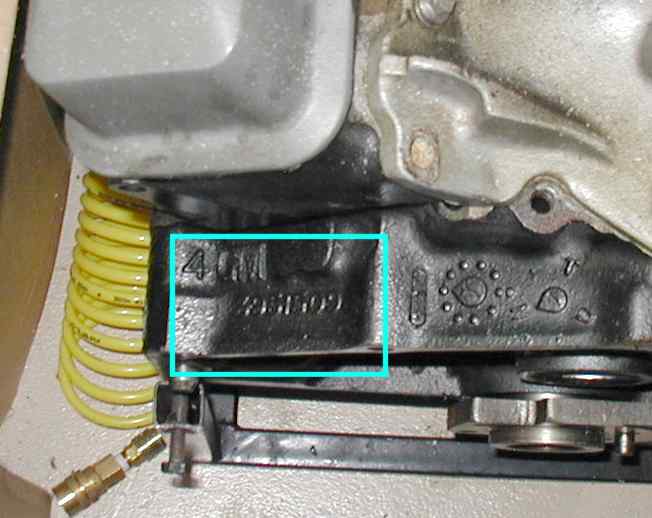
Post a photo of this block and we'll be able to tell RIGHT AWAY if it's truly a Pontiac motor. Show us the front and rear of it in particular, in preference to concentrating on the sides.
Which is not to say that it's "impossible" to swap a Pontiac 400 into your Camaro, or even that "you shouldn't"; just, $3k is FANTASY LAND. Even if you had the already built and running motor it would cost you more than that just to put it in. I doubt that what you're proposing can be done for less than $15k, and even at that, it won't be easy. Even if you DO own a whole machine shop and can bore blocks, grind cranks, perform professional-grade porting on random mfrs' heads, and so on. Especially by someone so unfamiliar with such things that they don't even know enough about what they're starting out with to realize that it's not a Chevrolet motor. You have NO IDEA how many rude surprises you'll come across trying to put that into effect. Just having some random carb on hand isn't going to make it all go away.
Good luck. You're going to need it.
Post a photo of this block and we'll be able to tell RIGHT AWAY if it's truly a Pontiac motor. Show us the front and rear of it in particular, in preference to concentrating on the sides.
Which is not to say that it's "impossible" to swap a Pontiac 400 into your Camaro, or even that "you shouldn't"; just, $3k is FANTASY LAND. Even if you had the already built and running motor it would cost you more than that just to put it in. I doubt that what you're proposing can be done for less than $15k, and even at that, it won't be easy. Even if you DO own a whole machine shop and can bore blocks, grind cranks, perform professional-grade porting on random mfrs' heads, and so on. Especially by someone so unfamiliar with such things that they don't even know enough about what they're starting out with to realize that it's not a Chevrolet motor. You have NO IDEA how many rude surprises you'll come across trying to put that into effect. Just having some random carb on hand isn't going to make it all go away.
Good luck. You're going to need it.
Trending Topics


Thread Starter
Junior Member
Joined: Aug 2023
Posts: 4
Likes: 0
From: Houston, TX
Car: 1986 Chevrolet Camaro
Engine: 305sbc FI
Transmission: 700R4
Axle/Gears: 3.73
Re: 400 SBC Build
This block is the original block out of a 67 Pontiac Bonneville (car came with 2 engines, same casting number), both tested good on compression. I suppose I do not have a great understanding of small blocks, and I assumed with some minor work a sbc 400 head and cam would fit on a Pontiac motor (some comments appear to prove me wrong).
Thread Starter
Junior Member
Joined: Aug 2023
Posts: 4
Likes: 0
From: Houston, TX
Car: 1986 Chevrolet Camaro
Engine: 305sbc FI
Transmission: 700R4
Axle/Gears: 3.73
Re: 400 SBC Build
I will admit this is the first pushrod engine I have ever had apart. Everything I have and work on apart from the (new to me) 67 Bonneville and 86 Camaro are SOHC or DOHC. I have never really been a pushrod V8 guy due to some circumstances with cars I have come across. Even my 60 Cadillac Sedan DeVille is SOHC. I have little to no knowledge on small blocks, and I was under the understanding that of the same generation, the blocks are (somewhat) near identical in design (apart from 2 and 4 bolt mains and small or large bore) and that heads were fairly interchangeable between like engines. Being as all of these brands are and were under GM, I figured it was a matter of rebadging, like they do in modern times where you can find a near identical 1.4L EcoTec among all the major GM brands. So engine parts are essentially not at all compatible between a 67 Pontiac 400 and a 67 Chevy 400? Even down to the block, lifters, cams, rods, etc? My knowledge is limited and that is why I came here to post, considering many in this group have experience I couldn't fathom with small blocks.
Joined: Sep 2005
Posts: 28,015
Likes: 2,492
Car: Yes
Engine: Usually
Transmission: Sometimes
Axle/Gears: Behind me somewhere
Re: 400 SBC Build
67 Pontiac Bonneville
sbc 400
These are 2 completely different things. A Pontiac motor, ANY of them, is NOT a small block Chevy. ABSOLUTELY NOTHING WHATSOEVER interchanges between these engines. Not blocks, heads, pistons, rods, cam, valves, external tin, accessory drives, ... NOTHING. As said, a few bolts, maybe the spark plugs, and I forgot originally, the alternator (with minor tweeeeks), certain internal distributor parts (points rotor & cap), and lifters in certain cases, is all that is common between them. Putting a Pontiac motor into one of these cars is nearly as "foreign" a transplant as a Frod or Xler motor would be. Since these cars were never offered with a Pontiac motor, there are no factory parts to fit one in. There are, or have been, $$$aftermarket$$$ things to enable it, butt I have no idea whether any such still exist. They were always VERY expensive and of limited variety even back when available.
Back in the day, every GM division had its own engines. Chevy, Buick, Olds, Pontiac, & Cadillac. Don't ask me why, I wasn't the one that made the call to let that stuuupidity go on for as long as it did: their US competitors with multiple badges on otherwise identical chassis had slain that dragon DECADES earlier. None of the GM divisions' engines was really inherently "superior" to the others; they all had pretty bright engineers, butt they were all different. Each produced essentially identical torque & HP for any given displacement and year model (emissions configurations etc.). Each of their designs had strengths and weaknesses: size, weight, distributor placement, bore/stroke/rod length ratios, design details like the oil pump and exhaust routing, and so on. Butt ABSOLUTELY NOTHING WHATSOEVER interchanged among them. It was deeply weird. It was as though each division defended its engine identity "turf" literally to the death. The beginning of the end of that happened in the mid-late 70s one year, 77 or 78 if memory serves, when they ran out of Cadillac motors due to a strike or a factory fire or something, and put Olds ones in a bunch of em; which then they didn't have enough Olds motors left for all the Olds cars, so they put Buick and Chevy motors in lots of those. Some Pontiac cars got Chevy engines. My wife screwed up and bought a 78 or so Buick POS around 1990 that had an Olds motor in it. Buyers were outraged. It was a scandal. They got hauled into court over it and it cost them DEARLY.
Lots of late 2nd gen Trans Ams had Olds motors: if you ever see one with a "T/A 6.6" badge on their hood, that's an Olds 403. COMPLETELY DIFFERENT from a Pontiac motor, which the Trans Ams that came with Pontiac cast-iron, it was either a 455 or a 301. Regular Firebirds around that time mostly came with some kind of 6-cyl or a Pontiac 350.
In any case, the 400 had Pontiac's original "tall deck" height. That engine's last year was somewhere around 70 butt I don't recall exactly anymore, butt regardless, it has NO provision for modern fuel (moderate compression, hardened valve seats). Their 370, 389, 326, 400, 428, & 455 were this height. The 301 & 350 were "short deck". All had the same bore spacing and thus were the same "block size". That is, there's no such thing as a "small block" or "big block" Pontiac V8; only tall deck & short deck. They're all kinda "big". On top of that, there's LOTS of year-to-year differences among Pontiac blocks and other parts; lots of stuff doesn't interchange across the whole range. Timing covers, water pumps, intake manifolds, and so on, varied widely. Not at all like SBC. Arguably, internal interchangeability is one of the Chevy small block's greatest strengths; the other divisions weren't even close in that regard.
Chevrolet had their bell housing bolt pattern, which matched their 6-cyl engines originally; Buick Olds & Pontiac had a different one, commonly referred to as the "BOP" pattern. The 700 transmission is Chevy pattern only since by the time it was introduced the GM brass had finally wrangled the asinine divisional engine efff-up to submission and standardized on the Chevy V8, therefore an engine w/ the BOP pattern won't bolt up to it. There are adapters but they come with their own issues. The 6-cyl 700 has yet another bolt pattern that was specific to 60° V6, and thus won't fit a BOP motor flange, either.
The exhaust systems are different, at least as far back as the cat. Chevy exhaust won't bolt to Pontiac heads. Not even close. Engine mounts are different; there are no factory mounts for a Pontiac motor in a 3rd gen F body, although again, there are/were aftermarket solutions, and it's not a horribly difficult thing to fab up either. Butt it's extra work and/or money and/or opportunity for error. Accessories (PS, WP, AC, alt, etc.) are all different; whether any bracket system you can readily find off of a junk motor would fit into one of these cars, I have no clue. Again, as I've said over and over, there are / were / have been / might still be aftermarket solutions, butt they won't be cheeeep or eeeeezy to find, and certainly not "turnkey" as in one-stop shop, packaged, fully tested and ready to install, specific to putting a 67 Pontiac motor into a 86 Camaro, guaranteed to fit, "buy this kit and it's all you need". No.
I'm pretty sure that one of the reasons they standardized on the Chevy V8 was its compact size. I'm not sure whether the Pontiac engine will fit without "adjusting" the firewall, or whether things like AC (the evap housing), power steering (the pump vs the steering gear), and power brakes (the booster) will interfere.
At EVERY STEP OF THE WAY, this will fight back. People who are long-term familiar with Pontiac motors, have networks of friends and parts sources to draw on, their own garage stash of old stuff, and experience working with them, have trouble enough accomplishing this swap. For someone without all that, I'd put the odds of successfully completing this swap, for ANY amount of money, at less than 10%; and ABSOLUTELY ZERO for doing it on a $3k budget even if the motor is "free". I doubt you'd need more than ONE hand of fingers to count the # of people on this forum - of all candidates, the most likely - that have completed this swap to the point of COMPLETION: running, driving, full exhaust, AC, PS, PB, and so forth. Given that the engine proper is the SMALLEST cost and difficulty in any of this, it would make NO SENSE AT ALL to stick a 400 - a 60s motor that requires 98 octane fuel, doesn't have hardened valve seats for unleaded fuel, uses a rope rear main seal from the Stone Age, and so on - when you can get a 455 that takes EXACTLY as much $$$ and effort to install butt is just better to begin with.
I figured

Sorry to burst your bubble, butt ... It Is What It Is.
Last edited by sofakingdom; Aug 9, 2023 at 04:27 PM.


Joined: Jan 2005
Posts: 10,450
Likes: 509
From: Hurst, Texas
Car: 1983 G20 Chevy
Engine: 305 TPI
Transmission: 4L60
Axle/Gears: 14 bolt with 3.07 gears
Re: 400 SBC Build
This is a Pontiac V8. One of the older ones.
This is a small block Chevy V8.
These are 2 completely different things. A Pontiac motor, ANY of them, is NOT a small block Chevy. ABSOLUTELY NOTHING WHATSOEVER interchanges between these engines. Not blocks, heads, pistons, rods, cam, valves, external tin, accessory drives, ... NOTHING. As said, a few bolts, maybe the spark plugs, and I forgot originally, the alternator (with minor tweeeeks), certain internal distributor parts (points rotor & cap), and lifters in certain cases, is all that is common between them. Putting a Pontiac motor into one of these cars is nearly as "foreign" a transplant as a Frod or Xler motor would be. Since these cars were never offered with a Pontiac motor, there are no factory parts to fit one in. There are, or have been, $$$aftermarket$$$ things to enable it, butt I have no idea whether any such still exist. They were always VERY expensive and of limited variety even back when available.
Back in the day, every GM division had its own engines. Chevy, Buick, Olds, Pontiac, & Cadillac. Don't ask me why, I wasn't the one that made the call to let that stuuupidity go on for as long as it did: their US competitors with multiple badges on otherwise identical chassis had slain that dragon DECADES earlier. None of the GM divisions' engines was really inherently "superior" to the others; they all had pretty bright engineers, butt they were all different. Each produced essentially identical torque & HP for any given displacement and year model (emissions configurations etc.). Each of their designs had strengths and weaknesses: size, weight, distributor placement, bore/stroke/rod length ratios, design details like the oil pump and exhaust routing, and so on. Butt ABSOLUTELY NOTHING WHATSOEVER interchanged among them. It was deeply weird. It was as though each division defended its engine identity "turf" literally to the death. The beginning of the end of that happened in the mid-late 70s one year, 77 or 78 if memory serves, when they ran out of Cadillac motors due to a strike or a factory fire or something, and put Olds ones in a bunch of em; which then they didn't have enough Olds motors left for all the Olds cars, so they put Buick and Chevy motors in lots of those. Some Pontiac cars got Chevy engines. My wife screwed up and bought a 78 or so Buick POS around 1990 that had an Olds motor in it. Buyers were outraged. It was a scandal. They got hauled into court over it and it cost them DEARLY.
Lots of late 2nd gen Trans Ams had Olds motors: if you ever see one with a "T/A 6.6" badge on their hood, that's an Olds 403. COMPLETELY DIFFERENT from a Pontiac motor, which the Trans Ams that came with Pontiac cast-iron, it was either a 455 or a 301. Regular Firebirds around that time mostly came with some kind of 6-cyl or a Pontiac 350.
In any case, the 400 had Pontiac's original "tall deck" height. That engine's last year was somewhere around 70 butt I don't recall exactly anymore, butt regardless, it has NO provision for modern fuel (moderate compression, hardened valve seats). Their 370, 389, 326, 400, 428, & 455 were this height. The 301 & 350 were "short deck". All had the same bore spacing and thus were the same "block size". That is, there's no such thing as a "small block" or "big block" Pontiac V8; only tall deck & short deck. They're all kinda "big". On top of that, there's LOTS of year-to-year differences among Pontiac blocks and other parts; lots of stuff doesn't interchange across the whole range. Timing covers, water pumps, intake manifolds, and so on, varied widely. Not at all like SBC. Arguably, internal interchangeability is one of the Chevy small block's greatest strengths; the other divisions weren't even close in that regard.
Chevrolet had their bell housing bolt pattern, which matched their 6-cyl engines originally; Buick Olds & Pontiac had a different one, commonly referred to as the "BOP" pattern. The 700 transmission is Chevy pattern only since by the time it was introduced the GM brass had finally wrangled the asinine divisional engine efff-up to submission and standardized on the Chevy V8, therefore an engine w/ the BOP pattern won't bolt up to it. There are adapters but they come with their own issues. The 6-cyl 700 has yet another bolt pattern that was specific to 60° V6, and thus won't fit a BOP motor flange, either.
The exhaust systems are different, at least as far back as the cat. Chevy exhaust won't bolt to Pontiac heads. Not even close. Engine mounts are different; there are no factory mounts for a Pontiac motor in a 3rd gen F body, although again, there are/were aftermarket solutions, and it's not a horribly difficult thing to fab up either. Butt it's extra work and/or money and/or opportunity for error. Accessories (PS, WP, AC, alt, etc.) are all different; whether any bracket system you can readily find off of a junk motor would fit into one of these cars, I have no clue. Again, as I've said over and over, there are / were / have been / might still be aftermarket solutions, butt they won't be cheeeep or eeeeezy to find, and certainly not "turnkey" as in one-stop shop, packaged, fully tested and ready to install, specific to putting a 67 Pontiac motor into a 86 Camaro, guaranteed to fit, "buy this kit and it's all you need". No.
I'm pretty sure that one of the reasons they standardized on the Chevy V8 was its compact size. I'm not sure whether the Pontiac engine will fit without "adjusting" the firewall, or whether things like AC (the evap housing), power steering (the pump vs the steering gear), and power brakes (the booster) will interfere.
At EVERY STEP OF THE WAY, this will fight back. People who are long-term familiar with Pontiac motors, have networks of friends and parts sources to draw on, their own garage stash of old stuff, and experience working with them, have trouble enough accomplishing this swap. For someone without all that, I'd put the odds of successfully completing this swap, for ANY amount of money, at less than 10%; and ABSOLUTELY ZERO for doing it on a $3k budget even if the motor is "free". I doubt you'd need more than ONE hand of fingers to count the # of people on this forum - of all candidates, the most likely - that have completed this swap to the point of COMPLETION: running, driving, full exhaust, AC, PS, PB, and so forth. Given that the engine proper is the SMALLEST cost and difficulty in any of this, it would make NO SENSE AT ALL to stick a 400 - a 60s motor that requires 98 octane fuel, doesn't have hardened valve seats for unleaded fuel, uses a rope rear main seal from the Stone Age, and so on - when you can get a 455 that takes EXACTLY as much $$$ and effort to install butt is just better to begin with.
Something close to "assume"; and we all know what that word results in when broken down into its 3 components.
Sorry to burst your bubble, butt ... It Is What It Is.
This is a small block Chevy V8.
These are 2 completely different things. A Pontiac motor, ANY of them, is NOT a small block Chevy. ABSOLUTELY NOTHING WHATSOEVER interchanges between these engines. Not blocks, heads, pistons, rods, cam, valves, external tin, accessory drives, ... NOTHING. As said, a few bolts, maybe the spark plugs, and I forgot originally, the alternator (with minor tweeeeks), certain internal distributor parts (points rotor & cap), and lifters in certain cases, is all that is common between them. Putting a Pontiac motor into one of these cars is nearly as "foreign" a transplant as a Frod or Xler motor would be. Since these cars were never offered with a Pontiac motor, there are no factory parts to fit one in. There are, or have been, $$$aftermarket$$$ things to enable it, butt I have no idea whether any such still exist. They were always VERY expensive and of limited variety even back when available.
Back in the day, every GM division had its own engines. Chevy, Buick, Olds, Pontiac, & Cadillac. Don't ask me why, I wasn't the one that made the call to let that stuuupidity go on for as long as it did: their US competitors with multiple badges on otherwise identical chassis had slain that dragon DECADES earlier. None of the GM divisions' engines was really inherently "superior" to the others; they all had pretty bright engineers, butt they were all different. Each produced essentially identical torque & HP for any given displacement and year model (emissions configurations etc.). Each of their designs had strengths and weaknesses: size, weight, distributor placement, bore/stroke/rod length ratios, design details like the oil pump and exhaust routing, and so on. Butt ABSOLUTELY NOTHING WHATSOEVER interchanged among them. It was deeply weird. It was as though each division defended its engine identity "turf" literally to the death. The beginning of the end of that happened in the mid-late 70s one year, 77 or 78 if memory serves, when they ran out of Cadillac motors due to a strike or a factory fire or something, and put Olds ones in a bunch of em; which then they didn't have enough Olds motors left for all the Olds cars, so they put Buick and Chevy motors in lots of those. Some Pontiac cars got Chevy engines. My wife screwed up and bought a 78 or so Buick POS around 1990 that had an Olds motor in it. Buyers were outraged. It was a scandal. They got hauled into court over it and it cost them DEARLY.
Lots of late 2nd gen Trans Ams had Olds motors: if you ever see one with a "T/A 6.6" badge on their hood, that's an Olds 403. COMPLETELY DIFFERENT from a Pontiac motor, which the Trans Ams that came with Pontiac cast-iron, it was either a 455 or a 301. Regular Firebirds around that time mostly came with some kind of 6-cyl or a Pontiac 350.
In any case, the 400 had Pontiac's original "tall deck" height. That engine's last year was somewhere around 70 butt I don't recall exactly anymore, butt regardless, it has NO provision for modern fuel (moderate compression, hardened valve seats). Their 370, 389, 326, 400, 428, & 455 were this height. The 301 & 350 were "short deck". All had the same bore spacing and thus were the same "block size". That is, there's no such thing as a "small block" or "big block" Pontiac V8; only tall deck & short deck. They're all kinda "big". On top of that, there's LOTS of year-to-year differences among Pontiac blocks and other parts; lots of stuff doesn't interchange across the whole range. Timing covers, water pumps, intake manifolds, and so on, varied widely. Not at all like SBC. Arguably, internal interchangeability is one of the Chevy small block's greatest strengths; the other divisions weren't even close in that regard.
Chevrolet had their bell housing bolt pattern, which matched their 6-cyl engines originally; Buick Olds & Pontiac had a different one, commonly referred to as the "BOP" pattern. The 700 transmission is Chevy pattern only since by the time it was introduced the GM brass had finally wrangled the asinine divisional engine efff-up to submission and standardized on the Chevy V8, therefore an engine w/ the BOP pattern won't bolt up to it. There are adapters but they come with their own issues. The 6-cyl 700 has yet another bolt pattern that was specific to 60° V6, and thus won't fit a BOP motor flange, either.
The exhaust systems are different, at least as far back as the cat. Chevy exhaust won't bolt to Pontiac heads. Not even close. Engine mounts are different; there are no factory mounts for a Pontiac motor in a 3rd gen F body, although again, there are/were aftermarket solutions, and it's not a horribly difficult thing to fab up either. Butt it's extra work and/or money and/or opportunity for error. Accessories (PS, WP, AC, alt, etc.) are all different; whether any bracket system you can readily find off of a junk motor would fit into one of these cars, I have no clue. Again, as I've said over and over, there are / were / have been / might still be aftermarket solutions, butt they won't be cheeeep or eeeeezy to find, and certainly not "turnkey" as in one-stop shop, packaged, fully tested and ready to install, specific to putting a 67 Pontiac motor into a 86 Camaro, guaranteed to fit, "buy this kit and it's all you need". No.
I'm pretty sure that one of the reasons they standardized on the Chevy V8 was its compact size. I'm not sure whether the Pontiac engine will fit without "adjusting" the firewall, or whether things like AC (the evap housing), power steering (the pump vs the steering gear), and power brakes (the booster) will interfere.
At EVERY STEP OF THE WAY, this will fight back. People who are long-term familiar with Pontiac motors, have networks of friends and parts sources to draw on, their own garage stash of old stuff, and experience working with them, have trouble enough accomplishing this swap. For someone without all that, I'd put the odds of successfully completing this swap, for ANY amount of money, at less than 10%; and ABSOLUTELY ZERO for doing it on a $3k budget even if the motor is "free". I doubt you'd need more than ONE hand of fingers to count the # of people on this forum - of all candidates, the most likely - that have completed this swap to the point of COMPLETION: running, driving, full exhaust, AC, PS, PB, and so forth. Given that the engine proper is the SMALLEST cost and difficulty in any of this, it would make NO SENSE AT ALL to stick a 400 - a 60s motor that requires 98 octane fuel, doesn't have hardened valve seats for unleaded fuel, uses a rope rear main seal from the Stone Age, and so on - when you can get a 455 that takes EXACTLY as much $$$ and effort to install butt is just better to begin with.
Something close to "assume"; and we all know what that word results in when broken down into its 3 components.
Sorry to burst your bubble, butt ... It Is What It Is.
The Canadian Pontiacs had Chevy engined in the 60s, FWIW. Some Canadian Pontiacs even had the 409 in them. 50s GMC pickups had Pontiac V8s. The late 70s and early 80s was not the first time GM had played with powering vehicles with non-brand specific engines.
I agree with most other points, it is going to be a difficult swap keeping all the goodies that make a car of the 3rd gen era nicer to drive than the earlier cars.
Joined: Sep 2005
Posts: 28,015
Likes: 2,492
Car: Yes
Engine: Usually
Transmission: Sometimes
Axle/Gears: Behind me somewhere
Re: 400 SBC Build
The biggest reason for all the GM engine swapping around was emissions, not availability.
https://www.nytimes.com/1977/03/15/a...sinful-to.html
https://en.wikipedia.org/wiki/Rebadg...sional_engines
The one that sparked the lawsuit was from Chicago. A 77 Olds with a Chevy 350 in it.
The 403 Olds Trans Ams were mostly a California emissions thing.
You're right about the Canada Pontiacs that had Chevy motors. No idea what was going on there: this was before emissions were enough of a thing to kill off Pontiac engines. There were domestic ones as well. Give me awhile and I'll try to think of the name of the particular model that came that way, exclusively as far as I can recall.
All of this of course was in chassis other than 3rd gen F body. Most of those were engineered to accommodate any of the divisions' engines, and vice-versa. SO for example the Caprice/Impala, Chevelle, Nova, and F body up through 2nd gen, were all sold with different badges by the different divisions, with their own engines (or not...) in them. The 3rd gen was not designed that way to that extent: there are rumors that Pontiac was initially going to put their motors into Firebirds but was overruled; whether that's actually true I have no idea. But even the SBC had to be altered to fit: the exhaust manifolds are different from the other chassis at that time, the accessory drives are different (PS pump had to be moved to clear the front-steer gearbox), and so on.
Joined: Sep 2005
Posts: 28,015
Likes: 2,492
Car: Yes
Engine: Usually
Transmission: Sometimes
Axle/Gears: Behind me somewhere
Re: 400 SBC Build
I'll try to think of the name of the particular model that came that way
It was the "Parisienne".
https://en.wikipedia.org/wiki/Pontiac_Parisienne
Joined: Jan 2005
Posts: 10,450
Likes: 509
From: Hurst, Texas
Car: 1983 G20 Chevy
Engine: 305 TPI
Transmission: 4L60
Axle/Gears: 14 bolt with 3.07 gears
Re: 400 SBC Build
Holy Schmoly, I remembered!!! I actually found both of my brain cells and rubbed them together, and to my surprise, THEY FIRED!!!! Might be the last time of my life at the rate things are going.
It was the "Parisienne".
https://en.wikipedia.org/wiki/Pontiac_Parisienne
It was the "Parisienne".
https://en.wikipedia.org/wiki/Pontiac_Parisienne
Down south the Opala was commonly had with a 250I6 or 350 V8 as well. Checker had GM power as well.
Joined: Jan 2005
Posts: 10,450
Likes: 509
From: Hurst, Texas
Car: 1983 G20 Chevy
Engine: 305 TPI
Transmission: 4L60
Axle/Gears: 14 bolt with 3.07 gears
Re: 400 SBC Build
Ummmm... no. The first ones that came to light were Olds with Chevy motors in them, closely followed by or contemporaneous with the Cadillacs with Olds in them. The same Olds and Caddy motors passed emissions just fine in both CA and 49-state configurations, both at the time and for YEARS afterwards. My memory was in error as to the cause of the swappage however, I'll admit to that.
https://www.nytimes.com/1977/03/15/a...sinful-to.html
https://en.wikipedia.org/wiki/Rebadg...sional_engines
The one that sparked the lawsuit was from Chicago. A 77 Olds with a Chevy 350 in it.
Ummmm... no. They were nationwide. Where I was living at the time (SE US) they outnumbered the 455s. My brother-in-law had one.
You're right about the Canada Pontiacs that had Chevy motors. No idea what was going on there: this was before emissions were enough of a thing to kill off Pontiac engines. There were domestic ones as well. Give me awhile and I'll try to think of the name of the particular model that came that way, exclusively as far as I can recall.
All of this of course was in chassis other than 3rd gen F body. Most of those were engineered to accommodate any of the divisions' engines, and vice-versa. SO for example the Caprice/Impala, Chevelle, Nova, and F body up through 2nd gen, were all sold with different badges by the different divisions, with their own engines (or not...) in them. The 3rd gen was not designed that way to that extent: there are rumors that Pontiac was initially going to put their motors into Firebirds but was overruled; whether that's actually true I have no idea. But even the SBC had to be altered to fit: the exhaust manifolds are different from the other chassis at that time, the accessory drives are different (PS pump had to be moved to clear the front-steer gearbox), and so on.
https://www.nytimes.com/1977/03/15/a...sinful-to.html
https://en.wikipedia.org/wiki/Rebadg...sional_engines
The one that sparked the lawsuit was from Chicago. A 77 Olds with a Chevy 350 in it.
Ummmm... no. They were nationwide. Where I was living at the time (SE US) they outnumbered the 455s. My brother-in-law had one.
You're right about the Canada Pontiacs that had Chevy motors. No idea what was going on there: this was before emissions were enough of a thing to kill off Pontiac engines. There were domestic ones as well. Give me awhile and I'll try to think of the name of the particular model that came that way, exclusively as far as I can recall.
All of this of course was in chassis other than 3rd gen F body. Most of those were engineered to accommodate any of the divisions' engines, and vice-versa. SO for example the Caprice/Impala, Chevelle, Nova, and F body up through 2nd gen, were all sold with different badges by the different divisions, with their own engines (or not...) in them. The 3rd gen was not designed that way to that extent: there are rumors that Pontiac was initially going to put their motors into Firebirds but was overruled; whether that's actually true I have no idea. But even the SBC had to be altered to fit: the exhaust manifolds are different from the other chassis at that time, the accessory drives are different (PS pump had to be moved to clear the front-steer gearbox), and so on.
Last edited by Fast355; Aug 15, 2023 at 02:33 AM.


Joined: Mar 2014
Posts: 4,556
Likes: 811
From: South Ms
Car: 89 Firebird
Engine: 355 TBI
Transmission: 700R4
Axle/Gears: 10 Bolt.Posi-3.73s
Re: 400 SBC Build
Worse dog of an engine i ever owned was a canadian built one year only 267 in i believe an 81 or maybe 83 Grand Prix. Sounded great with true duals but it felt like a 4cyl and not the turbo 4cyl either lol
Joined: Jan 2005
Posts: 10,450
Likes: 509
From: Hurst, Texas
Car: 1983 G20 Chevy
Engine: 305 TPI
Transmission: 4L60
Axle/Gears: 14 bolt with 3.07 gears
Re: 400 SBC Build
Last edited by Fast355; Aug 15, 2023 at 12:11 PM.
Joined: Sep 2005
Posts: 28,015
Likes: 2,492
Car: Yes
Engine: Usually
Transmission: Sometimes
Axle/Gears: Behind me somewhere
Re: 400 SBC Build
Checker had GM power as well.

Their car, the Marathon, was an Impala chassis with the iconic body set on top of it. They had some really oddball drive train combos; and I think some that never actually existed.
I seem to recall back at the time that the original application listing for the 4347 starter (the one that moved the starter closer to the crank to fix The 70s Block Problem wherein the starter bolt pattern was drilled too far from the crank CL) was something like 1972 Checker cab with 396 and Powerglide.

Having spent a certain amount of time in NYC where there were LOTS of Checker Marathons, I somehow don't think any of them came like that. Butt hay... if looking it up as a raw gag gets us a starter that bypasses a malfunction that otherwise SCRAPS about 30 - 35% of ALL 70s blocks whether SBC, 6-cyl, BBC; I'm down with it.


Joined: Feb 2017
Posts: 4,185
Likes: 576
From: Meriden, CT 06451
Car: 84 TA orig. 305 LG4 "H" E4ME
Engine: 334 SBC - stroked 305 M4ME Q-Jet
Transmission: upgraded 700R4 3200 stall
Axle/Gears: 10bolt 4.10 Posi w Lakewood TA Bars
Re: 400 SBC Build
My buddy had an ElCamino with that slug. First thing he did was put a Weiand 177 on it. That woke it up a bit. Then a couple of years later, the car got a nice 355 with Dart heads and the supercharger got a new upper pulley. 267 was not a half bad engine with 12-14 psi of boost on top. Could have had worse engines though, 260 Olds or 265 Pontiac or the horrible odd-fire V6s. I drove a customers Fox body Mustang once that had a ~255 V8 in it, what a lazy dog.
Someday I hope to do something with it.

Thread
Thread Starter
Forum
Replies
Last Post
pbuzick88
Aftermarket Product Review
28
Jul 3, 2012 12:55 AM