


Aluminum Pan hard bar


Thread Starter
Member
iTrader: (7)
Joined: Jan 2007
Posts: 251
Likes: 0
From: Northwest SC
Car: 91 RS
Engine: LT1
Transmission: T56
Axle/Gears: 3.42 LSD
Aluminum Pan hard bar
I am looking into pan hard bars and i am wondering if i could make one out of aluminum? i was thinking some heavy wall 1 to 1 1/4 tube, thread both ends and get some nice heavy duty screw in ends w/ jam nuts. Any ideas? or has any one tried this before?

Supreme Member
iTrader: (3)
Joined: Oct 2005
Posts: 1,833
Likes: 0
From: Cincinatti OH
Car: 1991 L03 700r4 RS
Engine: 1987 WS6 Trans AM Lb2
Transmission: Th350 red neck Performance 3k stall
Axle/Gears: 95 Mustang 8.8 built with 3.73s
chrome moly would be a much better choice.
Thread Starter
Member
iTrader: (7)
Joined: Jan 2007
Posts: 251
Likes: 0
From: Northwest SC
Car: 91 RS
Engine: LT1
Transmission: T56
Axle/Gears: 3.42 LSD
Why would i want chrome moly? it weighs the same as regualar steal, is more exspensice and is septible to cracking in half.
Supreme Member
iTrader: (3)
Joined: Oct 2005
Posts: 1,833
Likes: 0
From: Cincinatti OH
Car: 1991 L03 700r4 RS
Engine: 1987 WS6 Trans AM Lb2
Transmission: Th350 red neck Performance 3k stall
Axle/Gears: 95 Mustang 8.8 built with 3.73s
Aside from every one of your comments being wrong about chrome moly steel, you don't have to run it. You're not saving enough weight with an aluminum pan hard bar to make it worthwhile and I've bent pan hard rods before (stock and aftermarket mild steel).

Supreme Member

Joined: Jun 2001
Posts: 9,550
Likes: 5
From: Charleston, SC
Car: 91 Camaro Vert
Engine: 02 LS1, HX40
Transmission: 2002 LS1 M6
this is true... (well, it weighs the same as regular STEEL.... but spelling aside.)
moly does weigh identically... the weight diff you see in parts is solely due to them using less metal... the wall thickness is thinner, and THATS why the parts made from it weigh less...
if they were identical parts, or identical size blocks of mild steel vs chrome moly, they would weigh the same.
once more, spelling aside, it IS more expensive. you cant really debate that. the raw material costs more. the parts made from it cost more. in no way is this incorrect.
well, half right.
chrome moly as an allow is more susceptible to cracking. it is more brittle afterall.. it might not crack in half.... it rarely does... rather, it cracks where the stress is....
now the yield point is still high enough that it is highly unlikely to break a panhard this way, short of slamming into something hard enough to break everything else too...
in anycase, i believe the spirit of that statement is just saying its likely to crack.. and as a material, thats true.. as the part in question, its unlikely to occur.
so, he wasnt completely wrong on all points.
ive bent stock panhard rods without hitting anything.
i havent bent any aftermarket mild steel rods.... but in anycase, i dont see the weight loss of an alum bar really worth much on a daily driver... unless you find one that has poly endlinks. every alum one ive seen (except for a $$$$ billet setup) has rodends that will eventually become annoying as hell.

Member
Joined: Mar 2004
Posts: 388
Likes: 0
From: Kansas, where the wind howls
Car: 84 Z28 H.O. w/Megasquirt II
Engine: semi-stock L69
Transmission: T-5 non W/C
Axle/Gears: 3.73 open
I'd like to throw my  in here...
I was hit by a mustang a while back. She hit me perpindicular(spelling police please spare me) covering the back half of the wheel and the rear qtr. below the belt. I felt the whole axle sway and move around during the incident. Damage report follows:
Bent wheel-$115
Drum brake damage-$60
Axle flange bent-$75
Body damage-$LABOR$
But guess what...my stock panhard rod is just fine. I even compared it to another stocker I had lyin around. You know what was damaged in the impact? The mounting point on the car. Stretched it to nice egg shape.
EDIT:Correct. I was hit on passenger side
It leads me to believe even an unobtainium panhard bar would give little improvement(other than adjustable if so equipped) without reinforcing the mounting point on the car. I don't doubt that the stock bars can be bent easily, but beware of the sheetmetal mounting point.
in here...I was hit by a mustang a while back. She hit me perpindicular(spelling police please spare me) covering the back half of the wheel and the rear qtr. below the belt. I felt the whole axle sway and move around during the incident. Damage report follows:
Bent wheel-$115
Drum brake damage-$60
Axle flange bent-$75
Body damage-$LABOR$
But guess what...my stock panhard rod is just fine. I even compared it to another stocker I had lyin around. You know what was damaged in the impact? The mounting point on the car. Stretched it to nice egg shape.
EDIT:Correct. I was hit on passenger side
It leads me to believe even an unobtainium panhard bar would give little improvement(other than adjustable if so equipped) without reinforcing the mounting point on the car. I don't doubt that the stock bars can be bent easily, but beware of the sheetmetal mounting point.
Last edited by pizza_guy; Jan 8, 2007 at 11:31 AM.
Trending Topics
Thread Starter
Member
iTrader: (7)
Joined: Jan 2007
Posts: 251
Likes: 0
From: Northwest SC
Car: 91 RS
Engine: LT1
Transmission: T56
Axle/Gears: 3.42 LSD
Thank you MRdude nice to know some people do a little thinking before the type. What i am really trying to find out is what kind of forces is the pan hard bar sees. My biggest worry about ti at the moment is where the ends screw into the bar, i'm thionking they may just rip right out. Also i have been completely unable to find out what some of the aftermarket ones weigh to see if they would be a noteable difference. As for finding one i don't plan on it i was going to build it. It is basicly just a bar about 43" long with bushing links on either end. The hardest part being finding the bushing links.
Pizza guy i'm geussing she hit you on the passanger side?
Pizza guy i'm geussing she hit you on the passanger side?
Supreme Member
Joined: Jun 2001
Posts: 9,550
Likes: 5
From: Charleston, SC
Car: 91 Camaro Vert
Engine: 02 LS1, HX40
Transmission: 2002 LS1 M6
Thank you MRdude nice to know some people do a little thinking before the type. What i am really trying to find out is what kind of forces is the pan hard bar sees. My biggest worry about ti at the moment is where the ends screw into the bar, i'm thionking they may just rip right out. Also i have been completely unable to find out what some of the aftermarket ones weigh to see if they would be a noteable difference. As for finding one i don't plan on it i was going to build it. It is basicly just a bar about 43" long with bushing links on either end. The hardest part being finding the bushing links.
Pizza guy i'm geussing she hit you on the passanger side?
Pizza guy i'm geussing she hit you on the passanger side?
the primary forces are in tension or compression, depending on the direction you're turning..
the secondary forces are twisting.... because the rearend does rotate, and the car does roll independantly of the axle....
its hard cornering pressure while turning that can bend a stock panhard without hitting anything.
the aftermarket ones are stiffer, and its the endlinks or bushing deflection that takes the load, rather then the bar twisting..
you can twist a stock one in your bare hands rather easily.
Thread Starter
Member
iTrader: (7)
Joined: Jan 2007
Posts: 251
Likes: 0
From: Northwest SC
Car: 91 RS
Engine: LT1
Transmission: T56
Axle/Gears: 3.42 LSD
Thanks for the info, here and about the ring gear, sounds like I should be ok with it then, but I should wait until Ii have made other upgrades to the rear suspensoin to help limit the twisting. Any idea on where one can buy just the poly end links?
Supreme Member
iTrader: (3)
Joined: Oct 2005
Posts: 1,833
Likes: 0
From: Cincinatti OH
Car: 1991 L03 700r4 RS
Engine: 1987 WS6 Trans AM Lb2
Transmission: Th350 red neck Performance 3k stall
Axle/Gears: 95 Mustang 8.8 built with 3.73s
Having gone through 3 pan hard bars and hanging out at a suspension fabrication shop have taught me quite a few things about the suspension on these cars. I have 2 stock pan hard bars that are S shaped from nitrous passes, never wrecked, never wheel hopped just torqued to death. I have an aftermarket mild steel bar that twisted on me but is still useable, and a stocker that has a peice of 1/2in chrome moly welded into the flange. You my friend are an idiot, you can't even spell so don't try and side up with someone agaisnt me acting like I just threw out some BS advice to you. The cost of an aluminum bar would probably be MORE than the cost of a chrome moly bar that would weigh almost identical. Sorry I didn't take the time to disect your incorrect statements about chrome moly steel. I'm well aware of what it is, what it does, and what you're talking about; it just didn't seem like the post deserved a thurough response. Mr_Dude I do thank you for expanding on that but Mdenz3 you can get over yourself. I gave you solid good advice sorry it didn't coincide with what you wanted to hear.
Supreme Member
Joined: Jun 2001
Posts: 9,550
Likes: 5
From: Charleston, SC
Car: 91 Camaro Vert
Engine: 02 LS1, HX40
Transmission: 2002 LS1 M6

Member
Joined: Oct 2006
Posts: 365
Likes: 0
From: Melbourne,Fl
Car: 1989 TRANS AM GTA
Engine: 355 L98
Transmission: Built 700r4
Axle/Gears: BW 3.27
I am not going to call bs but i would like to know how you bent them into a s-shape when you only went straight, i thought the purpose of them was to keep the axle from moving side to side
Thread Starter
Member
iTrader: (7)
Joined: Jan 2007
Posts: 251
Likes: 0
From: Northwest SC
Car: 91 RS
Engine: LT1
Transmission: T56
Axle/Gears: 3.42 LSD
I had a nice reply but IE crashed on me, i lost it, and i don't feel like retyping it. Hence i will leave it SHUT UP UNLESS YOU HAVE SOMETHING USEFUL TO SAY!
Thread Starter
Member
iTrader: (7)
Joined: Jan 2007
Posts: 251
Likes: 0
From: Northwest SC
Car: 91 RS
Engine: LT1
Transmission: T56
Axle/Gears: 3.42 LSD
It bent the mounting point because in that type of colision the pan hard bar was being stretched (as i mounts passanger side body driver side axel), and as the tensile stregth of even a stock unit is probably quite it simly transfered the stress to the mounting point.
As MrDude pointed out :
"the primary forces are in tension or compression, depending on the direction you're turning..
the secondary forces are twisting.... because the rearend does rotate, and the car does roll independantly of the axle...."
Which it where the benifits of a stronger one may be evident.
As MrDude pointed out :
"the primary forces are in tension or compression, depending on the direction you're turning..
the secondary forces are twisting.... because the rearend does rotate, and the car does roll independantly of the axle...."
Which it where the benifits of a stronger one may be evident.
Supreme Member
iTrader: (3)
Joined: Oct 2005
Posts: 1,833
Likes: 0
From: Cincinatti OH
Car: 1991 L03 700r4 RS
Engine: 1987 WS6 Trans AM Lb2
Transmission: Th350 red neck Performance 3k stall
Axle/Gears: 95 Mustang 8.8 built with 3.73s
I bent the first stock unit on street tires. I launched the car and after that it would kick to the side every time I tried launching it. I could barely get that one out when I pulled it. I changed the control arms and the panhard bar at the same time. The second bar was stuck on the 9 bolt I bought so I used it in conjunction with the aftermarket LCA's, same thing. This one bent worse than the previous one launching on ET streets. Both bars are DEFINETLY bent, you can lay one end down and the other won't even touch the table and both times when they bent they would make the car kick out on launch. You can call bullshit all you want that's my experience with them and why I recommend installing a stiffer aftermarket one. I've bent them launching my car both times I used a stock unit, and put a twist on the aftermarket unit I had made. I had the other stocker built with the steel welded in to replace it since it has the softer stock bushings (the aftermarket ones I have are nylons). This will give it a little more leway but still be strong enough to keep it from bending.
Thread Starter
Member
iTrader: (7)
Joined: Jan 2007
Posts: 251
Likes: 0
From: Northwest SC
Car: 91 RS
Engine: LT1
Transmission: T56
Axle/Gears: 3.42 LSD
Ok so you didn't exactly bend them in a S. My stament about chrome moly is correct it IS the same weight, more exspensiVe, and it will break not bend (which is why it is banned form NASCAR and other racing organizations). I don't plan a drag racing this car much if ever. I have done the math and estimated weight savings of around 3.5lbs. It will be far cheaper for me as i have the perfect piece of aluminum for it here at my shop (also that way i could make a matching brace to replace the stock one that braces the pan hard bar mounting location, just so it looks nice). And does anyone know where to get the good rod ends from? I am haveing a hard time locating some.

Junior Member
Joined: Oct 2006
Posts: 2
Likes: 0
uhhhh
im going to be agreeing with 1991CamaroRslow since i've been with him the whole time hes been racing. I can definitly say panhard rods have been some of those things we have had to replace. along with good ol junk 700r4 trannys. we both know the original owner of his 91 RS its never been wrecked or even slid in a ditch for that matter, its torqued some things up on the street and strip though thats for damn sure. when he says bent he means Bent. i was working at a performance susupension shop a few years back i can definitly say that since i worked there and weighed parts as well as read all the weld stress and metal stress sheets that came in when we had parts tested that moly IS lighter AND stronger than mild steel, it may not be a Ton lighter but its lighter and definitly a stronger material hands down.... and to the above post working there we had stuff in easily over 1000 horse power drag cars and not once ddi we have a return on a moly "breaking" mild steel on the other hand happened a few times
Last edited by Ttop87Stang; Jan 8, 2007 at 06:28 PM. Reason: forgot somthnig
Supreme Member
iTrader: (3)
Joined: Oct 2005
Posts: 1,833
Likes: 0
From: Cincinatti OH
Car: 1991 L03 700r4 RS
Engine: 1987 WS6 Trans AM Lb2
Transmission: Th350 red neck Performance 3k stall
Axle/Gears: 95 Mustang 8.8 built with 3.73s
I guess "bent in an S" is quite an exhageration, they definetly have a curvature to them and it's at the bottom and top (like a stretched out S). Your last post was phenomenally more coherant than the previous ones, and if you already have the aluminum then I say go for it. I just ran a search and you should be able to find the rod ends you need on e bay rather cheap. Sorry if I came off rude earlier I really was trying to provide decent information.
Thread Starter
Member
iTrader: (7)
Joined: Jan 2007
Posts: 251
Likes: 0
From: Northwest SC
Car: 91 RS
Engine: LT1
Transmission: T56
Axle/Gears: 3.42 LSD
A chrome moly bar 1" in diameter and 6' long will weigh 16.03lbs FACT
A 1018 (mild steel) mar 1" in diameter and 6' long will wiegh 16.03lbs FACT
THEY WEIGH THE SAME if you don't belive go look it up for yourself or just call a steel supply company and ask them.
All of the suspension parts that i have been able to find specs on are constructed out of the same sizes of material for both mild steel and chrome moly therefore they will weigh the same, any variation is from inconsitancies in thier manufacture. Yes Chrome moly is a stronger material (never said it wasn't) it is also more britle hence it will break and not bend.
----------
I do thank you for your insite into bent pan hard bars, sorry if i have been short but i have been at work for some 30 odd hours now strait (don't ask why).
A 1018 (mild steel) mar 1" in diameter and 6' long will wiegh 16.03lbs FACT
THEY WEIGH THE SAME if you don't belive go look it up for yourself or just call a steel supply company and ask them.
All of the suspension parts that i have been able to find specs on are constructed out of the same sizes of material for both mild steel and chrome moly therefore they will weigh the same, any variation is from inconsitancies in thier manufacture. Yes Chrome moly is a stronger material (never said it wasn't) it is also more britle hence it will break and not bend.
----------
I do thank you for your insite into bent pan hard bars, sorry if i have been short but i have been at work for some 30 odd hours now strait (don't ask why).
Last edited by Mdenz3; Jan 8, 2007 at 06:40 PM. Reason: Automerged Doublepost

Supreme Member
Joined: Feb 2003
Posts: 1,287
Likes: 1
Car: a car being parted out
Engine: blown up
Transmission: in peices
Getting back to the main points of using aluminum I will say this...
Aluminum has a very increased ability to deflect, and be more flexible than a steel one will be. Call this a wondering axle.
After all we all know aluminum will bend before it will break, MOST steel will TRY to do this as well. However, most steels will usually retain their shape much better than aluminum, even under high stress, steel will 'spring back' where aluminum will not.
You also have to think about sheering forces on the threads in the tube. Not a pleasant thought to me personally of going around a corner one second and then the axle starts walking on you the next.
Just some FYI I am not going to get into the weights Vrs anything I am thinking purely of safety.
Aluminum has a very increased ability to deflect, and be more flexible than a steel one will be. Call this a wondering axle.
After all we all know aluminum will bend before it will break, MOST steel will TRY to do this as well. However, most steels will usually retain their shape much better than aluminum, even under high stress, steel will 'spring back' where aluminum will not.
You also have to think about sheering forces on the threads in the tube. Not a pleasant thought to me personally of going around a corner one second and then the axle starts walking on you the next.
Just some FYI I am not going to get into the weights Vrs anything I am thinking purely of safety.
Member
Joined: Oct 2006
Posts: 365
Likes: 0
From: Melbourne,Fl
Car: 1989 TRANS AM GTA
Engine: 355 L98
Transmission: Built 700r4
Axle/Gears: BW 3.27
I havent done it to my GTA but with my last camaro i welded 8th inch steel to box in the pandhard bars and the lower control arms then put poly bushings in them and without posi that alone would allow me to lay rubber with both tires due to the lack of flex and distrobution of weight side to side so i guess i can understand how you bent them what i did my not have saved weight but it sure did save me alot of money and made huge difference in the way the car hooked and cornered it was flatter around curves than my old z28 was and it had v-6 springs in the back and stock rs sway bars with poly end links

Joined: Apr 2002
Posts: 2,029
Likes: 2
From: Ohio
Car: 88' Iroc-Z
Engine: LQ9
Transmission: T-56
Axle/Gears: 3.42
I know the stock bar can bend really easy. When I was in the tear down phase of my project car this is what I removed.


Any aftermarket bar is going to be an upgrade. You don't really need to lose weight in the rear. So just get what you can afford.
Any aftermarket bar is going to be an upgrade. You don't really need to lose weight in the rear. So just get what you can afford.

TGO Supporter
Joined: Sep 2000
Posts: 6,775
Likes: 27
From: So.west IN
Car: 87 Formula/ 00 Xtreme
Engine: TPI 305/ v6
Transmission: struggling t-5/ 4l60E
Axle/Gears: 3.08/ 3.23

Supreme Member
Joined: Jun 2001
Posts: 9,550
Likes: 5
From: Charleston, SC
Car: 91 Camaro Vert
Engine: 02 LS1, HX40
Transmission: 2002 LS1 M6
Guest
Posts: n/a
I dont know that I'd make it out of aluminum. Aluminum has a nasty tendency to fail from fatigue more than anything else, and given that suspension parts like the panhard bar are nearly constantly moving its not the greatest place to use it. Do a search for aluminum rocker arms and you'll see the relation from aluminum moving parts and failure. If you want to though... well be my guest. Just check the threaded ends every once in a while to see if there's any damage going on, thats where its most likely to fail on you. Size the bar properly, its either going to need to be bigger (preferable) or thicker walled than the mild steel or chromoly bars used for that location. That will increase the weight, but its still going to end up being lighter than the steel bars are.
Like others stated, by volume there is no weight difference between chromoly and mild steel. If you think there is, you dont know anything about chromoly. Where the weight difference comes in is that its stronger (generally) so people who spec or use it will use a thinner wall than mild steel and that makes it lighter, lighter only because there's less material there. At that point with chromoly you end up with a piece that is generally of the same strength as a mild steel piece but doesnt weigh as much.
I'd like to see a picture of a rod ended panhard bar bent from torque. That'd be novel.
Like others stated, by volume there is no weight difference between chromoly and mild steel. If you think there is, you dont know anything about chromoly. Where the weight difference comes in is that its stronger (generally) so people who spec or use it will use a thinner wall than mild steel and that makes it lighter, lighter only because there's less material there. At that point with chromoly you end up with a piece that is generally of the same strength as a mild steel piece but doesnt weigh as much.
I'd like to see a picture of a rod ended panhard bar bent from torque. That'd be novel.
Thread Starter
Member
iTrader: (7)
Joined: Jan 2007
Posts: 251
Likes: 0
From: Northwest SC
Car: 91 RS
Engine: LT1
Transmission: T56
Axle/Gears: 3.42 LSD
I was planing on useing 3/8 1 1/2 aluminum tubing with steel inserts at the ends to help reinforce the threads. I know that chromoly is stronger so you can use less, but every suspension piece availble for the thirdgens that can be bought in chromoly has the same material size specs as their mild steel counterparts.

Joined: Aug 2006
Posts: 12,812
Likes: 110
From: Central NJ
Car: 86 Trans Am
Engine: 408 stroker sbc
Transmission: TKO600
Axle/Gears: Moser full floater m9, 3:70 trutrac
how exactly are you planning to attach the steel inserts into the aluminum?
Thread Starter
Member
iTrader: (7)
Joined: Jan 2007
Posts: 251
Likes: 0
From: Northwest SC
Car: 91 RS
Engine: LT1
Transmission: T56
Axle/Gears: 3.42 LSD
I was going to thread the ends of the bar at 1-8 thread, 6 inches deep, then take some threaded rod 6" long drill and tap it to 3/4-16 to accept the rod ends. Then add a little lock-tite to the treaded adapter thread it into the aluminum bar until it bottoms out, face them both to the same legnth to make it look nice and thread in the rod ends.

Supreme Member
iTrader: (5)
Joined: Jan 2002
Posts: 13,622
Likes: 5
From: Orland Park, IL
Car: 1984 Z28
Engine: SLOW carbed ls
Transmission: TH400 with brake, 8" PTC converter
Axle/Gears: moser 9" 4.11
threaded rod is never strong enough. It's a big no-no in 4x4 crowds, the threads rip out very easily.
Joined: Aug 2006
Posts: 12,812
Likes: 110
From: Central NJ
Car: 86 Trans Am
Engine: 408 stroker sbc
Transmission: TKO600
Axle/Gears: Moser full floater m9, 3:70 trutrac
i applaud your creativity and drive on this project, but you have to ask yourself, is it really worth it? all the time involved and all the headaches. if you are really dead-set on an aluminum panhard bar why not just buy it off ebay or some other company who actually sells these item. they are really not expensive and you can get matching LCA if you so desire. after you buy all the drill bits taps and dies for your piece you could have bought it, and already had it installed. just my
and i would suggest using a fine thread 1-14 i believe it is for the threaded inserts if possible. they are stronger and tighten more evenly
and i would suggest using a fine thread 1-14 i believe it is for the threaded inserts if possible. they are stronger and tighten more evenly
Thread Starter
Member
iTrader: (7)
Joined: Jan 2007
Posts: 251
Likes: 0
From: Northwest SC
Car: 91 RS
Engine: LT1
Transmission: T56
Axle/Gears: 3.42 LSD
That the beauty of running a machine shop, I already have everything i need to make it except the rod ends.  and that is a good point about the 1-14 threads.
and that is a good point about the 1-14 threads. 


Joined: Nov 2002
Posts: 6,665
Likes: 414
From: Oyth
Car: 89RS vert
Engine: Erod
Transmission: 4L65e
Axle/Gears: BW, 3.27
I could bend my aluminum panhard bar about 2inches up/down from the center.Although i never broke or bent it.I now have a 4130 chrome-moly unit.Its 1 1/4 dia. 3/4 rod ends.Makes my Hotchkis swaybar look small.

Joined: Sep 1999
Posts: 4,353
Likes: 308
From: NJ
Car: 92 Firebird
Engine: 4.8 LR4
Transmission: T56
Axle/Gears: 3.45 9 Bolt
I made an adjustable aluminum one out of threaded stock I go from coleman racing, it was like $15 for the stock and the ends have machined flats. I know this may be haevier than a stock one but it is a hell of a lot lighter than an aftremarket steel one. I then bought poly bushings and rod ends from spohn to complete it. in all was like $50 or so. I also made LCA's the same way.

Member
Joined: Feb 2007
Posts: 165
Likes: 0
From: port jefferson station, new york
Car: 89 2.8 RS
Engine: the 2.8
Transmission: 700r4 auto
Axle/Gears: stock one wheel squealer
if your a good welder this is a good prject for you but i would suggest reinforcing the mounting point for the panhard bar. If you are a good enough welder to not want to buy a spohn panhard or something of that nature then you should take out the interior and scrape out all of the filler in the joint. now go ahead and weld all of the joints properly. this will argueably do more than upgrading a panhard bar. It ties the entire frame together and tends to stop chasis twist on launch and turns. Id also suggest getting a wonder bar and stb before upgrading the panhard because that will stop more twisting then a slightly bulkier panhard.

Banned
iTrader: (12)
Joined: Jul 1999
Posts: 12,212
Likes: 13
From: Bertram (outside Austin), TX
Car: 87 GTA
Engine: L98
Transmission: 700R4
Axle/Gears: Dana M78 3.27 posi
The primary reason for using chrome moly, is that you can use a thinner wall, for a lighter final weight, for equal strength. So, in the end, chrome moly is lighter for equal strength, or stronger for equal weight. Depends on which goal you're going for.
Thread Starter
Member
iTrader: (7)
Joined: Jan 2007
Posts: 251
Likes: 0
From: Northwest SC
Car: 91 RS
Engine: LT1
Transmission: T56
Axle/Gears: 3.42 LSD
That is true but EVERY aftermaret suspension piece i could find for a third gen used the SAME wall thickness for both the mild steel and chrome moly versions. And my goal it weight reduction more so than strength.
Joined: Aug 2006
Posts: 12,812
Likes: 110
From: Central NJ
Car: 86 Trans Am
Engine: 408 stroker sbc
Transmission: TKO600
Axle/Gears: Moser full floater m9, 3:70 trutrac
thats not true, but it is the case for pieces made with spherical ends because the ID of the tubing needs to be a certain size to accommodate the tube ends. if you compare UMI LCA for instance, the ones with poly bushings are 120 wall and the poly/spherical and full spherical pieces are 095 because of the tubing adapters
Last edited by //<86TA>\\; Feb 11, 2007 at 12:18 PM. Reason: i cant speell
Thread Starter
Member
iTrader: (7)
Joined: Jan 2007
Posts: 251
Likes: 0
From: Northwest SC
Car: 91 RS
Engine: LT1
Transmission: T56
Axle/Gears: 3.42 LSD
Your partialy correct the spherical end does use the same wall thickness for both mild steel and chrome moly(the other type is not offered in chrome moly) but they chrome moly is 1.25 OD rather than 1.375 OD (i was unable to find matrial specs to determine actual weight savings but according to the difference in circumfrances .3926" at .095 thick and two pieces 18" long the weight difference would be about 6 onces total or 3 on each side). The panhard bars (what this thread is about) are only offered in 1.250” x 0.095” (from UMI) tubing regardless of material, so if i were tring to save weight there would be no point in wasting money on a chrome moly version. What i was really hoping to fin dout in this thread is weight specs for different aftermarket ones versus stock, the forces acting upon the panhard bar, if anyone else has done this, and if so what they did.

Supreme Member

Joined: Feb 2000
Posts: 1,170
Likes: 0
From: Seattle, Washington
Car: '87 IROC-Z/'82 RX7
Engine: SBC 355/1.1L Rotary
Transmission: T56/5 Speed
Axle/Gears: 4.33/3.93
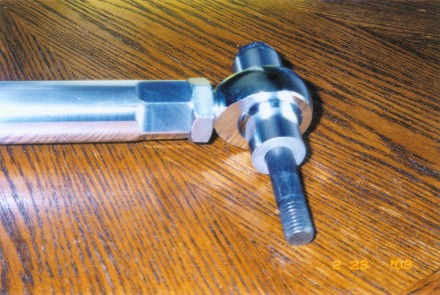
Coleman Racing sells a tubular pre threaded piece of aluminum, same as you would use for control arms like I did. Buy 3/4" QA1 Rod Ends and you're set.
Banned
iTrader: (12)
Joined: Jul 1999
Posts: 12,212
Likes: 13
From: Bertram (outside Austin), TX
Car: 87 GTA
Engine: L98
Transmission: 700R4
Axle/Gears: Dana M78 3.27 posi
A bit tricky to find on their site, until I did a search. Custom lengths up to 40", if they don't already have what you need, on the shelf.
Coleman Racing
Coleman Racing
Last edited by Stephen; Feb 13, 2007 at 12:09 PM.

Joined: Apr 2004
Posts: 556
Likes: 1
From: Houston, TX
Car: 1986 Z28
Engine: LT1
Transmission: T5 WC
Axle/Gears: 3.42 T2R
I made an adjustable aluminum one out of threaded stock I go from coleman racing, it was like $15 for the stock and the ends have machined flats. I know this may be haevier than a stock one but it is a hell of a lot lighter than an aftremarket steel one. I then bought poly bushings and rod ends from spohn to complete it. in all was like $50 or so. I also made LCA's the same way.
*Edit* to add how to and pictures that I used when I did mine
http://www.jonaadland.com/Z28/Mods/PHB/AluminumPHB.html
http://www.frrax.com/rrforum/index.p...topic=4086&hl=
http://frrax.com/rrforum/index.php?a...491&hl=spacers
Last edited by GMan 3MT; Feb 13, 2007 at 12:25 PM.

Supreme Member
Joined: Sep 2001
Posts: 2,308
Likes: 2
From: winthrop harbor, il & plymouth, il
Car: 1986 camaro
Engine: 383 sbc
Transmission: th-400
Axle/Gears: 4th Gen 10 bolt/Detroit TrueTrac 4.
I purchased some Hex aluminum tubing for the lcas and panhard bar from coleman. Same as stated above but in a hex shape. They are strong/beefy and look pretty cool in that maroon anodizing finish. I made the panhard and lcas, including rod ends for 150 total. They're on car adjustable too.
Joined: Sep 1999
Posts: 4,353
Likes: 308
From: NJ
Car: 92 Firebird
Engine: 4.8 LR4
Transmission: T56
Axle/Gears: 3.45 9 Bolt
I too got my bar from Coleman, along w/ the QA1 rod ends, and had some aluminum bushings fabbed up (yeah, it is nice when you work at a machine shop). And mine too IIRC was about $50, nearly half of what they sell them for. It is slightly noisier than stock and it is advisable to check the ends more frequently for wear. I guess as long as you're not doing hard launches, you will be fine. I've not had any problems with mine autocrossing on V710s, and those generate quite a side load.
*Edit* to add how to and pictures that I used when I did mine
http://www.jonaadland.com/Z28/Mods/PHB/AluminumPHB.html
http://www.frrax.com/rrforum/index.p...topic=4086&hl=
http://frrax.com/rrforum/index.php?a...491&hl=spacers
*Edit* to add how to and pictures that I used when I did mine
http://www.jonaadland.com/Z28/Mods/PHB/AluminumPHB.html
http://www.frrax.com/rrforum/index.p...topic=4086&hl=
http://frrax.com/rrforum/index.php?a...491&hl=spacers

Senior Member

Joined: Sep 2006
Posts: 747
Likes: 1
From: Reno, NV
Car: 1982 Z28 & 1967 RR/SS 396
Engine: ZZ383 & 375hp 396
Transmission: T56 & factory TH400
Axle/Gears: 9" ford & 12 bolt 4.10
Ok so you didn't exactly bend them in a S. My stament about chrome moly is correct it IS the same weight, more exspensiVe, and it will break not bend (which is why it is banned form NASCAR and other racing organizations). I don't plan a drag racing this car much if ever. I have done the math and estimated weight savings of around 3.5lbs. It will be far cheaper for me as i have the perfect piece of aluminum for it here at my shop (also that way i could make a matching brace to replace the stock one that braces the pan hard bar mounting location, just so it looks nice). And does anyone know where to get the good rod ends from? I am haveing a hard time locating some.

Ok I am probably going to start a bunch of crap here but if your going to state facts lets get them correct!!
First) Your correct here!! 1018 steel and 4130 do weigh exactly the same. Just when you use 4130 you are allowed to use a thinner material. Hence the weight savings.
Second) 4130 is banned from Nascar and some other racing organizations but it is mandated by NHRA on anything that goes real fast. You are not going to see a top fuel car, funny car, pro stock car, TAD, or TAFC, or pro modified car made ouut of mild steel. They all must be made from 4130!! The reason that nascar and some other organizations banned 4130 is that after it has been welded it need to be stress releived to prevent cracking. If it has been stress releived it very rarely and I mean very rarely cracks. If it has been stress releived it will be less likely to crack then mild steel.
Third) any idiot can weld mild steel. You can grab a torch and weld it, grab a mig gun and glue it together, or you can tig weld it. 4130 must be tig welded and it is an art. The metal has to be prepaired correctly and the correct filler has to be used. Mild steel by nature is very forgiving! 4130 is not. Most of the racing organizations do not let you use 4130 due to making sure that you have proper weld and such. NHRA is the only racing organizations tha has strict frame standards. Nascar and almost all of the others do not. Heck in a sprint car you can probably use muffler tubing.
Fourth) Now back to the topic at hand. I removed my Pan Hard bar the other night and it was made by D1ck Goulstrand. It is made of aluminum and has been in the car since 1982 when the car was new. It has held up just fine and showed no signs of cracking or bending. But then again I driver pertty normal.
That is my
Last edited by Comp788; Feb 25, 2007 at 11:42 AM.

Supreme Member
Joined: Nov 2002
Posts: 2,776
Likes: 8
From: Santa Monica, CA
Car: '91 Camaro RS
Engine: F1R Procharged 383
Transmission: Tremec 600
Axle/Gears: moser 12 bolt, 4.11's 33 spline axl
i can't believe the ignorance of some people......
chromemoly steel is used because its extremely stiff and strong compared with the same profile made in mild steel......you can use a thinner profile tubing than in mild steel with the same, if not greater strength......and end up with a MUCH lighter part.
thats why they make race car suspension parts out of it, cages out of it, and bike frames out of it......but its brittle.
aluminum suspension parts are very uncommon, because of the torsional loads and compression loads they get, even high quality aluminum would be very prone to cracking at the welds......and if it was built to avoid that, it would end up being just as heavy as the steel component at about 3 times the cost.
chromemoly steel is used because its extremely stiff and strong compared with the same profile made in mild steel......you can use a thinner profile tubing than in mild steel with the same, if not greater strength......and end up with a MUCH lighter part.
thats why they make race car suspension parts out of it, cages out of it, and bike frames out of it......but its brittle.
aluminum suspension parts are very uncommon, because of the torsional loads and compression loads they get, even high quality aluminum would be very prone to cracking at the welds......and if it was built to avoid that, it would end up being just as heavy as the steel component at about 3 times the cost.

Joined: Jun 2001
Posts: 8,028
Likes: 93
From: DC Metro Area
Car: 87TA 87Form 71Mach1 93FleetWB 04Cum
Re: Aluminum Pan hard bar
Holy Crap.
I’ve had this thread open since day one meaning to reply to it when I had time, but now that it’s been linked to and referred to as gospel in a few other threads I feel something has to be said.
First answers, and then I may address some of the dumber comments made in this thread directly, if I decide that the answers didn’t cover it completely.
Quick and simple… aluminum PHB… search ebay, you’ll find that nascar type cars and most similar cars use aluminum PHB’s. If you feel that your similar weight f-body puts more stress on it’s PHB no matter how serious a suspension you have, keep dreaming. (though one thing that would be interesting to know is if they use the same PHB setup on the circle tracks that they do on the “road courses”)
Those of you that are claiming to have bent PHB’s in normal driving or launching. Bullshit. They do flex which does affect your times (which is the reason that I recommend them as a first suspension mod for most cars, especially drag cars where you notice it more on the 1-2 shift), but by the time you put enough force into them to hurt them you’ll bend the body side mount before the bar. Those of you claiming that you’ve done it more then once… to be honest with you I don’t believe you, and if you have, you’ve either been hitting something with it or there is something else tweaked in your suspension causing it.
What forces… well, it should only really see tension and compression. There should be no (well more accurately so little that it’s insignificant) twisting. In theory you should be able to use solid bushings here, or just weld sleeves to the end of the PHB and not have a problem, really, I don’t see why people bother with rod ends if you’re willing to live with the noise of solid links… I guess it’s the same as why a lot of aftermarket torque arms use them… people expect them/don’t know any better.
Some of you have said “aluminum flexes more…” well, sure… what diameter, thickness and alloy? Aluminum weights half of what any kind of steel will weigh so you can use 2x as much and still have the same weight bar. Choose your alloy correctly and you can have something 5x as stiff as the comparable steel bar, or no stiffer than the steel bar if you don’t. And notice I’m not differentiating different steels, yes ALL STEEL HAS ROUGHLY THE SAME DENSITY. Get that through your thick skulls. Next person that says “4130 is lighter” needs to be banned for being an idiot and wasting the rest of our time. If you don’t believe it then look it up. Don’t waste our time with it any more.
Mild steel (10xx, usually 1018, 1020 or 1026) vs chrome molly (4130, there are other grades of chrome molly, but not that are commonly used for tubular structures). Lets start with mild steel doesn’t reall harden, so we’re usually talking about it being basically in the same state all the time, no matter what you do to it. 4130 does harden, so it’s important to differentiate between states, basically annealed (as soft as it gets), normalized (heat treated to some ‘normal’ soft, workable state) and hardened (this could be anything harder then normalized, but for 4130 we’re usually talking about something that will end up in the low 1xxKSI range tensile strength). Be aware that this only really matters for fairly thin sections. You can only effectively surface harden 4130, so if it’s thicker then probably about .1” or so it’s probably not through hardened to the same hardness, it’s just not possible.
Now here is the thing, when people build stuff out of 4130, they usually use 4130n (normalized). Now the thing is that all sorts of numbers are tossed around but what you need to remember is that 4130n has a tensile strength in the low, 70KSI range (70,000psi). Compare that to “cold rolled mild steel” and you’ll find that it’s in the high 60 to low 70KSI range (there’s a broader range because we’re not talking about just one grade). So here is the thing, grab a stick (same size) of each, and there is a decent chance that the mild steel stick will be stronger then the 4130, and no matter which is stronger they’ll be within a few percentage points.
Now I have stated that NASCAR does not allow 4130 before… IN THEIR CAGES. I’m not sure about suspension parts (if someone knows for sure I’d be interested in knowing).
Here’s the thing. When you weld 4130, you normally weld it with “mild steel” wire unless you’re going to be heat treating the part later. Now the way you harden a heat treatable steel is you get it over 1200* (glowing red hot), and quench it (yes, oversimplified, but if you did it you would have some crudely hardened 4130). Now the thing is that when you weld the 4130, you do get the joint hot enough, and the rest of the steel piece stays cooler and since steel conducts heat relatively well, it actually self quenches, it cools the joint fast enough to harden it. So now you have a tubular structure that most of it is no stronger than if it was made of mild steel, the actual weld joint is no stronger, but you have a hard area around the weld joint which serves no purpose EXCEPT as a hard, BRITTLE section, right outside the welded joint, exactly in the location that will usually see the most force trying to cause the section to bend/flex.
What happens when that hard spot sees an impact? It cracks and shatters, usually cracking into a sharp, pointy spear, which is why you can’t use the stuff in NASCAR cages.
Why does the NHRA and IHRA require 4130 for the faster cars, why does it allow thinner tubing if you us 4130? NO FREAKING CLUE. there are well known metal fabricators/chassis builders that have gone as far as stating “4130 has no business being anywhere near a driver in a car” and will build a “legal” cage with the halo bar or headache bar in the cage replaced with mild steel.
BTW, those of you “TIG is the only right way to weld 4130…” people, the reason that that “rule” came about was all about heat control. A TIG arc is much hotter and more localized than a oxy/fuel gas weld (something in the scale of 20K *F vs 5K *F). Properly done, not only is a MIG arc hotter (by 5-10K *f) but a typical tube weld will take roughly 1/3 the time with a MIG that it will with a TIG, even further controlling heat input into the joint. Check it out, most newer airplane 4130 structures are now MIG welded from the factory.
So why do I take the time to differentiate suspension parts from the chassis/cage? Well, simply, chassis parts are small enough that there is some chance that you may heat treat the part after it’s finished, and a properly heat treated part that was properly welded to start with has the potential to be much stronger/stiffer then a non heat treated part. And by heat treated I mean properly heat treated, in an oven for hours, proper brine baths…. People seem to think “just stress relieve it (heat it with a torch till the areas around the welds are cherry red and allow it to cool slowly) and it will be fine or “it’s heat treated.” Well, stress relieving is not heat treating, it will not result in a stronger part, and for that matter, unless you can get the whole part up to the same temperature and slowly cool it, I haven’t seen any evidence that it even ends up with less stresses in it then a properly TIG or MIG welded part without it.
Anyone here think that Spohn or any of the aftermarket vendors heat treat their 4130 suspension parts?
What else… tubes have to be a certain size to be threaded for rod ends… not really, they make threaded rod ends designed to be welded to the end of the tube to accept a rod ends. I’m actually surprised that as many parts are direct threaded as they are, since it’s more work (less materials cost, but if you’re paying a competent welder usually you try save labor, threading tube is really a bit of a PITA unless you have the whole thing automated on a lathe or something.)
I did the math before and I don’t remember _exactly_ what I came up with, but I’m surprised that someone doesn’t do a thin wall, large diameter mild steel PHR/LCA setup. Something in the range of 1.25” tube with .065” wall should be as strong/stronger, lighter and more rigid than everything else out on the market now. Thin wall aluminum could be even better from a function stand point, but I’d be surprised if that ever happened since the appropriate tubing would be prone to denting and similar issues from ham fisted customers…
I’ve had this thread open since day one meaning to reply to it when I had time, but now that it’s been linked to and referred to as gospel in a few other threads I feel something has to be said.
First answers, and then I may address some of the dumber comments made in this thread directly, if I decide that the answers didn’t cover it completely.
Quick and simple… aluminum PHB… search ebay, you’ll find that nascar type cars and most similar cars use aluminum PHB’s. If you feel that your similar weight f-body puts more stress on it’s PHB no matter how serious a suspension you have, keep dreaming. (though one thing that would be interesting to know is if they use the same PHB setup on the circle tracks that they do on the “road courses”)
Those of you that are claiming to have bent PHB’s in normal driving or launching. Bullshit. They do flex which does affect your times (which is the reason that I recommend them as a first suspension mod for most cars, especially drag cars where you notice it more on the 1-2 shift), but by the time you put enough force into them to hurt them you’ll bend the body side mount before the bar. Those of you claiming that you’ve done it more then once… to be honest with you I don’t believe you, and if you have, you’ve either been hitting something with it or there is something else tweaked in your suspension causing it.
What forces… well, it should only really see tension and compression. There should be no (well more accurately so little that it’s insignificant) twisting. In theory you should be able to use solid bushings here, or just weld sleeves to the end of the PHB and not have a problem, really, I don’t see why people bother with rod ends if you’re willing to live with the noise of solid links… I guess it’s the same as why a lot of aftermarket torque arms use them… people expect them/don’t know any better.
Some of you have said “aluminum flexes more…” well, sure… what diameter, thickness and alloy? Aluminum weights half of what any kind of steel will weigh so you can use 2x as much and still have the same weight bar. Choose your alloy correctly and you can have something 5x as stiff as the comparable steel bar, or no stiffer than the steel bar if you don’t. And notice I’m not differentiating different steels, yes ALL STEEL HAS ROUGHLY THE SAME DENSITY. Get that through your thick skulls. Next person that says “4130 is lighter” needs to be banned for being an idiot and wasting the rest of our time. If you don’t believe it then look it up. Don’t waste our time with it any more.
Mild steel (10xx, usually 1018, 1020 or 1026) vs chrome molly (4130, there are other grades of chrome molly, but not that are commonly used for tubular structures). Lets start with mild steel doesn’t reall harden, so we’re usually talking about it being basically in the same state all the time, no matter what you do to it. 4130 does harden, so it’s important to differentiate between states, basically annealed (as soft as it gets), normalized (heat treated to some ‘normal’ soft, workable state) and hardened (this could be anything harder then normalized, but for 4130 we’re usually talking about something that will end up in the low 1xxKSI range tensile strength). Be aware that this only really matters for fairly thin sections. You can only effectively surface harden 4130, so if it’s thicker then probably about .1” or so it’s probably not through hardened to the same hardness, it’s just not possible.
Now here is the thing, when people build stuff out of 4130, they usually use 4130n (normalized). Now the thing is that all sorts of numbers are tossed around but what you need to remember is that 4130n has a tensile strength in the low, 70KSI range (70,000psi). Compare that to “cold rolled mild steel” and you’ll find that it’s in the high 60 to low 70KSI range (there’s a broader range because we’re not talking about just one grade). So here is the thing, grab a stick (same size) of each, and there is a decent chance that the mild steel stick will be stronger then the 4130, and no matter which is stronger they’ll be within a few percentage points.
Now I have stated that NASCAR does not allow 4130 before… IN THEIR CAGES. I’m not sure about suspension parts (if someone knows for sure I’d be interested in knowing).
Here’s the thing. When you weld 4130, you normally weld it with “mild steel” wire unless you’re going to be heat treating the part later. Now the way you harden a heat treatable steel is you get it over 1200* (glowing red hot), and quench it (yes, oversimplified, but if you did it you would have some crudely hardened 4130). Now the thing is that when you weld the 4130, you do get the joint hot enough, and the rest of the steel piece stays cooler and since steel conducts heat relatively well, it actually self quenches, it cools the joint fast enough to harden it. So now you have a tubular structure that most of it is no stronger than if it was made of mild steel, the actual weld joint is no stronger, but you have a hard area around the weld joint which serves no purpose EXCEPT as a hard, BRITTLE section, right outside the welded joint, exactly in the location that will usually see the most force trying to cause the section to bend/flex.
What happens when that hard spot sees an impact? It cracks and shatters, usually cracking into a sharp, pointy spear, which is why you can’t use the stuff in NASCAR cages.
Why does the NHRA and IHRA require 4130 for the faster cars, why does it allow thinner tubing if you us 4130? NO FREAKING CLUE. there are well known metal fabricators/chassis builders that have gone as far as stating “4130 has no business being anywhere near a driver in a car” and will build a “legal” cage with the halo bar or headache bar in the cage replaced with mild steel.
BTW, those of you “TIG is the only right way to weld 4130…” people, the reason that that “rule” came about was all about heat control. A TIG arc is much hotter and more localized than a oxy/fuel gas weld (something in the scale of 20K *F vs 5K *F). Properly done, not only is a MIG arc hotter (by 5-10K *f) but a typical tube weld will take roughly 1/3 the time with a MIG that it will with a TIG, even further controlling heat input into the joint. Check it out, most newer airplane 4130 structures are now MIG welded from the factory.
So why do I take the time to differentiate suspension parts from the chassis/cage? Well, simply, chassis parts are small enough that there is some chance that you may heat treat the part after it’s finished, and a properly heat treated part that was properly welded to start with has the potential to be much stronger/stiffer then a non heat treated part. And by heat treated I mean properly heat treated, in an oven for hours, proper brine baths…. People seem to think “just stress relieve it (heat it with a torch till the areas around the welds are cherry red and allow it to cool slowly) and it will be fine or “it’s heat treated.” Well, stress relieving is not heat treating, it will not result in a stronger part, and for that matter, unless you can get the whole part up to the same temperature and slowly cool it, I haven’t seen any evidence that it even ends up with less stresses in it then a properly TIG or MIG welded part without it.
Anyone here think that Spohn or any of the aftermarket vendors heat treat their 4130 suspension parts?
What else… tubes have to be a certain size to be threaded for rod ends… not really, they make threaded rod ends designed to be welded to the end of the tube to accept a rod ends. I’m actually surprised that as many parts are direct threaded as they are, since it’s more work (less materials cost, but if you’re paying a competent welder usually you try save labor, threading tube is really a bit of a PITA unless you have the whole thing automated on a lathe or something.)
I did the math before and I don’t remember _exactly_ what I came up with, but I’m surprised that someone doesn’t do a thin wall, large diameter mild steel PHR/LCA setup. Something in the range of 1.25” tube with .065” wall should be as strong/stronger, lighter and more rigid than everything else out on the market now. Thin wall aluminum could be even better from a function stand point, but I’d be surprised if that ever happened since the appropriate tubing would be prone to denting and similar issues from ham fisted customers…


