When you click on links to various merchants on this site and make a purchase, this can result in this site earning a commission. Affiliate programs and affiliations include, but are not limited to, the eBay Partner Network.
Tech / General EngineIs your car making a strange sound or won't start? Thinking of adding power with a new combination? Need other technical information or engine specific advice? Don't see another board for your problem? Post it here!
Better article than a lot that I've seen... Makes things easier to follow than several magazine articles.
From what I've seen, the full metal jacket positive seals for late 90's Vortec 350 trucks fit most stock thirdgen heads without machining.
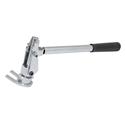
This image threw for me for a loop... I've always used this tool the other way around. In fact, I'm pretty sure the instructions even say to remove the nut and slip the tool over the threaded stud, thread the nut back on, and then the fingers push against the valve retainer. I'm not sure but I doubt there'd be room in the smaller hole to remove the valve locks. So either I've been missing something for 20 years, or the author didn't read the instructions that come with the tool... OR... Maybe the author is just left handed.
Better article than a lot that I've seen... Makes things easier to follow than several magazine articles. From what I've seen, the full metal jacket positive seals for late 90's Vortec 350 trucks fit most stock thirdgen heads without machining.
FelPro seems to be recommending umbrella with o-rings for our cars. maybe because they don't make a positive seal for them.
Makes it easier to compress springs in tight spots like near heater box and brake booster. but I ran across a few accounts where people saying it slips off too easy.
Better article than a lot that I've seen... Makes things easier to follow than several magazine articles.
From what I've seen, the full metal jacket positive seals for late 90's Vortec 350 trucks fit most stock thirdgen heads without machining.
This image threw for me for a loop... I've always used this tool the other way around. In fact, I'm pretty sure the instructions even say to remove the nut and slip the tool over the threaded stud, thread the nut back on, and then the fingers push against the valve retainer. I'm not sure but I doubt there'd be room in the smaller hole to remove the valve locks. So either I've been missing something for 20 years, or the author didn't read the instructions that come with the tool... OR... Maybe the author is just left handed.
Uh..... yeah.. Someone needs a technical advisor on their photo shoots.
For single springs I use this type of compressor. Even on tight 4thgens, it makes it easy.
where do you find one of those bad boys? Gotta tear down my TPI to get to injectors, so thinking of at least inspecting under valve covers at that time and preparing for this job. Is it true you can just put piston at TDC and not worry about valve falling in? No rope or anything.
Yeah, the valve will only drop a little with the piston at TDC, but really a compression tester with the fitting for an air hose is cheap. You can never have too many tools.
The intake valve seals on 350 cars are the blue or black variety of positive seals with the ring/band. The O-rings are spec'd because our cars came with the shields on the valve springs that normally use O-rings. Back in the day, the standard practice was to get two sets of the intake seals, and run them on both the intake/exhaust valves. I know I replaced the O-rings one time, but I did them wrong. Incidentally that was at least a decade ago, and the blue Fel-pro seals are still in place and I don't get any smoke. Point being that the positive seals negate the need for the O-rings, and probably the shields. Trouble with just tossing the shields and rotators is that the heads are machined with the valve spring seats at different heights to compensate for the rotators, so then you have to shim the springs... Or replace the springs and keepers... And at that point you just want to buy some aluminum heads and be done with all the fiddling.
Of course now, you can just order the Fel-pro seals for a Vortec 350 truck, like 96-99 or something? They're the full metal jacket positive seals, they're shorter and smaller, and one set does all 16 valves and you don't end up with a handful of leftover O-rings.
I would be a little afraid of nicking springs using a compression tool like that. One nick in a tool steel spring wire is a stress riser which could lead to failure. I believe that is one of the reasons that springs are electro-polished. Then again, the Chinese making the "universal" spring compressor probably wouldn't know/care about that.
One nick in a tool steel spring wire is a stress riser which could lead to failure.
Interesting observation and that happening may have contributed to the single spring failure I've had after tens of thousands of miles put on multiple sets.
I would be a little afraid of nicking springs using a compression tool like that. One nick in a tool steel spring wire is a stress riser which could lead to failure. I believe that is one of the reasons that springs are electro-polished. Then again, the Chinese making the "universal" spring compressor probably wouldn't know/care about that.
The springs are harder than the tool, haven't had a issue with that. Even figured out how to use it on my solid roller cam springs
The springs are harder than the tool, haven't had a issue with that.
I'm looking for some cause for the one and only spring failure I've had. A damaged spring seems the most likely but you never know. Maybe 7000 RPM is a little too much.
This is the spring compressor of choice as posted above.
It can be a little finicky however once adjusted properly, works very well.
I'm looking for some cause for the one and only spring failure I've had. A damaged spring seems the most likely but you never know. Maybe 7000 RPM is a little too much.
This is the spring compressor of choice as posted above.
It can be a little finicky however once adjusted properly, works very well.
Specifically, the "shoe" requires adjustment via the threading to change the amount the spring is compressed. I've found that too much compression distorts the spring pushing it off to the side. This applies pressure to one keeper or the other and makes removal difficult. Of course, too little compression doesn't release the keepers sufficiently. It's also handy in that the handle can be rotated relative to the spring and allows for a "push down" or a "pull down" motion (if that makes sense). This provides options when doing the springs with the heads in the car. An example is cylinder seven and it's proximity to the brake booster IIRC.
Specifically, the "shoe" requires adjustment via the threading to change the amount the spring is compressed. I've found that too much compression distorts the spring pushing it off to the side. This applies pressure to one keeper or the other and makes removal difficult. Of course, too little compression doesn't release the keepers sufficiently. It's also handy in that the handle can be rotated relative to the spring and allows for a "push down" or a "pull down" motion (if that makes sense). This provides options when doing the springs with the heads in the car. An example is cylinder seven and it's proximity to the brake booster IIRC.
Thanks for details, I was thinking the tool could be rotated 30 degrees (for example) yet remain on the spring and then pushed down. This way it could get out of way of stuff attached to firewall. Is this not the case? Are you saying the handle can only be "flipped" over that it can act as a pusher or flipped again and acts as a puller?
Update on using this tool. It aint as easy as you'd think. After fooling around with it for a while, I recalled someone saying they had to bend the forks to straighten at less of an angle. I did that and it helped. One thing I had expected from this tool, is that it would lock down so you could use both hands to work while inserting top seal and keepers. no such luck, or I haven't figured it out yet. other than that, its a good tool. I'm just not as strong as I once was, so it gets tiring to use. If I'm not fast enough to get the top seal and keepers in, my arm gets tired, and I have to rest and start again.
As I was closing up shop last night, it occurred to me to try using a piece of 3/8" hose or about that size, and use that to push the top seal down.
Originally Posted by skinny z
Specifically, the "shoe" requires adjustment via the threading to change the amount the spring is compressed. I've found that too much compression distorts the spring pushing it off to the side. This applies pressure to one keeper or the other and makes removal difficult. Of course, too little compression doesn't release the keepers sufficiently. It's also handy in that the handle can be rotated relative to the spring and allows for a "push down" or a "pull down" motion (if that makes sense). This provides options when doing the springs with the heads in the car. An example is cylinder seven and it's proximity to the brake booster IIRC.
Last edited by LiquidBlue; Mar 8, 2019 at 10:34 AM.
As I had described earlier, it can be a little finicky however by using the adjustment thread the amount of compression applied to the spring can be tailored to the application. With the proper adjustment dialed in, there is a camming motion where the handle goes over centre and will remain in the compressed position hands free. Now having said that, I'm not one to have that kind of stored energy ready to unload and send the handle.up into my chin so I exercise caution if I need to get both hands in there. Generally though, a magnetic tool and needle nose pliers get the job done.
With the proper adjustment dialed in, there is a camming motion where the handle goes over centre and will remain in the compressed position hands free. Now having said that, I'm not one to have that kind of stored energy ready to unload and send the handle.up into my chin so I exercise caution if I need to get both hands in there.
Do you mean when in "pull-down" mode? It doesn't seem possible in push down mode.
Seems to me it was possible regardless of the handle orientation. It has been a couple of years since I last assembled any cylinder heads and then it was all on the bench with the exception of one spring changed out with the engine in the car.
As a qualifier to the above, the springs in question were the conical style (Comp beehive 26918) with the accompanying small diameter retainer. That may have some impact of the results I had.
Seems to me it was possible regardless of the handle orientation. It has been a couple of years since I last assembled any cylinder heads and then it was all on the bench with the exception of one spring changed out with the engine in the car.
As a qualifier to the above, the springs in question were the conical style (Comp beehive 26918) with the accompanying small diameter retainer. That may have some impact of the results I had.
Ya, I'm pondering popping the heads. Reason being, is something is bound to go wrong, and then I'll need to pop them anyway. then i would have wished i hadn't wasted time messing with spark plug holes, turning engine and chasing down flying parts !