When you click on links to various merchants on this site and make a purchase, this can result in this site earning a commission. Affiliate programs and affiliations include, but are not limited to, the eBay Partner Network.
Tech / General EngineIs your car making a strange sound or won't start? Thinking of adding power with a new combination? Need other technical information or engine specific advice? Don't see another board for your problem? Post it here!
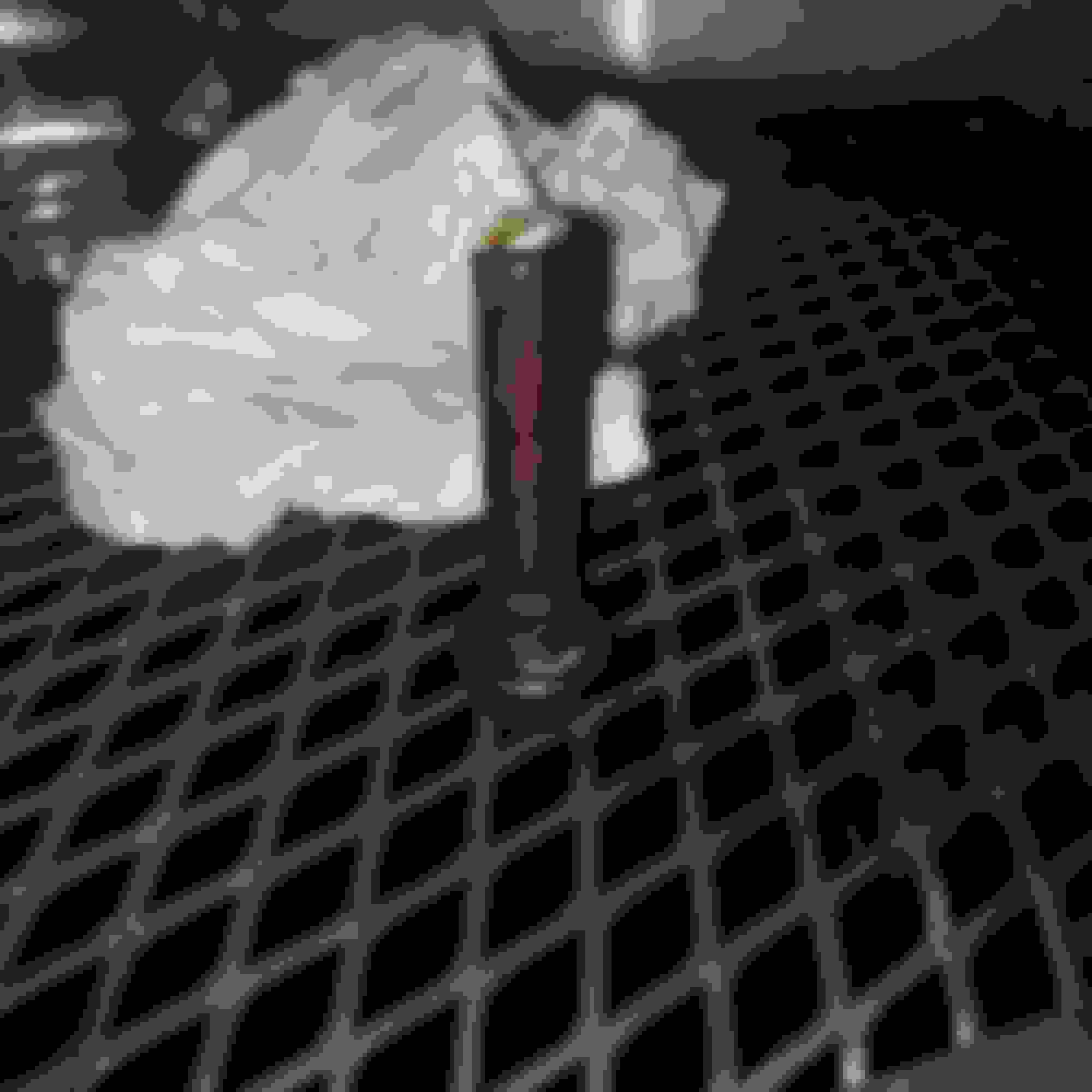
I was swapping the intake manifold on my 383. Pulled the driverside valve cover to gain clearence to pull the manifold. Found coolant on top of the head. Went to remove the head bolt near the drain back and it was loose. Lifted up on it and this is what I found. The oil was clean with no signs of coolant when I changed it 500 miles ago. I hate to not tear this engine all the way down, but the heads are coming off and I am installing new head bolts and head gaskets. It was carrying good oil pressure and no weird noises when I shut it down. Hopefully the head and block deck surfaces are still in good shape along with all the bearings and machined surfaces. Either the Jegs "Made in the USA of premium material" head bolts are garbage or this happened. Never in my life have I seen a head bolt fail on a SBC in this manner. I broke a factory Vortec bolt reusing them once before I knew they were TTY throw aways, but never a new bolt after it had run a while. If Jegs stood behind their products they should send me a Blueprint 396 or 400 that rivals the output of my 383 that their own brand of head bolts has potentially killed! Being winter if anything has to be machined it will take forever.
Having spent almost 20 years with a manufacturer of fasteners and custom forgings (and LOT of it for GM) I have a feel for the QC/SPC rigors that engine fasteners were subjected to. The OEM bolts were stringently tested, materials with certified traceability were used, and standards were pretty high for "street" engine applications. Many of the rod cap bolts were thread-rolled AFTER heat treating, and while that was pretty destructive to dies and the rolling machinery, it made for a far better-than-aerospace fastener.
I have always wondered if the aftermarket manufacturers of "Acme Whiz-Bang Super- Quality" fasteners even had standards and testing, and how low those standards might be. A lot of casual observers seem to have a belief that grade 8 bolts are the best available, when it is really only the point at which the boys are left behind and the men take over.
You may have had a bag of those super-special "boy" bolts.
Having spent almost 20 years with a manufacturer of fasteners and custom forgings (and LOT of it for GM) I have a feel for the QC/SPC rigors that engine fasteners were subjected to. The OEM bolts were stringently tested, materials with certified traceability were used, and standards were pretty high for "street" engine applications. Many of the rod cap bolts were thread-rolled AFTER heat treating, and while that was pretty destructive to dies and the rolling machinery, it made for a far better-than-aerospace fastener.
I have always wondered if the aftermarket manufacturers of "Acme Whiz-Bang Super- Quality" fasteners even had standards and testing, and how low those standards might be. A lot of casual observers seem to have a belief that grade 8 bolts are the best available, when it is really only the point at which the boys are left behind and the men take over.
You may have had a bag of those super-special "boy" bolts.
Bolts fail, even good ones. Had a ARP break b4. Had GM break.
Very true. I wrote up many a repair order in the late '80s for Chevrolets with broken head bolts on the 2.5L. There was a special policy on them extending the engine warranty to 100k miles. Mostly S-10s, but saw it on Celebrities (A-bodies) too.
I have head studs in my engine. Clamping force is more consistent and you're not turning the bolt into the threads of the block to get the correct clamping force.
You already were using aftermarket bolts but I've seen too many rebuilds simply use the original head bolts that came with the engine. Even for a stock rebuild, throw away the old head bolts and use new ones.
All the new engines use torque to yield bolts. Although they can be measured after use, they should never be reused.
It's not that the original fasteners were necessarily any better than anything else, but they were engineered for the application and were reliable in that capacity. A stock rod cap bolt probably wouldn't hold up in a high demand application, but a stock engine is usually not a high demand application. For those that were, the "stock" fasteners had different specifications in many cases.
With aftermarket, there are no rules so it can become a crap shoot, with only the manufacturer's reputation as any insurance. Something exported from somewhere west of Hawaii may not be quite as reassuring.
ARP head studs. So many part numbers. Some are listed as SBC, some SBC Brodix, Dart, Sportsman. Is that for any of their 23* heads? My heads are basically Dart Pro1. Dart has a stud kit listed for them, but no stud dimensions. Why do stud manufacturers not make this simple and put the length of the studs in their information?
Also going to change the head gaskets since the heads will be off. I am considering Felpro 1003 even though I give up some quench. I also might potentially use 501SD. Felpro basically said 1003 for Racecar and 501SD for Heavy Duty use. This 383 is a bit of both as in I am cramming a ton of air into it and then squeezing it to 11:1 then building tons of cylinder pressure. I like the idea of the pre-flattened steel ring in the 1003s. It is also the gasket that numerous performance head manufacturers like AFR suggest using. I am going with the Felpro design because it fixes the water flow through the cylinder head at the siamese exhaust ports to help cool that area.
Vortec head bolts aren't torque to yield... They do have an updated torque sequence but that does not make them TTY.
"Cylinder Head Installation On 1996-98 GM 5.7L VIN R Engines
The AERA Technical Committee offers the following information on cylinder head installation for 1996-98 GM 5.7L VIN R engines. This information is somewhat different than previous engines. GM is now recommending a torque turn method of tightening the cylinder head for this engine. It does not however, use a torque-to-yield bolt to mount the cylinder heads.
The cylinder head mounting bolts may be reused if they are not damaged in the threads or show neck-down or stretch condition. The bolts should be thoroughly cleaned of sealer before inspection and installation. Cleaned bolts should have a coating of GM sealing compound Part #1052080 applied to the threaded area only. The use of an aftermarket equivalent sealing compound is also acceptable to use on threads.
Follow the steps listed below to correctly install head gaskets for this engine being careful not to get any seal on the head gasket mating surfaces or gasket.
1. Place the head gasket over dowels with the bead up. 2. Carefully guide the cylinder head into position over the dowel pins and gasket. 3. Coat threads of the head bolts with sealing compound and finger tighten all bolts. 4. Tighten all bolts in sequence shown below to 22 ft. lbs. 5. Tighten all bolts in sequence an additional turn in degrees, using J 36660 tool.
Short bolts (3,4,7,8,11,12,15,16) additional 55 degrees. Medium Bolts (14,17) additional 65 degrees Long Bolts (1,2,3,5,6,9,10,13) additional 75 degrees
The bolt numbers correspond to the "normal" Small Block torque sequence.
Vortec head bolts aren't torque to yield... They do have an updated torque sequence but that does not make them TTY.
"Cylinder Head Installation On 1996-98 GM 5.7L VIN R Engines
The AERA Technical Committee offers the following information on cylinder head installation for 1996-98 GM 5.7L VIN R engines. This information is somewhat different than previous engines. GM is now recommending a torque turn method of tightening the cylinder head for this engine. It does not however, use a torque-to-yield bolt to mount the cylinder heads.
The cylinder head mounting bolts may be reused if they are not damaged in the threads or show neck-down or stretch condition. The bolts should be thoroughly cleaned of sealer before inspection and installation. Cleaned bolts should have a coating of GM sealing compound Part #1052080 applied to the threaded area only. The use of an aftermarket equivalent sealing compound is also acceptable to use on threads.
Follow the steps listed below to correctly install head gaskets for this engine being careful not to get any seal on the head gasket mating surfaces or gasket.
1. Place the head gasket over dowels with the bead up. 2. Carefully guide the cylinder head into position over the dowel pins and gasket. 3. Coat threads of the head bolts with sealing compound and finger tighten all bolts. 4. Tighten all bolts in sequence shown below to 22 ft. lbs. 5. Tighten all bolts in sequence an additional turn in degrees, using J 36660 tool.
Short bolts (3,4,7,8,11,12,15,16) additional 55 degrees. Medium Bolts (14,17) additional 65 degrees Long Bolts (1,2,3,5,6,9,10,13) additional 75 degrees
The bolt numbers correspond to the "normal" Small Block torque sequence.
The AERA Technical Committee"
Vortec head bolts are torque to yield from what I have witnessed and I treat them as such. I have since the first time I tried to reuse a set and a long bolt broke with probably less than 50 ft/lbs on it. I measured several of them and they had stretched substantially compared to a new set. As installed by GM in a production or crate engine they yield and stretch. The only head bolt I have broken on a SBC prior to this one was a low mileage used Vortec bolt I was re-using. Not sure why I even changed for this build. Now it has me thinking studs, even though I have never had an issue in a couple dozen top end and fresh builds using vortec bolts. One of these engines has run 6 years and countless street miles at 12 lbs of boost on Felpro 1003s and Felpro vortec bolts.. I have coffee cans full of the used 1/2" hex GM head bolts that have been intended for scrap for some time.
ARP head studs. So many part numbers. Some are listed as SBC, some SBC Brodix, Dart, Sportsman. Is that for any of their 23* heads? My heads are basically Dart Pro1. Dart has a stud kit listed for them, but no stud dimensions. Why do stud manufacturers not make this simple and put the length of the studs in their information?
So many different part numbers because not all head castings are the same. If there is more or less metal around the bolt holes, the bolts need to be longer or shorter.
As an example with BBC head bolts. Stock style OEM heads have 4 short bolts beside the exhaust ports. Just about all the aftermarket performance heads have increased the casting in that area which raises the seat above the exhaust port instead of beside it. This means the head requires 4 longer bolts for those holes. Better access to the bolt, better clamping force, less chance of a cracked head from a thin casting.
It also makes a difference if the block has open or blind head bolt holes. An open hole will allow the head bolt to go directly into the coolant gallery. Pull a single head bolt out without draining the coolant from the block and it will come out the bolt hole. Blind holes do not go into the gallery so you can't use overly long head bolts as they would bottom out in the holes before providing proper clamping force on the head.
So many different part numbers because not all head castings are the same. If there is more or less metal around the bolt holes, the bolts need to be longer or shorter.
As an example with BBC head bolts. Stock style OEM heads have 4 short bolts beside the exhaust ports. Just about all the aftermarket performance heads have increased the casting in that area which raises the seat above the exhaust port instead of beside it. This means the head requires 4 longer bolts for those holes. Better access to the bolt, better clamping force, less chance of a cracked head from a thin casting.
It also makes a difference if the block has open or blind head bolt holes. An open hole will allow the head bolt to go directly into the coolant gallery. Pull a single head bolt out without draining the coolant from the block and it will come out the bolt hole. Blind holes do not go into the gallery so you can't use overly long head bolts as they would bottom out in the holes before providing proper clamping force on the head.
I ended up calling both Felpro and ARP. Both were extremely helpful. ARP gave me the part number to use. Felpro gave me two different gasket numbers and I decided to use the one with a steel ring behind the fire ring that works similarly to o-ringing the block.
On a factory block all SBC head bolt holes are wet.
Vortec head bolts are torque to yield from what I have witnessed and I treat them as such. I have since the first time I tried to reuse a set and a long bolt broke with probably less than 50 ft/lbs on it. I measured several of them and they had stretched substantially compared to a new set. As installed by GM in a production or crate engine they yield and stretch. The only head bolt I have broken on a SBC prior to this one was a low mileage used Vortec bolt I was re-using. Ever since that I used 65 ft/lbs in 3 steps with NEW Vortec bolts. Not sure why I even changed for this build. Now it has me thinking studs, even though I have never had an issue in a couple dozen top end and fresh builds using vortec bolts at 65 ft/lbs. One of these engines has run 6 years and countless street miles at 12 lbs of boost on Felpro 1003s and Felpro vortec bolts at 65 ft/lbs. I have a friend that does the same thing, but torques the bolts to 70 ft/lbs. I have coffee cans full of the used 1/2" hex GM head bolts that have been intended for scrap for some time.
That is awfully strange to hear you're having so many issues with the later Vortec bolts. We have been rebuilding these engines since the early 2000's, usually a half dozen or more a month, here in the machine ship and never experienced what you're saying.
Vortec head bolts are not TTY from what I was able to find, Ebay alum heads use the same ARP part# as Sportsman II's, Alum heads use pre-flattened wire(fire-ring) gaskets, PTFE bolt sealer is slipperier than oil. If you ask ARP make sure to let them know your not using a blind hole block and need to use a thread sealer. Manley head bolts instructions seem to be the only ones to address this, I have like 5 diff brand head bolt sets for a future video someday.
That is awfully strange to hear you're having so many issues with the later Vortec bolts. We have been rebuilding these engines since the early 2000's, usually a half dozen or more a month, here in the machine ship and never experienced what you're saying.
Never had a single issue with the OEM bolts once I learned to throw the old ones away and use new ones every time with the revised torque value. I measured the old bolts a few times and found they had stretched despite some claiming they are not TTY. Measuring them does not lie. They stretch and are trash when they come out.
My issue currently is with a Jegs bolt. Never used those before and never will again.
I am putting ARP studs in it now. That is when I get over Covid and actually feel like messing with it. I am feeling alot better, just don't feel like standing on my head pulling the heads off yet.
Vortec head bolts are not TTY from what I was able to find, Ebay alum heads use the same ARP part# as Sportsman II's, Alum heads use pre-flattened wire(fire-ring) gaskets, PTFE bolt sealer is slipperier than oil. If you ask ARP make sure to let them know your not using a blind hole block and need to use a thread sealer. Manley head bolts instructions seem to be the only ones to address this, I have like 5 diff brand head bolt sets for a future video someday.
I talked with both Felpro and ARP. I have 234-4301 studs and Felpro 1003 head gaskets. AFR calls for using the same studs and gaskets with their heads.
His exact words to me were "all bolts are torque to yield" which I guess I agree with because all bolts can be torqued to permanent deformation. He went on to say that the TTY is the specification, not the design of the bolt.
As for the part numbers that Fast355 posted, that's not even a kit for a V8. That's a V6 part number so that's obviously not a part number that he's ordering, although the bolts are the same, just less of them.
The part number Boot posted was for a V8.
He said that Fel-Pro recommends that ALL head bolts on ALL engines be replaced because it's not worth the chance of one failing. I stated something to that effect being the reason for their recommendation concerning warrantying their gaskets.
At the same time, he said if you want to reuse them, inspect them for defects and if they're good, you can absolutely reuse them but again, as far as they're concerned, they recommend never reusing them for warranty purposes.
I forgot to ask him about brand new bolts snapping or not reaching spec so that remains unanswered.
His exact words to me were "all bolts are torque to yield" which I guess I agree with because all bolts can be torqued to permanent deformation. He went on to say that the TTY is the specification, not the design of the bolt.
As for the part numbers that Fast355 posted, that's not even a kit for a V8. That's a V6 part number so that's obviously not a part number that he's ordering, although the bolts are the same, just less of them.
The part number Boot posted was for a V8.
He said that Fel-Pro recommends that ALL head bolts on ALL engines be replaced because it's not worth the chance of one failing. I stated something to that effect being the reason for their recommendation concerning warrantying their gaskets.
At the same time, he said if you want to reuse them, inspect them for defects and if they're good, you can absolutely reuse them but again, as far as they're concerned, they recommend never reusing them for warranty purposes.
I forgot to ask him about brand new bolts snapping or not reaching spec so that remains unanswered.
I may have accidentally said the 4.3 V6 part number. That being said the bolts are the same either way, just more of them in the kit for the V8 which I now noticed you mentioned. The physical bolt part numbers are the same from GM when you buy them individually.
For the record I totally agree with what he told you. You can yield any bolt into the plastic zone. If the torque specification is yielding the bolt, it is TTY. Where the bolt stretches makes a difference in the TTY stuff. Obviously you do not want the threads to deform allowing the bolt to pull out of the threads in the material it is installed into, the plastic zone needs to be in the shank of the bolt. TTY are typically undercut above the threads but not necessarily in all cases.
I have some older 70s and 80s head bolts that are not undercut in the least. It was a solid forging that had threads cut into the end of it.