


Fuel pump issues


Thread Starter
Junior Member
Joined: Feb 2001
Posts: 53
Likes: 0
From: Chicago, IL USA
Fuel pump issues
Hello- I broke down today. My car is about 5 miles from home and stuck in the city (Chicago). Since I got laid off and have barely any spending money right now- I'm basically forced to go and try to fix this myself. My best guess is that the problem is that the fuel pump died. It was running strangely, didn't want to start about 10 miles and 15 minutes before it died permanently. The engine is now completely unstartable. I took out the air filter and pulled the throttle (at the engine) by hand- no fuel squirted out as I have seen in the past on other TBI engines. I know this could be the fuel filter, but I'm thinking that that wouldn't be so sudden. In any case, it appears that I will need to remove the whole gas tank and replace the pump myself. It would be nice if it was just an electrical connection or something that failed, but it's probably the pump. Any advice on what else to check or tips on replacing this pump on a '91 camaro would be greatly appreciated. (or where to buy one). I would like a nice, easy way to confirm this is the problem before investing a great deal of time and money into this deal. Thanks for any help!
-Kevin
edit: Also, I have a 350 block with a couple of 305 components on this engine. Since I have a larger displacement now should I be using the 350 pump to pump more fuel? (is there a difference?)
thanks!
-Kevin
edit: Also, I have a 350 block with a couple of 305 components on this engine. Since I have a larger displacement now should I be using the 350 pump to pump more fuel? (is there a difference?)
thanks!
Last edited by kevin-design; Feb 19, 2002 at 02:51 AM.

Supreme Member

Joined: May 2001
Posts: 2,009
Likes: 5
From: Pitman, NJ
Car: '89 IROC-Z
Engine: Canfield 195 headed 358ci
Transmission: TH350, Art Carr 9.5"
Axle/Gears: 3.92 Dana 44
Take out your back seats and pull out the carpeting. There will be 3 wires: power, ground, and the one for the gauge (I believe) cut them and hook them up to a direct switch. If you can turn the pump on that way then you probably have a bad relay, short, or maybe oil pressure sending unit.
Thread Starter
Junior Member
Joined: Feb 2001
Posts: 53
Likes: 0
From: Chicago, IL USA
Well, another rainy day in Chicago prevented me from working on this... so I did a little reading up on what's involved. In evaulating the fuel pump, I have compiled the following advice:
1. Just turn the key to the start position, then go listen to the pump. A normally working pump will turn on to pressurize the system, and then stop once working pressure is reached. A faulty pump will run, not reach working pressure, and continue to run. This test will also reveal an electrical issue with the fuel pump.
2. Pour some gasoline or starter fluid directly into the tbi port. The engine should start for a few seconds and then die again when it burns up that fuel.
3. Tear out the back seat and use a meter to access the wires to check for power and signal to the pump.
4. Pull back the throttle manually at the TBI. It should spray out a little gasoline as you do this.
I'm looking for someone to confirm these tips as accurate methods to assess the problem or suggest any alternate methods before I get to pulling apart my gas tank.
Thanks for any help!
ps. I don't suppose I can access the pump by lifting the trunk carpeting and maybe some panel or something? Will I need to move the exhaust too?!? Thanks again!
-Kevin
1. Just turn the key to the start position, then go listen to the pump. A normally working pump will turn on to pressurize the system, and then stop once working pressure is reached. A faulty pump will run, not reach working pressure, and continue to run. This test will also reveal an electrical issue with the fuel pump.
2. Pour some gasoline or starter fluid directly into the tbi port. The engine should start for a few seconds and then die again when it burns up that fuel.
3. Tear out the back seat and use a meter to access the wires to check for power and signal to the pump.
4. Pull back the throttle manually at the TBI. It should spray out a little gasoline as you do this.
I'm looking for someone to confirm these tips as accurate methods to assess the problem or suggest any alternate methods before I get to pulling apart my gas tank.
Thanks for any help!
ps. I don't suppose I can access the pump by lifting the trunk carpeting and maybe some panel or something? Will I need to move the exhaust too?!? Thanks again!
-Kevin

Moderator


Joined: Jan 2000
Posts: 19,651
Likes: 309
K-D,
First, the fuel pump will run for about two seconds when the ignition is first turned to the RUN position, not the START position. Additionally, the fuel pump will not operate until it makes a given pressure. There is no pressure switch in the fuel system, so the ECM doesn't know/care when there is or isn't fuel pressure. It will run for about two seconds, regardless of what pressure is or isn't achieved.
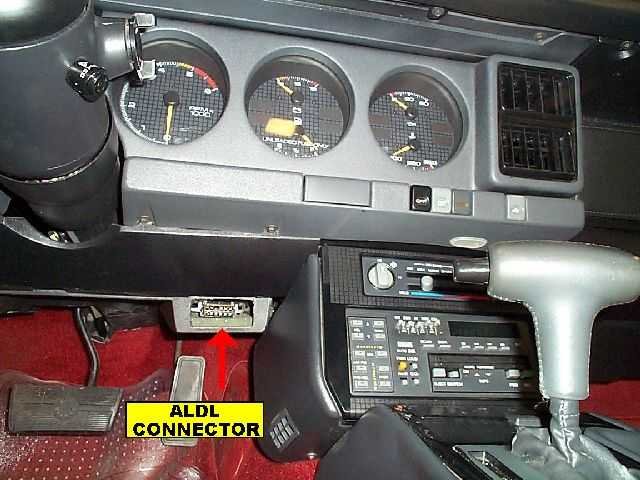
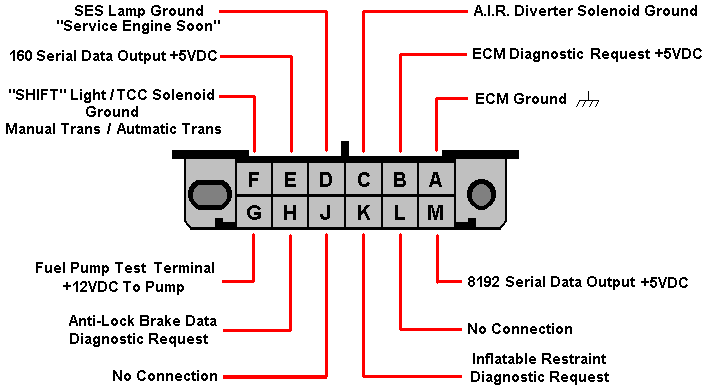
Second, you can test the pump without tearing apart the upholstery. Connect a 12VDC+ jumper to the 'G' terminal on the ALDL connector under that dash to operate the pump directly. This terminal is wired to the fuel pump through normally closed contacts on the F/P relay.
Third, you can "prime" the intake by carefully pouring a little fuel through the throttle body to attempt to start the engine. A LITTLE!
Fourth, since there is no accelerator pump on a fuel injection system, opening the throttle will NOT cause a fuel spray to occur in the bores. This only works with carburetors.
Next, there is a fuse near the battery/radiator support for the fuel pump, and a relay either in the fuse panel or on the firewall for the fuel pump. Failure of this relay can prevent the pump from operating.
Lastly, it always helps to have a clean fuel filter and fresh load of fuel. Just checking that one...
First, the fuel pump will run for about two seconds when the ignition is first turned to the RUN position, not the START position. Additionally, the fuel pump will not operate until it makes a given pressure. There is no pressure switch in the fuel system, so the ECM doesn't know/care when there is or isn't fuel pressure. It will run for about two seconds, regardless of what pressure is or isn't achieved.
Second, you can test the pump without tearing apart the upholstery. Connect a 12VDC+ jumper to the 'G' terminal on the ALDL connector under that dash to operate the pump directly. This terminal is wired to the fuel pump through normally closed contacts on the F/P relay.
Third, you can "prime" the intake by carefully pouring a little fuel through the throttle body to attempt to start the engine. A LITTLE!
Fourth, since there is no accelerator pump on a fuel injection system, opening the throttle will NOT cause a fuel spray to occur in the bores. This only works with carburetors.
Next, there is a fuse near the battery/radiator support for the fuel pump, and a relay either in the fuse panel or on the firewall for the fuel pump. Failure of this relay can prevent the pump from operating.
Lastly, it always helps to have a clean fuel filter and fresh load of fuel. Just checking that one...
Last edited by Vader; Mar 31, 2018 at 10:40 AM. Reason: Updated links
Thread Starter
Junior Member
Joined: Feb 2001
Posts: 53
Likes: 0
From: Chicago, IL USA
Wow. Thanks for the good advice. I'm actually embarassed not to know some of that stuff. So I guess the two second "Run position" is a valid test, but only to verify that the pump tries to run for two seconds when you first turn the key.
The G-terminal is news to me too, thanks for that, I will definately test it.
Also, regarding the fuse and relay- also good tips I didn't know about, but failure of either of these components should result in an almost immediate and permanent (esp. for the fuse) stop of the engine, right? This is part of what makes me think it's a physical problem with the pump- it was running strangely about 15 minutes before it stalled to where it is now. It would start for a second or two and then die. Finally, I got it running for about 15 minutes, and then I had to make a stop- it never quite started again. By the time I had pushed it into a parking space, it wouldn't even try- but the motor was turning just fine (air filter was removed, spark checked. Anyway, assuming this is the problem, do you have any tips for making the job of replacing the pump easier? (it's $250+ for a mechanic, or $35 for the part +warranty for me to do it)
And yes, I have at least half a tank of gas in it- fuel filter I haven't checked, but again, I would expect a lot more notice with that type of failure and at least some effort in starting.
Thanks a lot for the help! Good stuff!
-Kevin
The G-terminal is news to me too, thanks for that, I will definately test it.
Also, regarding the fuse and relay- also good tips I didn't know about, but failure of either of these components should result in an almost immediate and permanent (esp. for the fuse) stop of the engine, right? This is part of what makes me think it's a physical problem with the pump- it was running strangely about 15 minutes before it stalled to where it is now. It would start for a second or two and then die. Finally, I got it running for about 15 minutes, and then I had to make a stop- it never quite started again. By the time I had pushed it into a parking space, it wouldn't even try- but the motor was turning just fine (air filter was removed, spark checked. Anyway, assuming this is the problem, do you have any tips for making the job of replacing the pump easier? (it's $250+ for a mechanic, or $35 for the part +warranty for me to do it)
And yes, I have at least half a tank of gas in it- fuel filter I haven't checked, but again, I would expect a lot more notice with that type of failure and at least some effort in starting.
Thanks a lot for the help! Good stuff!
-Kevin

Junior Member
Joined: Feb 2002
Posts: 22
Likes: 0
You're lucky you had any warning. Mine was running fine and one morning it just didn't start. I didn't hear the pump so I towed it to a friend's shop. He had a lift and that made the job MUCH easier. I recomend you get a friend to help you because it gets a little tricky trying to squeeze that tank out, especially with a good amount of gas in it. Once you get the tank out it's a snap. It should take you a couple of hours to do it. As far as I can remember, I think we only had to drop the exhaust down from the hangers in the back. Take your time and make sure the car is secure on jackstands. Good luck!
Thread Starter
Junior Member
Joined: Feb 2001
Posts: 53
Likes: 0
From: Chicago, IL USA
point of failure?
Another question I have about this: If the pump is failing because of a ruptured diaphragm or other reason, it seems to me that the pump would still "run" that is, the motor would turn and you would hear the sound- yet the pump would still need to be replaced.
Alternatively, the motor could be jammed, and thus wouldn't necessarily make any noise, but the electrical system would still be functioning properly- I guess you'd probably blow a fuse actually, but the same response could be expected of a loose wire or faulty electronic component.
So my question is to anyone who is failiar with in-tank fuel pumps, what is the most common point of failure of these pumps? Is the dignosis of fuel pump failure typically correct or have you switched a fuel pump only to find that it was something else causing the trouble? Thanks again for any help!
-Kevin
Alternatively, the motor could be jammed, and thus wouldn't necessarily make any noise, but the electrical system would still be functioning properly- I guess you'd probably blow a fuse actually, but the same response could be expected of a loose wire or faulty electronic component.
So my question is to anyone who is failiar with in-tank fuel pumps, what is the most common point of failure of these pumps? Is the dignosis of fuel pump failure typically correct or have you switched a fuel pump only to find that it was something else causing the trouble? Thanks again for any help!
-Kevin
Trending Topics
Thread Starter
Junior Member
Joined: Feb 2001
Posts: 53
Likes: 0
From: Chicago, IL USA
Originally posted by Vader
Second, you can test the pump without tearing apart the upholstery. Connect a 12VDC+ jumper to the 'G' terminal on the ALDL connector under that dash to operate the pump directly. This terminal is wired to the fuel pump through normally closed contacts on the F/P relay.
Second, you can test the pump without tearing apart the upholstery. Connect a 12VDC+ jumper to the 'G' terminal on the ALDL connector under that dash to operate the pump directly. This terminal is wired to the fuel pump through normally closed contacts on the F/P relay.
Anyway, the good news is that after all that, I was correct in blaming the fuel pump. Runs nicely now, and I also replaced the filter just for good measure. Finished just in time as everything is now covered in snow. By far the hardest part was jamming the tank back into (and out of) place- the filler tube is a gigantic pain to finagle through the frame, I even nibbled out some extra clearance. Anyway, next time I'm definately paying a mechanic for this one. thanks for the help everyone!
-Kevin
*now to get a replacement for the hacked exhaust that was installed.
Edit: The other impossible job: removing the bolts holding the suspension together. Had to keep extending wrenches to provide enough torque to turn the bolts. Snapped one in half, and even then, the remaining half had the be sledgehammered out. Looked like artifacts from the Titanic. Where can I get new (stainless?) ones?
Last edited by kevin-design; Feb 27, 2002 at 03:11 PM.

Thread
Thread Starter
Forum
Replies
Last Post
92camaroJoe
Tech / General Engine
6
Aug 13, 2015 06:07 AM

