When you click on links to various merchants on this site and make a purchase, this can result in this site earning a commission. Affiliate programs and affiliations include, but are not limited to, the eBay Partner Network.
My cargo light does not turn on when the hatch opens. I've done some checking and I think it may be a bad diode where the three white wires connect.
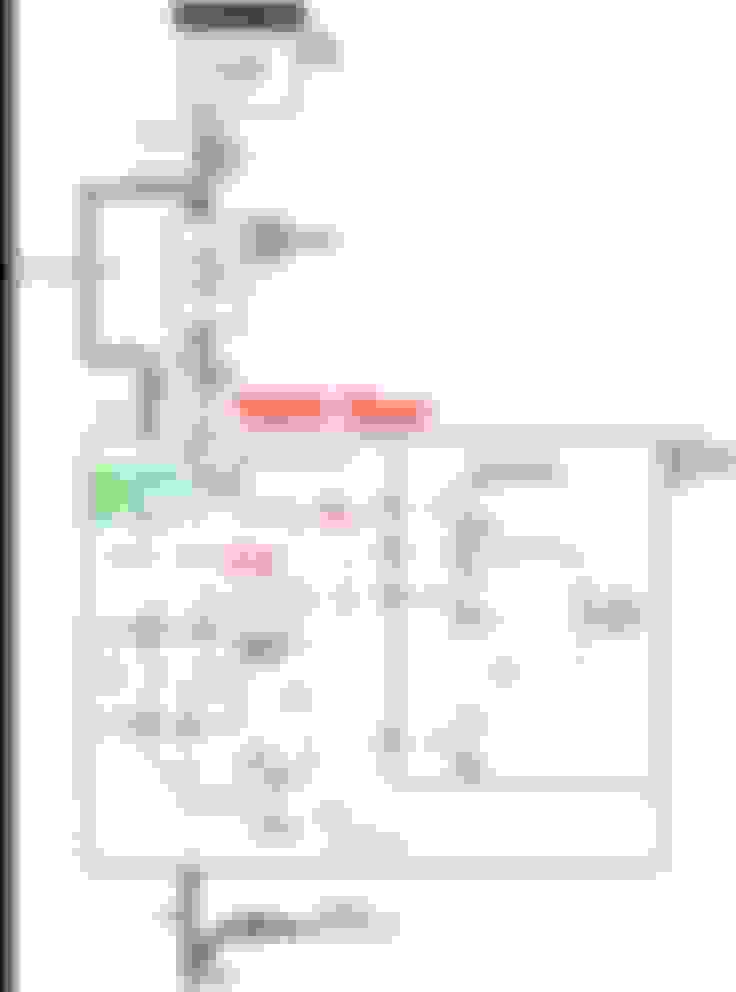
I've attached a pic with the results of my testing. These tests lead me to believe the diode is bad.
Can anyone confirm my guess?
Also, where would I get a new diode? Will any inline automotive diode work?
Thanks.
No, that's not right... when you measure its resistance with the meter's red lead on the end with the band and the black on the other, it should measure very high resistance, probably "OL" or whatever else your meter says when the leads aren't touching anything; then with the black lead on the band end and the red on the other, it should read some much lower resistance, the exact value will depend on your particular meter but will usually be a few hundred or thousand ohms. Definitely shouldn't be the same both ways.
Pretty sure it's not a LED... just yerbasic diode. Prolly wrapped up in the harness if memory serves. Its purpose is so that if all those relay contacts end up with 12V on them, such as during the pull-down operation, the light doesn't come on.
My car does not have the pulldown hatch, but looking at that diagram, that light diode looks like it lights up to confirm "hatch unlatched".
Follow the purple line. When the relay contact is in the UNLATCHED position, ground is brought to one side of the LED, and there is already +12v on the other side, making it light up for a visual indication.
At least, that's what I am seeing. But I have been known to be wrong.
The "light diode" is so named because it controls the light , and not because it indicates that the light is on . It is not an LED , just a simple diode being used in a "blocking diode" configuration , as Sofa described .
Also , to the OP , when you measure any electronic device for ohms , it's important to disconnect one side of that device from the circuit so that it's truly only the device itself the meter is measuring . With the diode still connected in the circuit it's possible to have your readings affected by other devices in the circuit that the diode is connected to .
Last edited by OrangeBird; Jun 29, 2019 at 08:09 PM.
The "light diode" is so named because it controls the light , and not because it indicates that the light is on . It is not an LED , just a simple diode being used in a "blocking diode" configuration , as Sofa described .
Also , to the OP , when you measure any electronic device for ohms , it's important to disconnect one side of that device from the circuit so that it's truly only the device itself the meter is measuring . With the diode still connected in the circuit it's possible to have your readings affected by other devices in the circuit that the diode is connected to .
Yes, just a regular diode. That's why I removed the bulb (and mentioned it in my diagram), breaking the circuit so that the diode was separated from the circuit.
You folks have been very helpful. I ordered a diode with quick connectors attached so wiring will be removable in case the hatch motor or other device fails.




 The "light diode" is so named because it controls the light , and not because it indicates that the light is on . It is not an LED , just a simple diode being used in a "blocking diode" configuration , as Sofa described .

