When you click on links to various merchants on this site and make a purchase, this can result in this site earning a commission. Affiliate programs and affiliations include, but are not limited to, the eBay Partner Network.
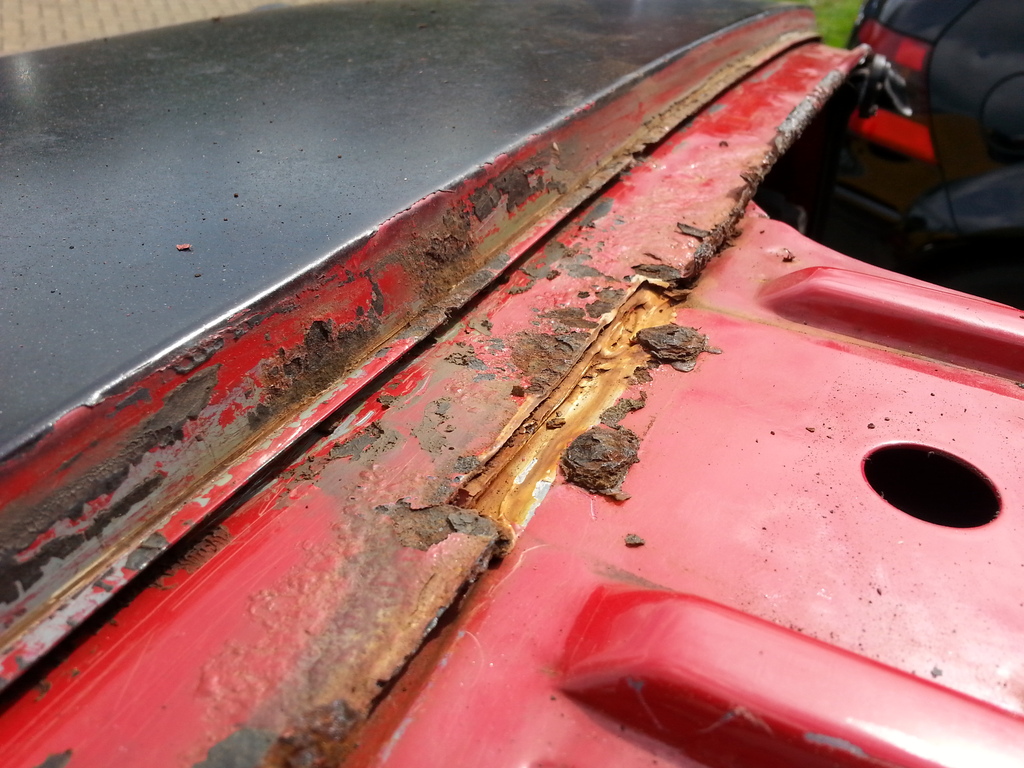
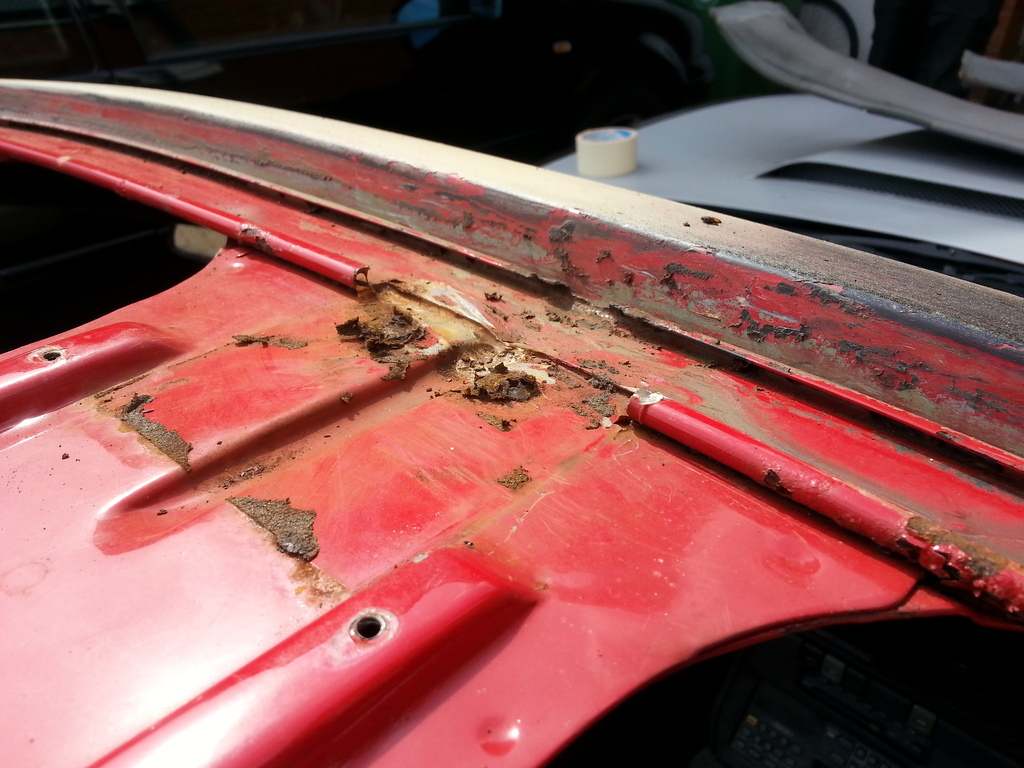
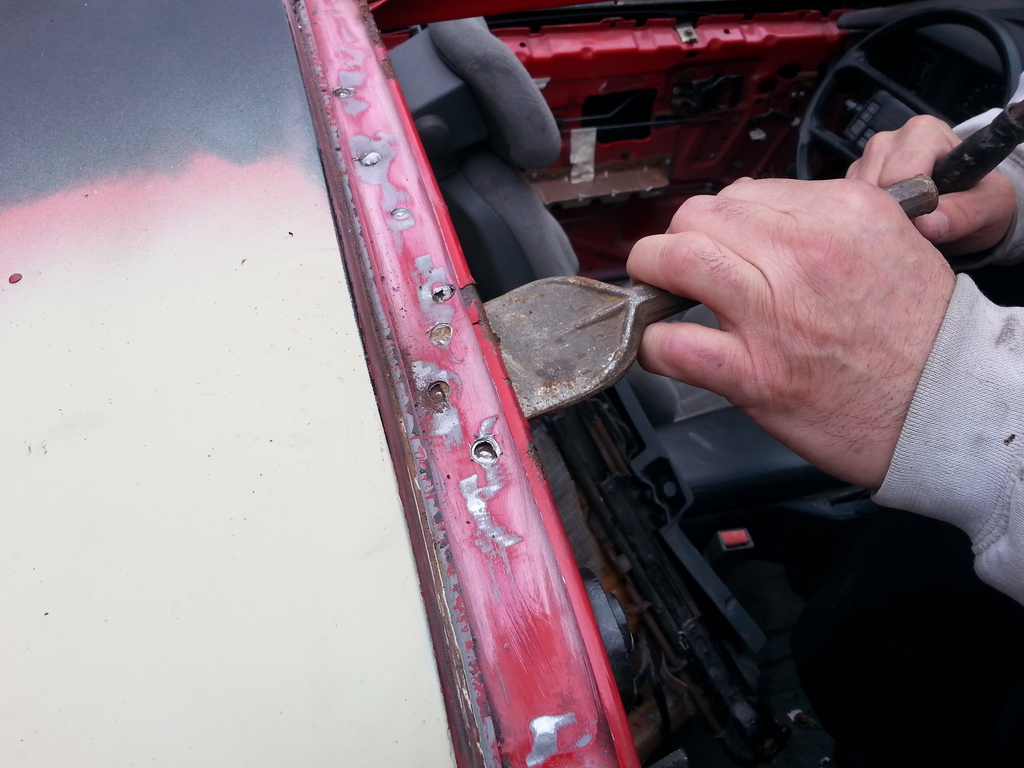
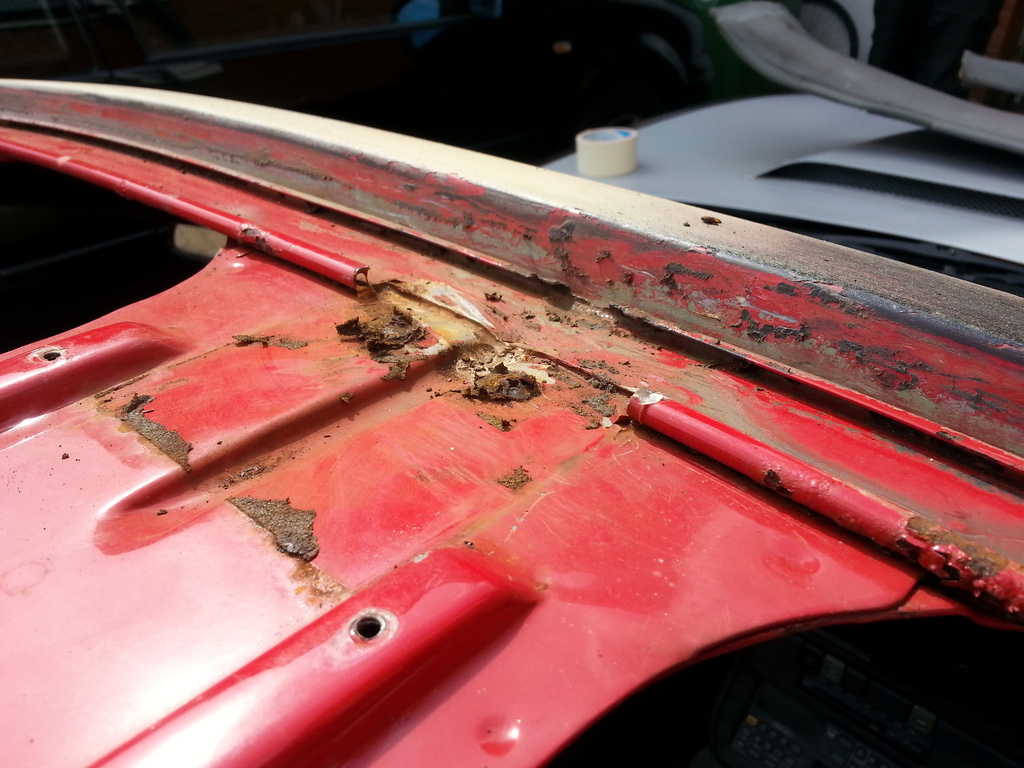
I took the T-tops off for the first time in years today and was immediately greeted by an old friend...rust. The T-top bar has it the worst, but that can be replaced so I'm not too worried about it. However, I am worried about the rust I have in one of the J channels on the passenger side because two 1" sections of the lip that the seal goes under have totally rotted away. For now my plan is to hit the rusted J-channel area with a wire wheel to clean it up and see where I am. The majority of the lip still seems to be pretty solid but I won't know until I get the rust off. I'll post pictures of that when I get an opportunity to clean up the affected area. In the meantime, what can I do about those two sections of the channel that have rusted away? Also, can anyone recommend a good brand of weatherstripping?
Here's one:
Here's the other:
It's hard to see, but it has not rusted through the metal underneath the lip
With the exception of the front passenger side channel, everything else seems to be in pretty good shape
I just answered someone else asking about the same thing in a PM, so I'll just copy it here;
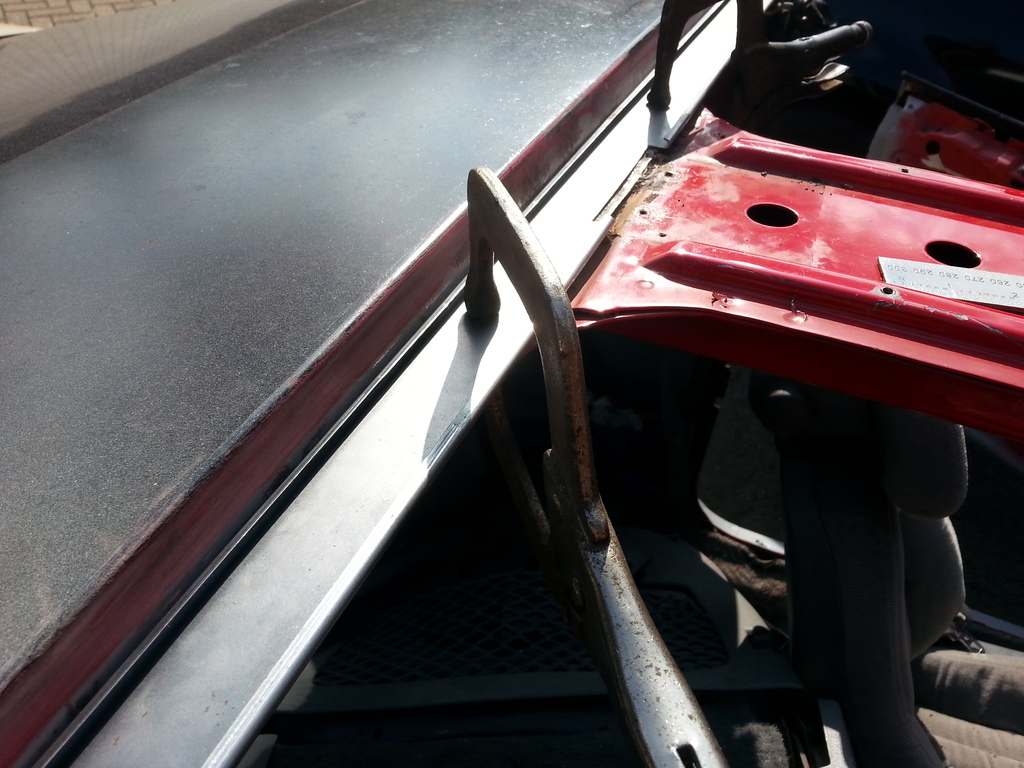
"Most of the time the problem is a hole rusted through the body under/behind the seal, and that is how the water is getting in. When GM designed the T-Tops they neglected to provide a path for water to escape from between the seal and the body, so over time it just rots its way through. When I redid my T-Tops I found I had several holes, the largest being over 3" long and over 1/4" high along the rear of the passenger side T-top rail. The seal itself worked fine, but any water would get between the seal and the body, flow into the hole and soak the headliner before pouring into the back seat. I found several smaller holes in the rest of the rails, and the front passenger corner was thoroughly crunchy with rust. To fix it all, I used a wire wheel to remove all the paint and rust down to bare metal, then used gap filling foam to fill in the larger holes and let that cure overnight, trimming it flush the next day with a razor blade. Then I used 2 part metal epoxy (the gray putty stuff in a tube) to fix the holes and let it cure, then sanded it flush with the rest of the metal. Then 2 layers of self etching primer, then 2 of filler primer, sanding and painting. I also replaced my center bar with a junkyard one as the original had completely rusted away to crumbly flakes. This went in, then the new (junkyard) seals got glued in with weatherstrip adhesive, then black 2-hr rain-ready silicone (kitchen/bath) was put in between them and the body in 2 passes; the first with the seal pulled back, the second pass on top of the first and I let the seal squeeze and excess out as the nozzle went along, then wiped everything up with paper towels. The end result is the seal has RTV going from it to the body with no opportunity for water to get between between the seal and body. The only mistake I made is I should have also coated the bottom of the new center bar with RTV, because in hard rain I still get a small leak at the front of the bar from water getting in around it. The only other spot I still get rain at all is on the inside of the driver side window where the seal and A-pillar meet, but that is more due to improper window alignment and not the seals. I hope this helps!
BTW if you do pull a junkyard set or re-use yours, the hardest part is pulling them without damaging them. All I can suggest is use a good metal putty knife, go SLOW, and don't pull on the seal while removing it as much as you can. They tear incredibly easy, especially with age, but they can be removed intact. Given the cost of new replacements, it's at least worth looking for a decent used set."
As for repairing the damaged channels, I used the same epoxy to replace/repair any chunks that were too crunchy to salvage. After I was done wire wheeling the channels it was clear there was extensive corrosion throughout, and I spent the better part of two days filling holes and rebuilding with the epoxy. This was all done over 5 years ago now, and to date still no leaks. Your channels are abut half as bad as mine had been, and my center bar was completely rotted. The only thing holding the two side pieces on was the three screws on each, and the glue underneath was holding the center piece in place. I highly recommend doing what I said above about slathering the bottom of the new piece with 2-hr rain ready kitchen/bath black silicone before installing the new center bar. All of the problems with leaking in these cars is from water rotting its way through the metal, and in the exception of actual damage to the seals (tears/rips) they are rarely the cause. Keeping the water out from behind/under the seals and forcing it to drain off the body does wonders to curing the issues and preventing cancer on 3rd gens.
There are numerous sources for seals, none are cheap for T-top cars, sadly.
Here's what I ended up doing. I wire wheeled all the rust off, tacked on some strips of new metal along the channel lip where it was still solid, put some seam sealer on it, then primed and painted. It's not the prettiest solution, but it should work ok and it'll be covered up by the weatherstripping anyway.
83Chimaera, I'll be following your weatherstripping install advice to a t when I get around to doing it. I just need a full day that I can devote to it.
i'm going the metal route, i measured he thickness and its about .078 to .080 so that's approx 14 gauge metal. I cant seem to source any locally yet but i'm "steel" searching...
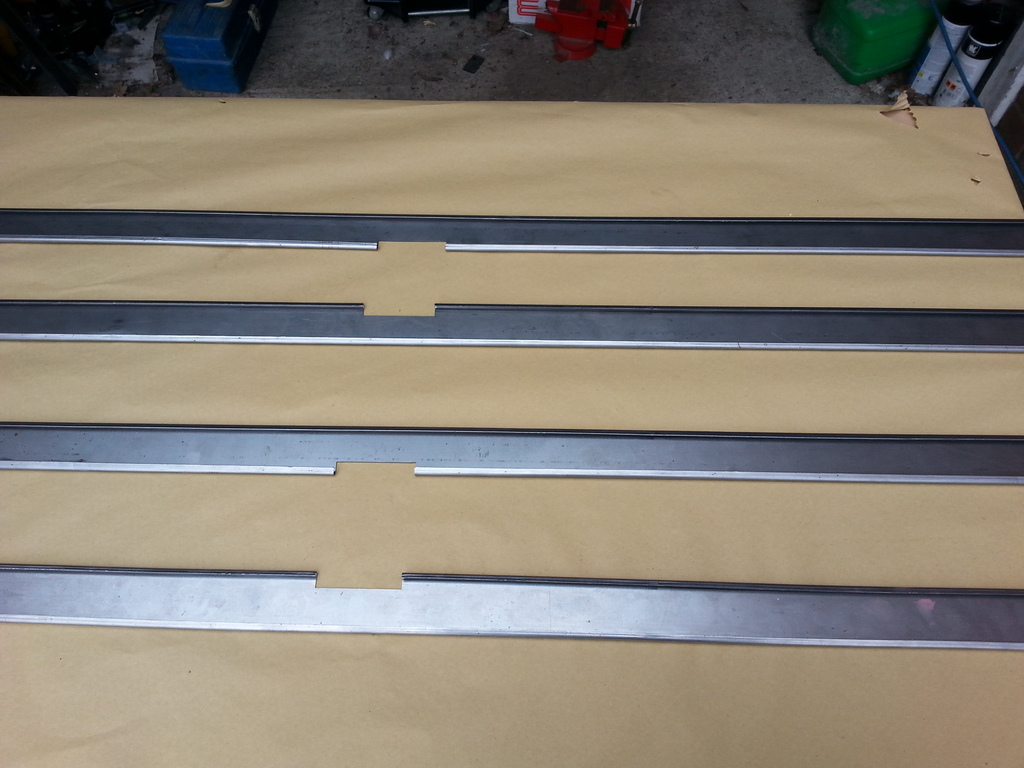
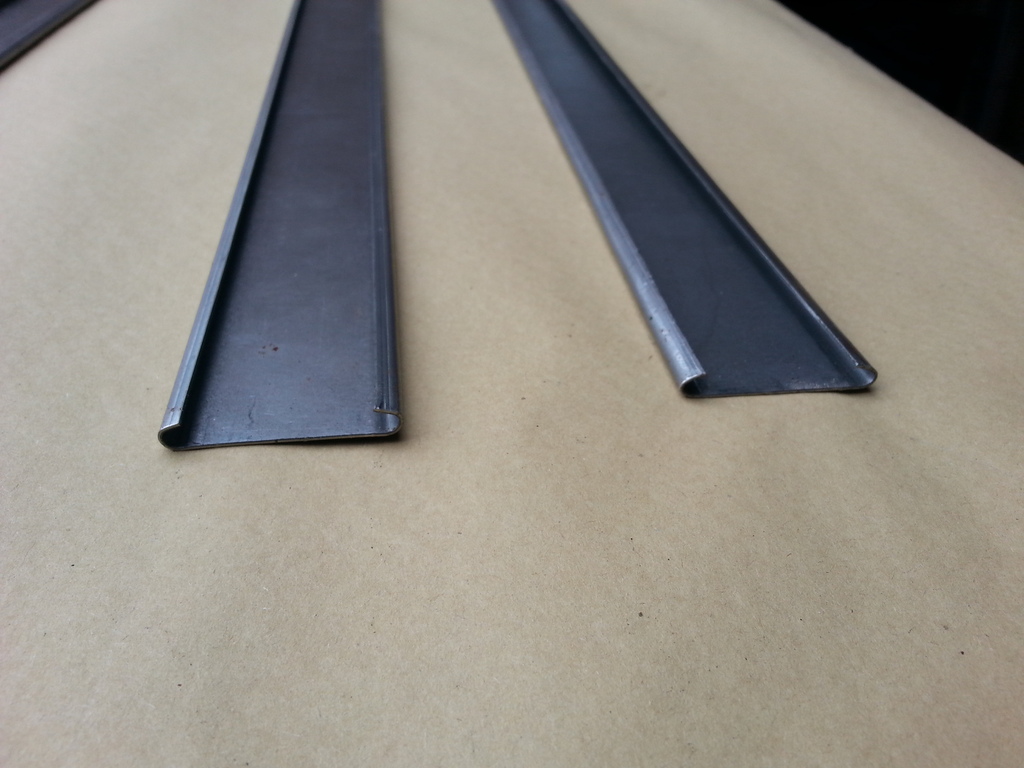
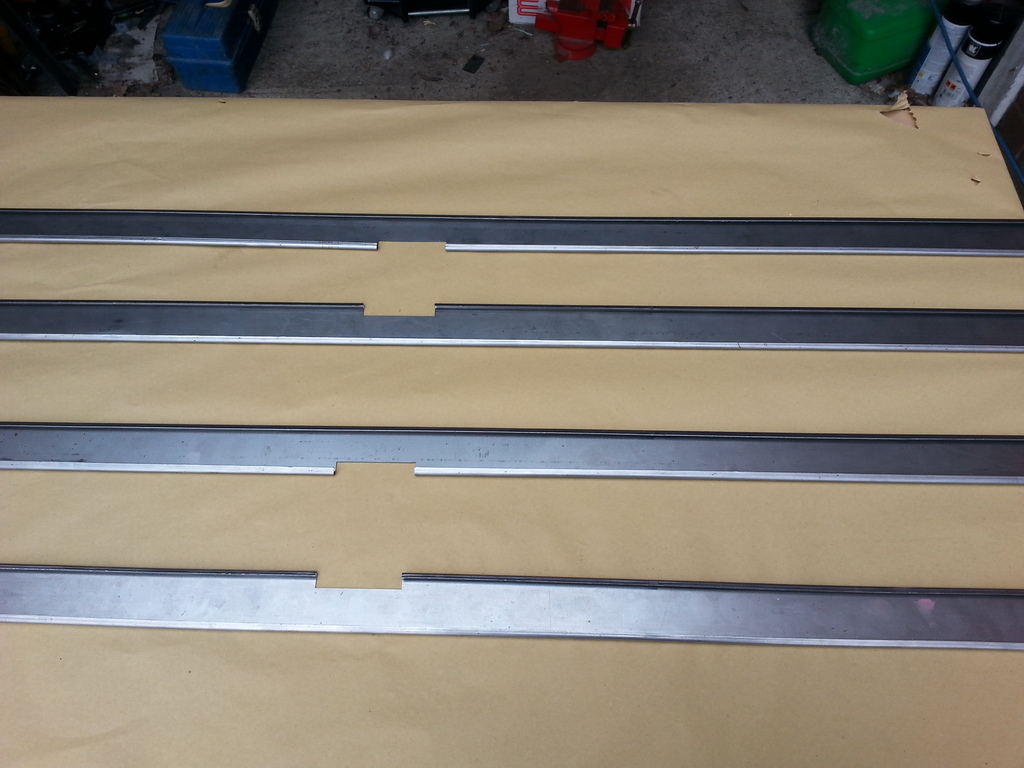
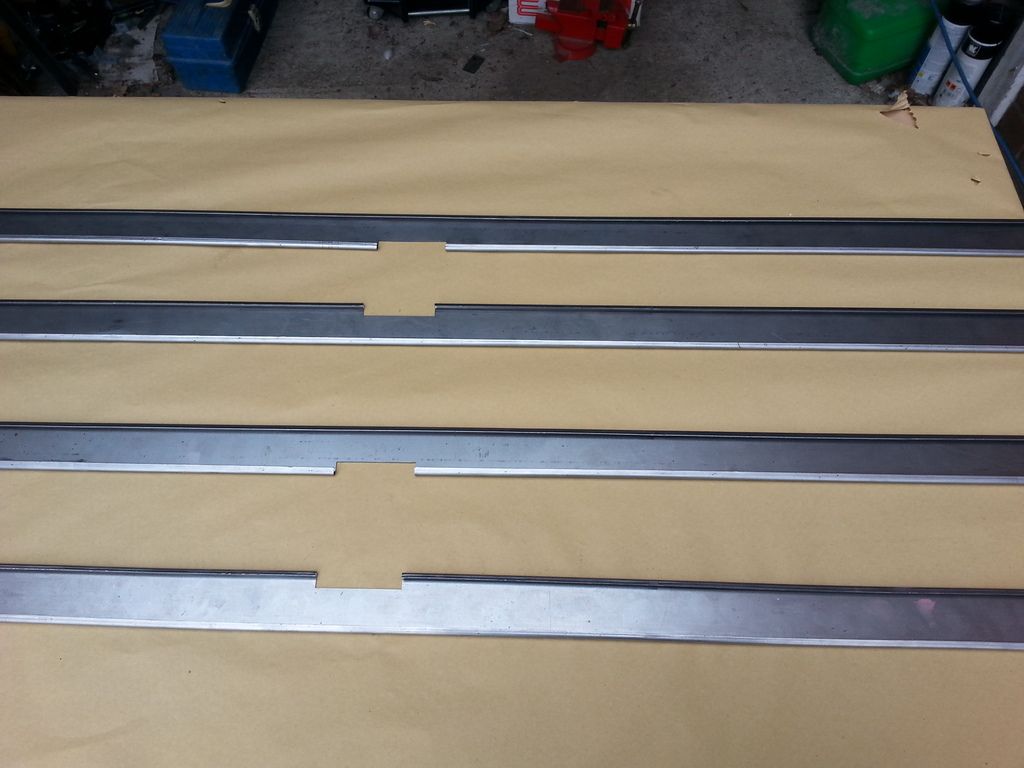
Cut out and replace. You do it once and you're done with it. With good sealer and correct primer it'll last for years. With new rubber up there you should also have a nice tight fit with the tops and no draughts or leaks.
I actually resolved this using fiberglass sheeting and POR15
That's not the way to do it. That will actually promote rust, so unless your car never leaves the garage, you are going to end up with a much bigger problem than you had before.
Originally Posted by BarryV8
Cut out and replace. You do it once and you're done with it. With good sealer and correct primer it'll last for years. With new rubber up there you should also have a nice tight fit with the tops and no draughts or leaks.
^^^That is the proper way.
Last edited by Steve86TA; Jan 29, 2016 at 12:27 AM.
That's not the way to do it. That will actually promote rust, so unless your car never leaves the garage, you are going to end up with a much bigger problem than you had before.
You basically just covered up the rust. The metal is badly pitted, moisture will get under the POR15 and the fiberglass. The moisture will be held in there by the POR15 and fiberglass, speeding up the rust process. By the time the POR is bubbled and the fiberglass is coming off and you realize there's a problem, all the metal will be gone from behind it.
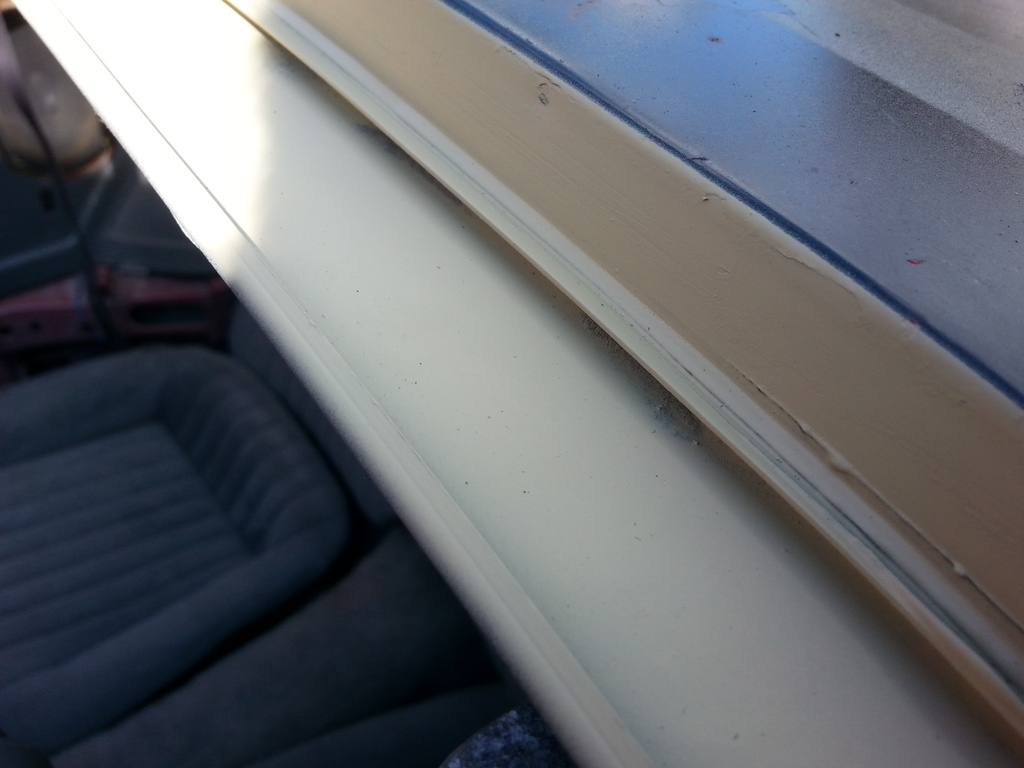
Yes, the channels front and rear were bespoke made by a specialist. My understanding is that several sets were done as a group purchase for a bunch of 3rd gen owners. They'll fit Firebirds and Camaros. I'll try and dig up contact info and post it on this thread for anyone who is curious.
Yes, the channels front and rear were bespoke made by a specialist. My understanding is that several sets were done as a group purchase for a bunch of 3rd gen owners. They'll fit Firebirds and Camaros. I'll try and dig up contact info and post it on this thread for anyone who is curious.
Yes, the channels front and rear were bespoke made by a specialist. My understanding is that several sets were done as a group purchase for a bunch of 3rd gen owners. They'll fit Firebirds and Camaros. I'll try and dig up contact info and post it on this thread for anyone who is curious.
You basically just covered up the rust. The metal is badly pitted, moisture will get under the POR15 and the fiberglass. The moisture will be held in there by the POR15 and fiberglass, speeding up the rust process. By the time the POR is bubbled and the fiberglass is coming off and you realize there's a problem, all the metal will be gone from behind it.
I get what you are saying... which basically amounts to POR15 doesn't work at all?
It literally advertises to do the opposite.
"POR-15® is a paint-like substance which acts as a total rust inhibitor and also very effective as a metal filler. Its consistency is approximately that of paint and it has very good spreadability (one quart covers 96 square feet). POR-15® chemically bonds to rusted steel to form a rock-hard, nonporous coating that won't crack, chip, or peel. It works by isolating metal from moisture; without moisture present, steel can't rust. Thin, covering coats are best. Apply second coat when first coat is dry to touch with slight "finger-drag" remaining. "
If water really can get under POR15. then yes, it was a waste of time.
I get what you are saying... which basically amounts to POR15 doesn't work at all?
It literally advertises to do the opposite.
"POR-15® is a paint-like substance which acts as a total rust inhibitor and also very effective as a metal filler. Its consistency is approximately that of paint and it has very good spreadability (one quart covers 96 square feet). POR-15® chemically bonds to rusted steel to form a rock-hard, nonporous coating that won't crack, chip, or peel. It works by isolating metal from moisture; without moisture present, steel can't rust. Thin, covering coats are best. Apply second coat when first coat is dry to touch with slight "finger-drag" remaining. "
If water really can get under POR15. then yes, it was a waste of time.
It works just fine for some things, but badly pitted sheetmetal isn't one of them. Those pits go all the way through, which is how the moisture gets in. The fiberglass doesn't help matters either. Once you have the moisture in there, the rust process continues and you have all that stuff in there between the body and the rubber... it just snowballs.
It works just fine for some things, but badly pitted sheetmetal isn't one of them. Those pits go all the way through, which is how the moisture gets in. The fiberglass doesn't help matters either. Once you have the moisture in there, the rust process continues and you have all that stuff in there between the body and the rubber... it just snowballs.
Good explanation dude. Damn, yeah I forgot about it coming in through the back of the t-top rail - which is basically inaccessible to paint. I'm honestly more concerned now about that part than the channel strip - which honestly seems easy to replace - if you get one fabricated.
The other rust spots - I'll look at again in my before photos. The fiberglass I will definitely remove and sand out - then maybe re-POR.
When you say tacked on, how did you do it? And where'd you get the metal?
Have similar issues on mine...
I got the sheet metal from Home Depot. I don't recall what gauge it was, but it was close enough in thickness for me. I just cut a strip off that was the same width as the original lip that's on there and had a welder friend tack it into place. I then used seam sealer to fill the gap where the the two pieces meet. What I did may or may not be the best way to do it, but I didn't feel that the rust on mine was severe enough to warrant replacing the entire channel like what BarryV8 did. Excellent work on that btw.
Yes, the channels front and rear were bespoke made by a specialist. My understanding is that several sets were done as a group purchase for a bunch of 3rd gen owners. They'll fit Firebirds and Camaros. I'll try and dig up contact info and post it on this thread for anyone who is curious.
We would love to get that contact information to order some sets.
Thanks Barry.