


For those upgrading brakes


Thread Starter
Senior Member
Joined: Jul 2003
Posts: 646
Likes: 0
From: P'cola
Car: 1991 Z28 Camaro
Engine: L98
Transmission: 700R4 that will magically turn into a 6 speed one day.
For those upgrading brakes
I just found this from Camaroz28.com and it's pretty interesting. Thought I'd share it with you folks that are looking into expensive big brake packages. I dunno if it's all bs, but it makes a lot of sense. Enjoy reading.
http://home.columbus.rr.com/trackbir...led_rotors.htm
Mods if this is a repost or something, go ahead and kill it.
http://home.columbus.rr.com/trackbir...led_rotors.htm
Mods if this is a repost or something, go ahead and kill it.

Supreme Member
Joined: Mar 2001
Posts: 6,577
Likes: 0
From: Portland, OR www.cascadecrew.org
Car: 1990 Camaro RS
Engine: Juiced 5.0 TBI - 300rwhp
Transmission: T5
Axle/Gears: 3.42 Eaton Posi, 10 Bolt
good info, although we have discussed this before, it is always good to have come up again for the new folks.
I'll post up a tidbit writen by a member of another site that I go to.
Also, for you viewing pleasure.  Some links.
http://www.stoptech.com/whitepapers/...ons_122701.htm
http://www.stoptech.com/whitepapers/...erformance.htm
and now the real entertainment.
http://www.altimas.net/forum/showthr...7&pagenumber=1
I really enjoy reading this thread , it is rather funny.
I'll post up a tidbit writen by a member of another site that I go to.
Brake Fallacies.
Dennis Cook
The Working of Brakes
There is a common fallacy out there that increasing your brake pad size will increase the stopping power of your car through greater friction. This is in fact false. The force of friction is determined by physics as the force down on the object times the coefficient of friction. The only way to change the coefficient of friction is to modify the material or design of the brake pad. The only way to modify the force down is to change the brake piston force (by size changes or number for example).
This does not mean that a larger brake pad does not help braking! The benefit of a large brake pad comes into effect when you consider thermal dissipation. The larger the pad the more this thermal temperature (created by the interaction between the pad and rotor) is spread amongst a pad. This means less temperature is concentrated at one point on the pad and the rotor absorbs more heat. This decreases the likelihood that the pad itself will heat beyond operating temperature. If the pad were to go beyond operating temperature it would glaze over resulting in brake fade. Furthermore, a larger pad results in a longer service life of the pad since there is more pad material to consume. **Note: This is not to say that a huge pad is the way to go. I am simply telling you the benefits of a bigger pad. Do not. I repeat do not buy a huge pad thinking that will be the end all. However, consider a pad with a better material makeup for a large difference.
Cross-Drilled /Slotted Rotors
The second thing you can do to improve your brake performance is often to go to a larger rotor. We all know that this gives the rotor further ability to dissipate heat away from the pads through itself and through the air (conductive and convective heat transfer). It also increases the effective radius of the force acting on the rotor. Since actual brake torque equals force of pistons* effective radius * coefficient of friction of the pad. So obviously a larger pad, a larger rotor, or both result in better brake performance by avoiding brake fade. It is also obvious that a larger rotor will give you a larger brake torque (stopping force). But what about cross drilled or slotted rotors? Well the common belief in the main stream is that somehow slotted or cross-drilled rotors allow for better performance by handling heat. This is 100 percent false. The individuals involved in such fallacies mention that air through the holes works to cool the rotor (convective heat transfer into the air from the rotor). The issue is that from physics we know that metal transfers heat better then air by a significant amount. (The larger mass of the rotor becomes more important then the larger surface area of the rotor in any situation other then the optimal. Cross drilling is not an optimal manner of creating metal to air transfer through larger surface areas. There is not much airflow through the holes.) As such the rotor begins to work as a heat sink. Now by cross drilling or slotting we are decreasing the overall amount of metal to transfer this heat to. Clearly we are decreasing performance of the rotor to dissipate heat amongst itself. We are also damaging the brakes structural rigidity. The iron in a brake rotor is made of a crystalline structure. By drilling holes in said surface we cut the end grains creating a situation that breeds cracks. Furthermore, even if we were to cut the rotors correctly to avoid cutting the end grains structural rigidity is still decreased. The temperature around the holes will be slightly less then that of the entire rotor leading to temperature stress. Moreover, the decreased mass will result in lowered rigidity. Lastly, the holes of a cross-drilled rotor decrease the area of the pad that contacts the rotor. This concentrates the heat more on certain areas of the pad (similar to the idea of using a smaller pad where the pad heats up more quickly).
So what do cross drilled and slotted rotors accomplish? Well cross-drilled does not do anything for a car but perhaps give you a certain bling look. In a motorcycle or other extremely light vehicle the decrease in rotational inertia and unsprung mass might perhaps be useful (once other more efficient avenues are exhausted). However, in a street car or race car the speeds and weight of such vehicles will make the relatively miniscule decrease be outweighed by the need for more heat dissipation.
Slotted rotors meanwhile serve a few purposes. The main original purpose of a slotted rotor was to vent gases that buildup between the pads and the rotors. However, this reasoning is no longer valid. As the years have gone by pads have been designed that produce very little gas. Furthermore many pads come with groves in themselves that allow for the removal of any minor gas that is created. So does that mean that slotted rotors fall to the same fate as cross-drilled? Well, no. A slotted rotor always decreases the rotors capability to dissipate heat amongst itself, but they have their applications. A slotted rotor will clean off the brake pad as it passes the slots. As such it works really well for rally and dirt tracks. Furthermore, the slots themselves can serve to wipe off the top layer of glaze that tends to appear on your brake pads. Some racers say this last part is beneficial while others question whether the slots will fill before the deglaze affect is ever helpful. I have yet to determine the answer to this question. The answer of slotted brake usefulness seems to lie with whether the benefit of cleaning the pads outstrips the loss in heat dissipation. This question depends on your application.
Ventilated or Veined
So what do ventilated rotors accomplish? Well, the concept would be the same as the idea for cross-drilled/ slotted that have been previously perpetrated. However, there are a few distinct differences. The rotors are designed to increase surface area and to flow air in the middle of the rotors. The increased surface area to the air clearly provides for more cooling from the air at the cost of mass. So why does this method work while the others fail? The first reason is that a ventilated design flows a lot of air through a rotor. A ventilated rotor acts as a centrifugal pump sucking air into the rotors. This is why rotors with curved veins provide better braking. A slotted or cross-drilled design will flow very little air under heavy braking. As such the veins of the ventilated system are far more efficient. Moreover, air moves through the center of the rotor cooling the rotor more evenly and efficiently. Furthermore, the ventilated design does not decrease the contact patch of the pad on the rotor. Finally, the design has different structural rigidity qualities then that of a cross-drilled or slotted design.
Brake Bias
So now you know that increasing your pad size and rotor size will help to stop your brake fade. You also know that swapping the pad, increasing the rotor size, or increasing the force of the pistons on the pad can increase your stopping force at the tires. Finally, you have learned to stay away from cross-drilled and look very closely at whether to use a slotted rotor.
So does that mean it is time to go get that fancy front brake kit for your car? Well, no again. The first thing to consider is that in any braking setup the tires are the ultimate limiting piece. You cannot stop faster then your tires allow you to stop, ever. As such, if your car can lock it’s tires under braking consistently then better brakes will not improve your braking performance. (I stress the consistent part, as brake fade must also be combated.)
Furthermore, most people understand the idea of brake bias, but fail to understand its application. A typical car is setup with the front brakes being far more effective then the rear. Now the first thing we must realize is that from a dynamic stand point your car should have stronger front brakes. When you brake physics transfers more weight to the front axle that must be accounted for. However, in this dynamic state we also have brake bias. Your typical street car is slightly dynamically biased towards the front. This leads to the front tires locking up before the rear tires under heavy conditions. Such a situation is obviously not optimal for a car stopping quickly. You want the stopping bias to be roughly equal given the acceleration you are traveling at (please note that the bias depends on the acceleration of the vehicle). When you have a front bias you get a more stable stop (as opposed to a rear bias where a lock can cause spins), but you also get further brake dive and longer stopping distances. Most cars stock come with a minor front bias for the layman. So it is clearly discernable that by going with a bigger front brake kit you are actually most likely increasing your stopping distance if you do not equally modify the rear brakes (or set the clamping forces lower on the front brake to make up for the front brakes increased effective radius).
Dennis Cook
The Working of Brakes
There is a common fallacy out there that increasing your brake pad size will increase the stopping power of your car through greater friction. This is in fact false. The force of friction is determined by physics as the force down on the object times the coefficient of friction. The only way to change the coefficient of friction is to modify the material or design of the brake pad. The only way to modify the force down is to change the brake piston force (by size changes or number for example).
This does not mean that a larger brake pad does not help braking! The benefit of a large brake pad comes into effect when you consider thermal dissipation. The larger the pad the more this thermal temperature (created by the interaction between the pad and rotor) is spread amongst a pad. This means less temperature is concentrated at one point on the pad and the rotor absorbs more heat. This decreases the likelihood that the pad itself will heat beyond operating temperature. If the pad were to go beyond operating temperature it would glaze over resulting in brake fade. Furthermore, a larger pad results in a longer service life of the pad since there is more pad material to consume. **Note: This is not to say that a huge pad is the way to go. I am simply telling you the benefits of a bigger pad. Do not. I repeat do not buy a huge pad thinking that will be the end all. However, consider a pad with a better material makeup for a large difference.
Cross-Drilled /Slotted Rotors
The second thing you can do to improve your brake performance is often to go to a larger rotor. We all know that this gives the rotor further ability to dissipate heat away from the pads through itself and through the air (conductive and convective heat transfer). It also increases the effective radius of the force acting on the rotor. Since actual brake torque equals force of pistons* effective radius * coefficient of friction of the pad. So obviously a larger pad, a larger rotor, or both result in better brake performance by avoiding brake fade. It is also obvious that a larger rotor will give you a larger brake torque (stopping force). But what about cross drilled or slotted rotors? Well the common belief in the main stream is that somehow slotted or cross-drilled rotors allow for better performance by handling heat. This is 100 percent false. The individuals involved in such fallacies mention that air through the holes works to cool the rotor (convective heat transfer into the air from the rotor). The issue is that from physics we know that metal transfers heat better then air by a significant amount. (The larger mass of the rotor becomes more important then the larger surface area of the rotor in any situation other then the optimal. Cross drilling is not an optimal manner of creating metal to air transfer through larger surface areas. There is not much airflow through the holes.) As such the rotor begins to work as a heat sink. Now by cross drilling or slotting we are decreasing the overall amount of metal to transfer this heat to. Clearly we are decreasing performance of the rotor to dissipate heat amongst itself. We are also damaging the brakes structural rigidity. The iron in a brake rotor is made of a crystalline structure. By drilling holes in said surface we cut the end grains creating a situation that breeds cracks. Furthermore, even if we were to cut the rotors correctly to avoid cutting the end grains structural rigidity is still decreased. The temperature around the holes will be slightly less then that of the entire rotor leading to temperature stress. Moreover, the decreased mass will result in lowered rigidity. Lastly, the holes of a cross-drilled rotor decrease the area of the pad that contacts the rotor. This concentrates the heat more on certain areas of the pad (similar to the idea of using a smaller pad where the pad heats up more quickly).
So what do cross drilled and slotted rotors accomplish? Well cross-drilled does not do anything for a car but perhaps give you a certain bling look. In a motorcycle or other extremely light vehicle the decrease in rotational inertia and unsprung mass might perhaps be useful (once other more efficient avenues are exhausted). However, in a street car or race car the speeds and weight of such vehicles will make the relatively miniscule decrease be outweighed by the need for more heat dissipation.
Slotted rotors meanwhile serve a few purposes. The main original purpose of a slotted rotor was to vent gases that buildup between the pads and the rotors. However, this reasoning is no longer valid. As the years have gone by pads have been designed that produce very little gas. Furthermore many pads come with groves in themselves that allow for the removal of any minor gas that is created. So does that mean that slotted rotors fall to the same fate as cross-drilled? Well, no. A slotted rotor always decreases the rotors capability to dissipate heat amongst itself, but they have their applications. A slotted rotor will clean off the brake pad as it passes the slots. As such it works really well for rally and dirt tracks. Furthermore, the slots themselves can serve to wipe off the top layer of glaze that tends to appear on your brake pads. Some racers say this last part is beneficial while others question whether the slots will fill before the deglaze affect is ever helpful. I have yet to determine the answer to this question. The answer of slotted brake usefulness seems to lie with whether the benefit of cleaning the pads outstrips the loss in heat dissipation. This question depends on your application.
Ventilated or Veined
So what do ventilated rotors accomplish? Well, the concept would be the same as the idea for cross-drilled/ slotted that have been previously perpetrated. However, there are a few distinct differences. The rotors are designed to increase surface area and to flow air in the middle of the rotors. The increased surface area to the air clearly provides for more cooling from the air at the cost of mass. So why does this method work while the others fail? The first reason is that a ventilated design flows a lot of air through a rotor. A ventilated rotor acts as a centrifugal pump sucking air into the rotors. This is why rotors with curved veins provide better braking. A slotted or cross-drilled design will flow very little air under heavy braking. As such the veins of the ventilated system are far more efficient. Moreover, air moves through the center of the rotor cooling the rotor more evenly and efficiently. Furthermore, the ventilated design does not decrease the contact patch of the pad on the rotor. Finally, the design has different structural rigidity qualities then that of a cross-drilled or slotted design.
Brake Bias
So now you know that increasing your pad size and rotor size will help to stop your brake fade. You also know that swapping the pad, increasing the rotor size, or increasing the force of the pistons on the pad can increase your stopping force at the tires. Finally, you have learned to stay away from cross-drilled and look very closely at whether to use a slotted rotor.
So does that mean it is time to go get that fancy front brake kit for your car? Well, no again. The first thing to consider is that in any braking setup the tires are the ultimate limiting piece. You cannot stop faster then your tires allow you to stop, ever. As such, if your car can lock it’s tires under braking consistently then better brakes will not improve your braking performance. (I stress the consistent part, as brake fade must also be combated.)
Furthermore, most people understand the idea of brake bias, but fail to understand its application. A typical car is setup with the front brakes being far more effective then the rear. Now the first thing we must realize is that from a dynamic stand point your car should have stronger front brakes. When you brake physics transfers more weight to the front axle that must be accounted for. However, in this dynamic state we also have brake bias. Your typical street car is slightly dynamically biased towards the front. This leads to the front tires locking up before the rear tires under heavy conditions. Such a situation is obviously not optimal for a car stopping quickly. You want the stopping bias to be roughly equal given the acceleration you are traveling at (please note that the bias depends on the acceleration of the vehicle). When you have a front bias you get a more stable stop (as opposed to a rear bias where a lock can cause spins), but you also get further brake dive and longer stopping distances. Most cars stock come with a minor front bias for the layman. So it is clearly discernable that by going with a bigger front brake kit you are actually most likely increasing your stopping distance if you do not equally modify the rear brakes (or set the clamping forces lower on the front brake to make up for the front brakes increased effective radius).
Some links.http://www.stoptech.com/whitepapers/...ons_122701.htm
http://www.stoptech.com/whitepapers/...erformance.htm
and now the real entertainment.
http://www.altimas.net/forum/showthr...7&pagenumber=1
I really enjoy reading this thread , it is rather funny.
Thread Starter
Senior Member
Joined: Jul 2003
Posts: 646
Likes: 0
From: P'cola
Car: 1991 Z28 Camaro
Engine: L98
Transmission: 700R4 that will magically turn into a 6 speed one day.
Thanks for the backup links Dewey. It seems this is a rather heated discussion since a lot of people buy into the hype that the cross drilled rotors are just the best that money can buy, period. I'll have to finish reading those links.
Supreme Member
Joined: Mar 2001
Posts: 6,577
Likes: 0
From: Portland, OR www.cascadecrew.org
Car: 1990 Camaro RS
Engine: Juiced 5.0 TBI - 300rwhp
Transmission: T5
Axle/Gears: 3.42 Eaton Posi, 10 Bolt
If you create enough hype, people buy it. Thus why we have the tornado, the electric supercharger, tons of engine additives, HID conversion kits, ect.
Maybe we can nomite putting this info in the FAQ board.
Maybe we can nomite putting this info in the FAQ board.
Thread Starter
Senior Member
Joined: Jul 2003
Posts: 646
Likes: 0
From: P'cola
Car: 1991 Z28 Camaro
Engine: L98
Transmission: 700R4 that will magically turn into a 6 speed one day.
Originally posted by Dewey316
Maybe we can nomite putting this info in the FAQ board.
Maybe we can nomite putting this info in the FAQ board.
Trending Topics

Banned
Joined: May 2004
Posts: 1,340
Likes: 0
From: Orange, Calif
Car: '87 Cam RS V6
Engine: Top Secret
Transmission: DYT700R4 custom inerts and conv.
Lets say a car car stock with 12"rotors. You put performance pads on it- it stops better but will fade with excessive heat.
You take that same car and put a 13" drilled and slotted rotor on it with the same performance pad- you have the same basic rotation mass only more outward for leverage, and you WILL increase surface area even with drills and slots and run much cooler because of additional surface area of the drilled sections- they act just as a heat sink does.
Now take that same car with a solid 13" rotor and it could very likely be the same power only heavier
Conclusion: I would much rather run the lighter weight 13" rotor than the heavier if they both work well and the 12's don't.
Also, drilled rotors create a much more positive feel on inital bite/ standard rotors will cause pad float longer than drilled rotors.
I just checked some weights- a 12.19x1.25 solid rotor is 12.7lbs/ a 13.06x1.25 drilled and slotted rotor is 12.3lbs on the same hat.
You take that same car and put a 13" drilled and slotted rotor on it with the same performance pad- you have the same basic rotation mass only more outward for leverage, and you WILL increase surface area even with drills and slots and run much cooler because of additional surface area of the drilled sections- they act just as a heat sink does.
Now take that same car with a solid 13" rotor and it could very likely be the same power only heavier
Conclusion: I would much rather run the lighter weight 13" rotor than the heavier if they both work well and the 12's don't.
Also, drilled rotors create a much more positive feel on inital bite/ standard rotors will cause pad float longer than drilled rotors.
I just checked some weights- a 12.19x1.25 solid rotor is 12.7lbs/ a 13.06x1.25 drilled and slotted rotor is 12.3lbs on the same hat.
Last edited by vsixtoy; May 22, 2004 at 10:13 AM.
Supreme Member
Joined: Mar 2001
Posts: 6,577
Likes: 0
From: Portland, OR www.cascadecrew.org
Car: 1990 Camaro RS
Engine: Juiced 5.0 TBI - 300rwhp
Transmission: T5
Axle/Gears: 3.42 Eaton Posi, 10 Bolt
Originally posted by vsixtoy
You take that same car and put a 13" drilled and slotted rotor on it with the same performance pad- you have the same basic rotation mass only more outward for leverage, and you WILL increase surface area even with drills and slots and run much cooler because of additional surface area of the drilled sections- they act just as a heat sink does.
You take that same car and put a 13" drilled and slotted rotor on it with the same performance pad- you have the same basic rotation mass only more outward for leverage, and you WILL increase surface area even with drills and slots and run much cooler because of additional surface area of the drilled sections- they act just as a heat sink does.
Now take that same car with a solid 13" rotor and it could very likely be the same power only heavier
Also, drilled rotors create a much more positive feel on inital bite/ standard rotors will cause pad float longer than drilled rotors.
Banned
Joined: May 2004
Posts: 1,340
Likes: 0
From: Orange, Calif
Car: '87 Cam RS V6
Engine: Top Secret
Transmission: DYT700R4 custom inerts and conv.
Originally posted by Dewey316
You have more area to to dispurse the heat from the rotor to the air, but less area to dispurse the heat from the pad to the rotor. look closely at a heat sink, the area that absorbs the heat from the what it is trying to cool, is not drilled, they go for MAXIUMUM contact area, the side of the heat sink you are refering to, would be more likened to the vienes in the rotor. this is why curved vaines do better, than straight vaines. this is where the surface area that you want is.
You have more area to to dispurse the heat from the rotor to the air, but less area to dispurse the heat from the pad to the rotor. look closely at a heat sink, the area that absorbs the heat from the what it is trying to cool, is not drilled, they go for MAXIUMUM contact area, the side of the heat sink you are refering to, would be more likened to the vienes in the rotor. this is why curved vaines do better, than straight vaines. this is where the surface area that you want is.
Originally posted by Dewey316
Remeber, for every bit of mass you remove, you removed that much more fade restance.
Remeber, for every bit of mass you remove, you removed that much more fade restance.
Originally posted by Dewey316
Yes, there is a diffrence is feel between the two, I cannot argue with that. but initial bite is great, until you are ten laps into a session, and trying to haul the car down from 120mph, into a 90* turn. i'll take stopping power, and fade resistance, over initial bite.
Yes, there is a diffrence is feel between the two, I cannot argue with that. but initial bite is great, until you are ten laps into a session, and trying to haul the car down from 120mph, into a 90* turn. i'll take stopping power, and fade resistance, over initial bite.
Last edited by vsixtoy; May 22, 2004 at 10:56 AM.
Supreme Member
Joined: Mar 2001
Posts: 6,577
Likes: 0
From: Portland, OR www.cascadecrew.org
Car: 1990 Camaro RS
Engine: Juiced 5.0 TBI - 300rwhp
Transmission: T5
Axle/Gears: 3.42 Eaton Posi, 10 Bolt
Dean
In the last schenario i was comparing a 13" solid, to a 13" drilled.
yes, I would also take the extra inch (what guy wouldn't) no matter what.
the only thing i will humbily disagree with you about is this.
well surface to the environment is good, the surface area to the pad is also good, you have to balance the two that is why a good curved vain rotor is better, more surface area to the environment, for heat disapation off the pad, you want the solid rotor vs a cross drilled.
BTW, how the ol ONRALZ doing these days.
In the last schenario i was comparing a 13" solid, to a 13" drilled.
yes, I would also take the extra inch (what guy wouldn't
) no matter what.the only thing i will humbily disagree with you about is this.
Not will increased surface area (area exposed to the enviroment)
BTW, how the ol ONRALZ doing these days.
Banned
Joined: May 2004
Posts: 1,340
Likes: 0
From: Orange, Calif
Car: '87 Cam RS V6
Engine: Top Secret
Transmission: DYT700R4 custom inerts and conv.
Hi John, (that last quote should be "with", not "will"-my spell error)
The pad is exposed to air in the void drilled and slotted areas as they pass by the pad- thus cooling the pad in areas where a solid rotor can't- thats the compromise (I love a good debate).
I think most people don't realise the vane options availiable and what purpose they serve based on heat requirements. Yes curved vane rotors are the strongest and heaviests, and are use in high heat conditions. I always look to unsprung weight and choose the lightest option with enough performance for my needs.
"ONARAIL" is doing fine. Check this out. I still tinker with the car when I have spare time. https://www.thirdgen.org/techbb2/sho...hreadid=239836
The pad is exposed to air in the void drilled and slotted areas as they pass by the pad- thus cooling the pad in areas where a solid rotor can't- thats the compromise (I love a good debate).
I think most people don't realise the vane options availiable and what purpose they serve based on heat requirements. Yes curved vane rotors are the strongest and heaviests, and are use in high heat conditions. I always look to unsprung weight and choose the lightest option with enough performance for my needs.
"ONARAIL" is doing fine. Check this out. I still tinker with the car when I have spare time. https://www.thirdgen.org/techbb2/sho...hreadid=239836
Last edited by vsixtoy; May 22, 2004 at 11:10 AM.
Supreme Member
Joined: Mar 2001
Posts: 6,577
Likes: 0
From: Portland, OR www.cascadecrew.org
Car: 1990 Camaro RS
Engine: Juiced 5.0 TBI - 300rwhp
Transmission: T5
Axle/Gears: 3.42 Eaton Posi, 10 Bolt
Originally posted by vsixtoy
The pad is exposed to air in the void drilled and slotted areas as they pass by the pad- thus cooling the pad in areas where a solid rotor can't- thats the compromise (I love a good debate)
The pad is exposed to air in the void drilled and slotted areas as they pass by the pad- thus cooling the pad in areas where a solid rotor can't- thats the compromise (I love a good debate)
"ONARAIL" is doing fine. Check this out. I still tinker with the car when I have spare time. https://www.thirdgen.org/techbb2/sho...hreadid=239836
BTW, to coop looks like tons o' fun.
and lastly, damn you and being able to get 7 digits on your plates. in OR, we only get 6 and a space.
 (i'm thinking of getting ON RALZ for mine.)
 Thread Starter
Senior Member
Joined: Jul 2003
Posts: 646
Likes: 0
From: P'cola
Car: 1991 Z28 Camaro
Engine: L98
Transmission: 700R4 that will magically turn into a 6 speed one day.
I'm honestly not too knowledgable about all this rotor talk so I'll let you two debate on and just absorb the info.
However, the one thing I had wrong when I initially read the article I posted in the first post, was that with less area you have less mass, with less mass you have less resistance to heat. Therefore, the crossdrilled rotors will obtain heat fater than a standard..ok, that's been established. However, with the reduced mass, would the cross drilled rotor not have the ability to dissipate that heat faster than a standard rotor since there would be less mass to cool....since in essence the cooling effect is the obsorption of colder air to replace the hotter air (if I am remembering chemistry correctly)? It seems that yes, the rotor will get hotter faster in extreme driving, but would also cool more quickly due to the lessened mass to cool down. So, if this is correct and, comparing apples to apples, you took a drilled and slotted rotor (say 12") and a standard rotor (also 12") would they not have the same braking abilities in the long run?
However, the one thing I had wrong when I initially read the article I posted in the first post, was that with less area you have less mass, with less mass you have less resistance to heat. Therefore, the crossdrilled rotors will obtain heat fater than a standard..ok, that's been established. However, with the reduced mass, would the cross drilled rotor not have the ability to dissipate that heat faster than a standard rotor since there would be less mass to cool....since in essence the cooling effect is the obsorption of colder air to replace the hotter air (if I am remembering chemistry correctly)? It seems that yes, the rotor will get hotter faster in extreme driving, but would also cool more quickly due to the lessened mass to cool down. So, if this is correct and, comparing apples to apples, you took a drilled and slotted rotor (say 12") and a standard rotor (also 12") would they not have the same braking abilities in the long run?
Banned
Joined: May 2004
Posts: 1,340
Likes: 0
From: Orange, Calif
Car: '87 Cam RS V6
Engine: Top Secret
Transmission: DYT700R4 custom inerts and conv.
But what cools the cast metal?- airflow (aka- thats why brake ducts are used in racing. The metal rotor absorbs the heat from the pad, and the air absorbs the heat from the metal rotor. (You have to be smiling right now- I am- we are poking this way to critical. As you stated, its a fair compromise whatever direction you lean).
The tried and true is the dimple slotted rotors the Trans Am Series cars run with big brake ducts. They allow air across the surface without weakening the rotor under extreme heat.
305RSlc, less mass can mean much more area (not less area)- as in a heat sink. The surface area for cooling expandes into the surface area inside each hole. There is more exposed surface area for cooling on a drilled and slotted rotor- The only drawback to a slotted rotor is under EXTREME racing conditions they will crack
The tried and true is the dimple slotted rotors the Trans Am Series cars run with big brake ducts. They allow air across the surface without weakening the rotor under extreme heat.
305RSlc, less mass can mean much more area (not less area)- as in a heat sink. The surface area for cooling expandes into the surface area inside each hole. There is more exposed surface area for cooling on a drilled and slotted rotor- The only drawback to a slotted rotor is under EXTREME racing conditions they will crack
Supreme Member
Joined: Mar 2001
Posts: 6,577
Likes: 0
From: Portland, OR www.cascadecrew.org
Car: 1990 Camaro RS
Engine: Juiced 5.0 TBI - 300rwhp
Transmission: T5
Axle/Gears: 3.42 Eaton Posi, 10 Bolt
Originally posted by vsixtoy
(You have to be smiling right now- I am- we are poking this way to critical. As you stated, its a fair compromise whatever direction you lean).
(You have to be smiling right now- I am- we are poking this way to critical. As you stated, its a fair compromise whatever direction you lean).
The tried and true is the dimple slotted rotors the Trans Am Series cars run with big brake ducts. They allow air across the surface without weakening the rotor under extreme heat.
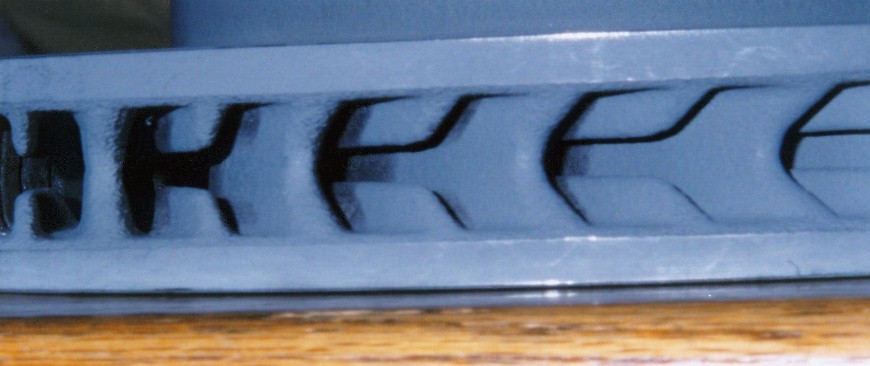
there you get more sufrace area also.
(thank you porsche.) And also note, that porsches cross drilling is a whole diffrent process, they holes are actualy cast in there when they cast the rotors.Also dean, what are you running up front, to match the wilwoods out back?

Supreme Member
Joined: Mar 2003
Posts: 4,771
Likes: 15
From: Florida
Car: 1987 Black IROC-Z (SOLD)
Have you seen the NASCAR cars when they are on the brakes, the rotors are glowing red. I don't think that slots or drilled holes are cooling the pads. Only the cool outside ducted air is doing the cooling.

Supreme Member
Joined: Nov 2001
Posts: 1,886
Likes: 0
From: Jacksonville, NC
Car: Guess
Engine: Crazy 8
Transmission: So close to being a manual I can taste it
ITs a tough issue, both have strong points and weak points, and so far I think everyone is making good points about whether or not drilled/slotted rotors work better for racing situations. As for my opinion, I don't know because I don't have a race car!! I use solid rotors for street use with high quaility pads. I have GM vette pads up front and I bought a set of Brake Pros Metal Matrix pads for my soon to be LS1 Rear discs... I am using solid rotors I got at the local parts store for both front and rear. I really like the looks of the drilled slotted rotors but for the price, it just ridiculus to spend that much for something pretty. Maybe one day, I will go for some slotted rotors, but I am in no hurry. I have always swayed more towards the idea of solid or slotted rotors over drilled anyway due to the arguements of cracking (seen on many friends cars) and ideas of thermal characteristics. But I have no personal experience with drilled rotors ( I did put a pair of drilled rotors on my exgirlfriends car, but she road the break like crazy, it was an attempt to keep the rotors from warping as quickly, it seemed to work!). However, I have to wonder if drilled rotors are "the solution" to great braking. I say that from a standpoint, not based on marketing from aftermarket companies, but from the FACT that most of the high end exotic pasta rockets and even the new C6 vette come with drilled rotors. I highly doubt that Porsche, Ferrari, Lambo, and even GM are going to just "throw" drilled rotors at the brake system in attempt to gain something other that asthetics. I could be hoplessly naive in thinking the engineers spend hours on theory and testing to come up with a well designed, engineered braking system for each car they design, but I don't think I am wrong in my thinking. Just some more food for thought!!!
Supreme Member
Joined: Mar 2001
Posts: 6,577
Likes: 0
From: Portland, OR www.cascadecrew.org
Car: 1990 Camaro RS
Engine: Juiced 5.0 TBI - 300rwhp
Transmission: T5
Axle/Gears: 3.42 Eaton Posi, 10 Bolt
Originally posted by 92 zzz28
I highly doubt that Porsche, Ferrari, Lambo, and even GM are going to just "throw" drilled rotors at the brake system in attempt to gain something other that asthetics.
I highly doubt that Porsche, Ferrari, Lambo, and even GM are going to just "throw" drilled rotors at the brake system in attempt to gain something other that asthetics.
Hows this argument. a couple of weeks ago, i was at the ALMS races here in portland. Audi, Ferrari, Dyson, Cadie and Chevy (actualy all the LMP, and GTS) used solid rotors. The only drilled rotors i saw was on some of the Porsche Cup cars, and a couple of the WC cars. And, very few had them on the fronts, mostly on rear use, which i assume they did to get a little diffrent brake feel on engagement.


Joined: Feb 2003
Posts: 1,229
Likes: 5
From: Albuquerque, NM
Car: 1966 El Camino Custom
Engine: 350
Transmission: 200R4
Axle/Gears: 3:73 12 bolt with Brute Strength
Appologies to someone that may have already brought this up but I missed it but....I always was told that the drilled rotors were there for two reasons: The first to help release trapped gasses from the braking surface and secondly, to lighten the brake assembly for better acceleration. The rotors are reciprocating and sprung weight and drilled rotor buyers are looking for some advantage by using a lighter rotor...along with forged alum hubs and other light weight brake components. I say if you have exhausted other lightening efforts and your looking for more...why not use the lighter drilled rotors?
Supreme Member
Joined: Mar 2001
Posts: 6,577
Likes: 0
From: Portland, OR www.cascadecrew.org
Car: 1990 Camaro RS
Engine: Juiced 5.0 TBI - 300rwhp
Transmission: T5
Axle/Gears: 3.42 Eaton Posi, 10 Bolt
quoted from above
weight is a diffrent issue, you have to balance the unsprung, and rotating mass, with the stopping power and longevity you need. Like everything else there is a compromise. You will see lots of road racers, take large braking force, and lots of heat control over the weight penalty. Whereas drag racers run small lightweight brakes, that are only good for slowing down to a stop once. but weight very little.
However, this reasoning is no longer valid. As the years have gone by pads have been designed that produce very little gas. Furthermore many pads come with groves in themselves that allow for the removal of any minor gas that is created.

Member
Joined: Sep 2002
Posts: 158
Likes: 0
From: Elizabethtown, KY
Car: 89 Formula 350
Engine: L98 w/ Stealthram
Transmission: 700R4
Axle/Gears: 9 bolt 3.27
I got slotted and cross drilled rotors for all 4 wheels. I got them because they look good, and my old rotors were shot. Plus they were cheaper then OEM replacements.
Supreme Member
Joined: Mar 2003
Posts: 4,771
Likes: 15
From: Florida
Car: 1987 Black IROC-Z (SOLD)
Originally posted by 89Formula5.7
I got slotted and cross drilled rotors for all 4 wheels. I got them because they look good, and my old rotors were shot. Plus they were cheaper then OEM replacements.
I got slotted and cross drilled rotors for all 4 wheels. I got them because they look good, and my old rotors were shot. Plus they were cheaper then OEM replacements.

Supreme Member
iTrader: (7)
Joined: Mar 2001
Posts: 6,420
Likes: 5
From: Fort Mill, SC, USA
Car: '88 Iroc, '91 RS, and a '70 RS
Engine: 5.7 TPI; 5.0 TBI; ZZ4/T56 on the ag
Transmission: A4, A4, slated to be a T56
Cheap and good looks are not the only things to look for in brakes...let us know when they warp on you.
No flaming intended, just stating facts.
Ed
No flaming intended, just stating facts.
Ed
Member
Joined: Sep 2002
Posts: 158
Likes: 0
From: Elizabethtown, KY
Car: 89 Formula 350
Engine: L98 w/ Stealthram
Transmission: 700R4
Axle/Gears: 9 bolt 3.27
I take no offense. I will let you all know if and when they warp. I don't ride my brakes or do a lot of panic braking. So, I think that they will last awhile. I'll measure rotor temp as soon as I get to college today.
Supreme Member
Joined: Mar 2003
Posts: 4,771
Likes: 15
From: Florida
Car: 1987 Black IROC-Z (SOLD)
Originally posted by 89Formula5.7
I take no offense. I will let you all know if and when they warp. I don't ride my brakes or do a lot of panic braking. So, I think that they will last awhile. I'll measure rotor temp as soon as I get to college today.
I take no offense. I will let you all know if and when they warp. I don't ride my brakes or do a lot of panic braking. So, I think that they will last awhile. I'll measure rotor temp as soon as I get to college today.
Member
Joined: Sep 2002
Posts: 158
Likes: 0
From: Elizabethtown, KY
Car: 89 Formula 350
Engine: L98 w/ Stealthram
Transmission: 700R4
Axle/Gears: 9 bolt 3.27
I haven't had any problems with them for the year they've been on. In fact, the car stops MUCH better than with OE rotors. Maybe the old ones were ready to kill me, but I noticed a difference. The car stops great. That was my primary concern, along with cost. Anything else is just a bonus.

Thread
Thread Starter
Forum
Replies
Last Post
Billy Decker
Engine/Drivetrain/Suspension Wanted
0
Sep 4, 2015 03:46 PM
rudolphschenker
Transmissions and Drivetrain
1
Sep 4, 2015 02:41 AM
