When you click on links to various merchants on this site and make a purchase, this can result in this site earning a commission. Affiliate programs and affiliations include, but are not limited to, the eBay Partner Network.
Alternate return-style fuel pressure reg routing to dual fuel logs
LTX and LSXPutting LT1s, LS1s, and their variants into Third Gens is becoming more popular. This board is for those who are doing and have done the swaps so they can discuss all of their technical aspects including repairs, swap info, and performance upgrades.
Alternate return-style fuel pressure reg routing to dual fuel logs
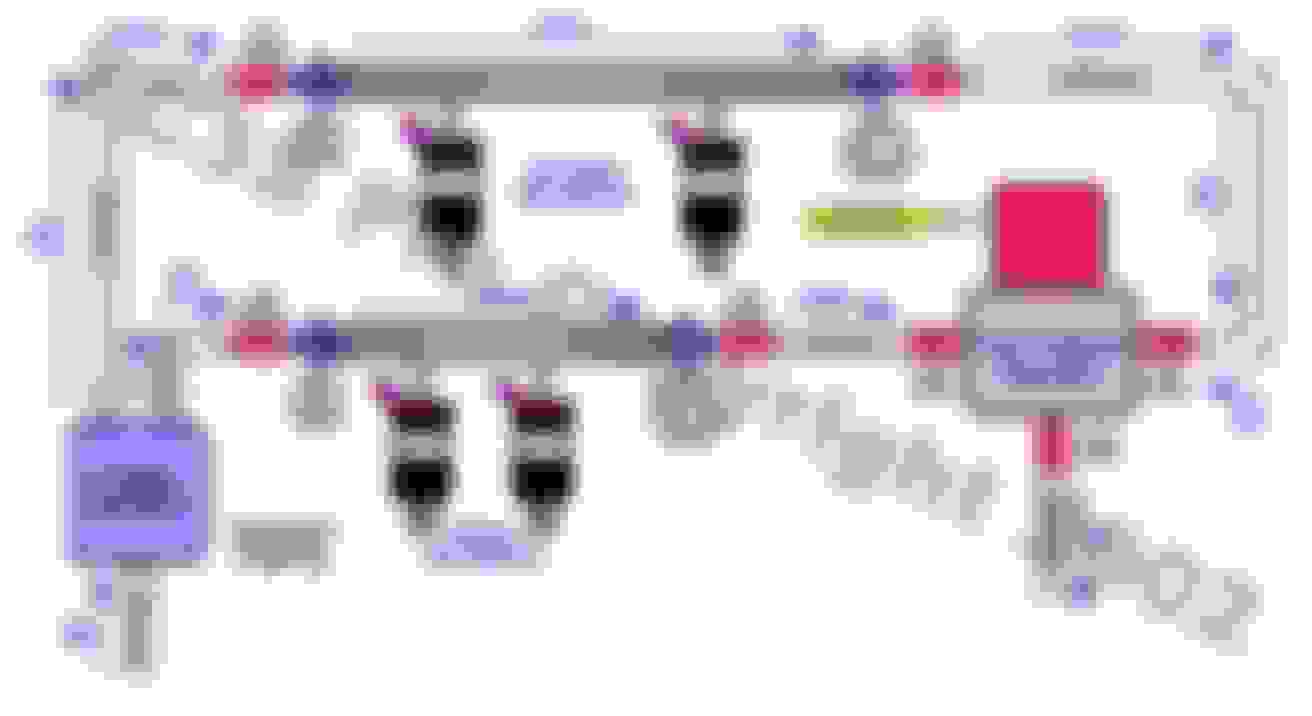
I saw an alternate routing scheme for the fuel lines from an aftermarket return-type fuel pressure regulator that didn't dead-head either fuel log (like most setups do), but I can't find it again. Seems to make a lot of sense so that you don't have one fuel rail picking up heat while the other one has flow for both rails going into it, meaning the fuel should be cooler in one rail than in the other.
That would work to avoid deadheading, but I'd rather not make the fuel have to pass through one rail picking up heat before it gets to the other rail. Assuming the fuel picks up more heat from the rail than it does from a line, that is.
Last edited by five7kid; Dec 11, 2015 at 11:55 PM.
Whether series (pump, log1, log2, FPR) or parallel (pump, wye, log1 & log2, wye, FPR), you would set the FPR up similar to stock... everything before the FPR holds the set pressure.
This is not like typical carb, where after the FPR has the pressure drop and is dead head.
Yep, that's it. I couldn't get the supply line going to the reg first out of my head.
So, yes, everything before the reg will be at the set pressure. The "inlet" and "outlet" ports of the reg all go to the same chamber - the "return" is basically a relief valve.
My main issue is space - I don't have any at the ends of two corners of the fuel rail for the fittings...
You are overthinking the heating part.
In a deadhead system the fuel sits in the rails until it is used.
With a return style system...
If you consider a 255lph pump flows roughly 1 gpm through the fuel system, the time the fuel is in both rails in a series configuration is only around 1 second total.
No need to overcomplicate things & spend money where it isn't needed.
A simple series configuration with a -8 supply will support over 1000rwhp.
Give me a dimension you have to work with, I have a lot of low clearance options.
Last edited by Lonnie P; Dec 12, 2015 at 08:09 AM.
You are overthinking the heating part.
In a deadhead system the fuel sits in the rails until it is used.
With a return style system...
If you consider a 255lph pump flows roughly 1 gpm through the fuel system, the time the fuel is in both rails in a series configuration is only around 1 second total.
No need to overcomplicate things & spend money where it isn't needed.
A simple series configuration with a -8 supply will support over 1000rwhp.
Give me a dimension you have to work with, I have a lot of low clearance options.
You may be right. I do have a bigger pump than that, though.
By switching the supply line from the reg to the pump, leaving the current cross-over line I have, and routing the fuel to the reg from the now-deadheaded rail end, it would become a flow-through system.
I'll get some measurements to you in a bit. Gotta run right now.
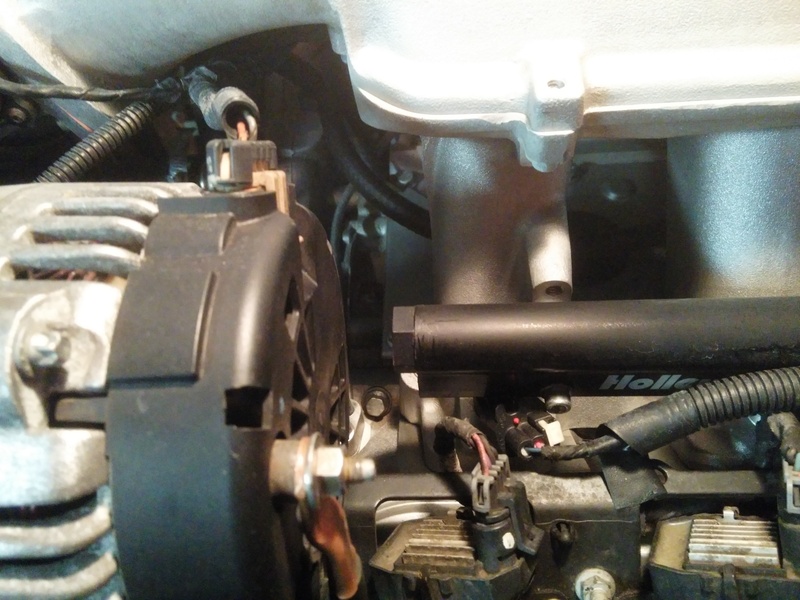
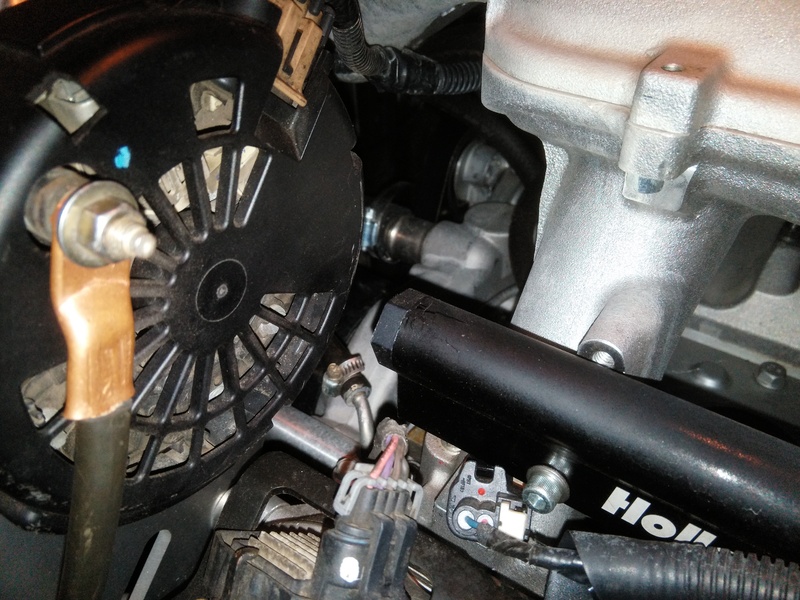
There's right at (slightly over) 1" between the face of the fuel rail (not the plug) and the back of the alternator (high mount Kwik alternator bracket kit).
From the rear. I may be able to rotate the alternator to a higher hole in the bracket to give more clearance there (but I'd have to get a new belt, of course):
Okay, this was a long time ago, but I'll go ahead and update.
The Earl's fitting fit, but didn't leave much room (had to rotate the alternator out of the way to get it in). Remember this uses the f-body accessory spacing, not the truck type spacing. (Sorry, keep forgetting to get a pic.)
As for performance, data is limited so far due to poor weather at the start of the season. The first race weekend was snowed out. The next weekend Friday evening race had showers moving through throughout the evening, so we only got one round in before curfew (I won the round in both classes I ran). Not much data to be had from that, but the car was running about the same as it had last year.
The next weekend, Friday race went the full 7 rounds, which I managed to win. The car was on the whole evening (my average RT was ~.025). That Sunday I ran in two classes, the weather was totally weird and unpredictable (would change from the time I left the pits to the time I ran), but I made it to both finals; bad light in one did me in, won the other (average RT in the class I won was ~.015 - foot-braking).
So, to date, in 5 classes, I've made it to the final round run and lost once. If that's the measure, then I'd say it was a move in the right direction.